No Salvage Brand to Worry About
One of the biggest headaches when buying a used vehicle, whether it’s a car, truck, or even an off-road machine, is sifting through the paperwork and trying to understand its past. For many folks in Oklahoma, there's a unique relief when it comes to ATVs and UTVs: you won't ever encounter the dreaded "salvage" brand on their titles. This guide is here to walk you through what that means for you, whether you're looking to buy, sell, or simply understand the nuances of Oklahoma's off-road vehicle titling process.
What Even is a Salvage Title, Anyway?
Before we dive into why Oklahoma doesn't have salvage brands for off-road machines, it's helpful to understand what a salvage title is in the first place, especially since it's a common concept for cars and trucks.
The Concept in Cars and Trucks
When you think of a "salvage" title, your mind probably goes straight to a car that's been in a terrible accident, submerged in a flood, or damaged by fire. For typical road-going vehicles like your family sedan or work pickup, a salvage title is a big deal. It's essentially a red flag issued by a state's Department of Motor Vehicles, indicating that an insurance company has deemed the vehicle a "total loss." This usually means the cost to repair the damage exceeds a certain percentage (often 70-80%) of the vehicle's pre-damage market value.
The implications of a salvage title on a car are significant. First, the vehicle's market value plummets. Who wants a car that was once declared a total loss? Second, it usually requires a stringent inspection process to even get it back on the road. This might involve mechanical checks, safety inspections, and sometimes even anti-theft checks to ensure no stolen parts were used in the rebuild. After passing these hurdles, the car might then receive a "rebuilt" or "restored" title, but the original salvage history remains permanently attached to its record. Insuring a vehicle with a salvage or rebuilt title can also be more complicated and expensive, as many insurers view them as higher risk.
Why Off-Road Machines Are Different
It might seem strange that ATVs and UTVs would be treated differently than cars, especially since they're often put through their paces in harsh environments. However, the regulatory landscape for off-road vehicles often diverges significantly from that for street-legal ones. Historically, many states haven't subjected ATVs and UTVs to the same rigorous titling and registration requirements as cars, largely because they weren't intended for public road use. Their primary purpose was recreation, farming, or other off-highway applications.
This historical difference in regulation means that the specific rules around titling, inspections, and even what information appears on a title can vary greatly. For instance, many states don't require an odometer reading for an ATV title, unlike a car. [Why an ATV Title Has No Odometer Reading] The idea of a "total loss" might be handled by an insurance company, but the state's titling authority might not have a mechanism to brand the title itself in the same way they would for a car that needs to be safe for highway speeds and public roads. Oklahoma is one of those states that has chosen a simpler, more direct approach for off-road machines.
Oklahoma's Approach to Off-Road Vehicle Titles
When it comes to your quad or side-by-side, Oklahoma keeps things straightforward. This can be a huge relief for buyers and sellers alike, cutting down on some of the typical worries associated with vehicle transactions.
No Salvage Brand for ATVs or UTVs
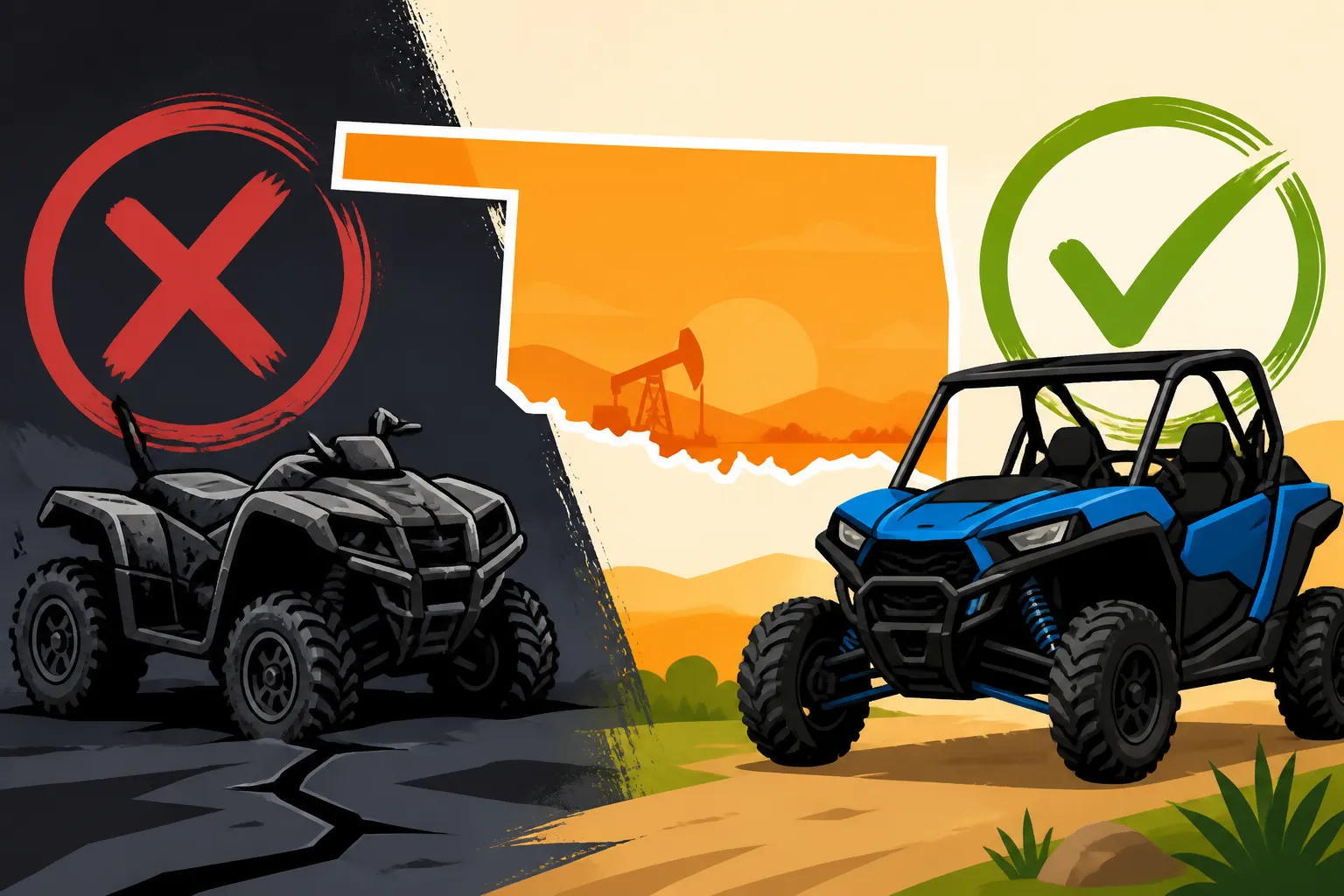
Here's the good news: Oklahoma does not issue salvage titles for ATVs or UTVs. That's right, you heard correctly. Unlike cars and trucks that can carry the stigma of a salvage or rebuilt brand on their title, an off-road machine in Oklahoma simply won't have that designation. This means if you buy an ATV or UTV that was previously damaged to the point where an insurance company deemed it a total loss, the Oklahoma title you receive will not show any "salvage" or "rebuilt" branding. No Salvage Brand to Worry About
For buyers, this eliminates one layer of title complexity and a specific type of background check that's common for cars. You won't have to wonder if a clean-looking title is hiding a past salvage designation that dramatically impacts its value or legality. For sellers, it means the state's title won't create an automatic devaluation based on past incidents. However, it's absolutely crucial to understand that while the title won't reflect a salvage status, the physical machine's history of damage, repairs, or flood exposure remains a vital piece of information. The state simply chooses not to brand the title itself for these specific vehicle types.
The Standard Title You'll Get
So, if there's no salvage branding, what kind of title do you get in Oklahoma for an ATV or UTV? You'll receive a standard Oklahoma title. This is a clean, unbranded title that looks much like any other vehicle title in the state, just without certain categories or notations specific to road vehicles. [Oklahoma Issues Standard Titles Only]
This standard title will include essential information such as:
- Vehicle Identification Number (VIN): This is the unique identifier for your machine, crucial for tracking its origin and ensuring it's not stolen.
- Make, Model, and Year: Basic identifying information about the ATV or UTV.
- Owner's Name and Address: Clearly states who legally owns the machine.
- Lienholder Information (if applicable): If you financed your purchase, the bank or credit union will be listed as the lienholder until the loan is paid off. [How a Lien Gets Recorded at a Tag Agency]
- Weight and Class: General vehicle descriptors.
What you won't find on an Oklahoma ATV or UTV title are things like odometer readings (since they're not required for off-road machines) or any specific branding for prior damage or total loss. This simplified titling process is a hallmark of Oklahoma's approach to recreational and utility off-road vehicles. While it streamlines the paperwork, it also places a greater emphasis on the buyer's due diligence regarding the machine's physical condition and history.
What This Means for Buyers and Sellers in Oklahoma
The absence of a salvage brand on Oklahoma ATV and UTV titles has distinct implications for both parties involved in a sale. It simplifies one aspect of the transaction but simultaneously heightens the importance of other considerations.
For Buyers: Due Diligence is Still Key
Just because an Oklahoma title for an ATV or UTV doesn't carry a "salvage" brand doesn't mean you can throw caution to the wind when buying a used machine. Quite the opposite, in fact. The absence of this official red flag means that the responsibility for uncovering a machine's true history falls even more squarely on your shoulders as a buyer. You cannot rely on the title alone to tell you if the machine has been in a catastrophic accident, submerged in a flood, or had its frame bent beyond repair.
Therefore, thorough due diligence is absolutely paramount. Here's what you should be doing:
- Inspect the machine meticulously: Look for signs of major repairs, rust, water lines (especially if the machine might have been flooded), bent frames, mismatched paint, or shoddy aftermarket modifications. Check fluid levels and look for leaks. Test all major functions: brakes, steering, lights, and transmission.
- Ask detailed questions: Don't be shy about asking the seller about the machine's history. Has it ever been in an accident? Has it been submerged? What kind of maintenance has it received? Were there any major repairs, and by whom? A transparent seller will be happy to answer these questions honestly.
- Request service records: If the seller has kept a log of maintenance and repairs, this is invaluable. It shows the machine has been cared for and provides a timeline of any significant work.
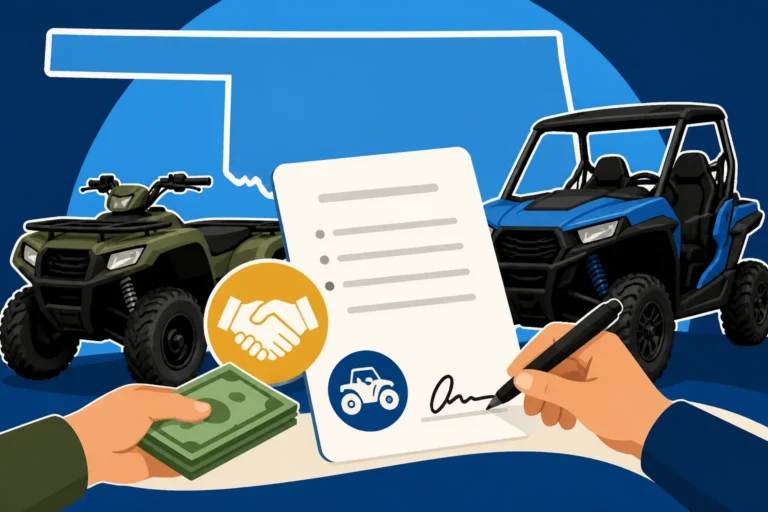
- Get a bill of sale: Even for an older machine, a comprehensive bill of sale is essential. This document can clearly state that the machine is being sold "as-is" but can also be used to document any known issues or repairs that the seller discloses. A platform like LawDepot offers customizable bill of sale templates that can be tailored to include specific details about the machine's condition, protecting both parties. [Writing a Bill of Sale That Lists the Price]
Remember, a "clean" Oklahoma title for an ATV or UTV only indicates that the state hasn't branded it as salvage. It does not certify the machine's physical condition or attest to its previous life. Your eyes, ears, and questions are your best tools.
For Sellers: Transparency Builds Trust
If you're selling an ATV or UTV in Oklahoma, the lack of a salvage brand on the title means you don't have to contend with that particular hurdle. However, building trust with potential buyers is still crucial, and transparency is the cornerstone of that trust. While the state's title won't ding you for past damage, a savvy buyer will still want to know.
Here's how to navigate selling your off-road machine effectively:
- Be honest about history: If your machine has been involved in a major incident, sustained significant damage, or undergone substantial repairs, disclose this information upfront. Trying to hide it will likely backfire when a buyer performs their inspection, potentially leading to a lost sale or, worse, accusations of misrepresentation.
- Highlight the "clean" title: While there's no salvage brand to worry about, the fact that you have a clear, unencumbered Oklahoma title is still a selling point. It shows clear ownership and no outstanding liens. [Oklahoma Titles After a Private Sale]
- Document everything: If you've had major repairs done, especially by a professional shop, gather those receipts and service records. This documentation supports your claims of repairs and demonstrates the machine's maintenance history. If you performed repairs yourself, consider creating a simple log or summary of what was done. You can use resources like LawDepot to draft a clear bill of sale that outlines the machine's condition and any known issues, adding a layer of legal protection for both buyer and seller.
- Prepare for inspection: Expect buyers to want to thoroughly inspect your machine. Be prepared to start it, let them look it over, and answer their questions honestly. A confident and transparent seller helps alleviate buyer concerns, especially since the title won't provide all the answers about past damage.
By being open and providing as much information as possible, you not only make the selling process smoother but also ensure that the buyer knows exactly what they're getting, fostering a positive transaction experience.
Navigating Damage and Insurance Claims Without a Salvage Title
The unique titling situation for ATVs and UTVs in Oklahoma—where a salvage brand isn't used—can raise questions about how serious damage or insurance claims are handled. It's a different landscape than with cars, but the principles of responsibility and transparency remain.
When Your ATV is a Total Loss
Even though Oklahoma doesn't put a "salvage" brand on an ATV or UTV title, off-road machines can still be declared a "total loss" by an insurance company. This happens if your quad or side-by-side is involved in an accident, fire, theft, or other covered event, and the cost to repair it to its pre-damage condition exceeds a certain percentage of its actual cash value (ACV).
When an insurance company declares a total loss:
- Payout and transfer of ownership: The insurance company will typically pay you the ACV of the machine (minus your deductible). In return, they will take possession of the damaged ATV or UTV.
- Sale for salvage: The insurance company will then usually sell the totaled machine at an auction, often to rebuilders or parts dealers, to recoup some of their losses.
- The title's journey: Here's where Oklahoma's rule comes into play. When the machine is sold for salvage, the new owner who buys it (perhaps to rebuild it or strip it for parts) will still apply for a standard Oklahoma title in their name. This title will not carry any "salvage" branding. This means the physical history of the machine (being totaled by an insurer) is separate from the state's titling record.
This distinction is important. While the state's title might appear "clean," the machine itself might have a significant damage history that an insurance company recorded. This is why a thorough pre-purchase inspection and asking direct questions about past damage are so critical for buyers. The insurance company's records are often the only formal documentation of a total loss event for these machines, rather than the state's title.
Recording Known Issues on a Bill of Sale
Given that the Oklahoma title won't alert you to a past total loss or severe damage, the bill of sale becomes an even more powerful document for both buyers and sellers of ATVs and UTVs. It's your opportunity to formalize any discussions about the machine's condition and history.
For sellers, using a detailed bill of sale is a smart move for transparency and liability protection. You can explicitly state the known condition of the machine, including any significant damage, repairs, or wear and tear. For example, you might add a clause like: "Buyer acknowledges seller has disclosed that the UTV sustained front-end damage in 2022, which was professionally repaired, and details of repairs are attached." This protects you from future claims that you misrepresented the machine's condition.
For buyers, a comprehensive bill of sale ensures that any verbal agreements or disclosures are put into writing. It's a record of what you were told about the machine's condition at the time of purchase. Should any disputes arise later, this document is crucial.
Using a reputable online service like LawDepot to create your bill of sale offers significant advantages. Their customizable templates allow you to:
- Add specific clauses: You can easily insert language that addresses known damage, recent repairs, or even "as-is" statements.
- Document included accessories: List any accessories, such as a winch, plow, or extra tires, that are part of the sale.
- Specify payment terms: Clearly outline the purchase price, payment method, and date of transaction.
By taking the time to create a thorough and honest bill of sale, both buyers and sellers in Oklahoma can navigate the sale of an ATV or UTV with confidence, especially in the absence of a state-issued salvage title brand. It's about ensuring all parties have a clear understanding of the transaction and the machine's history. [Oklahoma Bills of Sale for Older Machines]
Here's a quick comparison of what you might expect regarding salvage branding:
| Feature | Typical Car/Truck Title (Oklahoma) | ATV/UTV Title (Oklahoma) |
|---|---|---|
| Salvage Brand Indicator | Yes, if declared a total loss | No, not used for ATVs/UTVs |
| Rebuilt/Restored Brand | Yes, after passing inspection (if rebuilt) | No, not used for ATVs/UTVs |
| Odometer Reading Required | Yes | No |
| VIN Required | Yes | Yes |
| Lienholder Section | Yes | Yes |
| Pre-Purchase Inspection | Recommended, plus VIN history check | Highly Recommended, physical inspection key |
| Importance of Bill of Sale | Important | Extremely Important for disclosures |
Understanding these differences can save you a lot of grief and ensure you're making informed decisions about your off-road machine in Oklahoma. Whether you're hitting the trails at [Little Sahara State Park in Oklahoma] or working your ranch, knowing your machine's history and paperwork is key. You'll still need to register it properly, of course. [How to Register an ATV in Oklahoma] Don't forget, [Oklahoma Charges $11 at Titling] and you only pay it once.
Disclaimer
This article is for general informational purposes only and does not constitute professional advice. Laws, prices and regulations vary by location and change over time. Consult a qualified professional for guidance on your specific situation.