Bringing a Manufacturer’s Statement of Origin to a Tag Agency
Buying a brand new ATV or UTV in Oklahoma is exhilarating! You’ve probably spent weeks, maybe months, dreaming about hitting the trails at Little Sahara or cruising the back forty on your new machine. But then comes the moment you realize that shiny new quad or side-by-side isn't quite ready for action without one crucial step: registration and titling. And for a new machine, that process starts with a document many folks aren't familiar with – the Manufacturer's Statement of Origin, or MSO. This guide is here to walk you through exactly what an MSO is, why it's so important, and how to successfully use it at your local Oklahoma tag agency to get your new off-road vehicle legal.
Understanding the Manufacturer's Statement of Origin (MSO)
Getting your hands on a brand-new ATV or UTV is a fantastic feeling, but before you can truly call it yours and legally ride it, there's a vital piece of paper you'll need: the Manufacturer's Statement of Origin, often just called an MSO. Think of this document as the birth certificate for your off-road machine. It’s the very first official document generated for that specific vehicle, coming directly from the factory where it was built. Without it, your new quad or side-by-side is just a collection of parts – it can’t be legally titled or registered in Oklahoma.
What Exactly is an MSO and Why Does It Matter?
An MSO is a security document, much like a check or a deed, issued by the manufacturer when a new vehicle is produced. It certifies that the vehicle, identified by its unique Vehicle Identification Number (VIN), is indeed new and hasn't been titled in any state or jurisdiction before. This is what differentiates it from a regular title. A regular title is issued by a state’s motor vehicle department to an owner, indicating legal ownership and often a history of previous owners. The MSO is the bridge from the manufacturer to that very first title, proving the machine's origin and ensuring it hasn't been "lost" or stolen before reaching its first owner.
The MSO is absolutely critical for the initial titling and registration of your new ATV or UTV in Oklahoma. It’s the primary proof that the machine is legitimately new and ready for its first owner to establish legal ownership. Without a properly executed MSO, the tag agency simply won't have the necessary documentation to process your title application. This means no title, no registration, and no legal riding. It's the foundational document that sets everything else in motion.
The MSO in Your Hands: What to Look For
When you pick up your new ATV or UTV from the dealership, the MSO should be one of the key documents you receive. Take a moment to carefully inspect it. You’ll want to confirm several pieces of information are accurate and complete. First and foremost, check the Vehicle Identification Number (VIN). This multi-digit number must exactly match the VIN stamped on your machine’s frame. A single digit off can cause major headaches down the line.
Beyond the VIN, verify the make, model, and year of your ATV or UTV. These details should precisely reflect the machine you just purchased. Equally important is checking the "assigned to" section. The MSO should show that the manufacturer assigned the vehicle to the dealership, and then the dealership, in turn, has assigned it to you, the buyer. This assignment needs to include your full legal name(s) and address, and crucially, it must be properly signed and dated by an authorized representative of the dealership. If anything looks incorrect or incomplete, do not leave the dealership until it's rectified. Getting errors fixed later, especially once you've left the premises, can be a frustrating and time-consuming ordeal.
Gathering Your Documents for the Oklahoma Tag Agency
You’ve got your shiny new ATV or UTV and a meticulously checked MSO – that’s a fantastic start! But before you head down to your local Oklahoma tag agency, remember that the MSO, while crucial, isn't the only piece of paperwork you'll need. The tag agency needs a complete picture of your purchase to ensure everything is above board, from proving you actually paid for the machine to confirming your identity and residence. Preparing all your documents beforehand will save you a lot of time and potential trips back home.
The MSO Isn't the Only Paper You Need
First on your list, alongside that MSO, should be the original dealer invoice. This document serves a couple of vital purposes. It confirms the purchase price of your ATV or UTV, which the tag agency will use to calculate the Oklahoma excise tax. It also provides proof that you bought the machine from a legitimate dealer and specifies any sales tax collected. You can learn more about what to expect on this front in [Oklahoma Dealer Invoices at Titling]. Having this invoice handy ensures a smooth calculation of the necessary fees.
You'll also need proof of your identity and Oklahoma residency. This typically means a valid Oklahoma driver's license or state-issued ID card. If your address on your license isn't current, bring along a utility bill or other official mail showing your current Oklahoma address. While typically for private sales of older machines, if there are any questions about the declared purchase price on your dealer invoice, you might need to file an [Oklahoma Declaration of Purchase Price], though for a new machine from a dealer, the invoice usually suffices. Lastly, be prepared for any tax forms. If you purchased your machine from an out-of-state dealer, you might need to handle Oklahoma use tax differently, which we’ll cover in a moment.
Handling a New Machine from an Out-of-State Dealer
Buying an ATV or UTV from a dealership outside of Oklahoma can sometimes complicate the titling and registration process, but it’s definitely manageable if you know what to expect. The core requirement remains the MSO, which the out-of-state dealer should provide, properly assigned to you. The key difference usually comes down to taxes. Many out-of-state dealers might not collect Oklahoma's excise tax at the point of sale. Instead, you'll be responsible for paying this tax directly to the Oklahoma Tax Commission (via the tag agency) when you title the machine in your home state. This is often referred to as a "use tax" if the sales tax wasn't paid in the state of purchase.
It's crucial to clarify with the out-of-state dealer how they handle sales tax for Oklahoma residents. Get this in writing if possible. You don't want to pay sales tax in the selling state only to find out you still owe Oklahoma's excise tax. Understanding [Oklahoma Tax on an Out-of-State Purchase] beforehand can save you from unexpected costs. Make sure the MSO is correctly filled out and assigned to you by the out-of-state dealer, just as an in-state dealer would do. If for some reason the MSO is not readily available, or if you encounter other documentation hurdles with an out-of-state purchase, having a robust, legally sound bill of sale can be an important supplemental document. While not typically needed for a new machine with an MSO, for future private sales or if complications arise, resources like LawDepot can help you generate comprehensive legal documents to protect your interests.
The Step-by-Step Process at the Tag Agency
Alright, you've got your new machine, your MSO is in hand, and all your supporting documents are neatly organized. Now it's time for the main event: a visit to your local Oklahoma tag agency. This might seem a bit daunting, especially if it's your first time registering an ATV or UTV, but the process is generally straightforward once you're prepared. Knowing what to expect can ease any anxieties and help you navigate the counter like a pro.
What to Expect When You Arrive
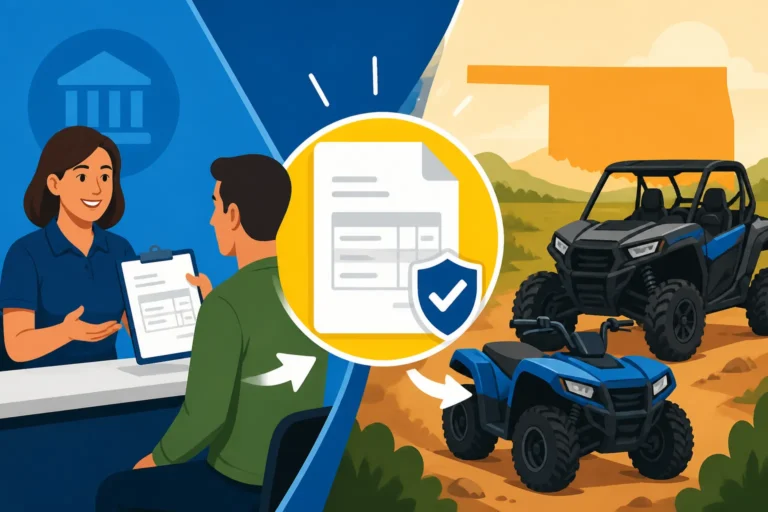
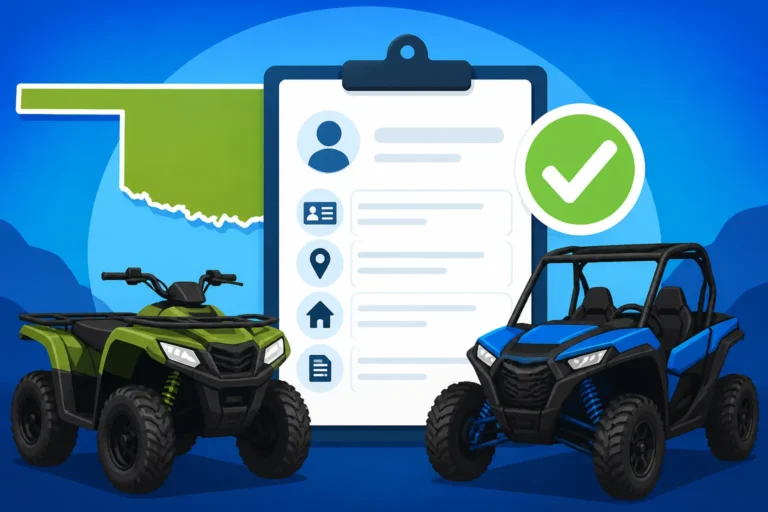
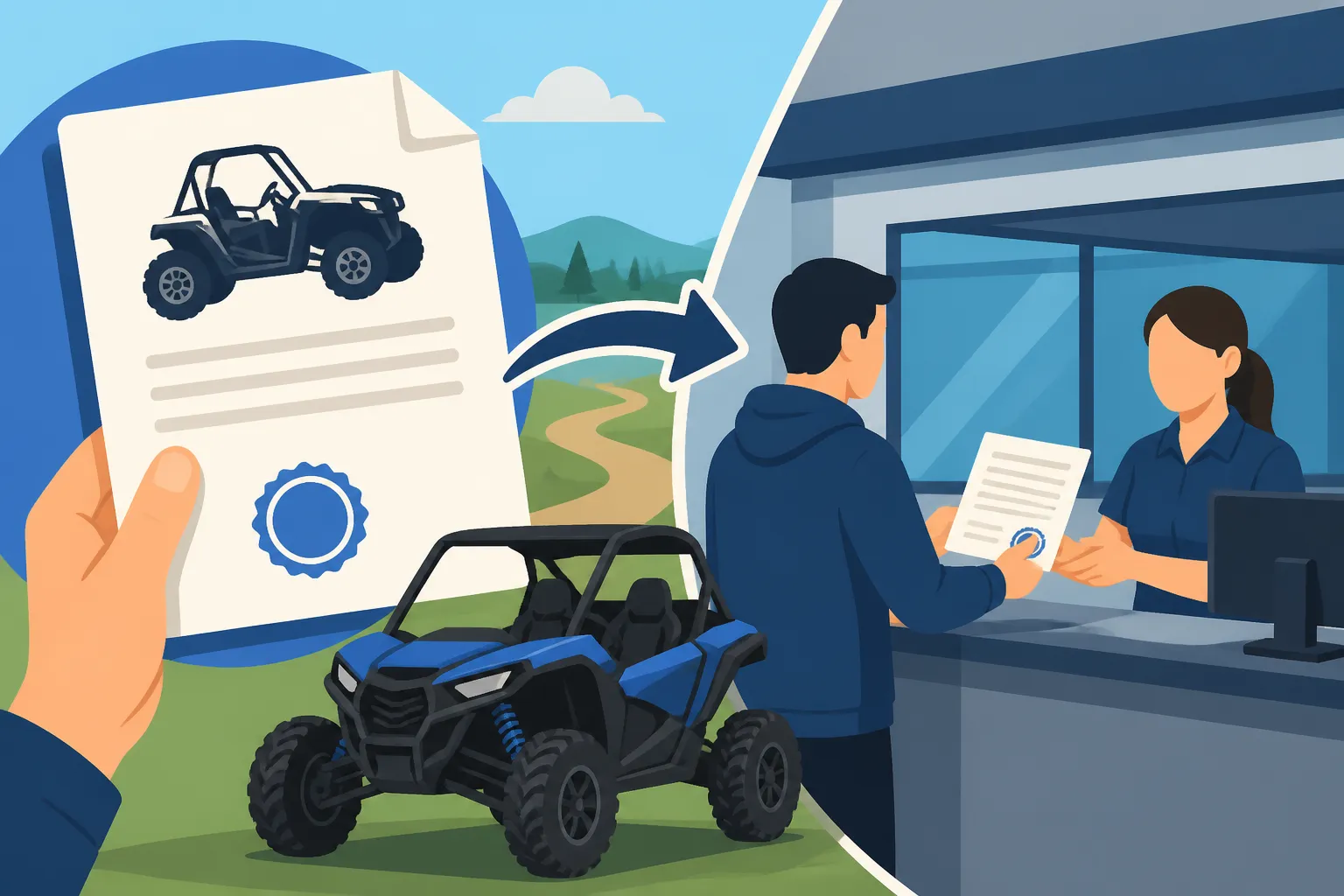
When you walk into the tag agency, you’ll typically take a number and wait for your turn. Once called, present all your gathered documents to the clerk. This includes your MSO, the dealer invoice, and your proof of identity and residency. The clerk will guide you through filling out the necessary forms. The primary one will be the application for title and registration. This form will ask for details about your machine (VIN, make, model, year) and your personal information. You can get a sense of what's on this form by looking into [Oklahoma's ATV Registration Application Explained]. Don’t hesitate to ask the clerk if you have any questions about specific fields. They are there to help!
Once the paperwork is complete and reviewed, the clerk will calculate the total fees due. This will include the one-time registration fee, which for ATVs and UTVs in Oklahoma is notably low – you'll want to read [Oklahoma Charges $11 at Titling] for specifics. You'll also pay the Oklahoma excise tax, which is calculated based on the purchase price of your machine. Understanding [Oklahoma Excise Tax at Titling] is key here. Be prepared to pay these fees, typically with cash, debit card, or a check, though payment methods can vary by agency.
Receiving Your Title and Registration Decal
After you’ve paid all the required fees, the tag agency will issue you a temporary registration and, most importantly, your permanent registration decal. This decal is usually a small sticker that needs to be affixed to the front of your ATV or UTV. Unlike cars, ATVs and UTVs in Oklahoma don't get a traditional metal license plate; instead, you get a decal for the front. For guidance on where exactly to put it, check out [Where the Registration Decal Goes on an ATV]. Make sure it's clearly visible.
While you'll receive your registration decal and temporary paperwork on the spot, your official title will generally be mailed to you within a few weeks. It's important to keep your temporary registration with you when you ride until your permanent title arrives. Many new owners are surprised that [What Oklahoma's $11 Registration Fee Actually Covers] is for the life of the machine under your ownership – it doesn't need to be renewed annually! However, if you sell the machine and it’s transferred to a new owner, they will pay that fee again. Keep your title in a safe place, not on the machine itself, as it's proof of ownership.
Common Pitfalls and How to Avoid Them
Even with the best preparation, sometimes things don't go exactly as planned. Dealing with official paperwork can be tricky, and there are a few common issues that new ATV and UTV owners might encounter when trying to title and register their machines using an MSO. Knowing about these potential pitfalls ahead of time can help you either avoid them entirely or navigate them smoothly if they do pop up.
Lost or Damaged MSO: A Puzzling Problem
One of the most frustrating situations is discovering your MSO is lost, stolen, or severely damaged before you've had a chance to title your machine. Since the MSO is essentially the "first title" for a new vehicle, replacing it isn't as simple as ordering a duplicate title from the state. Your first step should always be to contact the dealership where you purchased the ATV or UTV. They are usually the ones who initially received the MSO from the manufacturer and then assigned it to you. The dealership may be able to request a duplicate from the manufacturer on your behalf, but this can sometimes take time and involve fees.
If the dealership isn't able to help or is no longer in business, you might need to contact the manufacturer directly. This process can be slow and may require a lot of documentation from your end to prove ownership (such as your purchase agreement or bill of sale). It underscores the importance of keeping all your purchase records in a secure place. For situations where other vital documents, like an existing title, go missing later in the machine's life, generating an affidavit of lost title can be a necessary step, and resources like LawDepot can be helpful for creating such legal forms.
Dealer Errors and How to Address Them
Unfortunately, mistakes can happen at the dealership, and sometimes these errors end up on your crucial paperwork. Common issues include incorrect Vehicle Identification Numbers (VINs), misspelled names, or missing signatures on the MSO or dealer invoice. These seemingly small errors can cause a big headache at the tag agency, as clerks cannot process documents with discrepancies. It's why reviewing [Oklahoma Dealer Paperwork at Delivery] thoroughly before you leave the dealership is so important.
If you discover an error, your immediate course of action is to contact the selling dealership. Politely but firmly explain the issue and request that they correct the document. Most reputable dealerships will understand and rectify the mistake promptly. Always try to get a corrected original document rather than just a photocopy, as tag agencies often require originals. If you encounter resistance, document all your communication and consider escalating the issue within the dealership’s management. Persistence and clear communication are key here.
Understanding Cutoff Dates for Older Machines
While an MSO is specifically for a new ATV or UTV that has never been titled before, it's worth understanding Oklahoma's "cutoff dates" for older machines. These dates primarily affect machines that might have changed hands multiple times over the years without ever being officially titled in Oklahoma. For ATVs, the significant date is [Oklahoma ATV Cutoff of July 2005]; for UTVs, it's [Oklahoma UTV Cutoff of July 2008]. Machines manufactured before these dates often have different titling requirements, sometimes allowing them to be titled with a bill of sale even if an MSO or previous title is unavailable.
This information is mostly relevant if, down the line, you sell your machine, or if you happen to acquire a very old machine that has never been titled. For example, if you purchase an older quad that predates July 2005, you might be able to title it with a comprehensive bill of sale rather than needing an MSO. This is where services that provide professional, customizable legal documents can be quite useful. If you find yourself in a situation where you're buying or selling an older machine and need a clear, legally sound paper trail for [Oklahoma Bills of Sale for Older Machines], LawDepot can offer templates that ensure all necessary details are covered, making the process smoother for both buyer and seller, especially when an MSO is long gone.
Document Checklist for Titling and Registration
To help you keep track of everything, here's a handy checklist of documents you should bring to the Oklahoma tag agency when titling and registering your new ATV or UTV. Being organized will make your visit much smoother!
| Document Type | Description | Required for | Notes |
|---|---|---|---|
| Manufacturer's Statement of Origin (MSO) | The original "birth certificate" for your new machine, properly assigned to you by the dealer. | Titling | Ensure VIN, make, model, year, and assignments are all correct and signed. |
| Dealer Invoice | Original invoice showing purchase price, dealer information, and any taxes paid. | Titling | Used to calculate Oklahoma excise tax. |
| Proof of Identity | Valid Oklahoma Driver's License or State-Issued ID card. | Both | Must be current and match the name on the MSO. |
| Proof of Residency | Utility bill, bank statement, or official mail with your current Oklahoma address if it differs from your ID. | Both | Required to confirm you are an Oklahoma resident. |
| Payment for Fees | Cash, debit card, or check for registration and excise tax fees. | Both | Fees vary; check with the tag agency or state website for current amounts. |
Remember, always bring the original documents unless a copy is explicitly stated as acceptable. Photocopied MSOs, for example, are rarely accepted for initial titling.
Disclaimer
This article is for general informational purposes only and does not constitute professional advice. Laws, prices and regulations vary by location and change over time. Consult a qualified professional for guidance on your specific situation.