Primitive Camping Within Fifty Yards
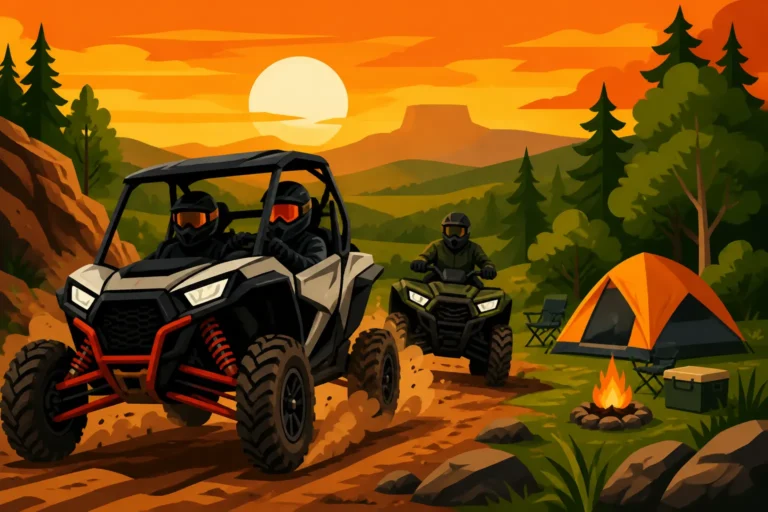
Primitive camping within fifty yards of a road can make an Oklahoma timber-land ride much easier: you can stay near your machine, avoid hauling a full camp setup far into the woods, and start riding early. The catch is that the distance rule is not blanket permission to camp anywhere. This guide explains where it applies, what to check, and how to plan a low-impact overnight stay.
What the fifty-yard camping rule means
The rule is tied to specific timber-land access
Oklahoma’s fifty-yard camping allowance is associated with certain timber-land riding and access areas, including the Honobia Creek and Three Rivers areas in southeastern Oklahoma. It is not a general rule that lets riders camp beside any trail, forest road, or private road in the state. Land ownership, the access program, seasonal rules, and the particular road all matter.
Think of the fifty yards as a limit on how far your primitive campsite may be from an eligible road, not as a right to camp anywhere within a fifty-yard strip. You still need to be on land open to public access, follow the area’s rules, and use a road where vehicle access is permitted. A road visible on a map may cross private land or lie outside the area covered by your access permit.
This distinction catches people out. A rider may arrive at a timber road, see a flat patch under the trees, and assume the distance rule settles the question. It does not. Before unloading, confirm that the parcel is part of the area you’re allowed to use and that camping is permitted there. For a broader overview of the property-access system, see Oklahoma Land Access Permits Explained.
Fifty yards is a distance, not a campsite guarantee
Fifty yards is 150 feet. That can sound generous until you are looking for a level, dry spot that is also clear of the road, drainage channels, standing water, brush, and other campers. In hilly timber country, a site that appears close on a screen may be farther away than it looks once you walk the slope.
Measure the distance from the road to the campsite rather than guessing from your truck or machine. A phone map can help you orient yourself, but a GPS position is not always precise beneath dense tree cover. If you are near the limit, choose a closer site rather than trying to argue that an uncertain measurement is just inside it.
The rule also does not necessarily mean you may drive off-road directly to your tent. The allowance concerns where primitive camping may take place; it does not automatically authorize cross-country vehicle travel. Keep your machine on roads or routes that are open to it, then carry your camping gear to the site if needed. Check the applicable Oklahoma Timber Land Access Rules before assuming a short shortcut is allowed.
Confirm access before you plan to sleep there
Check the area, season, and permit requirements
Timber-land access is not interchangeable with access to a state park, a private off-road park, or a national forest trail. Honobia Creek and Three Rivers are often discussed together, but each trip still calls for checking the rules that apply to the location and the dates you plan to visit. Timber-land riding can be subject to a defined seasonal window, and access may be limited to particular roads or activities.
Some timber-land access rules are connected to hunting season and may require a hunting license as well as the appropriate land access permit. A general riding plan should not assume that an ordinary trail pass covers timber-company land. Check the specific permit and eligibility requirements before driving out, especially if you are a nonresident or are visiting outside the usual riding window. The related guide Oklahoma Permits for Honobia Creek can help you identify the questions to resolve.
| Before camping | What to confirm | Why it matters |
|---|---|---|
| Location | The land is part of an area open to your use | A road or clearing may cross property with different access rules |
| Dates | Riding and camping are allowed during your visit | Seasonal access can change where and when you may travel |
| Permit | You have the required land access permit and any additional eligibility documents | A trail registration or park fee may not cover timber land |
| Road | The road is designated or otherwise open to your machine | A visible track is not automatically an authorized route |
| Campsite | The site is within the allowed distance and not in a prohibited area | The fifty-yard rule does not override other restrictions |
| Conditions | Weather, fire restrictions, and road conditions are suitable | Rain, heat, or dry conditions can change the safety of an overnight trip |
A quick way to organize the details is to check the rules first, then map your route, then choose a campsite. That order matters. If you pick a scenic clearing first and later discover it is outside the open area, you may have to move camp after dark or abandon the plan.
Use maps as a planning aid, not as proof of permission
An off-road mapping app such as onX Offroad can be useful for planning a route, saving a map, and keeping track of your position when cell service is unreliable. Use it alongside the land manager’s current information rather than treating a line on the screen as proof that a road is open or that camping is allowed. Property boundaries and access status can be difficult to interpret from a single map layer.
Before leaving home, download the map area you expect to need and make sure you know how to use it offline. Save a few likely stopping points, but keep them flexible. A road may be muddy, blocked, or unsuitable for a safe camp even if it appears passable on a screen. onX Offroad can help you understand the terrain, but it cannot replace checking access conditions and posted signs at the site.
Bring a paper map or write down key directions as a backup. Phones run low on power, can be damaged in a fall, and may not give you a reliable position under heavy tree cover. If you are riding with a group, agree on a meeting point before cell service drops. For more preparation advice, see Oklahoma Trail Conditions Before You Tow and Carrying a Paper Map Where GPS Fails.
Choose a safe, low-impact primitive campsite
Walk the site before unloading
A campsite that looks fine from the seat of a side-by-side may reveal problems when you step out. Walk the area and look for a level place away from the travel lane, soft shoulders, drainage paths, dead limbs, and standing dead trees. A sudden storm can turn a shallow depression into a runoff channel, and a branch that seems stable on a calm afternoon may be a hazard in strong wind.
Give other road users room to pass. A tent, cooking area, and parked machine should not block the road or force another rider into a ditch. Avoid setting up on a narrow bend, at a junction, beside a gate, or where dust and passing traffic will make the night unpleasant. If another group is already nearby, choose a site that leaves a respectful buffer instead of spreading camp across the road.
The same practical judgment applies to water and sanitation. Do not camp in a creek bed or where runoff drains toward a stream. Pack out food scraps, trash, and hygiene waste; do not assume that a primitive site has toilets, dumpsters, or potable water. Plan to carry what you need and leave the spot looking as though no one stayed there.
Keep fire and food plans conservative
Primitive camping does not mean every method of cooking or fire-making is acceptable. Dry conditions can turn a small flame into a serious wildfire risk, and fire restrictions may apply even when a campsite itself is permitted. Check for current restrictions before the trip, and do not light a campfire if the rules or conditions make it unsafe. A stove may be a better choice, but it too should be used only where permitted and on a stable, clear surface.
Bring enough water for drinking, cooking, and basic cleanup rather than counting on finding a reliable source. A timber road can be remote, and a hot day of riding can increase how quickly your group goes through supplies. Keep food secured, pack out every wrapper and container, and avoid leaving scraps that attract wildlife.
Be equally cautious with fuel, batteries, and equipment. Store fuel containers upright and away from cooking areas, and do not run a machine inside or directly beside a tent. If you are camping with children, agree on boundaries and keep them away from roads, water, and machinery. The guide What a First Aid Kit Needs on Timber Land is a useful companion when putting together your camp supplies.
Plan the ride and overnight stay as one trip
Build a simple arrival and departure plan
A good overnight ride starts before the trailer leaves the driveway. Confirm your destination, access requirements, route, and backup campsite. Tell someone who is not on the trip where you expect to be and when you plan to return. If the group is split between different vehicles, make sure everyone has the same meeting location and knows what to do if a machine breaks down.
Arrive with enough daylight to inspect the campsite and set up without rushing. In unfamiliar timber country, it is easy to spend longer than expected finding the right road or checking a boundary. Keep your first night’s plan modest: ride in, locate an allowed site, set up, and avoid exploring unmarked tracks after dark. For general planning ideas, see Oklahoma OHV Camping With Trail Access.
Before turning in, secure gear, check that machines are parked safely, and keep keys and essentials easy to find. In the morning, take a few minutes to look over the site before packing. Pick up small items such as zip ties, food wrappers, and bottle caps; they are easy to miss in leaves and gravel.
Have a fallback if the site is unsuitable
A legal site is not automatically a comfortable or safe one. Heavy rain may make the ground unstable, a road may be busier than expected, or the only open area may be exposed to wind. If the spot does not work, do not squeeze a tent into a questionable location just because you have already unloaded. Move to another site you have confirmed is open, or use an established campground if one is available and fits your plan.
The same flexibility helps when access conditions change. A gate, closure notice, damaged road, or posted restriction should prompt you to stop and reassess rather than continue because your map shows the route. A local timber road can look inviting while still being closed to the public. Leave the machine on an authorized route and avoid crossing gates or barriers.
If you are unsure whether a specific road or campsite qualifies, contact the relevant land manager or permit office before the trip. Ask directly whether primitive camping is allowed at that location, whether the fifty-yard distance applies there, and whether any seasonal or fire restrictions affect your dates. Keep the answer with your trip notes, but follow signs and instructions you encounter on site.
Camping within fifty yards can be a practical way to make a remote Oklahoma ride more manageable, especially when you want an early start and a simple overnight setup. The safest approach is to treat the distance as only one part of the decision: verify access, follow the road rules, choose a sound campsite, and leave the land clean. That preparation takes a little time at home and can prevent a frustrating late-night change of plans.
Disclaimer
This article is for general informational purposes only and does not constitute professional advice. Laws, prices and regulations vary by location and change over time. Consult a qualified professional for guidance on your specific situation.