Where to Pay at the Buttercup Campground Kiosk
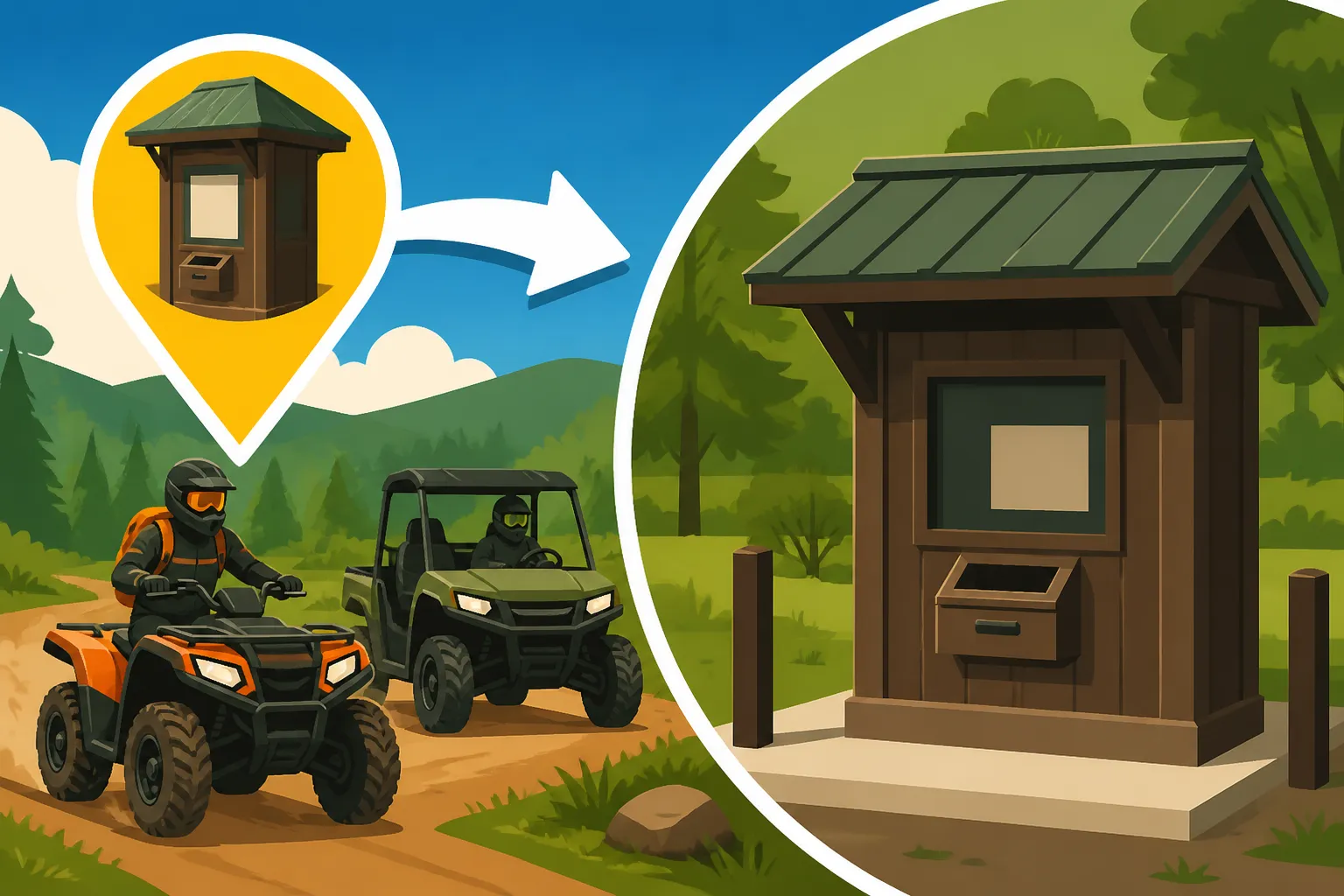
Arriving at Little Sahara with a trailer, a loaded machine, and eager riders can make a payment kiosk surprisingly easy to miss. At Buttercup Campground, look for the signed fee kiosk near the campground entrance or payment area, and take care of the required fees before settling in or heading toward the dunes. This guide explains how to find it, what to check, and what to do if payment is unclear.
Finding the Buttercup Campground kiosk
Where to look when you arrive
As you approach Buttercup Campground, watch for campground and payment signs before you turn farther into the camping area. The kiosk is intended to be found as you enter, not after you have driven out to the dunes or chosen a campsite. If you pass the entrance area without seeing it, slow down and look for posted directions rather than assuming payment happens somewhere on the riding area.
That distinction matters when you arrive with a trailer. It is tempting to pull into the first open space, unload the quad, and sort out fees later. But making the payment stop first can prevent a frustrating backtrack through a busy campground with machines and camping gear in tow.
If the first sign is hard to spot, ask a park employee or campground host where visitors should pay. Do not rely on a payment point you used on a previous visit; park layouts and procedures can change, and you may be entering through a different access point.
Keep navigation separate from fee instructions
A navigation app can help you reach Waynoka and orient yourself around the park, but it should not replace the posted directions for payment. I use onX Offroad to help plan an approach and keep track of nearby riding areas, then follow the signs on arrival for campground access and fees. A map pin may put you close to the right place without identifying the exact kiosk or telling you what payment steps to follow.
Download or prepare your route before leaving home if you expect patchy cell service. onX Offroad can be useful for general route planning, but do not count on a phone map to answer a question about a posted fee, a closed access point, or which kiosk serves your campground. The signs at the park and the instructions from staff should guide those decisions.
For a broader overview of the area, [Little Sahara State Park in Oklahoma] covers the riding destination, while [Oklahoma Campgrounds With Fee Kiosks] is useful if you are comparing places to stay and ride.
Paying before you set up camp
Read the kiosk instructions before starting
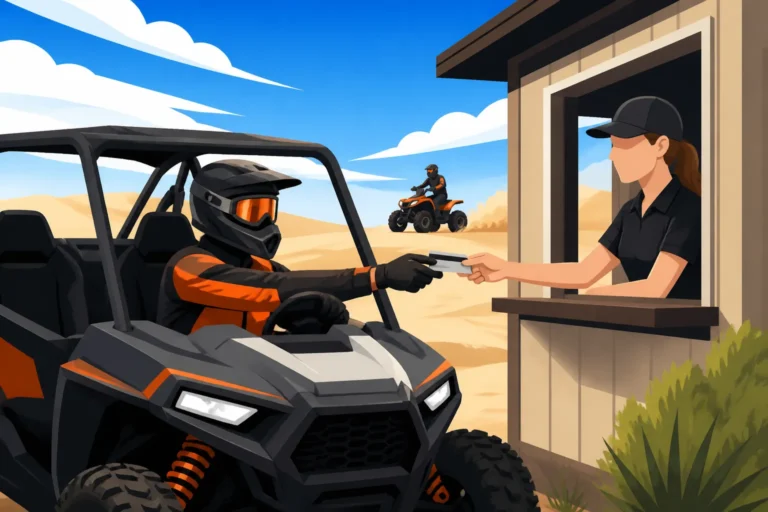
Once you reach the Buttercup payment area, pause long enough to read the entire sign or screen. Confirm that the kiosk applies to the fee you need to pay, and check whether it gives separate instructions for camping, riding, or other park access. A campground payment point may not cover every charge connected with a dune-riding visit.
Follow the prompts in order and keep any receipt, confirmation, or other proof the kiosk provides. If there is a place to display a receipt or permit, follow the posted directions for where it belongs. Keep a digital confirmation accessible on your phone as a backup, but do not assume a screenshot replaces a required physical pass or receipt.
The kiosk may present payment choices or instructions that are specific to the visit. Check what it accepts before you begin. If a payment method is not accepted, or the machine does not complete the transaction, look for a posted alternative rather than trying repeatedly and hoping a charge went through.
Know which fee you are paying
Visitors sometimes assume that paying for a campsite automatically covers riding access, or that paying a riding fee also settles campground charges. Those may be separate parts of a visit. Read the current posted information carefully, and make sure you understand which people, vehicles, and activities the transaction covers.
Before paying, check whether the instructions ask for information about the number of riders, passengers, machines, or nights of camping. If the group arrives in multiple vehicles, make sure each person understands whether they need to complete a separate step. It is easier to clarify this at the kiosk or with staff than after everyone has split up.
| Before you leave the kiosk | What to check |
|---|---|
| Payment is complete | Look for a receipt, confirmation, or clear completion message |
| The fee applies to your visit | Confirm whether it covers camping, riding access, or another specific item |
| You followed display instructions | Check whether a receipt or pass must be kept or displayed |
| The group is accounted for | Follow the posted directions for riders, passengers, and machines |
| You know what to do next | Check signs for the campground, dunes, and any additional payment point |
If you are unsure whether a separate riding charge applies, ask before unloading. The park’s posted instructions are more useful than assumptions based on another campground or another visit. For a related explanation of how dune fees work, see [How Long a Little Sahara Day Fee Lasts] and [Adding Up a Family's Day at Little Sahara].
If the kiosk is hard to use or you cannot find it
When the machine will not complete payment
First, check whether the kiosk displays an error, a payment rejection, or a message directing you to another location. Make a note of what it says. If it appears to have accepted payment but does not provide confirmation, avoid immediately paying again; a second attempt could create a duplicate transaction. Ask park staff or the campground host to help you determine whether the first attempt succeeded.
If the kiosk is out of service, do not treat that as permission to skip the fee. Look for a posted alternative payment method or ask staff where to go. Take a photo of a relevant error message or out-of-order notice if you need to explain what happened, but follow park instructions about payment and access.
Keep your receipt or transaction record until you leave. If a ranger, staff member, or campground host asks about payment, having the confirmation ready makes the conversation simpler than trying to remember which screen you saw or what time you used the kiosk.
When you arrive after dark or during a busy period
At night, signs and kiosk screens can be harder to read, especially when headlights are reflecting off them or several vehicles are queued nearby. Pull into a safe place, use enough light to read the instructions, and avoid blocking the entrance while you sort out the payment process. If there is a line, take the time you need but keep your group and trailer positioned safely.
Busy weekends bring a different kind of pressure: people may be unloading, meeting friends, or trying to get to the dunes quickly. Resist the urge to follow another visitor without checking whether they have already paid or are going to a different campground area. Buttercup and other park facilities may have distinct access and payment instructions.
Plan for navigation gaps before you arrive. onX Offroad may help you keep your route and riding-area notes together, but save the campground location and any useful directions ahead of time rather than depending on an active data connection at the entrance. You can also review [Little Sahara's Office Hours and Phone Number] before the trip so you have a way to seek help if you need to clarify a park question.
A smooth Buttercup arrival from parking to riding
Settle the group before you approach the kiosk
Before reaching the entrance, agree on who will handle payment and keep the relevant details ready. If multiple families are traveling together, make sure each driver knows whether they are included in one transaction or need to follow separate instructions. A quick conversation in the vehicle can save everyone from trying to coordinate while trailers are stopped near the entrance.
Keep the group together until you understand the payment and access instructions. One driver can read the posted information while another manages the vehicle, but do not send riders toward the dunes while the payment status is still uncertain. Once the required steps are complete, share the instructions with everyone so no one wanders into a restricted or wrong area.
If this is your first visit, it also helps to decide where the group will meet after payment. Campgrounds can be busy, and phones do not always have reliable service. A specific meeting point near your campsite or a recognizable campground landmark is more dependable than “we’ll find each other by the dunes.”
Check the riding-area rules after payment
Payment does not replace the need to check the riding rules and equipment requirements. Little Sahara’s sand environment calls for preparation, and signs may identify important safety requirements for machines and riders. Before heading out, review [Oklahoma's 10-Foot Whip Rule], [Oklahoma's Orange Flag Requirement], and [Oklahoma Night Lighting on Dunes]. The exact requirements that apply to your visit should be confirmed through current park information and posted rules.
Give your machine a quick check before riding: confirm that the flag and lighting are in place as required, make sure everyone has appropriate protective gear, and verify that the machine is suitable for the conditions. Sand can be demanding, particularly for riders who are new to dunes, so keep the first run conservative and agree on a meeting plan if anyone gets separated.
If your group has children, beginners, or riders on different types of machines, set expectations before leaving camp. Choose an easy place to regroup, avoid assuming every rider can follow the same pace, and make sure everyone knows the way back to Buttercup. A little preparation at the campsite is much less stressful than trying to solve a navigation problem after the group has spread out.
For broader planning, [Oklahoma Dune Riding Explained] offers useful context about riding in the sand, and [Oklahoma Trail Etiquette Locals Expect] can help your group be considerate around other visitors. The most reliable Buttercup routine is simple: find the signed kiosk, complete the required payment, keep proof handy, and confirm the riding rules before unloading or heading out.
Disclaimer
This article is for general informational purposes only and does not constitute professional advice. Laws, prices and regulations vary by location and change over time. Consult a qualified professional for guidance on your specific situation.