Oklahoma Riding Season Month by Month
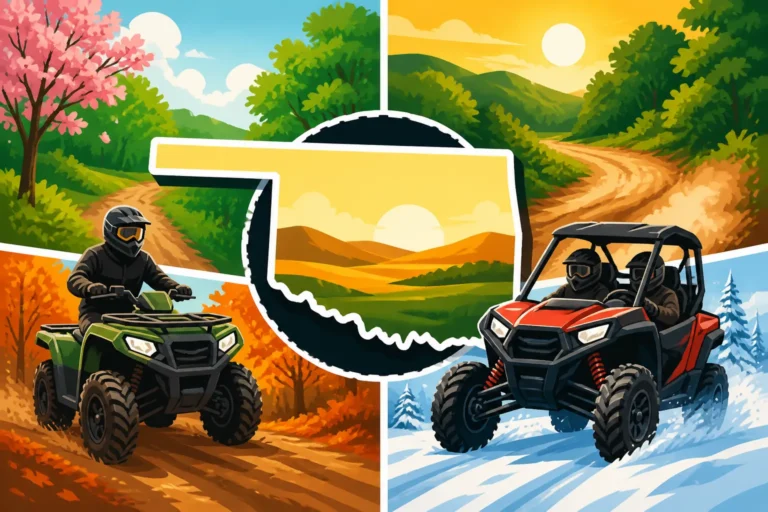
Oklahoma riding conditions can change from firm red dirt to slick clay after one storm, while summer heat can make a long trail day feel punishing. This month-by-month guide helps you choose when and where to ride, plan around seasonal weather and land access, and prepare your ATV or UTV for the conditions you’re likely to encounter.
| Month | Typical riding considerations | Planning focus |
|---|---|---|
| January | Cold, short days, possible ice or mud | Check access rules and daylight; dress for wind chill |
| February | Unpredictable temperatures and wet ground | Watch the forecast and avoid soft, saturated trails |
| March | Milder days, but frequent rain can affect trail surfaces | Keep plans flexible and check for closures |
| April | Greener landscapes and changeable spring weather | Pack rain protection and allow for muddy sections |
| May | Warm days, storms, and rising humidity | Check conditions before towing and carry water |
| June | Hotter afternoons and dry, dusty stretches | Ride earlier and plan frequent water breaks |
| July | Intense heat and high sun exposure | Keep rides shorter and avoid the hottest part of the day |
| August | Persistent heat, dust, and possible storms | Check forecasts, hydration, and fire restrictions |
| September | Cooler mornings begin, with lingering heat | Prepare for changing temperatures through the day |
| October | Often comfortable riding weather; hunting access may affect some land | Confirm land rules, routes, and seasonal access |
| November | Cooler days and shorter daylight | Pack warm layers and plan to finish before dark |
| December | Cold snaps, muddy periods, and early sunsets | Check access and trail conditions before leaving home |
Oklahoma ATV Riding From Winter Into Spring
January through March call for flexible plans
January and February can be rewarding months for riders who prefer cooler temperatures and quieter outings, but winter weather in Oklahoma is unpredictable. A sunny afternoon can still start with a sharp chill, and a recent freeze or thaw may leave shaded ground icy or soft. Dress in layers, carry gloves that still allow you to work controls, and keep a dry layer available for the ride home.
Before heading out, check the forecast for the riding area itself rather than relying only on conditions in your hometown. A route near Waynoka or Little Sahara can feel very different from a wooded trail in southeastern Oklahoma. The same goes for the drive to the trailhead: rain, ice, or strong winds can make towing less comfortable even when the riding area is accessible. For broader seasonal planning, see [Oklahoma Riding in Winter].
March often brings milder days, but it can also bring rain and rapidly changing conditions. Red clay and low-lying trail sections may become slick after a storm, and a route that was manageable on a dry weekend may be difficult after sustained rain. Check recent conditions and any posted notices before you leave; [Oklahoma Trail Closures After Rain] explains why a trail can be unavailable even when the weather looks fine at home.
A flexible plan helps prevent a frustrating trip. If your preferred wooded route is too wet, consider waiting rather than trying to push through and rut the trail. Keep a second destination in mind, but verify its access rules and conditions too. [Oklahoma Trail Conditions Before You Tow] is useful when you want to make that check before loading machines and driving across the state.
April and May bring longer days and spring uncertainty
April and May usually offer longer daylight and more comfortable temperatures than midsummer, making them appealing months for a full day out. Spring also brings quick weather shifts. Rain can roll through after you have already arrived, and warm afternoons can turn cool once clouds and wind move in. Pack a waterproof outer layer, a spare pair of gloves, and enough food and water to handle a longer-than-planned return.
In wooded areas such as Robbers Cave, the season can make the landscape especially inviting, but wet roots, clay, and shaded ground can stay slippery after rain. Ride at a pace that lets you respond to changing footing, and avoid assuming that every trail will have dried just because the sun is out. If the ground is soft, turning around can be the more responsible choice for both your machine and the trail.
Spring is also a good time to inspect equipment before busier summer outings. Check tires, brakes, lights, belts, cooling systems, and winch operation, then make sure your recovery gear is easy to reach. A basic maintenance check is less stressful at home than at a trailhead with a group waiting. For a month-by-month seasonal overview, see [Oklahoma Riding in Spring].
Oklahoma Riding in Summer Heat
June through August require heat planning
By June, afternoon heat can become the main factor shaping a ride. Start early when possible, take breaks in shade, and keep water within reach rather than buried under cargo. A hydration plan matters for everyone in the group, not only the person driving. Children, passengers, and riders wearing heavy protective gear may feel the heat sooner than expected.
July and August can be especially demanding. Dust may hang over dry routes, and a machine working hard at low speeds can build heat of its own. Keep an eye on temperature warnings or other changes in how the machine runs, and don’t ignore a rider who feels dizzy, nauseated, unusually tired, or confused. Those are reasons to stop, cool down, and reassess the day—not to push on to the next trail junction.
Plan the route and pace for the least heat-tolerant person in your group. A shorter ride with regular breaks can be more enjoyable than an ambitious loop that leaves everyone drained. Bring more water than you think you will need, and avoid counting on a convenience store or working water source being close by. [Oklahoma Riding in Summer Heat] offers more seasonal planning ideas.
Choose terrain and timing with care
Summer riding conditions vary by location. Sand near Waynoka and Little Sahara can be exposed to direct sun, while wooded routes in the southeast may offer more shade but can still be humid and physically demanding. Don’t confuse shade with cool conditions: humidity, protective clothing, and exertion all affect how quickly riders overheat.
Wind, dust, and thunderstorms can also change a day quickly. Check the forecast before leaving and again if you have service while out, but remember that cell reception can be limited in some areas. Download or save route information before departure, and tell someone where you plan to ride and when you expect to return.
A mapping tool such as onX Offroad can help you review routes and orient yourself before heading out, especially when you’re comparing trail options or organizing a group ride. Save the information you’ll need ahead of time rather than assuming you can load it at the trailhead. Use maps alongside posted signs and land rules; an app is a planning aid, not permission to ride on private or closed land.
Fall Riding and Seasonal Access
September and October bring a change in pace
September often brings cooler mornings while afternoons can still feel hot. Dress for both ends of the day: breathable riding gear can be comfortable at midday, but a light layer may be welcome at the trailhead or on the drive home. Keep drinking water even when the temperature feels less intense than it did in July.
October is often a comfortable time to ride, with cooler temperatures and more manageable daytime conditions. It’s also when land access deserves extra attention. Some public or timber-company properties have seasonal rules tied to hunting, and a route that was open during summer may have different requirements in fall. Check the specific property’s rules before you go, rather than relying on another rider’s memory of a past visit.
This is especially important in southeastern Oklahoma, where riders may consider areas around Honobia Creek or Three Rivers. Access can depend on the land manager, the season, permits, and the purpose of the visit. Read [Oklahoma Hunting Season and Trail Access] before planning a ride that overlaps with hunting season. Keep to designated routes, respect signs and gates, and be prepared to change destinations if access is restricted.
November brings shorter days and cooler trail time
November can still offer enjoyable rides, but shorter daylight hours affect how much ground you can cover safely. Set a turnaround time before you start and leave room for slow sections, stops, and minor repairs. If you wait until dusk to head back, visibility can drop quickly on rural roads and wooded trails.
Pack warm layers that you can add during breaks. Riders can cool down while standing still, particularly if they are damp from rain or perspiration. Check lights before leaving and carry a charged phone or other communication option, while remembering that coverage may be unreliable in remote areas.
Fall is also a useful time to review your route and access information carefully. A saved map can help you keep track of a planned route, but it does not replace a current check of closures or local rules. onX Offroad may be helpful for organizing routes ahead of time; compare what you see on the map with official signs and property-specific access information before riding.
December Riding and Choosing the Right Month
December is possible, but preparation matters
December riding can be pleasant on a clear, mild day and miserable when cold rain, wind, or early darkness enters the picture. Check conditions close to departure, then make a practical go-or-no-go decision. If the trail is muddy, the forecast is deteriorating, or your group is not equipped for the cold, rescheduling is often better than trying to salvage the trip.
Short daylight changes the shape of the outing. Choose a route that leaves a comfortable margin for getting back, and bring working lights even if you expect to finish before sunset. Store dry gloves and an extra warm layer where they can be reached without unpacking the entire machine. If you are towing, consider how cold or wet weather may affect the drive and your ability to load safely at the end of the day.
Winter is also a good time to explore where riding is permitted throughout the year. Access can vary by park, property, weather, and posted rules, so confirm the details for each destination rather than treating “year-round” as a guarantee that every route is open on every date. [Oklahoma Trails Open Year-Round] can help you narrow down options, and [Oklahoma Trail Map Downloads] can help with advance route planning.
Match the destination to the season and your group
A useful month-by-month plan starts with the riders, not just the weather. A family with young children may prefer a shorter route with easy places to stop. A group of experienced riders may be comfortable with a more demanding trail, but should still account for heat, rain, daylight, and access restrictions. Agree on the route, pace, meeting points, and turnaround time before engines start.
| If your priority is… | Consider planning around… | Before you go |
|---|---|---|
| Cooler daytime temperatures | Late fall, winter, or early spring | Check for cold rain, ice, and shorter daylight |
| Longer days | Spring and summer | Plan around storms and heat |
| Less exposure to direct sun | Wooded areas, when access allows | Check mud, local rules, and seasonal restrictions |
| A sand-focused ride | The Waynoka area and Little Sahara | Review park requirements and prepare for sun and sand |
| A hunting-season outing | Fall and early winter | Confirm permits, land access, and designated routes |
Keep a backup destination in mind, especially when rain or seasonal access can disrupt plans. A simple pre-trip check can include the forecast, trail status, property rules, permits, fuel, water, and machine condition. If riding with others, agree on how you’ll regroup if someone gets separated, and keep your route information available offline where possible. onX Offroad can support that preparation, but the responsibility to follow current signs and land-manager rules stays with each rider.
No month guarantees ideal riding. Oklahoma weather can shift quickly, and trail conditions can differ between regions on the same day. Choosing a suitable route, checking access, and adjusting your plan to the people and conditions you actually have will usually do more for a good ride than trying to stick to a calendar.
Disclaimer
This article is for general informational purposes only and does not constitute professional advice. Laws, prices and regulations vary by location and change over time. Consult a qualified professional for guidance on your specific situation.