Three Rivers WMA Riding in Oklahoma
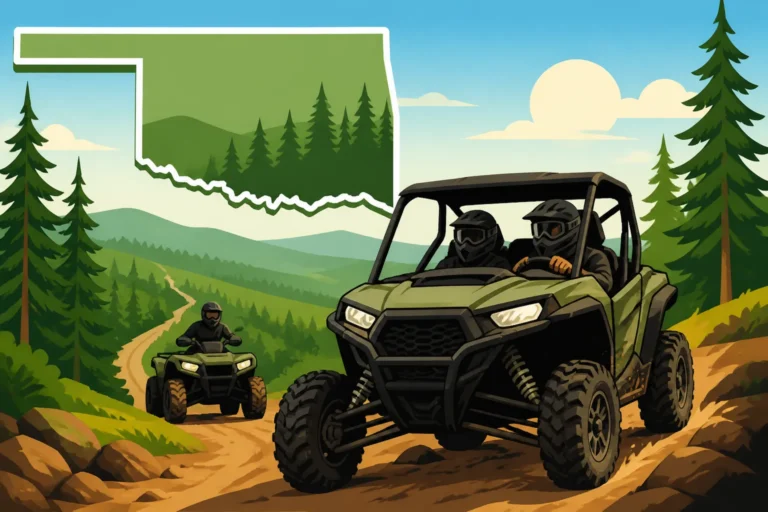
Three Rivers Wildlife Management Area can look like a huge, tempting stretch of southeast Oklahoma timberland on a map, but public access comes with seasonal limits and rules that are easy to miss. This guide explains when ATV and UTV riding may be allowed, what to check before hauling in, how to plan for remote roads, and why a map alone is not permission to ride.
What Three Rivers WMA Is and How Riding Access Works
A large timberland area with managed public access
Three Rivers WMA is a broad area of southeastern Oklahoma timberland associated with public access and wildlife management. Its scale is part of the appeal: riders may picture a full day exploring forest roads, checking out the landscape, or reaching hunting areas by machine. But “public access” does not mean every road, trail, or patch of ground is open to motorized recreation at all times.
The area is not the same as a developed OHV park with a single entrance, marked recreational loop system, and year-round riding schedule. Access can depend on the land agreement, the season, the reason for being there, and the rules in effect for the specific part of the property. A road visible on a map may be a working timber road or a route with restricted access, not a trail intended for casual riding.
Three Rivers is often described in relation to a large acreage figure, but the number of acres associated with a public access arrangement does not tell you how much land is open for ATV riding on the day you visit. Treat acreage as context, not a promise of unrestricted travel. The distinction between the broader timberland footprint and the routes you may legally use is important for anyone planning a ride.
Why the rules differ from a private OHV park
At a private riding area, the operator generally sets the riding hours, entry process, vehicle rules, and permitted routes. At a wildlife management area or timberland property, several sets of rules may apply at once. Wildlife management requirements, hunting access conditions, landowner restrictions, and general safety rules can all shape what riders may do.
That can feel frustrating when you have already loaded the machines and driven several hours. It is especially easy to assume that a route is open because you can see tracks or because a friend rode there in another season. Those clues are not reliable permission. Access can change with seasonal use, active management, weather, or property-specific restrictions.
If you want to understand how Three Rivers fits into the wider timberland access system, start with [Three Rivers Adds 185,000 Acres of Timber Land] and [Oklahoma Timber Land Access Rules]. Then confirm the applicable rules for your planned date and activity rather than relying on an old ride report, a social media post, or a navigation app alone.
Set the right expectation before you go
A Three Rivers ride is best approached as a carefully planned visit to a managed, remote landscape—not as a guaranteed open-trail weekend. You may need to choose a date around the permitted access window, carry the required permits, follow designated roads, and accept that a planned route may not be available.
That does not make the trip less worthwhile. It means the enjoyable part starts before you leave home. A little checking can prevent the familiar disappointment of arriving at a gate, finding a road closed, or discovering that the activity you planned does not meet the conditions for access.
| What you are checking | Why it matters | What to confirm before leaving |
|---|---|---|
| Access dates | Motorized access may be seasonal | The dates and conditions that apply to your planned visit |
| Purpose of access | Some timberland access may be tied to hunting | Whether your activity and any required license meet the rules |
| Route status | A visible road is not automatically open to public travel | Which designated roads or areas are authorized |
| Permit requirements | Permit rules can differ by residency and activity | Whether each rider needs a permit and how to obtain it |
| Current restrictions | Weather, management, or landowner decisions can affect access | Closures, check-in steps, and temporary restrictions |
When You Can Ride and What Seasonal Access Means
Riding access may be tied to hunting season
One of the most important planning details is that access on timberland areas such as Three Rivers may be limited to a specific part of the year and connected to deer-season access. That is different from a park that welcomes recreational riders whenever it is open. A trip outside the authorized period may not be allowed, even if the roads are dry and the area appears quiet.
Some riders hear “open during deer season” and assume that any recreational use is allowed throughout that window. Don’t make that leap. Access conditions may specify who can enter, what purpose is allowed, which roads may be used, and what documentation a rider must carry. Verify the rules for your exact dates and the specific property before you plan a route.
For background on the seasonal distinction, see [Oklahoma WMA Riding Only in Deer Season] and [Oklahoma Hunting Season and Trail Access]. They’re useful starting points, but the final check should be with the agency or land-access information responsible for the area. If a rule is unclear, ask directly instead of interpreting a broad phrase to mean what you hope it means.
Do not assume every rider has the same eligibility
Some timberland access conditions may be connected to hunting eligibility or a valid hunting license. That can affect a group in practical ways. For example, the person who organizes the trip may have the right permit and license, while a friend riding along may not meet the same conditions. A group reservation or a shared vehicle does not necessarily make everyone eligible.
Before inviting others, confirm the requirements for every person who will ride. Ask whether each rider needs a separate land-access permit, hunting license, check-in, or other document. Do not assume a passenger is exempt simply because they are not driving, either; the rules may define access by person rather than by machine.
A nonresident visitor should be especially careful about checking permit rules ahead of time. Residency can affect access requirements, and a license or permit from another state should never be assumed to substitute for Oklahoma requirements. For related details, use [Oklahoma Permits for Three Rivers] and [Oklahoma WMA Nonresident Check-In] as reference points, then confirm the requirements that apply to your particular visit.
Seasonal access is not a guarantee that every road is open
Even when your planned ride falls within an allowed season, the route still matters. A property can have designated roads for access while excluding other roads, cut-throughs, timber operations, or sensitive areas. The difference may not be obvious from the seat of a UTV, especially when a forest road branches into a narrower track.
Stay on the routes authorized for motorized travel. Do not take a shortcut around a locked gate, ride along a road simply because tire tracks are visible, or follow an unmarked path into the woods. A route may be used by land managers, hunters, or work crews without being open to general riding.
It is sensible to build flexibility into the day. If your preferred route is closed, turn around and use only an alternate route you have already confirmed. A backup plan is more useful than trying to improvise in a remote area where signage, phone coverage, and help may be limited.
Permits, Licenses, and Check-In Before Your Ride
Confirm every required permit before you haul
Permit requirements are easy to underestimate because riders may be familiar with a state park pass, private-park fee, or ordinary vehicle registration and assume that one of those covers the visit. They are not interchangeable. A machine’s registration does not automatically grant access to timberland, and a state recreation permit may not cover every type of public land use.
Check the permit rules for the specific area and the kind of visit you are planning. Confirm whether the requirement applies to each rider, whether there is a resident and nonresident distinction, what proof you need to carry, and whether permits must be purchased before arrival. If you are traveling with several machines, make a rider-by-rider checklist rather than assuming one person’s permit covers the whole group.
Keep the permit information accessible. A photo or saved confirmation can be handy, but follow any rule about the accepted form of proof. Do not depend on being able to open a website at the gate or on a phone signal deep in the timber. [Oklahoma Land Access Permits Explained] provides broader context, while [Oklahoma Permits for Three Rivers] is the more specific topic to review for this area.
Treat check-in as part of the trip plan
Some public access areas have check-in procedures, and a rider should find out whether one applies before arriving. Check-in may involve recording who is entering, confirming the purpose of a visit, or following a process specific to the property. A group leader should not assume that a quick stop by one person covers everyone unless the instructions clearly say so.
This is a small task that can save a lot of confusion. Imagine arriving with a family group, unloading four machines, and then realizing the riders needed to complete separate steps before entering. It is far easier to sort out those details at home, while everyone still has reliable internet and time to read the instructions.
Keep any confirmation, permit, and identification together in a place that is easy to reach. Make sure a second adult in the group knows where the documents are. If the access instructions say to check in at a particular location or use a specific method, follow that process rather than relying on a previous visit’s routine.
Bring the paperwork that matches your activity
Different documents prove different things. A registration document may show that the machine is registered. A permit may show eligibility for access. A hunting license may be required for certain kinds of seasonal entry. One document should not be treated as a replacement for another unless the official instructions explicitly say it is.
Before departure, write down what each rider must carry and check each item as it goes into the truck or gear bag. This is particularly useful when riders are arriving in separate vehicles or meeting at a trailhead. A rider who joins later may need to complete the same steps as the rest of the group.
If you’re also planning a trip to another riding location, remember that requirements can change from one place to the next. For example, access rules at a private OHV park may be very different from those at a wildlife management area. Keep your Three Rivers documents and plans specific to Three Rivers rather than assuming a permit or park pass from elsewhere settles the matter.
Routes, Speed, and Riding Responsibly on Timber Roads
Use designated roads rather than exploring freely
The freedom to explore is one of the biggest attractions of riding a UTV, but it can be the wrong approach on managed timberland. If access is limited to designated roads, stay on those roads. Do not assume that a narrow route is open because it looks well used, and do not ride through a gate or around a barrier to continue a route.
Roads can serve multiple purposes. A route may be used by hunters, timber crews, property managers, or emergency responders. A road that appears quiet at one moment can still be active, and a cut-through may enter private or restricted land without an obvious boundary. Respecting the road network protects both access and the people who depend on it.
If a route is blocked, turn around rather than creating a new one. Riding around an obstruction can damage land, disturb wildlife, or put you on property where you do not have permission. It can also put future public access at risk if repeated misuse leads to tighter restrictions.
Keep speed under control on shared roads
Speed limits and other operating rules may apply to timber roads and WMA access areas. Check the posted rules and current requirements before riding. A listed limit, such as the speed information discussed in [Oklahoma WMA Speed Limits], should be treated as a maximum, not a target. A lower speed may be appropriate when visibility is poor, the road is uneven, or other people are nearby.
Timber roads can change quickly. Loose gravel, washboard sections, mud, standing water, sharp turns, and dust can all affect handling. A UTV that feels stable on a familiar paved road can slide or bounce on a rough forest road. Keep enough space between machines that the rider behind you can see and react without driving through a cloud of dust.
Slow down near blind corners, gates, bridges, work areas, and places where people may be walking or hunting. If you encounter another vehicle, use a safe pull-off where possible and give it room. Being courteous is not just good manners; it reduces the chance of a collision on a narrow road with limited sightlines.
Keep wildlife and land management in mind
The area is managed for wildlife as well as public access. Noise, speed, and off-route travel can affect other users and the landscape. Avoid unnecessary revving, keep music low or off, and do not approach, chase, or crowd wildlife. A sighting can be a memorable part of the trip without becoming a reason to leave the road or disturb an animal.
Stay away from active work areas and equipment. Timber operations may involve trucks, machinery, or changing road conditions. If a road is signed closed or a crew is working nearby, do not try to slip through. Give workers plenty of space and follow any temporary instructions.
Leave gates as you find them unless signs or instructions say otherwise. If a gate is closed, do not open it and leave it standing. If you are unsure whether a road or entrance is available, stop and confirm instead of treating the absence of a person at the entrance as permission.
Planning a Safe and Comfortable Day at Three Rivers
Prepare for patchy service and remote conditions
Southeastern Oklahoma timberland can feel remote once you leave a main road. Phone service may be unreliable, and a navigation app that works perfectly in town may struggle when you enter a forested area. Before leaving, tell someone who is not on the trip where you plan to go and when you expect to return.
Download or save useful map information before driving into an area with weak service. onX Offroad can serve as a secondary navigation aid for looking at your position and planning orientation, but it should not be your source of permission to ride. Confirm road access through the relevant official information, and use signs and barriers on the ground as controlling instructions. App layers can help you understand the landscape, but a mapped road is not automatically an authorized route.
Carry a paper map or another offline reference as a backup. Keep the group together at junctions and agree on a turnaround point if riders become separated. For practical preparation, review [Cell Dead Zones in Southeast Oklahoma] and [Carrying a Paper Map Where GPS Fails] before the trip.
Check the weather and road conditions
Rain can make unpaved timber roads slick, rutted, or difficult to pass. A road that is manageable in dry conditions may become greasy after a storm, while low areas can hold water long after the rain stops. Check the forecast for the area rather than relying only on conditions at home or at the highway exit.
Do not let the truck and trailer dictate the ride. If access roads are soft, narrow, or damaged, a heavy tow rig may struggle even when a UTV could manage the route. Choose safe staging and parking locations only where permitted, and do not block gates, working roads, or emergency access.
A practical rule is to reassess before unloading. Look at the entrance, road surface, and weather. If conditions are worse than expected, postponing the ride is usually less costly than getting a trailer stuck or damaging a road. For more planning help, see [Oklahoma Trail Conditions Before You Tow].
Pack for a full day, not the best-case version
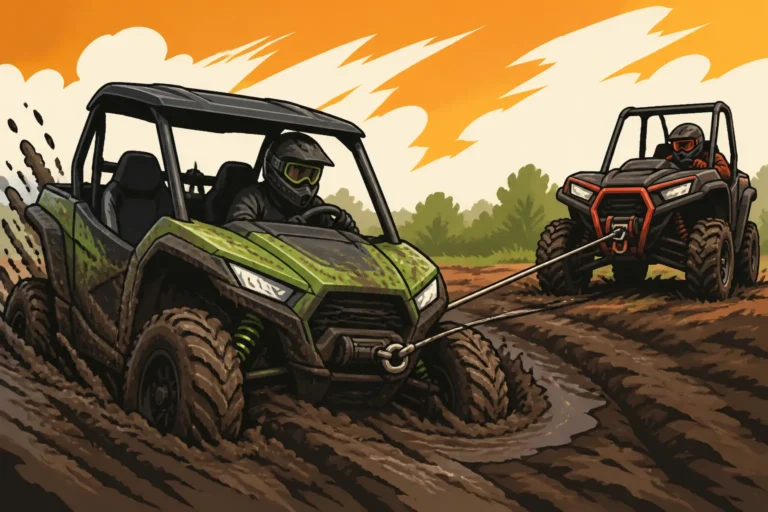
Bring water, basic first aid supplies, food, a charged phone, a power bank, and tools suitable for your machine. Add a tire repair kit and recovery gear if you know how to use it safely. A winch is useful only when the operator understands safe attachment points and keeps people clear of the line.
Dress for changing conditions. A warm, calm morning can turn into a hot afternoon, while shaded timber roads may feel cooler than exposed areas. Eye protection matters on dusty roads, and gloves help with both comfort and control. Pack a layer that can handle a change in weather rather than assuming the forecast will be exact.
Before riding, check fuel, tires, lights, brakes, and steering. Make sure everyone knows the group’s hand signals or communication plan. A quick safety check can feel tedious when the machines are ready to go, but it is far less frustrating than discovering a problem after you have left the staging area.
Riding With Hunters, Families, and Other Visitors
Share the area with hunters
Seasonal riding access can overlap with hunting activity. That means riders should be especially visible, predictable, and respectful. Wear visible clothing where appropriate, keep to authorized roads, and avoid sudden turns into brush or off-road areas. Do not assume a road is empty because you have not seen another vehicle.
Make noise in a controlled, ordinary way rather than trying to be silent or startling people. At the same time, avoid unnecessary revving and fast approaches. If you see a person, parked vehicle, or hunting activity, slow down and give them space. Do not stop close to someone’s position or drive toward wildlife that may be part of a hunt.
If your group plans to hunt and ride, confirm how the rules apply to the combination of activities. Keep any required licenses and permits with the person they belong to, and make sure every rider understands the boundaries of the day’s plan. Rules for recovering a harvested animal may also be specific; consult [Oklahoma WMA Deer Retrieval Rules] rather than assuming a machine can travel anywhere for retrieval.
Make a family ride work for every rider
A big group with different ages and experience levels needs a slower, clearer plan. Choose a route that fits the least experienced rider, set a conservative pace, and agree on where to regroup. Keep children within the supervision required for their age and machine, and make sure they understand not to ride ahead or leave a marked route.
Before leaving the staging area, review what riders should do if the group gets separated. A simple plan might be to stop at the next safe junction and wait, rather than turning around alone. Make sure younger riders know how to reach the adult leading the group and what to do if a machine develops a problem.
Carry appropriately sized safety equipment and check that each vehicle is suitable for its rider. A youth machine should not be treated as a smaller version of an adult machine with no need for instruction. If someone is new to riding, a quiet practice area and a short familiar route are better than a long, remote trip with a large group.
Be courteous to landowners and other visitors
Public access depends on people following the conditions that make access possible. Leave no trash, avoid damaging gates or road edges, and do not create new tracks. If you find litter or a damaged sign, report it through the appropriate channel rather than assuming it is yours to fix.
Give other users space at road intersections and pull-offs. Let work trucks pass safely, keep dust down around people and buildings, and avoid blocking entrances while unloading. If another visitor asks whether a road is open and you are unsure, don’t guess. Direct them to the official access information.
The best way to protect future riding opportunities is to leave the area as if you hope to return. That means staying within the rules even when a shortcut seems harmless. A few minutes saved by riding off-route are not worth risking access for everyone else.
A Step-by-Step Checklist Before You Leave Home
Confirm access, eligibility, and the route
Start by selecting your dates, then confirm that motorized access is allowed during that period. Check whether the rules tie access to a particular season, hunting activity, license, or permit. If any part of the requirement is unclear, get a direct answer before making the drive.
Next, identify the roads or areas you are allowed to use. Do not plan a route based only on the roads visible in a navigation app. Confirm whether access is limited to designated routes, and make sure your planned loop does not depend on an unverified road, a locked gate, or a route that crosses into a restricted area.
Finally, confirm the access process. Write down any check-in location or procedure, permit requirements, and contact information you may need. If the plan changes because of weather or a closure, be prepared to choose a different authorized area or postpone the visit.
Prepare the people and machines
Make a list of riders and check each person’s eligibility and documents individually. Confirm that every machine is in good mechanical condition and appropriate for the terrain and riders. Carry the registration and any other documentation required for the machine or activity, but remember that registration is not a substitute for land access permission.
Set expectations with the group before the day begins. Tell everyone that the ride will stay on authorized roads and that a closed or unclear route is a turnaround point. Agree on the pace, regroup locations, and what to do if someone has a mechanical issue or loses phone service.
Pack food, water, first aid, basic tools, recovery equipment, and offline navigation. onX Offroad may be useful as one layer of route awareness, but carry a backup and check the official access rules separately. Share the trip plan with someone who is not riding with you.
Recheck conditions on arrival
Before unloading, look for closures, warning signs, gates, and changes in road conditions. Do not assume a sign is outdated just because your plan was made earlier. If you cannot confirm that an entrance or road is open, stop and seek clarification rather than proceeding to see what happens.
Check in as instructed and keep required documents easy to access. Once you begin riding, stay on designated roads, control your speed, and remain alert for hunters, work vehicles, and other visitors. Be ready to turn around if conditions change.
At the end of the ride, account for every rider and machine before leaving. Pick up your trash, close gates as directed, and report any serious hazard or access problem to the appropriate authority. Those final steps are part of responsible riding—not an optional chore after the fun is over.
Disclaimer
This article is for general informational purposes only and does not constitute professional advice. Laws, prices and regulations vary by location and change over time. Consult a qualified professional for guidance on your specific situation.