Filing an Insurance Claim After a UTV Collision
A UTV collision is nobody's idea of a good time. One minute you're enjoying the open trail or running errands with your side-by-side, and the next, you're looking at damage, dealing with the aftermath, and wondering how on earth you're going to pay for it all. This guide is here to walk you through the often-confusing process of filing an insurance claim after a UTV collision in Oklahoma, helping you understand your options and what steps to take.
Understanding Your UTV Insurance Coverage in Oklahoma
Before you even think about filing a claim, you really need to understand what your UTV insurance policy actually covers. Many riders just sign up for whatever seems standard, but when a collision happens, those details become incredibly important. Knowing your policy limits, deductibles, and exclusions can save you a lot of headaches – and potentially, a lot of money – down the road. It's not just about having insurance; it's about having the right insurance for how you ride.
Different Types of Coverage and What They Mean
UTV insurance isn't a one-size-fits-all product. Just like car insurance, there are several different types of coverage, each designed to protect you in specific situations. Understanding these can help you anticipate what your policy will cover after a collision.
First up is Liability Coverage. This is crucial, especially if your UTV is street legal or if you ever ride on public lands where you might encounter others. If you're deemed at fault for an accident that causes damage to someone else's property (like their vehicle, fence, or even another UTV) or causes bodily injury to another person, liability coverage helps pay for those expenses. For those with a [Oklahoma Street UTV Plate Costs] and driving on the road, liability insurance is typically a requirement. Even if you only ride trails, having liability is a smart move, because accidents with other riders or damage to private property (even accidentally) can lead to serious financial repercussions.
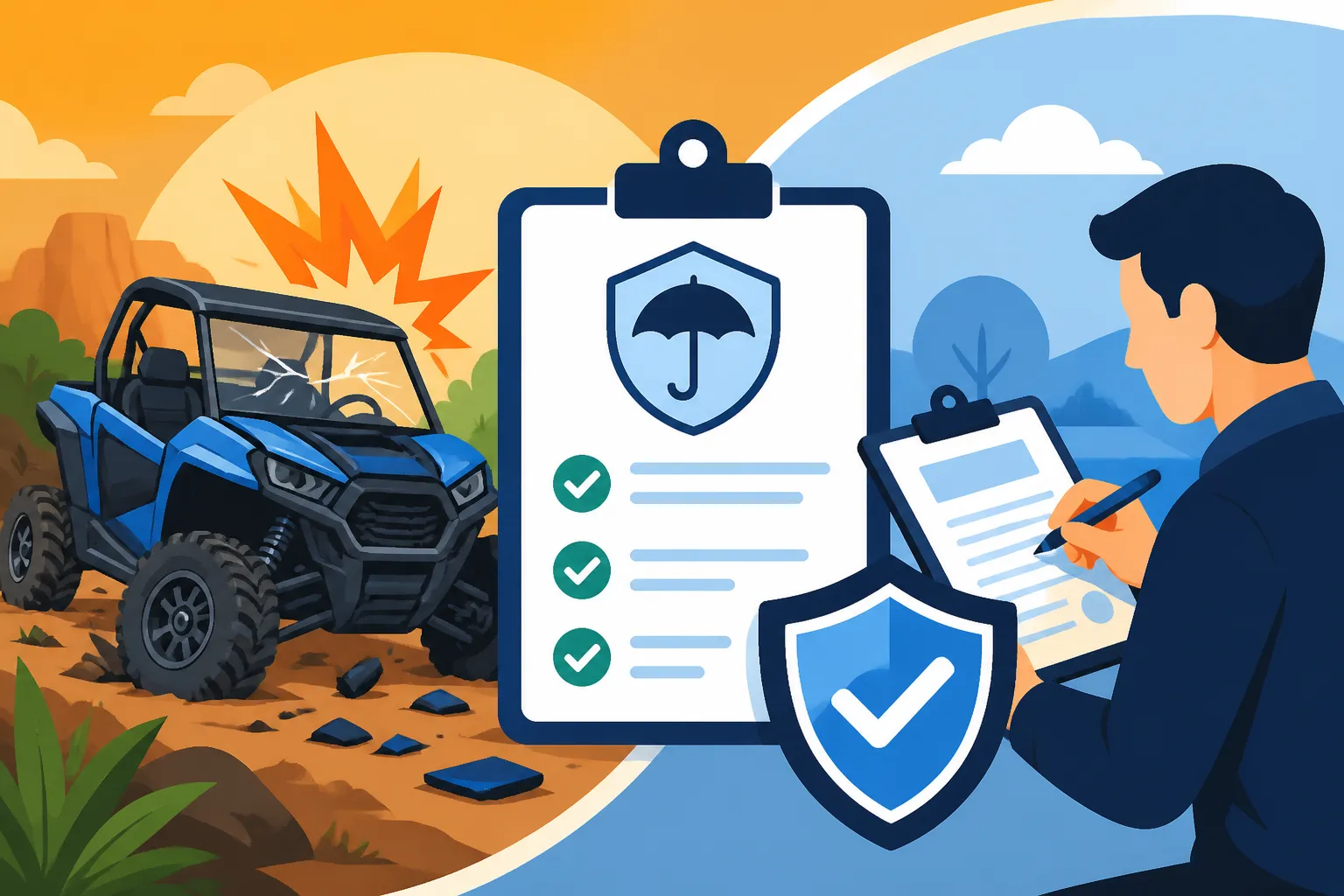
Then there's Collision Coverage. This is what pays for the damage to your UTV if it collides with another object – whether that's another vehicle, a tree, a rock, or even if it rolls over. This is the coverage that will typically kick in for the UTV itself after most accidents. Without collision coverage, any repairs to your own machine would come straight out of your pocket, which can be a huge hit to the wallet, especially for more extensive damage.
Comprehensive Coverage is another big one, and it covers non-collision incidents. Think theft, vandalism, fire, natural disasters like hailstorms or floods, or even if your UTV gets damaged by hitting an animal. While it might not seem directly related to a collision, having comprehensive coverage ensures you're protected from a wider range of unexpected events that could damage your UTV, not just crashes. This is particularly valuable if you live in an area prone to severe weather or if you park your UTV where it might be exposed to the elements or potential theft, which can be a real concern for high-value machines equipped with SuperATV aftermarket accessories. We even have a separate article about [Oklahoma Comprehensive Coverage for a Quad].
Medical Payments Coverage (sometimes called Personal Injury Protection or PIP in other states, though "MedPay" is more common for ATVs/UTVs in Oklahoma) can help pay for medical expenses for you and your passengers, regardless of who was at fault for the accident. While it typically has lower limits than full health insurance, it can be a lifesaver for immediate costs like ambulance rides or emergency room visits right after an accident, often covering deductibles or co-pays that your health insurance might require.
Finally, Uninsured/Underinsured Motorist Coverage is protection for you and your UTV if you're involved in a collision with another party who either doesn't have insurance at all or doesn't have enough insurance to cover the damages they caused. This can be incredibly frustrating – you're minding your own business, someone else causes an accident, and they don't have the means to pay. This coverage steps in to cover your UTV's damage and your medical bills, preventing you from being left in a financial lurch.
Checking Your Policy Before a Claim
It's tempting to shove your insurance documents in a drawer and forget about them until you need them, but taking a few minutes before an incident to review your policy can save you major headaches. When you're standing there after a collision, adrenaline pumping, trying to remember what your policy covers is not the time to be sifting through fine print.
First, locate your declarations page. This is usually the summary at the beginning of your policy that lists all your coverages, limits, and your deductible amounts. Your deductible is the amount of money you're responsible for paying out-of-pocket before your insurance company starts to pay for a covered loss. For example, if you have a $500 deductible and your UTV has $3,000 worth of damage, you'd pay the first $500, and your insurer would pay the remaining $2,500. Knowing this number upfront helps you prepare for the immediate financial impact of a claim. You can also explore [Oklahoma Insurance Deductible Choices] when you first get your policy.
Next, look for any exclusions. These are specific situations or types of damage that your policy won't cover. Some common exclusions for UTVs might include damage from racing, using the UTV for commercial purposes (unless specifically endorsed), or damage incurred while operating the machine illegally (like a DUI, which we discuss in [Oklahoma DUI Law and Off-Road Machines]). Knowing these can prevent an unpleasant surprise if your claim is denied due to an excluded activity.
Also, consider any modifications or accessories you've added to your UTV. Did you upgrade your suspension with a lift kit, add a new set of beadlock wheels, or install a top-tier light bar from SuperATV? Standard policies might only cover the factory value of your UTV. If you've invested significantly in aftermarket parts, you may need a separate endorsement or specialized coverage to ensure these additions are protected. It's a question worth asking your insurance agent: "Are my accessories covered?" Check out [Insuring the Winch and Accessories You Added Later] for more details.
Immediate Steps After a UTV Collision in Oklahoma
When a UTV collision happens, especially if it's unexpected, it's easy to feel overwhelmed. Your mind might race, and it can be hard to think clearly. That's why having a mental checklist of immediate steps can be incredibly helpful. Prioritizing safety and thorough documentation right from the start can make a huge difference in the outcome of your insurance claim.
Safety First: Securing the Scene and Checking for Injuries
Your first and most important priority after any collision, whether it's on a backcountry trail or a quiet county road, is the safety of everyone involved. Take a deep breath and assess the situation.
- Check for Injuries: Immediately check yourself, your passengers, and anyone else involved in the collision for injuries. Even if someone says they're fine, encourage them to seek medical attention if there's any doubt. Adrenaline can mask pain, and some injuries might not be immediately apparent. If anyone is injured, call 911 immediately to get emergency medical services on the way.
- Secure the Scene: If your UTV is still operational and it's safe to do so, move it off the main line of travel to prevent further accidents. If you're on a public road or trail, turn on your hazard lights. If you have reflective triangles or flares, set them up to warn oncoming traffic. On a trail, make sure the area is visible to other riders.
- Contact Law Enforcement: If there are injuries, significant property damage, or if the collision involves another vehicle (especially a street-legal one), it's highly advisable to call the local police, sheriff, or game warden, depending on where the incident occurred. A police report provides an official, unbiased account of the accident, which can be invaluable for your insurance claim. Even for trail-only incidents with substantial damage, a report can clarify details. We have a dedicated guide on [Oklahoma Accident Reporting for an ATV Crash].
Remember, your safety and the safety of others always come first. Everything else can wait.
Documenting the Incident Thoroughly
Once safety is addressed, the next critical step is to gather as much information as possible. The more detail you can provide to your insurance company, the smoother your claim process is likely to be. Think of yourself as an investigative reporter at the scene.
- Take Photos and Videos: Use your smartphone to take pictures and videos of everything.
- Damage: Get close-up shots of all damage to your UTV, any other vehicles involved, and any property. Take wide shots that show the overall scene.
- Scene: Photograph the collision site itself, including skid marks, debris, relevant signage, and road or trail conditions. Show the position of vehicles or machines relative to each other.
- Injuries: If there are visible injuries, document those (with consent, if possible).
- Other Factors: Capture anything else that might be relevant, like weather conditions, lighting, or obstructions.
- Exchange Information (if another party is involved):
- Get the full name, address, phone number, and email of the other driver(s) and any passengers.
- Collect their insurance company name and policy number.
- Note the make, model, year, and license plate number (if applicable) of their vehicle/UTV.
- If you're on a trail and the other machine has a distinct [Oklahoma Decals on the Front of a Machine], snap a picture of that too.
- Identify Witnesses: If anyone saw the collision happen, get their names and contact information. Their statements can corroborate your account.
- Record Details: Write down everything you remember about the collision:
- Date and Time: Exact time of the incident.
- Location: Specific address, cross streets, mile marker, or distinctive landmarks on a trail.
- Description: A detailed, factual account of what happened before, during, and after the collision. Avoid assigning blame at this stage; just state the facts.
- Police Report Number: If law enforcement responded, get the report number and the officer's name and badge number.
This meticulous documentation will be your best friend when you formally Filing an Insurance Claim After a UTV Collision with your provider.
Navigating the Insurance Claim Process in Oklahoma
You've secured the scene, you've gathered your information, and now comes the part where you officially interact with the insurance companies. This can feel like navigating a maze, but understanding the steps and what to expect can empower you to advocate for yourself and your UTV effectively.
Notifying Your Insurance Company
This is the official start of your claim. Don't delay. Most policies have specific timelines for reporting an accident, and waiting too long can complicate or even jeopardize your claim.
- Initial Contact: As soon as you are safely able, contact your insurance company. Many companies have a dedicated claims hotline available 24/7 or offer online reporting through their website or a mobile app. Provide them with the basic details: your policy number, the date and time of the accident, where it happened, and a brief description of what occurred.
- Provide Information: Be prepared to share all the documentation you collected at the scene: photos, witness contact information, other party's details (if applicable), and any police report numbers. Be factual and consistent with your account. Don't speculate or admit fault. Stick to the facts you know.
- The Adjuster's Role: Your insurance company will assign a claims adjuster to your case. This person is responsible for investigating the accident, determining fault (if necessary), assessing damages, and ultimately, negotiating a settlement. They may want to speak with you, the other party, and any witnesses. They might also visit the scene or inspect your damaged UTV. Be cooperative but remember they represent the insurance company's interests. This process is very similar to what you'd go through if you were getting [Oklahoma Insurance for Trail Riding] or a standard vehicle.
You might be wondering whether to file a claim with your own insurance company (first-party claim) or the other party's insurer (third-party claim). If you have collision coverage, filing with your own insurer often means your UTV can get repaired faster, as they will work on your behalf. If the other party is clearly at fault, your insurer will then pursue reimbursement from their company (this is called subrogation). If you don't have collision coverage, or if the other party is clearly at fault and you want to avoid paying your deductible, you might file directly with their insurance company. However, be prepared for a potentially longer process, as their adjuster's primary loyalty is to their policyholder, not to you.
Working with Adjusters and Repair Shops
Once the initial notification is done, you'll move into the damage assessment and repair phase. This is where the rubber meets the road, quite literally.
- Damage Assessment: The adjuster will evaluate the damage to your UTV. They might ask you to take it to a specific shop for an estimate, or they might send their own appraiser. It's perfectly within your rights to get your own repair estimates from a reputable UTV repair shop you trust. If you've invested in specialized components from a brand like SuperATV, make sure the repair estimates accurately reflect the cost of replacing those specific parts with equivalent quality.
- Repair vs. Total Loss: After assessing the damage, the adjuster will determine if your UTV is repairable or if it's considered a "total loss." A total loss typically occurs when the cost of repairs exceeds a certain percentage (often 70-80%) of the UTV's actual cash value (ACV) before the collision. If it's a total loss, the insurance company will pay you the ACV of your UTV, minus your deductible. This can be a tough pill to swallow, especially if your UTV held sentimental value or if it was heavily customized.
- Choosing a Repair Shop: If your UTV is repairable, your insurance company might recommend certain shops, but ultimately, the choice of where to get your UTV repaired is usually yours. You can choose your dealership's service department or an independent shop that specializes in UTVs. Make sure the shop uses quality parts and has experience with your specific UTV make and model.
- Negotiation and Settlement: Once the repair estimates are in or the total loss value is determined, the adjuster will present you with a settlement offer. Review this offer carefully. Does it cover all the damage? Does it reflect the true value of your UTV if it's a total loss? Don't be afraid to ask questions or negotiate if you feel the offer is too low. If you have documentation supporting a higher value (e.g., receipts for recent upgrades or maintenance), present it. If you're still not satisfied, you can appeal the decision or seek further advice.
Here's a quick comparison of common UTV damage scenarios and how insurance typically handles them:
| Scenario | Relevant Coverage Type(s) | What's Covered | Your Out-of-Pocket Cost |
|---|---|---|---|
| Rollover (no other vehicle) | Collision | Damage to your UTV, some medical expenses (if MedPay) | Deductible |
| Hit by another UTV (other driver at fault) | Other Party's Liability, your Uninsured/Underinsured | Damage to your UTV, your medical expenses | Potentially $0 |
| Hit another UTV (you are at fault) | Your Liability, your Collision, your MedPay | Damage to other UTV, their medical, damage to your UTV, your medical | Your Collision Deductible |
| UTV stolen from barn | Comprehensive | Actual Cash Value (ACV) of UTV | Deductible |
| Vandalism to UTV | Comprehensive | Repair costs for vandalism | Deductible |
| Tree falls on parked UTV | Comprehensive | Repair costs for tree damage | Deductible |
Common Pitfalls and How to Avoid Them
Filing an insurance claim can be a straightforward process, but it's also fraught with potential missteps that can delay your payout or even lead to a denial. Knowing these common pitfalls beforehand can help you navigate the process more smoothly and ensure you get the coverage you're entitled to.
What Can Delay Your Claim or Lead to Denial
There are several reasons why an insurance claim might get bogged down or, worse, completely denied. Being aware of these can help you avoid them.
- Lack of Documentation: This is perhaps the biggest culprit. If you don't have clear photos, witness statements, or a police report, it becomes your word against whatever the adjuster can piece together. Without solid evidence, proving what happened and the extent of the damage becomes significantly harder. This is why the steps we discussed earlier about [Oklahoma Accident Reporting for an ATV Crash] are so vital.
- Late Reporting: Most insurance policies require you to report an accident promptly – often within a few days or weeks. Delaying your report can raise red flags for the insurer, as they might wonder why you waited, potentially leading them to question the validity of your claim or the circumstances of the accident. It also makes it harder for them to investigate effectively, as evidence can degrade over time.
- Policy Exclusions: As mentioned before, certain situations might be explicitly excluded from your coverage. If you were, for example, using your UTV in a professional race and your policy excludes racing incidents, your claim will likely be denied. Similarly, if you were riding your UTV while intoxicated, not only are you facing serious legal consequences under [Oklahoma DUI Law and Off-Road Machines], but your insurance claim for damages might also be denied due to illegal operation. Always review your policy for these exclusions.
- Unreported Modifications: Many riders love to customize their UTVs with performance parts, lift kits, or specialized accessories. If you've added significant modifications – especially from brands like SuperATV – and haven't informed your insurance company, they might only cover the cost of the factory parts, leaving you to pay the difference for your upgrades. Even worse, some policies might consider certain undeclared modifications as a breach of contract, potentially leading to claim denial. It's always best to be transparent about any substantial changes to your machine when you get your policy or renew it.
- Failure to Cooperate: If you fail to respond to the adjuster's requests for information, don't allow them to inspect your UTV, or are evasive about details, your insurance company might deny your claim on the grounds of non-cooperation. Be responsive and honest throughout the process.
Understanding Settlements and Deductibles
When the claim process is nearing its end, you'll be presented with a settlement offer. This is the amount the insurance company is willing to pay to resolve your claim. It's crucial to understand how this figure is calculated and what factors affect it.
- The Role of Your Deductible: Remember that deductible we talked about? This is where it comes into play. If your UTV is being repaired, your deductible will be subtracted from the total repair cost before the insurance company pays the shop. If your UTV is a total loss, the deductible will be subtracted from the actual cash value payout. For instance, if your repairs are $2,000 and your deductible is $500, you'll pay $500, and the insurer will pay $1,500. This is why selecting appropriate [Oklahoma Insurance Deductible Choices] when you sign up for your policy is so important – a higher deductible means lower premiums but more out-of-pocket costs after an accident.
- Actual Cash Value (ACV) vs. Replacement Cost Value (RCV): Most UTV policies pay out based on Actual Cash Value for total losses. ACV is the replacement cost of your UTV minus depreciation. In simpler terms, it's what your UTV was worth right before the collision, considering its age, mileage, condition, and market value. Replacement Cost Value, on the other hand, would pay to replace your UTV with a brand new one of similar kind and quality, without subtracting depreciation. RCV coverage is less common for UTVs and typically comes at a higher premium. Understand which type of valuation your policy uses, as it significantly impacts your payout in a total loss scenario.
- Reviewing the Settlement Offer: Always meticulously review the settlement offer. Does it seem fair? Does it cover all your documented damages and expenses (repairs, medical bills, rental if applicable)? If you have multiple estimates for repairs, compare them to the insurance company's assessment. If there's a significant discrepancy, you have the right to challenge it with supporting evidence. This might include recent appraisals, receipts for upgrades, or market values of similar UTVs in Oklahoma.
- Impact on Premiums: Be aware that filing a collision claim, especially if you are found at fault, can lead to an increase in your insurance premiums at renewal time. This is a common practice across all types of vehicle insurance. While you can't prevent it, being prepared for this possibility helps you budget for future costs. Sometimes, especially for minor damages, it might be worth considering if paying out-of-pocket is more cost-effective than filing a claim and seeing your rates rise.
Navigating a UTV collision and the subsequent insurance claim isn't fun, but by understanding your coverage, documenting everything diligently, and knowing what to expect from the claims process, you can make a stressful situation a little bit easier to manage.
Disclaimer
This article is for general informational purposes only and does not constitute professional advice. Laws, prices and regulations vary by location and change over time. Consult a qualified professional for guidance on your specific situation.