Sharing a Road With Oilfield Trucks
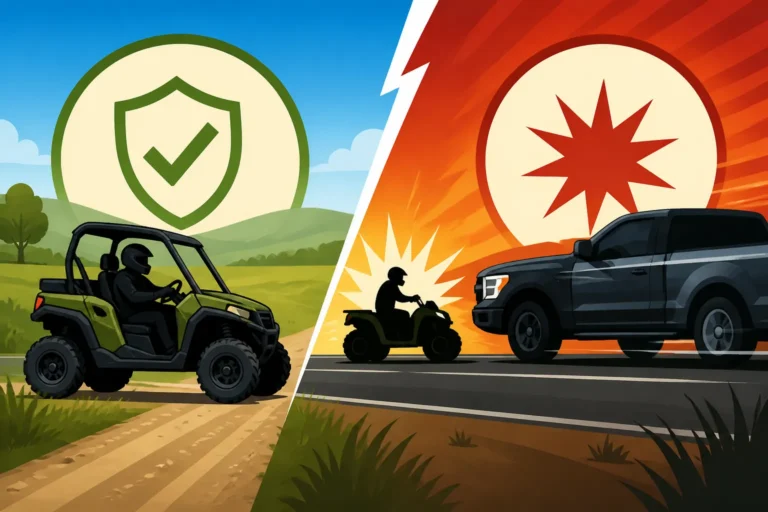
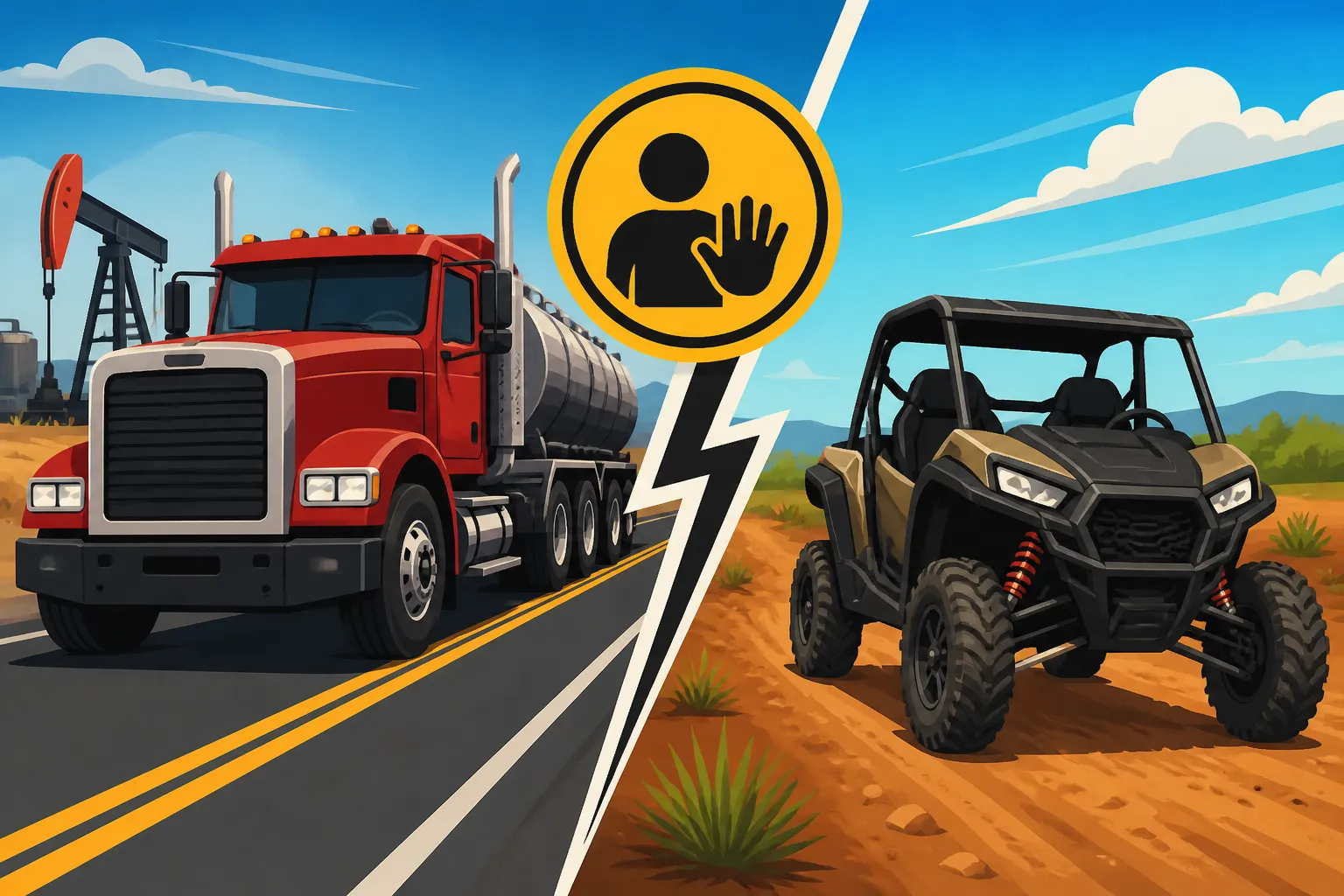
It's a scene many of us Oklahoma ATV and UTV riders know all too well: you're enjoying a ride down a county road, maybe heading to a hunting spot or just exploring, when suddenly, a massive oilfield truck comes barreling towards you, kicking up a dust cloud that swallows everything. It can be incredibly jarring, even downright terrifying, to share narrow, often unpaved roads with these giants. This guide is all about helping you understand the dynamics of sharing the road with oilfield trucks in Oklahoma, offering practical advice and strategies to keep you safe and your ride enjoyable.
Understanding the Landscape: Where ATVs, UTVs, and Oilfield Trucks Intersect
Oklahoma's rural roads are a unique blend of quiet tranquility and industrial necessity. For many ATV and UTV enthusiasts, these roads are a gateway to adventure, a path to the hunting lease, or simply the most direct route between points on their own property or adjacent land. Simultaneously, these very same roads are the lifeblood of Oklahoma's energy sector, serving as vital arteries for heavy oilfield trucks transporting equipment, supplies, and product. The convergence of these two worlds creates a challenging, but manageable, environment for riders.
The Reality of Rural Oklahoma Roads
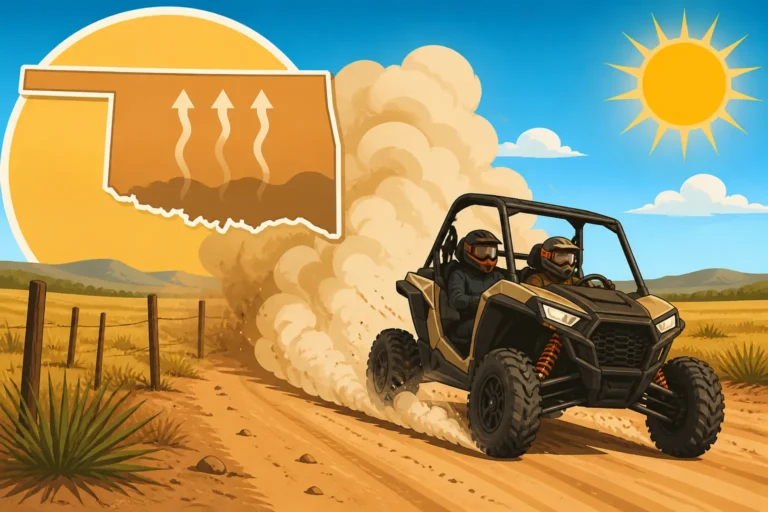
Picture this: you’re on a section line road, perhaps just a two-track dirt path or a narrow gravel lane, bordered by fences or ditches. These aren't your typical paved city streets. They're often dusty, sometimes muddy, and frequently feature washboards or potholes that can catch you off guard. On one hand, they offer the freedom and access that makes ATV and UTV riding so appealing. On the other, they can become high-traffic zones for massive oilfield vehicles without warning. These trucks are vital for the local economy, servicing oil wells, delivering frac sand, or hauling drilling rigs, but their sheer size and speed on these intimate roads can be incredibly intimidating. The dust they generate, especially [Why Dust Hangs Over a Section Road in Summer], can completely obscure vision for both the truck driver and you, creating moments of genuine peril. It’s a situation that demands respect, awareness, and proactive safety measures from every rider.
The "Instrument of Husbandry" and Other Exemptions
It's important to remember that most ATVs and UTVs aren't designed for road use, and their presence on public roads is typically restricted. However, Oklahoma law does provide some specific allowances. For example, your ATV or UTV might qualify as an "instrument of husbandry" if you're using it for agricultural purposes, such as checking cattle, hauling feed across your property, or moving equipment between fields. [Oklahoma's Instrument of Husbandry Exception] allows these machines on roads for limited distances when directly related to farm work. Additionally, [Oklahoma County Commissioners and ATV Roads] have the authority to open certain county roads to ATV and UTV traffic. This means that while you might be legally riding on a specific road, you're doing so in an environment that wasn't primarily built for smaller recreational vehicles. Oilfield trucks, on the other hand, are often legally and necessarily traversing these roads as part of their daily operations, which means you're sharing the space with vehicles that have a much higher weight, speed, and overall footprint. Understanding these different allowances is key to appreciating why you might find yourself in these shared-road scenarios.
Safety Strategies When Encountering Heavy Trucks
When you're out riding, especially on a road frequented by oilfield trucks, safety has to be your absolute top priority. These trucks aren't just big; they represent a significant force, and as an ATV or UTV rider, you are inherently more vulnerable. Developing solid safety strategies isn't about being paranoid; it's about being prepared and responsible.
Maximizing Your Visibility
One of the most critical aspects of sharing the road with oilfield trucks is ensuring you are seen. These trucks have enormous blind spots, and the drivers are often focused on the road ahead and their massive loads, not necessarily on spotting a smaller off-road vehicle. Start with your machine: if it has headlights and taillights, make sure they are clean and functional, even in broad daylight. Brightly colored clothing, especially neon yellow or orange, can make a huge difference. Consider adding reflective tape to your machine or helmet, particularly if you're ever out near dusk or dawn. For UTVs, upgrading to LED light bars or adding lighted whips can dramatically increase your presence on the road. Many riders choose to add high-mounted safety flags, and some even go for additional amber or red flashing lights. SuperATV, for instance, offers a range of auxiliary lighting options that can significantly boost your visibility. Think about [Making Yourself Visible on a Rural Road at Night] even if you only plan to ride during the day, as dust or unexpected delays can extend your ride into lower light conditions. Every bit of light and color helps to combat the challenges posed by dust clouds and large truck profiles.
Defensive Riding Tactics
Defensive riding is your best friend when navigating roads with oilfield trucks. This means constantly scanning the horizon, listening for the distinctive rumble of a big diesel engine, and anticipating potential encounters. If you see a dust cloud far off, assume it's a truck and begin preparing. When a truck approaches, whether from the front or behind, your immediate action should be to slow down. If the road allows, move as far to the right as safely possible, ideally pulling off onto the shoulder or even coming to a complete stop if space is limited. Give the truck ample room to pass. Remember, these vehicles are wider and longer than they appear, and they need a lot of clearance. Avoid sudden turns or swerving, as this can be unpredictable for a truck driver. Never assume the truck driver sees you, and never challenge their right-of-way, even if you think you have it. Your goal is to be predictable and to minimize any risk of collision. If you're riding a UTV equipped with [Oklahoma Turn Signals and Mirrors], use them to clearly indicate your intentions, like pulling over.
Communication and Signaling
While direct communication with a truck driver on a dusty road is often impossible, you can still use indirect methods to signal your presence and intentions. Your machine's lights are your primary tool. If you have turn signals, use them to clearly indicate if you're pulling over or turning off the road. Some riders might briefly flash their high beams to get attention if they feel unseen, but be cautious not to blind an oncoming driver. If you're fortunate enough to have a brief moment of eye contact with a driver as they pass, a simple nod or wave can be reassuring, but don't rely on this. The most effective communication often comes from your actions: being predictable, moving over early, and maintaining a safe, steady course. Even if your ATV or UTV isn't factory-equipped with turn signals, aftermarket kits, such as those from SuperATV, can add these valuable safety features, allowing you to communicate your movements more clearly to other road users, especially those driving large trucks.
Understanding Truck Behavior and Limitations
Riding safely alongside oilfield trucks isn't just about your actions; it's also about understanding the inherent characteristics and limitations of these massive vehicles. Knowing how they operate can help you better anticipate their movements and react accordingly.
Truck Blind Spots and Braking Distances
Big trucks have huge blind spots, often referred to as "No-Zones." These areas are on all four sides of the truck: directly in front, directly behind, and alongside both the driver and passenger sides, extending for many feet. If you can't see the truck driver's mirrors, there's a good chance they can't see you. This is crucial for ATV and UTV riders, who are small enough to disappear entirely within these zones. Never ride directly beside or behind a truck for an extended period, especially not where the driver might not see you. Additionally, oilfield trucks require significantly longer distances to stop than your ATV or UTV, particularly when loaded down with heavy equipment or liquids. On dry pavement, a fully loaded truck can take the length of two football fields to come to a complete stop, and on gravel or wet, muddy Oklahoma roads, that distance increases dramatically. This means cutting in front of a truck or making sudden maneuvers near one is extremely dangerous, as the driver simply doesn't have the reaction time or stopping power to avoid a collision.
Dust, Debris, and Road Conditions
Oilfield trucks, particularly those on unpaved roads, kick up an astounding amount of dust. This isn't just a nuisance; it's a major safety hazard. A truck passing at speed can create a thick, opaque cloud that instantly reduces visibility to zero for anyone behind it or riding into it. You might find yourself temporarily blind, unable to see the road ahead or any obstacles. This dust also carries the risk of debris: rocks, gravel, or other small objects that can be propelled with surprising force, potentially damaging your machine or causing injury. Furthermore, the sheer weight of these trucks takes a toll on the road surface. They create deep ruts, pulverize gravel into dust, and can quickly turn a relatively smooth path into a washboard nightmare. These degraded road conditions are harder for ATVs and UTVs to navigate safely, increasing the risk of losing control. If you're frequently riding in dusty conditions, a quality UTV windshield can make a huge difference in protecting you from debris and improving visibility, and companies like SuperATV offer robust options. Being aware of these environmental factors is crucial for preparing yourself and your machine for the realities of shared rural roads.
Legal and Practical Considerations
Beyond the immediate safety concerns, there are legal guidelines and practical preparations that can make your rides on shared roads safer and more responsible. Understanding these aspects will not only protect you but also help foster a more harmonious relationship between off-road enthusiasts and the industrial traffic that calls these roads home.
Knowing Local Ordinances and Road Rules
Even if a particular county road has been opened to ATV or UTV traffic by local commissioners, it's vital to remember that specific rules often apply. [Oklahoma ATV Road Rules Under 11-1116] outlines some general guidelines for ATVs on public roads, such as daylight-only operation for crossings and speed limits. However, the authority to open roads often rests with local county commissioners, and [Oklahoma Municipal Ordinances That Open Streets] are also a factor if you're riding near or through a town. It’s your responsibility as a rider to know which roads are open, under what conditions, and what equipment might be required. For instance, some open roads might mandate certain lighting or reflective gear, which ties back to maximizing your visibility. While oilfield trucks are generally operating under commercial vehicle regulations, your smaller machine is subject to different, often stricter, rules on public thoroughfares. Ignorance of these rules isn't an excuse, and encountering a county deputy or state trooper while operating illegally can lead to citations.
Equipment and Preparation
Your machine's readiness is a critical component of road safety. Ensure your ATV or UTV is well-maintained, with good tires, functioning brakes, and a properly operating suspension system. On rough, dusty oilfield roads, these components take a beating, and reliable performance is non-negotiable. Always wear appropriate safety gear, including a helmet, especially for riders under 18, as mandated by [Oklahoma Helmet Law for Riders Under 18]. Eye protection is also crucial to shield you from dust and flying debris. Beyond your personal gear, consider what you carry on your machine. A basic tool kit, a first-aid kit, and plenty of water are essential, especially in the Oklahoma heat. [How Much Water to Carry in August Heat] isn't just about comfort; it's a safety measure against dehydration if you break down or are delayed. A reliable communication device, like a fully charged cell phone (though service can be spotty in remote areas), or even a satellite communicator, can be a lifesaver. Companies like SuperATV offer storage solutions and utility upgrades that can help you carry these essentials securely, ensuring you're prepared for any eventuality when sharing the road with heavy industrial traffic.
Here's a quick comparison of the inherent differences between ATVs/UTVs and oilfield trucks on shared roads:
| Feature | ATV/UTV (Typical) | Oilfield Truck (Typical) | Implications for Shared Roads |
|---|---|---|---|
| Size/Weight | Small, lightweight (hundreds of lbs) | Massive, heavy (tens of thousands of lbs, loaded) | ATV/UTV is highly vulnerable; trucks have immense destructive potential. |
| Visibility | Small profile, easily obscured by dust/terrain | Large, but with extensive blind spots (No-Zones) | Riders must actively work to be seen; trucks struggle to spot smaller vehicles. |
| Maneuverability | Agile, quick turns, often unstable at high speed | Slow to turn, wide turning radius, needs ample space | ATV/UTV can get out of the way; trucks need predictable, clear paths. |
| Braking Distance | Short, quick stops, especially on soft ground | Very long, requires significant distance to stop, especially loaded | ATV/UTV can stop faster; never cut in front of a truck. |
| Dust/Debris | Generates some dust | Generates enormous dust clouds, throws significant debris | Riders must anticipate blinding dust and flying rocks from trucks; visibility is compromised. |
| Road Impact | Minimal | Significant: creates ruts, washboards, degrades surfaces | Road conditions can quickly deteriorate, making riding more challenging for ATVs/UTVs. |
Disclaimer
This article is for general informational purposes only and does not constitute professional advice. Laws, prices and regulations vary by location and change over time. Consult a qualified professional for guidance on your specific situation.