The 2011 Bill That Grouped UTVs With Golf Carts
It's incredibly frustrating trying to figure out the rules for riding your ATV or UTV on public roads in Oklahoma. One minute you hear it's completely illegal, the next someone tells you about a "street-legal" setup, and it all just adds to the confusion. This guide is here to untangle the complexities of Oklahoma's laws, especially the significant 2011 bill that changed how UTVs were viewed, grouping them with golf carts for certain types of road access.
Unpacking the 2011 Legislative Shift: UTVs and Golf Carts
Before 2011, the idea of driving your UTV on public roads in Oklahoma was pretty much a pipe dream for most recreational riders. ATVs and UTVs were largely considered off-road vehicles, meant for trails, private land, or very specific agricultural uses. The frustration was palpable for many who wanted to use their side-by-sides for quick trips to the store, to visit a neighbor down a rural road, or simply for utility tasks that required short stretches on county roads.
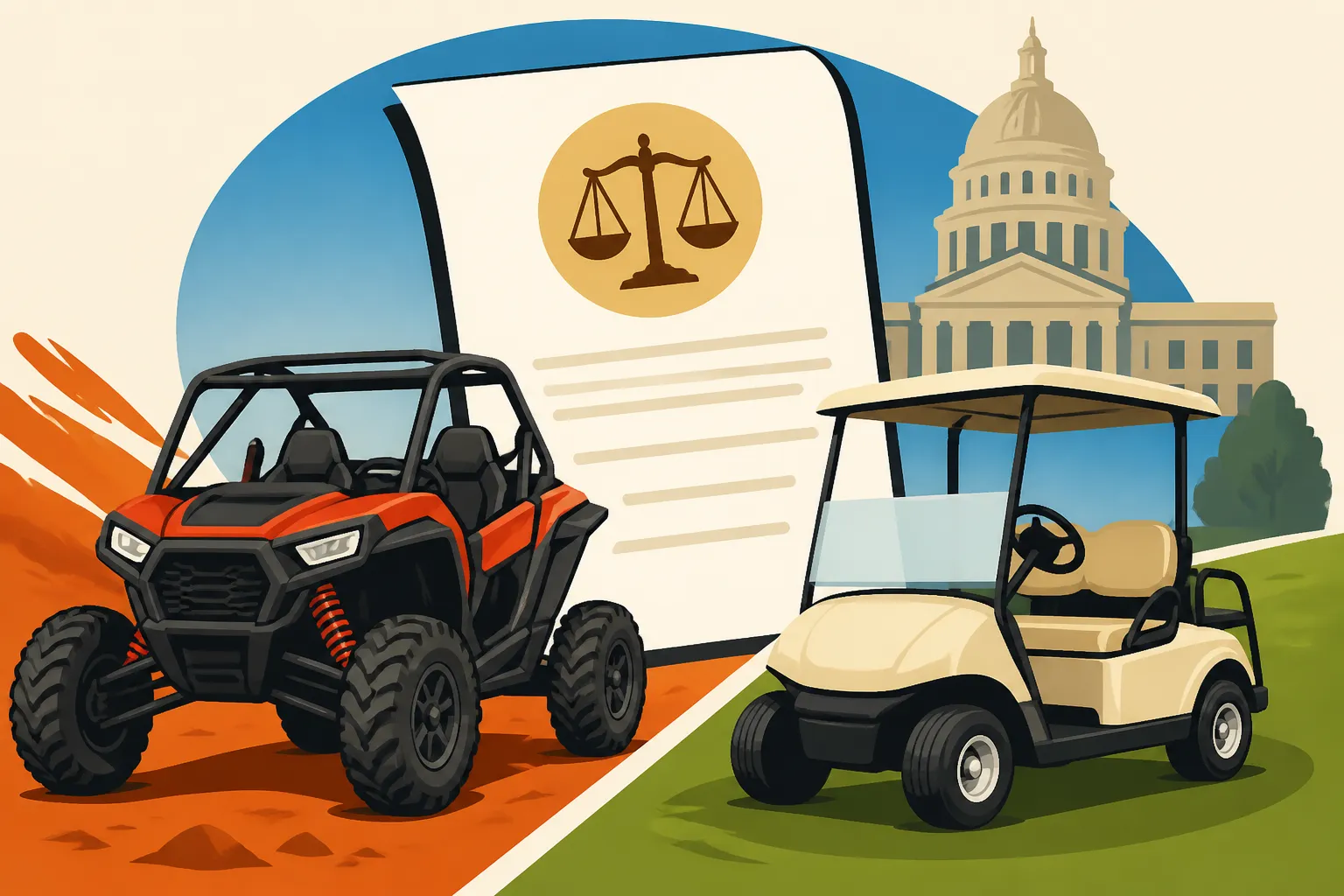
Then came the 2011 bill, a piece of legislation that brought a sigh of relief to many UTV owners, though it didn't create a free-for-all. What this bill primarily did was amend state statutes to include UTVs in the same category as golf carts for specific, limited purposes on public roadways. This was a critical distinction because it didn't suddenly transform every UTV into a road-worthy vehicle akin to a car, but rather opened doors for municipalities and counties to allow their use under controlled conditions. The intent was clear: to provide greater flexibility for UTV owners, especially in rural areas, without completely overhauling the state's vehicle code for highway use.
This legislative grouping meant that many of the existing rules and local ordinances that applied to golf carts could now, by extension, apply to UTVs. It acknowledged the growing popularity and utility of side-by-sides, particularly their role in rural communities and for landowners. While it wasn't the full "street-legal" status many desired, it was a significant step forward, offering a legal framework for local jurisdictions to permit limited road access. It's a prime example of how laws evolve to meet the changing needs and uses of vehicles like your favorite UTV.
Where You Can Ride: The Scope of Road Use for UTVs
So, with the 2011 bill in place, what does this actually mean for where you can ride your UTV on a public road in Oklahoma? It’s crucial to understand that the bill did not make UTVs fully street-legal across the board. Instead, it empowered local authorities – your county commissioners and city councils – to make decisions about specific roads within their jurisdictions.
You'll often find that many county roads, particularly in more rural areas, are open to UTVs. This often falls under what's known as the "instrument of husbandry" rule, or simply because county commissioners have explicitly voted to open certain roads to these vehicles. This is fantastic news for farmers, ranchers, and rural residents who need to traverse short distances on public roads for work or to get to a neighbor's property. Always check with your local county commissioner's office to confirm which roads are open and if there are any specific local regulations. You might be surprised at how many areas have embraced this, recognizing the practical use of these machines. This is often where you'll find [Oklahoma County Commissioners and ATV Roads] playing a big role.
City streets are a different ballgame. While the 2011 bill gave cities the authority, they had to actively pass their own ordinances to allow UTVs on their streets. This means what's permissible in one town might be strictly prohibited just a few miles down the road. For instance, a small town like Stillwater or Weatherford might have an ordinance allowing UTVs on certain streets, perhaps limiting speeds or specific hours, while a larger city like Oklahoma City or Tulsa might have much stricter, or even outright prohibitory, rules. Before you load up your UTV and head into town, always look up the local ordinances. It's a quick call to the city clerk's office or a search on the city's website that can save you a lot of grief. For more on this, you can check out [Oklahoma Municipal Ordinances That Open Streets].
Highway crossings also received some clarification. Generally, you can cross a highway if the speed limit is 35 mph or less, and it must be done in daylight. This isn't about cruising down a highway, but rather crossing it to get from one section of land to another or to access a county road on the other side. It’s a very specific allowance, designed for practicality, not for extended highway travel. Remember, safety is paramount during these crossings, as you're sharing the road with much faster vehicles.
Essential Equipment and Rider Requirements for Permitted Road Use
Even for the limited road use permitted under the 2011 bill, there are still some key requirements you need to be aware of regarding your UTV and yourself as the operator. These aren't just suggestions; they're in place to ensure safety for everyone on the road.
First, let's talk about the UTV itself. While the 2011 bill grouped UTVs with golf carts, implying a less stringent equipment list than a car, basic safety features are still crucial. Many riders, understanding the need for visibility and communication, add aftermarket accessories. Companies like SuperATV offer a wide range of products, from mirrors that significantly improve rear visibility to loud horns that can alert other drivers to your presence. While not explicitly mandated by the 2011 bill for all golf cart-like use, having working headlights, taillights, brake lights, and at least one rearview mirror is a really smart move and often expected by local law enforcement. For those who want to go a step further, SuperATV also provides full turn signal kits and windshields, making your machine much more visible and safer for any road interaction.
When it comes to the rider, age restrictions are important. Generally, anyone operating a UTV on a public road, even under these limited conditions, must be at least 16 years old. This is because you're essentially sharing the road with other vehicles, and the responsibility that comes with operating a motor vehicle applies. While you don't necessarily need a special motorcycle endorsement, a valid driver's license is typically required. Think of it this way: if you need a license to drive a car on that road, you'll likely need one to drive your UTV there too. You can find more details on this in [Oklahoma Drivers Must Be 16 for a Street UTV].
Helmets are another crucial piece of the safety puzzle. In Oklahoma, anyone operating or riding as a passenger on an ATV or UTV under the age of 18 is required to wear a helmet that meets federal safety standards. This rule applies whether you're on a trail or making a quick hop on a permitted road. It's a non-negotiable for younger riders and a smart choice for everyone else. For more on this, check out [Oklahoma Helmet Law for Riders Under 18]. Beyond helmets, appropriate riding gear—like long pants, gloves, and over-the-ankle boots—is always recommended to protect yourself in case of a mishap.
The Evolution to Full Street Legal: Beyond the 2011 Bill
It's important to draw a clear line between the limited road access granted by the 2011 bill's "golf cart grouping" and what is now considered a truly "street-legal" UTV in Oklahoma. The 2011 legislation was a critical first step, allowing local jurisdictions to permit certain low-speed, limited use on roads. However, it didn't create a statewide class of UTVs that could be registered and plated like a car, freely using most public roads.
That more expansive capability came later, with subsequent legislation, most notably a bill passed in 2021. This later law established a specific category for "street-legal UTVs," which, if properly equipped and registered, can obtain an annual road plate. This is what many riders truly mean when they talk about "street legal." It involves a much more comprehensive list of equipment requirements, mirroring what's expected for other motor vehicles, such as turn signals, mirrors, a horn, and often a windshield with a wiper. The 2011 bill laid some groundwork for discussion and recognition of UTVs on public ways, but it was the 2021 law that really created the pathway for that distinctive yearly decal and full road-use privileges, with certain exceptions like interstates and U.S. highways.
This distinction is vital for avoiding confusion. If your UTV is only operating under the allowances made by the 2011 bill and local ordinances, you're generally restricted to specific, low-speed roads and crossings. You won't have an annual tag, and your usage will be more limited. If you want the freedom to drive your UTV on a wider range of roads, you'll need to go through the process of meeting the requirements for a full street-legal conversion and registration, as outlined by the 2021 law. Many riders choose to upgrade their machines with components from companies like SuperATV, ensuring they meet the stringent requirements for turn signals, horns, and proper lighting to qualify for that coveted road plate. You can read more about what's required for this full status in [Oklahoma's Street-Legal UTV Class Explained] and [Oklahoma Equipment Required for Street UTVs].
To help clarify the differences, here's a quick comparison:
| Feature/Requirement | Limited Road Use (2011 Bill – Golf Cart Grouping) | Full Street-Legal (2021 Law – Annual Plate) |
|---|---|---|
| Primary Authority | Local (County Commissioners/City Ordinances) | State (Oklahoma Tax Commission, Tag Agencies) |
| Registration/Plate | No specific state road plate required | Annual state road plate and registration required |
| Equipment | Basic lights, some local mandates | Headlights, taillights, brake lights, turn signals, mirrors, horn, windshield, wiper, seatbelts |
| Driver's License | Typically required, age 16+ | Required, age 16+ |
| Helmet (Under 18) | Required | Required |
| Insurance | Not state-mandated for limited use | State-mandated liability insurance required |
| Roads Permitted | County roads (if opened), city streets (if ordinance), highway crossings (35 mph, daylight) | Most public roads (except interstates, US highways, certain speed limits) |
| Purpose | Agricultural, utility, recreational within local limits | Broader utility, commuting, recreational travel |
Understanding this distinction is key to riding legally and confidently in Oklahoma. The 2011 bill was a good start, providing options, but the later legislation for truly street-legal UTVs offers even more flexibility for riders.
Disclaimer
This article is for general informational purposes only and does not constitute professional advice. Laws, prices and regulations vary by location and change over time. Consult a qualified professional for guidance on your specific situation.