Fines and Costs Capped at $25
We've all been there: out enjoying a ride on our ATV or UTV, perhaps a little too close to a paved road or venturing onto a path we weren't entirely sure about, and then you see the flashing lights. Getting pulled over can be a jarring experience, especially when you're just trying to have some fun, and the fear of a massive fine can really dampen your spirits. This guide is here to shed some light on what to expect if you find yourself facing a ticket for an ATV or UTV violation in Oklahoma, specifically focusing on how fines and associated costs work, including the surprisingly low cap on many penalties.
Understanding Oklahoma's ATV and UTV Violation Fines
When it comes to off-road vehicles, Oklahoma has a unique approach to penalties for certain violations. While it might sound too good to be true, many of the fines associated with common ATV and UTV infractions are indeed capped, offering a bit of a silver lining in an otherwise frustrating situation. However, it's crucial to understand that a "fine" is often just one piece of the financial puzzle.
The $25 Cap: What It Means for Riders
It's true – for many of the specific violations related to ATV and UTV operation in Oklahoma, the actual fine you might pay is capped at $25. This can come as a huge relief, especially for riders who've heard horror stories from other states where a simple road crossing infraction can run into hundreds of dollars. The intent behind this cap is often to serve as more of a deterrent and a reminder rather than a heavy financial burden for what are considered minor infractions. For example, if you're cited for riding on a prohibited county road or perhaps for not having the correct lighting during a permitted road crossing, the base fine itself will likely not exceed this $25 amount. It's a system that acknowledges that off-road vehicles have a different operational context than typical street-legal vehicles. [Oklahoma Crossing Rules at 35 mph] highlights some of these specific rules.
However, this cap is specifically for the fine component. Imagine you're riding your UTV back to your campsite at Robbers Cave State Park after a long day of trail riding, and you take a shortcut on a paved park road that isn't designated for OHVs. A park ranger pulls you over and writes you a ticket for unauthorized road use. The fine on that ticket? Likely $25. This cap applies to a wide range of specific ATV and UTV violations, making Oklahoma a bit more forgiving on the wallet for riders caught bending or breaking less severe rules.
Beyond the Fine: Other Costs to Consider
While the $25 fine cap is certainly a positive for riders, it's vital to remember that a ticket can come with additional expenses that quickly add up. These are the "costs" that go beyond the basic fine.
First, there are almost always court costs and administrative fees. When you receive a citation, you're not just paying the fine; you're also paying for the administrative burden of processing that ticket through the justice system. These fees can vary by county or municipality and are added on top of your base fine. So, while your fine might be $25, the total amount you pay could easily be $75, $100, or even more, once these additional charges are factored in. It’s a common frustration that can really catch people off guard, expecting just that low fine.
Secondly, and perhaps more significantly, is the potential for impoundment or towing fees. If your ATV or UTV is deemed to be operated illegally or unsafely, an officer might have the authority to impound it. Imagine getting a ticket for riding on a prohibited road and, because you're far from home, the machine is towed. The towing company will charge a hook-up fee and a per-mile charge, and then there will be daily storage fees at their lot. These costs can easily run into several hundreds of dollars, far eclipsing the $25 fine. It's a nightmare scenario that can turn a minor infraction into a major financial headache.
Finally, there are the hidden costs of time, stress, and missed riding. Having to deal with a citation means taking time out of your day to pay it, or worse, to appear in court. This could mean taking time off work, missing a family event, or simply losing valuable riding time. The stress and anxiety of dealing with legal issues, no matter how minor, are also real costs. It's not just about the money; it's about the disruption to your life. So, while the financial fine may be minimal, the overall impact can still be substantial.
Common Violations and How They're Enforced
Knowing the rules is half the battle, and understanding how those rules are enforced is the other half. Oklahoma has specific guidelines for ATV and UTV use, especially when it comes to riding on public roads or trails. Getting familiar with these can help you avoid a citation altogether.
Riding on Prohibited Roads: Where You Can and Can't Go
One of the most common reasons riders receive citations is for operating their ATVs or UTVs on roads where they are not permitted. It's a tricky area because the rules aren't always black and white, and they can vary depending on where you are in the state.
County Roads and City Streets: Generally speaking, ATVs and UTVs are not allowed on public roads. However, there are exceptions. [Oklahoma Rules for Riding a County Road] details how some county commissioners have opened specific county roads to ATV and UTV traffic. This often happens in rural areas where off-road vehicles are essential for agricultural work or local transportation. The key here is specific designation – you can't just assume a county road is open. Similarly, some municipal ordinances allow UTVs on city streets, but these are rare and highly localized. It's always best to check with the local county or city government before riding on any paved surface. Riding for farm use, for instance, often falls under the [Oklahoma Farm Use on County Roads] exception, but this is strictly for work, not recreation.
Highways and Interstates: For the vast majority of ATVs and UTVs, state highways and interstates are strictly off-limits, with very few exceptions, typically only for direct, perpendicular crossings during daylight hours on roads posted 35 mph or less. [Oklahoma Rules for Crossing a Highway] covers these details. Trying to ride down a highway for any significant distance will almost certainly result in a citation and could be extremely dangerous.
Enforcement: Enforcement comes from various agencies. Local sheriff's deputies and city police officers are often the ones patrolling county roads and city streets. State Troopers from the Oklahoma Highway Patrol might enforce rules on state highways or at state parks. Even park rangers, especially in areas like Little Sahara State Park or Robbers Cave, have the authority to write tickets for violations within their jurisdiction. These officers are often looking for clear infractions, like prolonged road use or operating without required safety gear. It's always wise to remember that while the state's fine cap is low, the enforcement presence can still be significant, especially in high-traffic riding areas or during busy seasons.
Equipment Requirements and Safety Gear: What Officers Look For
Beyond where you ride, how you ride and the equipment your machine has (or lacks) can also lead to a ticket. Safety is a big concern for law enforcement, especially regarding youth riders and machines modified for road use.
Helmets for Youth: One of the most frequently enforced safety rules is the helmet law for riders under 18. [Oklahoma Helmet Law for Riders Under 18] clearly states that anyone under this age must wear a helmet that meets federal safety standards when riding an ATV or UTV. This applies to both operators and passengers. Many a parent has faced a citation because their child wasn't wearing proper head protection, even on private land if an officer can prove a public safety concern. It's an easy fix that prevents both fines and potential injury.
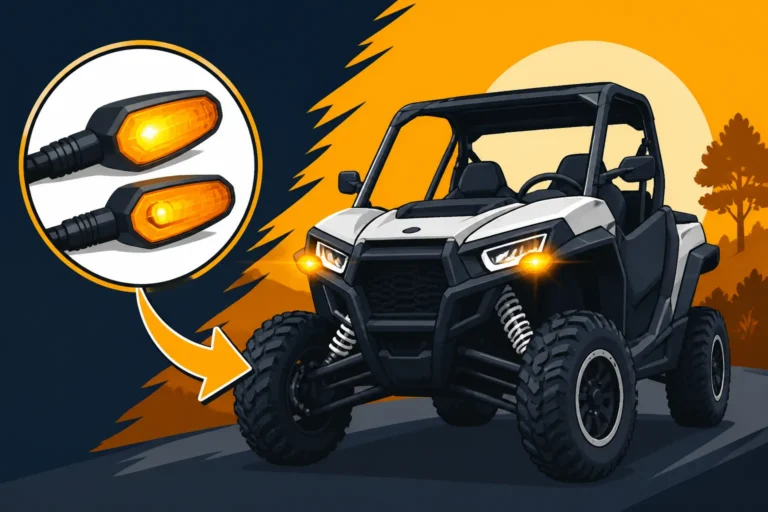
Lighting and Street-Legal Modifications: If you're venturing onto any public road, even for a permitted crossing, your machine needs to be visible. This means working headlights and taillights. For those who go through the effort of making their UTVs truly street-legal (a separate and complex process involving annual registration and specific equipment), the requirements are much more stringent. [Oklahoma Equipment Required for Street UTVs] includes turn signals, brake lights, mirrors, and a horn. Many riders turn to aftermarket companies like SuperATV for reliable and compliant kits that help them meet these rigorous standards, ensuring their side-by-side is ready for the road. Even if you're just crossing a road, basic functional lighting is essential, especially around dawn or dusk.
Spark Arrestors and Noise: While not as commonly cited for the $25 fine cap, spark arrestors are crucial for riding on public lands, especially in forested areas or during dry seasons, to prevent wildfires. Some areas may also have noise ordinances. While a loud exhaust might draw attention, the official fine for it might still fall under the $25 cap, but it could lead to other issues or community complaints.
Impaired Riding and Public Land Rules: Serious Consequences
Some violations are far more serious than a simple equipment or road-use infraction, carrying penalties that extend well beyond the $25 cap.
DUI and Off-Road Machines: Driving under the influence (DUI) laws absolutely apply to ATVs and UTVs, whether you're on a public road, a trail, or even private land if you're accessible to the public. [Oklahoma DUI Law and Off-Road Machines] confirms that operating any motorized vehicle while impaired can lead to severe consequences, including hefty fines, loss of driving privileges, and even jail time – penalties that are dramatically higher than the $25 cap. It’s not just for cars; your off-road machine is still a vehicle. It's a critical reminder that responsible riding means staying sober.
Public Land Specific Rules: Designated riding areas like state parks and wildlife management areas (WMAs) have their own sets of rules that riders must follow.
- Little Sahara State Park in Waynoka, for example, has rules about whip flags, night lighting, and speed limits in designated areas. While the base fine for a minor infraction might be $25, repeated offenses could lead to being ejected from the park or even banned. [Little Sahara State Park in Oklahoma] offers specific guidelines. They are also strict about alcohol, often banning it from specific dune areas.
- Wildlife Management Areas such as Honobia Creek WMA and Three Rivers WMA, which are primarily timber lands, have very specific riding seasons (often limited to deer season), speed limits, and designated trails. [Oklahoma WMA Riding Only in Deer Season] is a critical rule to remember. Riding off-season or off-trail can lead to fines, even if capped, and potentially more serious charges like trespassing or damaging natural resources if you are caught violating these agreements with the timber companies. Access to these lands often requires an Oklahoma Land Access Permit, and failure to have one could also result in a fine.
Understanding these specific land-use rules is paramount to enjoying Oklahoma's diverse riding opportunities without running afoul of the law.
Navigating a Citation: Your Options and Responsibilities
So, you've been issued a citation. What now? It can be an intimidating piece of paper, but understanding your rights and responsibilities can make the process less stressful. Remember, even with a low fine cap, ignoring a ticket can lead to much bigger problems.
Receiving a Ticket: What to Do in the Moment
The moment you see those flashing lights, it's natural to feel a rush of anxiety or frustration. However, how you handle the initial interaction can set the tone for everything that follows.
First and foremost, stay calm and cooperate with the officer. Pull over safely and follow all instructions. Arguing or being confrontational rarely helps your case and can sometimes escalate the situation, leading to additional charges. Officers are simply doing their job to enforce regulations that are in place for safety and property protection.
Next, understand the charge. Politely ask the officer to explain the specific violation you're being cited for. Make sure you understand where you were riding, what equipment was at issue, or which rule was broken. This information is crucial, especially if you decide to contest the ticket later. Make a mental note, or if safe, write down the details shortly after the interaction: time, location, officer's name/badge number, and exactly what they said. This helps create a clear record.
Finally, gather any relevant details. Did you have a valid reason for being on that road? Was your equipment actually compliant? For instance, if you've added SuperATV mirrors and turn signals to your UTV for improved visibility, but the officer missed them, you'd want to note that. Having a clear understanding of the situation is your first step in deciding how to proceed.
Paying the Fine or Contesting It in Court
Once you have the citation in hand, you generally have two paths: pay the fine or contest it in court.
Paying the Fine: For many minor ATV/UTV infractions, especially those where the base fine is indeed capped at $25, paying the ticket might be the most straightforward and least stressful option. The citation will usually provide instructions on how and where to pay, whether online, by mail, or in person at a local courthouse or tag agency. Remember that you'll be paying the base fine plus court costs and administrative fees, so be prepared for a higher total than just $25. [Where and How to Pay an ATV Fine] will outline the specific process. Paying the fine means you're admitting guilt to the infraction, and the matter is closed.
Contesting It in Court: There are times when contesting a ticket in court might be worthwhile, even if the fine itself is small. Perhaps you believe you were mistakenly identified, the officer misinterpreted an ordinance, or you genuinely weren't in violation. For instance, if you're cited for riding on a county road that has been officially opened by commissioners, you would have a strong case. [How to Fight an ATV Citation in Court] explains this in detail.
When you choose to contest, you'll need to appear before a judge. This means presenting your side of the story, potentially with evidence (like photos of signage, proof of equipment, or relevant local ordinances). While the fine is capped, losing in court can mean you're still responsible for the original fine, court costs, and potentially additional fees or even a higher fine if the judge finds other issues. It also requires a significant time commitment, which is another hidden cost of fighting a ticket. It's a personal decision, weighing the time and effort against the potential outcome.
Here's a quick summary of typical scenarios:
| Violation Type | Base Fine | Common Additional Costs (Estimated) | Total Impact (Potential) |
|---|---|---|---|
| Riding on Prohibited Road | $25 | Court costs, administrative fees | $75 – $150 (could be more with towing) |
| Youth Rider No Helmet | $25 | Court costs, administrative fees | $75 – $150 |
| No Lights (Permitted Crossing) | $25 | Court costs, administrative fees | $75 – $150 |
| Operating Off-Designated Trail (WMA) | $25 | Court costs, administrative fees | $75 – $150 (plus potential land damage charges) |
| DUI (Impaired Riding) | $500 – | Court costs, legal fees, license | Thousands (fines, fees, potential jail, insurance hike) |
| $1,000+ | suspension, impoundment | ||
| No Land Access Permit (WMA) | $25 | Court costs, administrative fees | $75 – $150 (plus cost of permit if purchased) |
Note: The "Common Additional Costs" and "Total Impact" are estimates and can vary significantly by jurisdiction and specific circumstances. DUI penalties are substantially higher and not subject to the $25 cap.
In Oklahoma, riders are fortunate to have a cap on many of the fines for ATV and UTV violations, offering a degree of protection from excessive penalties. However, it's crucial to understand that this cap applies primarily to the base fine and that other costs, such as court fees, towing, and the invaluable cost of your time and peace of mind, can quickly add up. Being informed, riding responsibly, and knowing the local rules for county roads, city streets, and public lands are your best defenses against unwanted tickets. Stay safe out there, and happy trails!
Disclaimer
This article is for general informational purposes only and does not constitute professional advice. Laws, prices and regulations vary by location and change over time. Consult a qualified professional for guidance on your specific situation.