Equipment Chapters a Machine Must Meet
It can feel like a real puzzle trying to figure out exactly what your ATV or UTV needs to transform from a trail-only machine into something you can legally drive on Oklahoma’s roads. The rules can be a little murky, and no one wants to invest time and money into modifications only to find out they missed a crucial detail. This guide is here to clear up that confusion, walking you through the essential equipment chapters your machine must meet to get that coveted street-legal plate in Oklahoma.
Understanding Oklahoma's Street-Legal UTV Laws
When you decide to take your side-by-side or utility vehicle from the dirt to the pavement, you're stepping into a different regulatory world. Oklahoma has specific provisions for what they term "Utility Vehicles" that can be made street-legal, and these provisions come with a clear checklist of equipment. It's not just about getting a tag; it's about ensuring your machine is safe and compliant for sharing the road with other vehicles, and frankly, avoiding a costly ticket.
The Legal Framework for Road-Use Machines
Oklahoma law carves out a special category for utility vehicles, allowing them to be registered for road use under certain conditions. This isn't the same as registering a quad for the occasional county road crossing. We're talking about a full, annual license plate and decal, much like a car, that allows you to drive on designated public roads. This framework was established to give UTV owners more flexibility, recognizing their utility for everything from farm work to neighborhood cruising, but it comes with the responsibility of meeting safety standards.
The core idea is that if you're going to operate a machine on public roads, it needs to have the same basic safety features as other road-going vehicles. This means more than just a loud horn. It encompasses everything from proper lighting to braking systems that can handle unexpected stops. Understanding [Oklahoma's Street-Legal UTV Statute] is your first step. It lays out the foundation for why these equipment requirements exist. Without these minimums, you're not just risking a fine; you're potentially endangering yourself and others, which no responsible rider wants to do. This is a big part of why Oklahoma changed its laws to allow street-legal UTVs in the first place, moving from a patchwork of local rules to a more unified state standard.
Why Equipment Standards Matter for Safety and Compliance
The equipment standards aren't just bureaucratic hurdles; they're designed with safety in mind. Imagine driving your UTV on a busy street at dusk without proper headlights, tail lights, or turn signals. It's a recipe for disaster. Other drivers won't know if you're slowing down, turning, or even if you're there at all. That's why the state mandates certain items, like [Oklahoma Turn Signals and Mirrors], and ensures that these components are in good working order.
Beyond safety, there's the critical aspect of legal compliance. If you're pulled over by a state trooper or local law enforcement, they're going to check for the required equipment. If your machine doesn't meet the standards, your street-legal status could be revoked, or you could face citations. This can be particularly frustrating if you've gone through the effort of registering your machine, only to find out a crucial component was overlooked. It's far better to get it right the first time and know that your vehicle is fully compliant, giving you peace of mind on every ride. You'll also want to understand [Oklahoma Equipment Checks by Troopers] to be fully prepared.
Essential Equipment for Oklahoma Street-Legal UTVs
So, what exactly does your UTV need to become roadworthy in Oklahoma? The list is comprehensive, mirroring many of the requirements for traditional automobiles. It’s not simply about bolting on a few accessories; it’s about ensuring each component meets specific performance and visibility criteria. Many riders turn to aftermarket suppliers like SuperATV for their conversion needs, as these companies often specialize in kits and components designed to meet these exact requirements.
Lighting and Visibility Requirements
Visibility is paramount when you're sharing the road. Your UTV must be equipped with a full suite of lighting to ensure you can see and be seen, day or night. This includes:
- Headlights: You need at least two white headlights, mounted at the front of the vehicle, that illuminate the road ahead for a specified distance. These aren't just for seeing the trail; they need to be bright enough for public roads, and typically include both high and low beam settings.
- Taillights: At the rear, you'll need at least two red taillights. These must be visible from a significant distance, especially at night, to signal your presence to vehicles behind you.
- Brake Lights: Integrated into your taillights, brake lights must illuminate when the brake pedal is pressed, clearly signaling to other drivers that you are slowing down or stopping.
- Turn Signals: Both front and rear turn signals are required, clearly indicating your intention to turn left or right. These need to flash distinctly and be visible from both the front and rear of the vehicle.
- Reflectors: Additional red reflectors are typically required at the rear, and sometimes amber reflectors on the sides, to enhance visibility, especially if your lights fail. Many riders add extra reflective tape, particularly to the rear, to make their machine even more noticeable.
- License Plate Light: A white light must illuminate your rear license plate, making it visible from a certain distance at night. This often gets overlooked but is a critical requirement.
Ensuring all these lights are installed correctly, working, and properly aimed is crucial. Don't just assume they're good to go; test them thoroughly before heading to the tag agency.
Braking and Steering Systems
Your UTV's ability to stop and steer effectively is non-negotiable for road use. The state requires that your braking and steering systems are in excellent working order and meet certain performance standards:
- Brakes: You need a fully functional braking system, usually hydraulic, that can stop the vehicle within a reasonable distance. This typically means brakes on all four wheels. Parking brakes are also a requirement, designed to hold the vehicle stationary on an incline. A lot of off-road machines have great brakes for the trail, but you need to ensure they're up to snuff for consistent road use, especially if you're carrying passengers or cargo.
- Steering: The steering system must be in good repair, allowing for safe and predictable control of the vehicle. There should be no excessive play in the steering wheel, and the system should respond smoothly and predictably. This is vital for maintaining lane control and performing evasive maneuvers if needed on a public road. Aftermarket modifications like power steering upgrades, if installed, must also be properly maintained.
The robustness of these systems is critical. A breakdown in either braking or steering on a public road could lead to severe consequences, far beyond what you might experience on a private trail. Always err on the side of caution and ensure these components are professionally installed and regularly inspected.
Mirrors, Horn, and Safety Belts
These seemingly smaller details play a huge role in overall safety and compliance, much like [Oklahoma Horns on a Street UTV] are necessary.
- Mirrors: A street-legal UTV must have at least one rearview mirror, typically mounted on the driver's side, that provides a clear view of the road behind the vehicle. Many riders opt for a center rearview mirror and often add a passenger-side mirror as well for enhanced visibility, and SuperATV offers great options for these. The goal is to eliminate blind spots as much as possible, crucial for changing lanes or merging.
- Horn: A working horn is mandatory for signaling other drivers or pedestrians in emergency situations. It needs to be audible from a certain distance, ensuring it grabs attention. A small novelty horn might be fun on the trails, but for the road, you need something effective and loud enough to meet compliance.
- Safety Belts: All occupants must be restrained by a seatbelt system that meets federal safety standards. Most modern UTVs come with factory-installed seatbelts, but it's important to ensure they are in good condition, not frayed or damaged, and are correctly fastened by all riders. These are critical for occupant safety in the event of a collision or sudden stop. While some off-road enthusiasts might upgrade to racing harnesses, the basic requirement is a functional lap and shoulder belt for each designated seating position.
It’s often these smaller items that trip up new street-legal UTV owners, so pay close attention to them.
Tires, Fenders, and Exhaust Considerations
Rounding out the equipment list are components that address traction, debris, and noise.
- Tires: Your tires must be DOT (Department of Transportation) approved. This is a big one. Off-road tires, while excellent for mud or sand, often lack the specific construction and tread pattern required for sustained highway speeds and wet pavement traction. DOT-approved tires have a specific marking on the sidewall. Using non-DOT tires on public roads can result in a fine and is a significant safety hazard. You need to verify that your tires are legal for road use.
- Fenders: Fenders or mud flaps are required to prevent rocks, mud, and water from being thrown up by your tires, potentially hitting other vehicles or pedestrians. This is especially important for UTVs, which can have aggressive tires that kick up a lot of debris. Ensuring your fenders adequately cover the full width of your tires is key.
- Exhaust System: Your UTV must have an adequate exhaust system that prevents excessive noise and directs exhaust fumes away from the occupants. While there aren't specific dB limits often listed for street-legal UTVs, the general rule is that it shouldn't be excessively loud or modified in a way that bypasses mufflers. A stock exhaust is usually fine, but aftermarket systems designed for off-road performance might be too loud for street use.
These items ensure your UTV operates safely and courteously on the road, minimizing nuisances to other drivers and potential hazards.
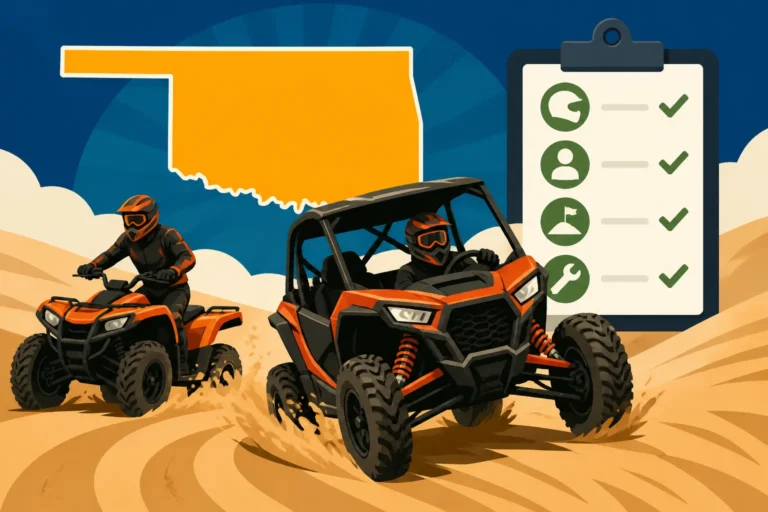
Oklahoma Street-Legal UTV Equipment Checklist
| Equipment Type | Specific Requirement | Notes |
|---|---|---|
| Lighting | Two White Headlights (high/low beam) | Must illuminate road ahead adequately. |
| Two Red Taillights | Visible from specified distance. | |
| Two Red Brake Lights | Activate upon braking. | |
| Front & Rear Turn Signals (Amber or Red) | Clearly indicate turns. | |
| Rear Red Reflectors | Enhance nighttime visibility. | |
| License Plate Light | Illuminates rear license plate. | |
| Safety & Control | Fully Functional Braking System (all wheels) | Must stop vehicle safely; parking brake required. |
| Functional Steering System (no excessive play) | Smooth and predictable control. | |
| At least One Rearview Mirror (driver's side) | Clear view to the rear. Many add more, and SuperATV offers options. | |
| Audible Horn | Loud enough to warn others. | |
| Safety Belts (for all occupants) | Factory installed or equivalent, in good condition. | |
| Other Requirements | DOT-Approved Tires | Marked "DOT" on sidewall, designed for road use. |
| Fenders/Mud Flaps | Cover tire width to prevent debris throw. | |
| Adequate Exhaust System | Prevents excessive noise and directs fumes safely. |
Navigating Modifications and Inspections
Converting your UTV to street-legal status isn't just about bolting on parts; it's about careful planning, proper installation, and understanding the administrative process. Many riders find themselves a bit overwhelmed, but breaking it down into manageable steps makes it far easier.
Sourcing Compliant Parts and Accessories
Once you know what you need, the next step is finding the right parts. It's crucial to choose components that are specifically designed for road use and meet relevant safety standards. This often means looking for parts that are DOT compliant or otherwise suitable for street legality. Companies like SuperATV specialize in aftermarket UTV accessories, and they often offer kits specifically designed to help riders meet these requirements, including everything from turn signal kits to DOT-approved windshields and mirrors.
You might be able to find some parts locally, but for a comprehensive conversion, exploring online retailers that cater to the street-legal UTV market is often your best bet. Always double-check product descriptions to ensure compliance with Oklahoma's specific regulations. For example, a turn signal kit from a reputable vendor should clearly state that it meets legal requirements for road use. Remember, the investment in quality, compliant parts is an investment in your safety and the longevity of your street-legal status. Don't cut corners here, as it could cost you more in the long run with fines or even accidents.
The Role of a Tag Agency in the Process
When it comes time to register your now-modified UTV, you'll be heading to an Oklahoma tag agency. Unlike some states that require a formal physical inspection by a state official, Oklahoma's process for street-legal UTVs relies heavily on your declaration. You'll fill out specific paperwork, indicating that your utility vehicle meets all the required equipment standards. This includes detailing the make, model, VIN, and providing proof of ownership and purchase price. Understanding [Oklahoma's ATV Registration Application Explained] will give you a head start on what forms to expect.
The tag agency's role is primarily to process your application, collect the necessary fees (including excise tax), and issue your title, registration, and the all-important annual street-legal license plate and decal. They don't typically perform a detailed physical inspection of your equipment at the counter. However, this doesn't mean you can skip the equipment. You are signing an official document stating that your vehicle meets all requirements. Falsifying this information could lead to serious legal consequences. It's your responsibility to ensure your UTV is fully equipped and compliant before you even walk into the tag agency. They are simply taking your word for it, backed by the paperwork.
Ongoing Maintenance for Roadworthiness
Getting your street-legal plate is just the beginning. Maintaining your UTV's roadworthiness is an ongoing commitment. Just like any other vehicle, regular maintenance is essential to ensure all your safety equipment remains in proper working order. This includes:
- Regular Light Checks: Periodically check all your headlights, taillights, brake lights, and turn signals to ensure they are functioning. Bulbs can burn out, wires can get loose, especially on a machine that sees off-road use.
- Brake and Tire Inspections: Continuously monitor your brake pads, fluid levels, and tire tread depth. Worn brakes or bald tires are a major safety hazard on paved roads. Look for the wear indicators on your DOT tires.
- Mirror and Horn Functionality: Ensure your mirrors are clean, securely mounted, and provide a clear view. Test your horn regularly.
- Seatbelt Condition: Inspect seatbelts for any fraying, tears, or damage to the buckles.
- General Wear and Tear: UTVs are subjected to rough conditions, even if they mostly stick to pavement once street-legal. Regularly check for loose bolts, damaged components, or anything that could compromise its safe operation.
Remember, a trooper can pull you over at any time for equipment violations. Staying on top of your maintenance not only keeps you safe but also keeps you compliant with the law. This proactive approach ensures you can confidently enjoy your street-legal UTV on Oklahoma's roads for years to come.
Disclaimer
This article is for general informational purposes only and does not constitute professional advice. Laws, prices and regulations vary by location and change over time. Consult a qualified professional for guidance on your specific situation.