Whether a Road Plate Replaces Your ATV Registration
Many off-road enthusiasts in Oklahoma find themselves scratching their heads when it comes to the different types of paperwork required for their ATVs and UTVs. You might be wondering, "If I get a road plate for my UTV, does that mean I don't need my regular ATV registration anymore?" It's a common and totally understandable question, and the answer isn't always as straightforward as it seems. This guide will clear up that confusion, helping you understand the distinct roles of ATV registration and street-legal UTV road plates in Oklahoma and what each entails for your machine.
The Distinct Worlds of ATV Registration and Street-Legal Road Plates
It's easy to assume that if you're making your UTV street legal, one form of official recognition would simply replace another. After all, isn't a license plate enough? However, in Oklahoma, the legal frameworks for standard off-road machine registration and street-legal UTV road plates operate in two separate, though occasionally intersecting, universes. They serve different purposes, are governed by different laws, and critically, one does not automatically negate or replace the other. Understanding this fundamental distinction is key to keeping your ride legal, whether you're tearing up the dunes or cruising down a county road.
Understanding Oklahoma's Standard Off-Road Machine Registration
Let's start with the basics: what Oklahoma refers to as "ATV registration." For many years, and still today, this refers to a one-time process for most off-road machines. It's essentially about establishing ownership and getting your vehicle recorded in the state's system. When you register an ATV or UTV in Oklahoma, you're primarily doing so to receive an official title and a decal. This process is less about granting permission for where you can ride and more about proving who owns the machine, similar to how you title a car.
This initial registration often involves a modest, one-time fee, which, once paid, means [Oklahoma Registration Never Renews]. It's a straightforward process designed to create a paper trail for your machine, which is incredibly important for preventing theft and proving ownership if you ever decide to sell it. The decal you receive is meant to be displayed on the front of your machine, clearly visible. It's not a license plate; it's an identification marker.
The Purpose and Specifics of a Street-Legal UTV Road Plate
Now, let's talk about the relatively newer concept of a street-legal UTV road plate in Oklahoma. This is a game-changer for many UTV owners, allowing them to legally operate their machines on certain public roads. However, it's crucial to understand that this road plate is an additional layer of legal compliance, not a replacement for your original off-road registration. It addresses a completely different set of concerns: making your UTV safe and compliant for mixed use with other traffic.
The process to obtain a road plate for your UTV, which is only available for UTVs, involves meeting specific equipment requirements and going through a separate application process at a tag agency. This includes ensuring your UTV has headlights, taillights, brake lights, turn signals, mirrors, a horn, and other safety features typically found on street vehicles. Once approved, you'll receive a standard-looking license plate that must be displayed on the rear of your UTV, along with an annual decal indicating its current street-legal status. This system was specifically introduced to create [Oklahoma's Street-Legal UTV Class Explained], giving UTV owners more flexibility.
Why You Might Need Both for Your UTV
Given these two distinct systems, it becomes clear why a UTV owner might need both a standard off-road registration and a street-legal road plate. Imagine you own a UTV that you love to take out on the trails at Little Sahara State Park, but you also want to use it to run quick errands into the nearest town or to legally connect between different sections of your property by driving on a county road. In this scenario, your machine is performing two separate functions, each requiring its own form of legal recognition.
The original, one-time ATV registration ensures your machine is properly titled and identified for off-road use and ownership records. The street-legal road plate, on the other hand, grants you the privilege to ride on approved public roads, provided you meet all the necessary equipment and licensing requirements. If you were to only have a road plate, you wouldn't necessarily be fulfilling the state's requirement for titling and registering your machine for its fundamental off-road identity. Conversely, an off-road registration alone does not give you permission to drive on public streets. They truly are two sides of the same coin, each necessary for their respective domains of operation.
Diving Deeper into Oklahoma's ATV/UTV Registration
Let's peel back another layer and look closely at the standard ATV and UTV registration. Many new riders, or even those moving from other states, often find themselves surprised by how Oklahoma handles these machines. It’s not like registering your daily driver car or truck, which typically involves annual renewals and various fees. The simplicity, once understood, is quite appealing for most off-road enthusiasts in the Sooner State.
What "ATV Registration" Actually Means in Oklahoma
When we talk about "ATV registration" in Oklahoma, it's really more about the initial titling process. This is a crucial distinction. Unlike vehicles that require yearly tags, an ATV or UTV in Oklahoma generally goes through a one-time registration process, typically costing a nominal fee. This is why you often hear people refer to [Oklahoma ATV Registration You Pay Once]. Once you've paid that fee and received your title and decal, you're usually set for the life of the machine in your ownership, as far as that basic registration goes.
The output of this process is not a traditional license plate but rather a durable decal designed to be placed on the front of your machine. This decal serves as visible proof that your ATV or UTV has been properly identified and recorded with the state. [Oklahoma Issues a Front Decal, Not a Plate], which helps differentiate it instantly from street-legal vehicles. This system helps state and local authorities track ownership and ensures that machines operating on public lands or specific areas are properly accounted for, without the recurring bureaucratic hassle of annual renewals.
The Machines That Require Standard Registration
Not every off-road machine falls under the exact same rules, especially when it comes to cutoff dates. Generally, ATVs, UTVs, and even dirt bikes that are designed exclusively for off-road use are subject to this standard registration process. However, there are some historical nuances that can affect older machines. For example, [Oklahoma ATV Cutoff of July 2005] means that ATVs manufactured or sold before that date might have different requirements for titling, sometimes requiring less paperwork if a clear chain of title isn't available. Similarly, [Oklahoma UTV Cutoff of July 2008] applies a similar logic to side-by-sides.
These cutoff dates were established to bring older machines into a more structured titling system, ensuring that even vintage quads or early UTVs can be legally owned and transferred. When you buy a machine, whether new from a dealer or used from a private seller, you'll need to go to a tag agency with the proper paperwork – such as a Manufacturer's Statement of Origin (MSO) for new machines or a bill of sale for used ones – to get it titled and registered.
Benefits and Limitations of Standard Registration
The primary benefit of Oklahoma's standard ATV/UTV registration is clear ownership and identification. It provides a legal record of who owns the machine, which is essential for insurance purposes, reselling, or recovering a stolen vehicle. Having your machine properly registered ensures you're compliant for riding on designated off-road trails, private property (with permission), and within OHV parks. It's a simple, low-cost way to make sure your investment is recognized by the state.
However, it's absolutely vital to understand the limitations: this standard registration does not make your ATV or UTV street legal. Period. That little decal on the front of your quad does not grant you permission to ride on city streets, county roads, or highways. Attempting to do so with only this registration can lead to fines and legal trouble. The [Oklahoma Rules for Riding a County Road] or [Oklahoma Rules for Riding a City Street] are entirely separate and require the additional step of obtaining a street-legal road plate for UTVs. This distinction is where many riders get confused, and it’s critical to remember that off-road registration is for off-road use, full stop.
Unpacking Oklahoma's Street-Legal UTV Road Plate
For years, Oklahoma UTV owners dreamed of legally taking their machines onto public roads for more than just crossing a highway at a specific angle. That dream became a reality with legislative changes that carved out a specific path for UTVs to gain street-legal status. This isn't just about sticking a plate on your machine; it's a comprehensive set of rules designed to integrate these powerful vehicles safely into road traffic.
The Legislative Shift That Created Street-Legal UTVs
The ability to obtain a street-legal road plate for UTVs in Oklahoma is a relatively recent development, stemming from a bill passed in 2021. Before this, the rules for operating any off-road machine on public roads were far more restrictive, often limiting use to specific agricultural purposes or very short crossings. The new law acknowledged the growing popularity and utility of UTVs and created a distinct category for them, setting out clear guidelines for what makes a UTV "street legal." This legislative act was a significant moment for the off-road community, essentially creating [A Class Created by a 2021 Bill] specifically for UTVs to gain road access.
This change meant that for the first time, UTV owners could apply for a dedicated license plate and operate their machines on many public roads, opening up new possibilities for recreation, utility, and commuting. It filled a long-standing gap in the law, providing clarity and a pathway for UTVs to move beyond purely off-road environments.
Equipment Requirements for a Road Plate
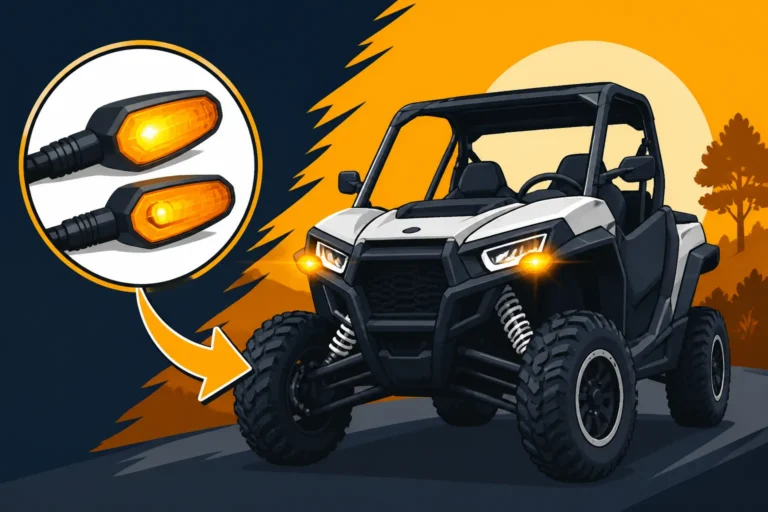
Making your UTV street legal is not just a matter of paying a fee; it requires specific modifications to ensure it meets safety standards for road use. Your UTV must be equipped with essential features that mimic those found on cars and trucks, ensuring visibility and proper signaling to other drivers. This includes, but isn't limited to, headlights, taillights, brake lights, turn signals on both the front and rear, at least one rearview mirror, and a horn. Many UTVs come from the factory with some of these items, but often, riders need to add or upgrade components to meet the full legal requirements.
This is where aftermarket accessory companies become invaluable. You'll likely be adding a few aftermarket parts to meet these requirements, and companies like SuperATV offer a fantastic range of turn signal kits, mirrors, and even windshields specifically designed for UTVs. These additions aren't just about compliance; they significantly enhance the safety of your machine when sharing the road with other vehicles. Whether you're looking for a full turn signal kit or heavy-duty mirrors, SuperATV offers robust options that can help your UTV meet Oklahoma's road-ready requirements.
Where a Road-Plated UTV Can (and Cannot) Go
While a street-legal road plate opens up many roads, it doesn't give you carte blanche to drive anywhere. Oklahoma's law is specific about where a road-plated UTV can operate. You'll generally find these machines allowed on county roads and on city streets where local ordinances permit their use. This means you should always check with your local municipality for specific rules within city limits. However, there are clear restrictions: [Oklahoma Street UTVs Stay Off Interstates] and U.S. highways are generally off-limits. The intent is to allow UTVs on less-trafficked roads where speeds are lower and the risk of high-speed collisions is reduced.
Understanding these boundaries is crucial to avoid tickets and maintain safety. A road-plated UTV is perfectly suited for accessing local fishing spots, connecting trailheads, or heading to the corner store, as long as you stick to approved roads. But don't expect to take it on a long-distance trip via the interstate; that's simply not what these vehicles are designed or permitted for, even with a road plate. Riders often ask about [Oklahoma Rules for Riding a County Road], and the answer depends heavily on whether your UTV has that street-legal plate.
Annual Renewal and Ongoing Responsibilities
Unlike the one-time nature of standard ATV registration, a street-legal UTV road plate comes with annual responsibilities, much like a regular car tag. You will need to renew your road plate every single year, paying the associated fees and ensuring your machine still meets all the equipment requirements. This yearly renewal also typically requires proof of insurance. [Oklahoma Insurance at Street Registration] is a mandatory component of making your UTV road-legal, providing liability coverage in case of an accident on public roads.
This ongoing commitment ensures that UTVs operating on public roads maintain their safety standards and that owners are financially responsible. It's not a "set it and forget it" situation; it's an annual commitment to safety and compliance. Failing to renew your road plate or maintain insurance can result in citations and the loss of your street-legal privileges, so it’s important to stay on top of these yearly requirements. [Street UTV Decals Renew Every Single Year], which means a new decal will be issued to affix to your license plate annually.
Navigating the System: Practical Advice for Oklahoma Riders
Understanding the difference between ATV registration and a street-legal UTV road plate is half the battle. The other half is knowing how to practically navigate these systems to keep your machine legal and enjoy your rides without unnecessary stress or penalties. With a bit of planning, you can ensure your UTV is ready for any adventure Oklahoma throws your way, whether on the trail or on designated roads.
When to Consider Both Registration Types
For most UTV owners in Oklahoma, especially those who enjoy both hardcore trail riding and the convenience of occasional road use, having both the standard ATV registration and the street-legal road plate is the ideal scenario. Think of it this way: the basic registration establishes your ownership and the machine’s identity for off-road purposes, while the road plate is an added privilege that allows you to expand its utility to public roads. If your UTV primarily stays on private land or within dedicated OHV parks, the standard off-road registration is usually sufficient. However, if you plan to use it for short commutes, to access hunting leases via county roads, or to connect between different trail systems, then pursuing street-legal status is a wise investment.
Many riders equip their UTVs with durable accessories from brands like SuperATV, ensuring they're ready for any adventure, on or off the pavement. This dual approach gives you the most flexibility and ensures you're compliant no matter where you choose to ride, saving you potential headaches down the line.
The Application Process for Each
The application processes for standard ATV registration and a street-legal UTV road plate are distinct and typically handled at your local tag agency, but with different forms and requirements. For your initial ATV/UTV registration, you'll generally need your Manufacturer's Statement of Origin (MSO) for a new machine, or a bill of sale and possibly a prior title for a used one. You'll fill out a specific application to title and register your off-road vehicle. [Oklahoma's ATV Registration Application Explained] covers the details you'll need to provide.
For a street-legal UTV road plate, the process is more involved. You'll need to demonstrate that your UTV meets all the required safety equipment standards. This might involve a visual inspection at the tag agency or simply signing an affidavit attesting to the modifications. You'll also need proof of insurance and potentially a valid driver's license for the primary operator. [Which Form You File for a Road Plate] will be a different document than your basic registration. It's often helpful to call your local tag agency ahead of time to confirm exactly what documents and proofs they will require for each process, as requirements can sometimes vary slightly by location or situation.
Avoiding Common Mistakes and Penalties
The biggest and most common mistake riders make is assuming that once they get a road plate for their UTV, their original off-road registration becomes irrelevant or is somehow subsumed. This is simply not the case in Oklahoma. Another error is assuming a street-legal UTV can go on any road, including interstates or busy U.S. highways. Always remember the distinction: road plates are for specific public roads, and the underlying ATV registration is for off-road identity.
To avoid costly penalties and frustrations, always carry copies of both your standard ATV registration/title information and your street-legal UTV plate registration and proof of insurance when operating your UTV. If you're pulled over on a county road, an officer will expect to see your road plate registration and proof of insurance, but it's always good to have the original titling information handy too. Knowing [Five Registration Mistakes That Cost Riders Money] can save you significant hassle. By understanding the nuances and taking the necessary steps, you can ensure your Oklahoma ATV or UTV adventures are always legal and enjoyable.
Comparison of Off-Road Registration vs. Street-Legal Road Plate
To further clarify the differences, here's a direct comparison of Oklahoma's standard ATV/UTV registration and the street-legal UTV road plate:
| Feature | Standard ATV/UTV Registration | Street-Legal UTV Road Plate |
|---|---|---|
| Primary Purpose | Off-road identification, ownership record | Legal operation on approved public roads |
| Cost Structure | One-time fee (e.g., $11) | Annual renewal fees (variable) |
| Physical Identifier | Front decal only | Rear license plate & annual decal |
| Where it Applies | Private land, designated OHV areas | Approved county/city roads (no interstates/US highways) |
| Equipment Required | Basic, factory standard | Additional safety gear (lights, mirrors, horn, turn signals) |
| Insurance Requirement | Not legally required for off-road use | Mandatory for street legality |
| Renewal Cycle | Never renews | Annual renewal |
| Applicable Machine Type | ATVs, UTVs, dirt bikes (with cutoffs) | UTVs only (as per 2021 law) |
Disclaimer
This article is for general informational purposes only and does not constitute professional advice. Laws, prices and regulations vary by location and change over time. Consult a qualified professional for guidance on your specific situation.