Oklahoma Rules for Riding After Dark
The sun dips below the horizon, and suddenly, the question hits you: can you keep riding your ATV or UTV after dark in Oklahoma? Many riders find themselves in this exact predicament, either wanting to extend a day's fun on the trails or needing to use their machine for chores that stretch into the evening. The truth is, Oklahoma's rules for riding after dark aren't a simple "yes" or "no" answer; they depend heavily on where you're riding and what kind of machine you have. This guide will shine a light on the specific regulations, helping you navigate night riding safely and legally across the Sooner State.
Navigating Oklahoma's General Night Riding Regulations
Riding an off-road vehicle after dark introduces a whole new layer of safety and legal considerations. Oklahoma law draws a clear distinction between riding on private property, designated off-highway vehicle (OHV) areas, and public roads or highways. Understanding these fundamental differences is your first step to legal night riding. Without proper guidance, it's easy to get caught off guard by regulations that might seem counterintuitive to a casual rider.
When Is It "After Dark" in Oklahoma?
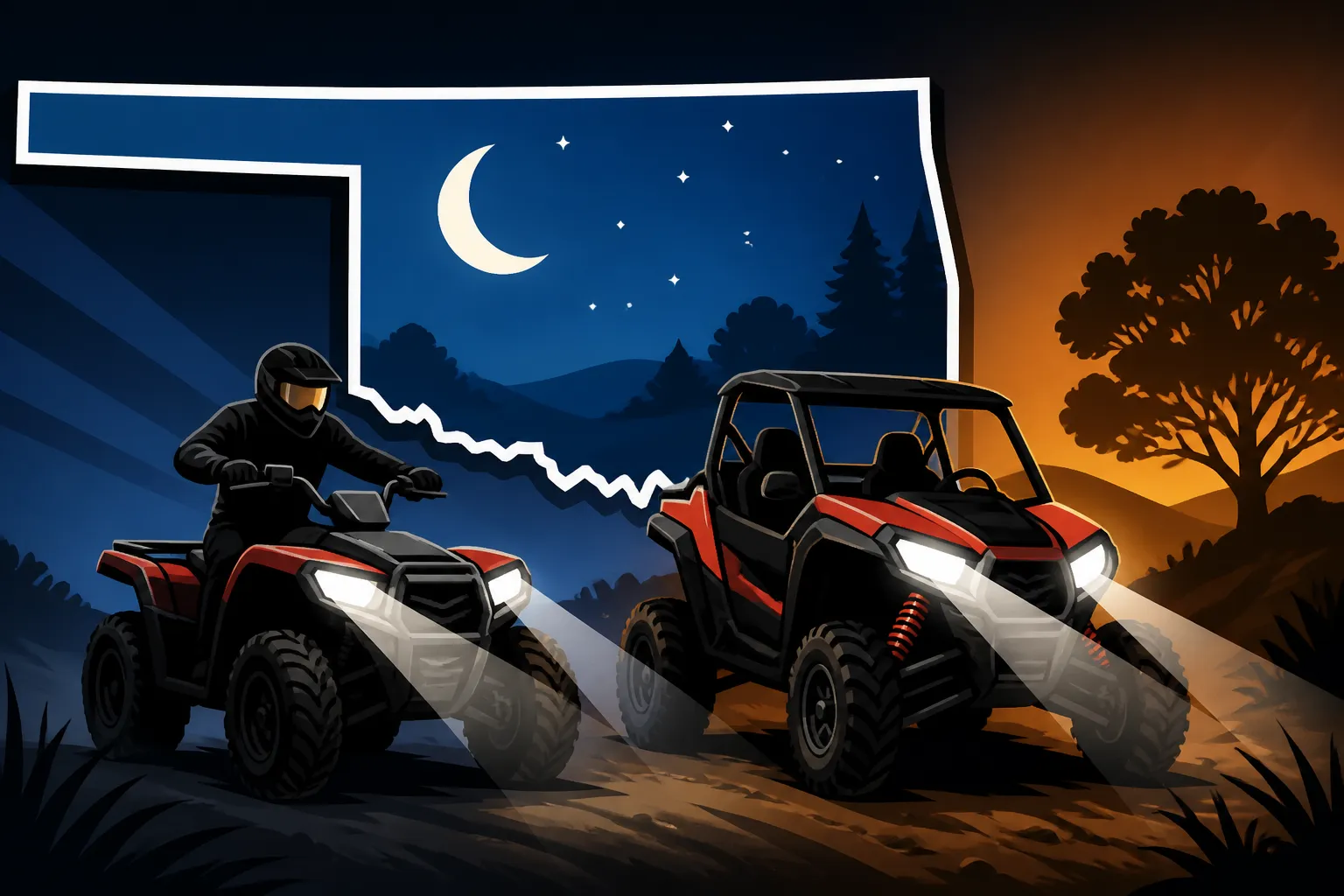
Legally speaking, "after dark" often refers to the period between sunset and sunrise, or more specifically, thirty minutes after sunset to thirty minutes before sunrise. This is the window when most vehicles, including ATVs and UTVs operating on public thoroughfares, are legally required to use headlights and taillights. It's not just about visibility for you, the rider, but also about making your presence known to others. Imagine trying to spot a dark-colored ATV on a country road without any lights; it's a recipe for disaster. This definition of "after dark" is crucial because it triggers specific equipment requirements and operational restrictions, shifting from the more relaxed daylight rules. It's not just a suggestion; it's a safety and legal mandate.
Core Restrictions on Public Roads at Night
Generally, operating an ATV or UTV on a public road in Oklahoma is restricted, and these restrictions tighten significantly after dark. Unless your UTV is specifically registered and equipped as a street-legal vehicle, or you're operating under a very narrow exemption like an "instrument of husbandry," you're likely not allowed on public roads at night. For street-legal UTVs, the rules are similar to any other motor vehicle: working headlights, taillights, brake lights, turn signals, and often reflective materials are absolutely mandatory. Without these, you're not just risking a ticket, you're endangering yourself and others. These rules are in place because ATVs and UTVs, by their very design, are not built to safely interact with typical road traffic, especially when visibility is low. [Oklahoma Street Legal UTV Requirements] outlines many of the nuances involved in getting a UTV road-ready. The intent is to keep everyone safe, and operating an inadequately lit off-road machine on a public thoroughfare after dark goes against that intent entirely.
Riding After Dark on Private Land and Agricultural Use
While public road rules are stringent, riding after dark on private land or for legitimate agricultural purposes offers a bit more flexibility. However, "flexibility" doesn't mean "no rules"; it means different rules and, crucially, still calls for a strong dose of common sense and safety awareness.
Private Property: Your Rules, With Common Sense
If you own the land, or have explicit permission from the landowner, riding an ATV or UTV after dark on private property is generally permissible. The state isn't dictating your lighting setup when you're on your own acreage, but you absolutely should be your own safety advocate. Think about it: hitting an unseen ditch, a fallen log, or even a fence post in the dark can lead to serious injury. Even on familiar land, shadows play tricks, and obstacles become invisible. Investing in robust aftermarket lighting, like a powerful LED light bar from a brand such as SuperATV, can dramatically improve your visibility and safety.
Beyond personal safety, there's the consideration of noise and disturbing neighbors. While not a state law, local ordinances or simply good neighborly conduct might suggest limiting loud engine noise late at night. Even on your own expansive ranch, common courtesy goes a long way. If you have guests riding with you, ensure they also understand the risks and are equipped with appropriate headlamps or helmet lights for added visibility. [Getting Written Permission Before Riding Private Land] is always a good idea, even for friends or family, to ensure clarity and avoid any misunderstandings.
Agricultural and Ranch Exemptions at Night
Oklahoma does provide specific exemptions for ATVs and UTVs used for agricultural purposes, often referred to as "instruments of husbandry." These machines might be allowed on public roads for short distances between fields or to access different parts of a farm, even after dark. However, this isn't a free pass. When operating an agricultural machine on a public road at night, it must be equipped with appropriate lighting, including headlights, taillights, and often a slow-moving vehicle (SMV) emblem. The purpose of these lights is to alert motorists to your presence. A farmer moving livestock or checking fences in the dead of night needs to be seen.
These exemptions are not for recreational use. You can't just slap a "farm use" sticker on your sport quad and go joyriding on county roads after sunset. The machine's primary use must genuinely be agricultural, and the road travel must be incidental to that use. It's about practical necessity, not pleasure. For those using their machines primarily for ranch work, understanding [Oklahoma Farm Use on County Roads] becomes paramount, especially if you're out tending to cattle or fixing fences as the stars come out.
| Riding Environment | General Night Riding Rule | Required Lighting (Min) | Notes for After Dark |
|---|---|---|---|
| Public Roads (Non-Street Legal) | Generally Prohibited | N/A (Should not be there) | Severe restrictions; permitted only for specific Ag use with full vehicle lighting. |
| Public Roads (Street-Legal UTV) | Permitted | Headlights, Taillights, Brake Lights, Turn Signals | Must meet all motor vehicle lighting standards. Annual plates required. |
| Private Land (Owned/Permitted) | Permitted | Recommended: Headlights, Taillights, Work Lights | No state minimum, but highly advised for safety; consider neighbors. |
| Designated OHV Parks (e.g., Little Sahara) | Often Permitted | Headlights, Taillights, Whip Flags with Lights | Specific park rules apply; usually require bright, visible lights and flag. |
| Agricultural Use on Roads | Permitted (Limited) | Headlights, Taillights, SMV Emblem | Only for bona fide farm/ranch work; not for recreation. |
Night Riding at Designated OHV Parks and Areas
For many riders, the real fun of night riding happens at dedicated off-highway vehicle parks and trails. These areas often embrace the thrill of riding under the stars, but they do so with specific rules designed to keep everyone safe in the dark.
Little Sahara State Park: A Beacon for Night Riders
Little Sahara State Park in Waynoka is perhaps Oklahoma's most famous spot for night riding. The park famously allows 24-hour access, meaning you can absolutely ride the dunes after dark. This is a huge draw for many, offering a completely different experience than daylight riding. However, this privilege comes with strict safety requirements. [Oklahoma Night Lighting on Dunes] is not just a suggestion there; it's heavily enforced. You're required to have a 10-foot whip flag with a bright orange flag at the top, and crucially, your machine must have working headlights and a taillight. Many riders go above and beyond, adding bright LED whip lights and powerful light bars to their machines to ensure maximum visibility to other riders in the vast, shifting sands. The dunes can be disorienting enough in daylight, so imagine trying to navigate them in the dark without adequate illumination. Park rangers are vigilant about enforcing these rules, and rightly so, as a collision in the dark can be catastrophic.
The experience of riding Little Sahara at night is incredible – the roar of engines echoing in the cool night air, the glow of hundreds of whip lights dotting the dunes like fireflies. But it's also a high-energy environment with riders of all skill levels. Being seen is paramount, which is why investing in quality lighting from a company like SuperATV can make a real difference in your safety and enjoyment. Always pay attention to other riders, especially those who might not be as well-lit, and maintain a safe following distance.
Other Public and Private OHV Areas
While Little Sahara is unique in its 24-hour access, other public and private OHV areas in Oklahoma may have different rules regarding night riding. For instance, state-managed areas like Robbers Cave OHV Area generally restrict riding to daylight hours. It's critical to check the specific rules and operating hours of any OHV park or trail system before you plan to ride after dark. A quick call to the park office or a visit to their official website can save you a lot of trouble.
Private riding parks, like Cross Bar Ranch, often set their own hours, which might include night riding on certain days or by special arrangement. They will also have their own set of safety requirements, which could include specific lighting, helmet rules, or age restrictions for night operations. Always respect these rules, as they are put in place for your safety and to maintain the park's operating permits. Disregarding them can lead to being asked to leave or even being banned from the facility. [Oklahoma OHV Camping With Trail Access] sometimes comes with extended riding hours, but verify before you go.
Essential Gear and Safety for Night Riding
Regardless of where you're riding after dark, safety should always be your top priority. Night riding, while exhilarating, brings increased risks. Proper preparation and the right gear can significantly mitigate these dangers.
Lighting: Beyond the Basics
Your machine's factory headlights and taillights are a good starting point, but for serious night riding, especially in challenging terrain, you'll want more. Consider adding aftermarket LED light bars. These can provide a much wider and brighter beam pattern, illuminating obstacles and terrain features far better than standard lights. LED cube lights are also excellent for specific areas, like rock lights for technical crawling or floodlights for camp setup. For side-by-sides, additional rear-facing amber or red lights can increase your visibility to riders behind you, especially in dusty conditions or at a place like Little Sahara where [Oklahoma's 10-Foot Whip Rule] is enforced. Many riders also add whip lights or lighted flags, which make your machine visible from a much greater distance and from all angles, particularly over dunes or hilly terrain.
When selecting lights, think about lumens and beam patterns. A good spot beam can help you see far ahead, while a flood beam will illuminate the immediate area around your machine. Some riders even combine both for comprehensive coverage. You also want lights that are durable and waterproof, capable of standing up to the dust, mud, and water crossings you might encounter. Brands like SuperATV offer a wide range of lighting solutions specifically designed for off-road environments, making it easier to find high-quality, robust options.
Rider Visibility and Personal Safety Gear
It's not just your machine that needs to be seen; you do too. Wearing reflective clothing or vests can make a huge difference if you happen to get off your machine or if your lights fail. A helmet with a clear visor is a must, and many riders opt for a headlight mounted to their helmet for additional light that moves with their gaze. [Oklahoma Helmet Law for Riders Under 18] already mandates helmets for younger riders, but good practice extends this to all riders after dark.
Beyond visibility, ensure your safety gear is in top condition. This includes a well-fitting helmet, goggles (to protect against dust and debris, which can be harder to see at night), gloves, and sturdy boots. A first-aid kit is essential for any ride, but especially at night when help might be harder to reach. Consider carrying a reliable flashlight or headlamp as a backup, even if your machine's lights are working. You never know when you might need to dismount and inspect something in the dark.
Navigating in the Dark
Even familiar trails can look completely different at night. GPS devices, whether standalone units or apps on your phone, are invaluable. Make sure they are charged and have up-to-date maps of your riding area. If relying on a phone, ensure it's in a protective, waterproof case and consider a portable charger. Paper maps, though old-school, can be a lifesaver in areas with no cell service. [Carrying a Paper Map Where GPS Fails] is always a smart move.
Always ride within your skill level and be extra cautious of your speed. Without the depth perception provided by natural light, judging terrain and obstacles becomes significantly harder. Take turns slower, approach crests with care, and avoid pushing limits you might confidently tackle in daylight. Consider riding with a buddy or in a group, especially for night rides. There's safety in numbers, and having someone else there can make a big difference in an emergency. Finally, always let someone know where you're going and when you expect to be back. This simple step can be crucial if you run into unexpected trouble.
Disclaimer
This article is for general informational purposes only and does not constitute professional advice. Laws, prices and regulations vary by location and change over time. Consult a qualified professional for guidance on your specific situation.