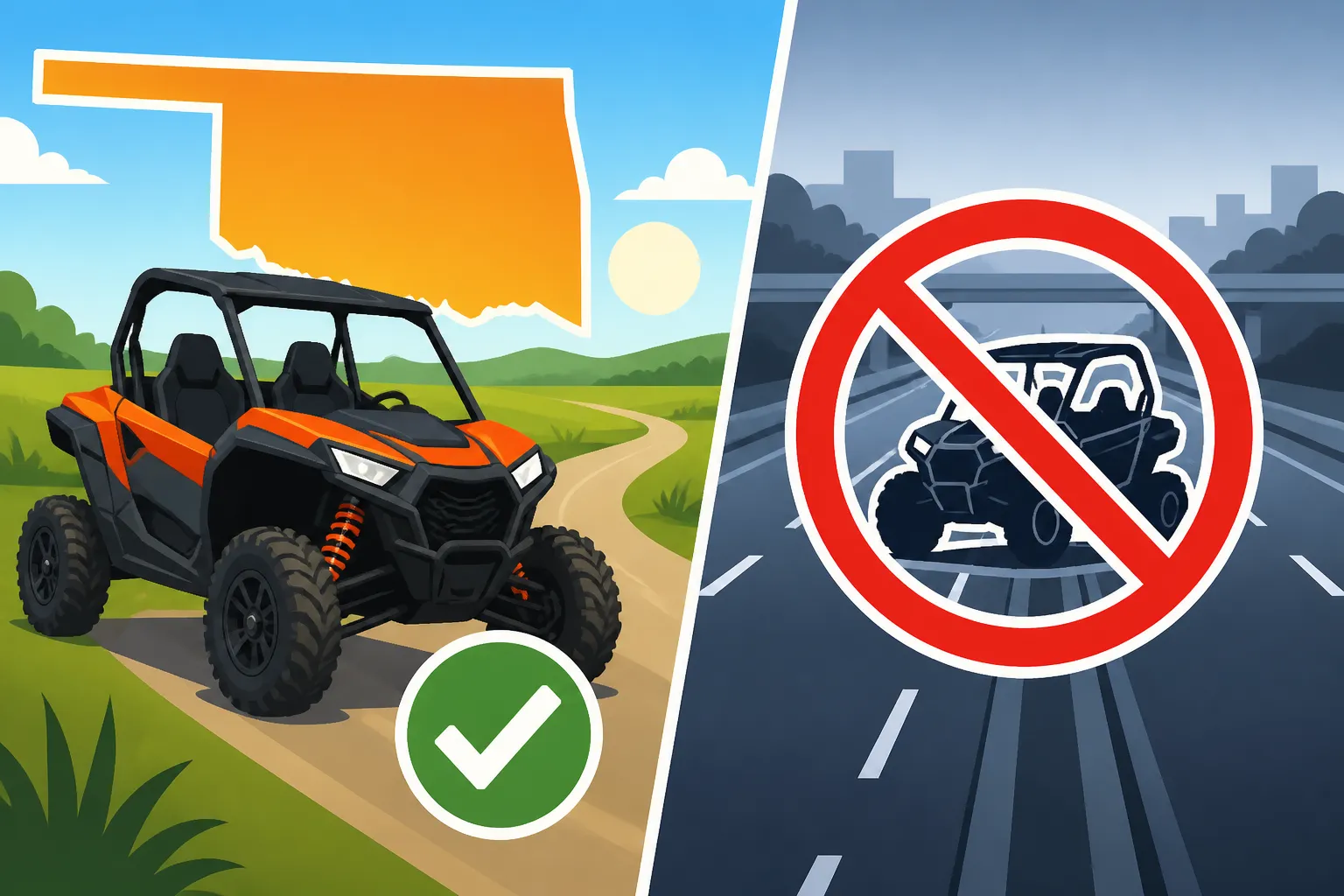
Oklahoma Street UTVs Stay Off Interstates
Picture this: you've just invested in a shiny new side-by-side, dreaming of cruising it down a scenic rural road to your favorite fishing spot or simply running a quick errand into town without having to load it onto a trailer. You heard Oklahoma now has a street-legal UTV class, which sounds fantastic! But then reality hits: you try to take it on a major highway or, heaven forbid, the interstate, and you realize something feels off. This guide is here to clear up the confusion and explain exactly why your Oklahoma street-legal UTV is restricted from interstates and many US highways, helping you navigate the rules safely and legally.
Understanding Oklahoma's Street-Legal UTV Laws
For years, the idea of legally driving an off-road utility vehicle (UTV) on public roads in Oklahoma felt like a pipe dream for many enthusiasts. We all knew the frustration of having to trailer our machines just to get to a local trail or a neighbor's property, even if it was just a mile down the county road. Then, a few years ago, the landscape shifted, and Oklahoma finally created a specific pathway for certain UTVs to become street-legal. However, this newfound freedom didn't come without caveats, and understanding these specifics is crucial for staying on the right side of the law.
The Genesis of Street-Legal UTVs in Oklahoma
Prior to 2021, driving your UTV on most public roads in Oklahoma was a gray area at best, and often outright illegal, except for very limited agricultural or municipal uses. Many of us just crossed our fingers and hoped we wouldn't run into a trooper during a quick hop between properties. But then, a significant piece of legislation was passed that year, fundamentally changing how UTVs could be used on public thoroughfares. This bill created a distinct category for "street-legal utility vehicles," setting out clear requirements for equipment, registration, and permissible roadways. It was a huge win for riders, opening up new possibilities, but it also introduced a new set of rules that required careful attention. This meant getting a special registration and a specific decal that signaled your UTV was authorized for road use, albeit with limitations.
Distinguishing Street-Legal from Off-Road Machines
It's easy to assume that once your UTV has a road plate, it's just like any other car or truck on the road. But that's where many riders get into trouble. A street-legal UTV in Oklahoma, while permitted on certain public roads, is not the same as a traditional passenger vehicle. The key differences lie in how they are registered, the equipment they must have, and most importantly for this discussion, where they are allowed to operate. An off-road UTV typically gets a simple [Oklahoma ATV Registration You Pay Once] decal for off-road use, which means it’s only meant for trails, private land, or specific agricultural purposes. A street-legal UTV, on the other hand, requires a special process to obtain a distinct annual road plate, similar to what you’d see on a regular vehicle. This plate signifies that the machine meets a different, more stringent set of equipment standards and has been approved for limited public road use. This distinction is vital because a standard off-road registration doesn't grant you any privileges on public paved roads beyond very specific crossings or agricultural exemptions.
Why Interstates and US Highways Are Restricted
This is often the biggest point of confusion and frustration for new street-legal UTV owners. You’ve gone through the trouble of adding all the required equipment, paid your fees, and have your shiny new [Oklahoma Road Plates for a Street-Legal UTV]. Why can't you hop on the I-35 for a few exits or cruise down a multi-lane US highway? The simple answer lies in the fundamental design and safety characteristics of UTVs, as well as the legislative intent behind their road legality. UTVs, even with their street-legal modifications, generally have lower top speeds, less protective enclosures, and are not designed to withstand high-speed impacts with larger, heavier vehicles like cars and trucks. The lawmakers, when creating the street-legal class, specifically carved out interstates and many US highways due to safety concerns. These roads typically have higher speed limits and greater traffic volumes, creating an inherently dangerous environment for a UTV. You'll find that [Oklahoma Street UTVs Stay Off US Highways] for very similar safety reasons, meaning routes like US-69 or US-75 are also generally off-limits for sustained travel. It's not about punishing riders; it's about minimizing the risk of serious accidents where a UTV would be significantly outmatched.
Essential Equipment for a Street-Legal UTV
So, you want to get your UTV approved for road use in Oklahoma? It’s not just about slapping on a license plate. There’s a specific checklist of items that your machine absolutely must have to meet the legal requirements. Think of it like getting your teenager ready for their driver's test – they need the right documents, the right skills, and a car that meets safety standards. For your UTV, this means ensuring it's equipped to interact safely with other vehicles on the road, even if only on designated routes.
What Your UTV Needs to Be Road-Ready
The state of Oklahoma has laid out clear guidelines for what constitutes a street-legal UTV. This isn't just a suggestion; it's the law, and tag agencies won't issue a road plate without verification of these items. First and foremost, you're going to need headlights and taillights that are functional and meet brightness standards. Beyond that, turn signals are a non-negotiable item, allowing you to clearly signal your intentions to other drivers. This often means adding aftermarket kits, as many factory UTVs aren't equipped with them. A working horn is also essential for alerting others, and you'll need at least one rearview mirror, though many riders opt for two for better visibility. Beyond the basics, working brake lights are mandatory, and your machine must have a windshield. If your UTV didn't come with one from the factory, you’ll need to install one, often requiring a durable, clear polycarbonate or glass option. Lastly, your tires must be street-appropriate and in good condition, and your machine must display an illuminated license plate lamp for the rear plate. All of these components ensure that your UTV is visible and capable of communicating its presence and actions to other motorists, which is paramount for safety on public roads.
Going Beyond the Bare Minimum for Safety
While the state mandates a core set of equipment, many savvy UTV owners, understanding the realities of road travel, choose to go above and beyond. Aftermarket accessories from reputable brands can significantly enhance both safety and compliance. For instance, while one rearview mirror is the minimum, installing side mirrors, perhaps from a brand like SuperATV, can drastically improve your field of vision, helping you spot cars or trucks in your blind spots, which are much more critical on a paved road than on a wide-open trail. Many riders also upgrade their turn signal kits to include brighter, more visible LED lights, ensuring their signals are seen even in bright daylight. Some even add a full set of DOT-compliant glass windshields, which offer better clarity and scratch resistance than typical polycarbonate. Additional lighting, like LED light bars (used responsibly and covered when on public roads), can make your machine more visible in adverse conditions or at dusk, though you must be careful not to blind oncoming traffic. Skid plates and tougher bumpers, while primarily thought of for off-road protection, can also offer a small measure of additional safety in minor road incidents. Investing in quality, road-specific components helps ensure not only that you meet the letter of the law, but also that you're as safe as possible sharing the road with other vehicles.
Licensing, Insurance, and Age Requirements for Street UTV Drivers
Just like driving any other vehicle on public roads, operating a street-legal UTV in Oklahoma comes with specific responsibilities regarding who can drive it, what kind of license they need, and how it must be insured. These aren't minor details; they are critical for ensuring public safety and avoiding legal trouble. For anyone planning to take their UTV from the trails to the town roads, understanding these requirements is non-negotiable.
Driver's License and Age Minimums
One of the most frequently asked questions about street-legal UTVs is about the driver. Can anyone hop behind the wheel? The answer is a resounding "no." Oklahoma law is very clear on this: to operate a street-legal UTV on public roads, the driver must possess a valid driver's license. This means a standard Class D driver's license, the same one you'd use to drive your car or pickup truck. No special endorsements are needed beyond that, which is a relief to many. Furthermore, there's a strict age requirement: [Oklahoma Drivers Must Be 16 for a Street UTV]. This ensures that drivers have at least some level of experience and maturity before operating a UTV on shared roads. It’s not just about knowing how to steer; it’s about understanding traffic laws, reacting to unpredictable situations, and exercising good judgment. So, while your eager 14-year-old might be a whiz on the trails, they'll have to wait a couple more years before they can legally take the street-legal UTV to the corner store.
The Importance of Insurance
Just like any other vehicle licensed for road use in Oklahoma, your street-legal UTV must be insured. This isn't optional; it's a fundamental requirement for anyone operating a vehicle on public thoroughfares. At the time of registration for your road plate, you will need to provide proof of liability insurance. [Oklahoma Insurance at Street Registration] is a critical step, and without it, you won't get your annual road decal. This insurance typically covers damages or injuries you might cause to other people or their property while operating your UTV on the road. It's there to protect you financially in case of an accident, which, unfortunately, can happen even to the most careful drivers. While liability is the minimum, many UTV owners opt for more comprehensive coverage, especially given the investment these machines represent. Factors like the value of your UTV, how often you plan to ride it on public roads, and your personal risk tolerance will influence the type and amount of coverage you choose. Always shop around and talk to your insurance provider to ensure you have adequate protection.
The No Motorcycle Endorsement Perk
Here’s a piece of good news that often surprises riders: despite sharing some characteristics with motorcycles, Oklahoma law specifically states that you do not need a motorcycle endorsement (often called an "M" endorsement) on your driver's license to operate a street-legal UTV. This is a significant distinction, as getting a motorcycle endorsement involves additional training, testing, and sometimes a separate permit period. For UTV drivers, this means your standard Class D driver's license is sufficient, provided you meet the age requirement. [Oklahoma Skips the Motorcycle Endorsement] is a deliberate choice by the legislature, recognizing that UTVs, while open-air and smaller than cars, handle differently than two-wheeled motorcycles and have a wider, more stable stance. This helps to streamline the process for UTV owners who want to get their machines road-legal without jumping through extra hoops meant for motorcyclists. It removes a potential barrier and makes street-legal UTV ownership more accessible for those who already hold a valid driver's license.
Where You CAN Ride Your Street-Legal UTV in Oklahoma
While getting your UTV street-legal opens up a world of possibilities beyond the trails, it’s crucial to understand that "street-legal" doesn't mean "any street." Oklahoma's laws are quite specific about the types of public roads you can and cannot use. Navigating these rules successfully means knowing your local ordinances, understanding state crossing regulations, and recognizing certain exemptions. It's about enjoying the freedom responsibly and avoiding unnecessary fines or dangerous situations.
Navigating County Roads and Municipal Streets
This is where your street-legal UTV really shines. Many rural roads and smaller municipal streets are fair game, but with a big caveat: local control. Oklahoma law empowers local governing bodies to decide which of their roads are open to street-legal UTVs. This means that while the state allows the classification, individual counties and cities have the final say over their specific roadways. So, while you might be able to cruise down a county road in one part of the state, a neighboring county might have different rules. For county roads, it’s often the [Oklahoma County Commissioners and ATV Roads] who make the decision, passing resolutions to open certain routes. For city streets, it's the municipal governing body. This patchwork of rules means you absolutely must do your homework before riding in any new area. Don't assume that because one rural road is open, all of them are. Always check with the county commissioner's office or city hall for current ordinances, and remember that rules can change. This local control ensures that communities can tailor the use of UTVs to their specific traffic patterns and safety concerns.
Crossing Rules for Highways and Railways
While street-legal UTVs are generally prohibited from sustained travel on interstates and most US highways, there are specific circumstances where you can cross them. This is a critical distinction that often gets overlooked. The law allows for crossing a highway that has a posted speed limit of 35 mph or less, and it must be done in daylight hours. This is about minimizing risk – a slower speed limit means less traffic speed differential, and daylight ensures maximum visibility. You can't just cross anywhere; it needs to be at a designated intersection or at a safe point where visibility is clear in both directions. The rule for [Oklahoma Highway Crossings in Daylight] is designed to get you from one permissible road to another as quickly and safely as possible, not to turn highways into UTV routes. Similarly, you are permitted to cross railway tracks, but again, this must be done in daylight. The rationale is the same: visibility and minimizing the time spent in a high-risk area. These crossing rules are not an invitation to travel along these high-speed thoroughfares but strictly to traverse them to access other permissible routes.
The Instrument of Husbandry Exception
Oklahoma law provides an interesting and important exception for vehicles used for agricultural purposes, often referred to as an "instrument of husbandry." This exception allows ATVs and UTVs (whether street-legal or not) to operate on public roads, regardless of local ordinances or even the specific highway restrictions, if they are being used for farm purposes. This means if you're driving your UTV to check fences, move cattle, transport tools to a field, or conduct other bona fide agricultural tasks, you generally fall under this exemption. [Oklahoma Farm Use on County Roads] is a classic example. However, this isn't a free pass for joyriding. The machine must be directly engaged in agricultural operations. If you're using your UTV to go to the store, even if you live on a farm, it likely wouldn't qualify as an instrument of husbandry. This exemption acknowledges the vital role these machines play in modern agriculture and ensures farmers can efficiently conduct their work without being unduly hampered by road regulations. It’s a pragmatic approach to support the state’s agricultural backbone, but it requires honest adherence to the "farm purpose" rule.
The Cost and Logistics of Street-Legal UTV Ownership
Deciding to make your UTV street-legal in Oklahoma is more than just adding some lights and mirrors; it involves a commitment to ongoing costs, paperwork, and maintenance. Many riders don't fully consider the financial and logistical aspects beyond the initial equipment purchase. It’s important to budget for these factors to avoid surprises and ensure you remain compliant year after year.
Initial Registration and Annual Renewal Costs
Getting your UTV titled and registered for street use in Oklahoma involves a few distinct costs. First, there's the initial titling fee, which is a one-time charge you'll pay at the tag agency. Then comes the excise tax, a 4.5% tax on the purchase price of the machine, which is also a one-time fee paid when you title it. Crucially, your street-legal UTV will then require an annual registration. Unlike the standard [Oklahoma ATV Registration You Pay Once] which is a lifetime decal for off-road use, the street-legal designation requires yearly renewal. This means paying an annual registration fee to receive your new [Oklahoma Yearly Decals for Street UTVs]. These costs can vary, so it's always best to check with your local tag agency or Service Oklahoma for the most current figures. Don't forget to factor in the cost of the physical road plate itself, which is often a small, one-time fee. These recurring costs are something many riders overlook, thinking the $11 off-road registration is all they'll ever pay. But for street legality, it's an ongoing annual expense, similar to registering a car.
Staying Compliant: Regular Inspections and Maintenance
Once your UTV is street-legal, the responsibility doesn't end. You're expected to maintain your machine in a roadworthy condition, ensuring all the required equipment remains functional. This means regularly checking your headlights, taillights, brake lights, turn signals, and horn. Are your mirrors secure and providing clear visibility? Is your windshield free from major cracks that obscure your view? While Oklahoma doesn't have a mandatory annual safety inspection program for street-legal UTVs like some states do for cars, law enforcement can still pull you over if your equipment is visibly deficient. A blown headlight or a non-functioning turn signal isn't just an inconvenience; it's a safety hazard and a violation. Beyond the legal requirements, consistent maintenance, such as checking tire pressure, brake fluid, and general wear and tear, is crucial for your own safety and the longevity of your machine. Regular checks mean you’re less likely to be surprised by an issue that could lead to a citation or, worse, an accident.
Aftermarket Upgrades and Compliance
Many UTV owners love to customize their machines with aftermarket upgrades, and this is perfectly fine for street-legal UTVs, as long as those upgrades don't compromise the required safety equipment or make the machine non-compliant. For instance, if you're upgrading your lighting, ensure the new lights still meet brightness and visibility standards. If you're adding a lift kit, consider how it might affect your machine's stability and visibility to other drivers, especially if you're already restricted to slower roads. Many brands, like SuperATV, offer a wide range of accessories, from full cab enclosures to upgraded suspension components and beefier tires. When selecting these upgrades, always ask yourself if they enhance or detract from your UTV's road-legal status. For example, if you're replacing mirrors, ensure the new ones are as effective, if not more so, than the originals. Choosing accessories that are designed with road safety in mind can make a big difference, allowing you to personalize your UTV while keeping it fully compliant and safe for public road use. Just remember, a cool modification should never come at the expense of legal compliance or safety.
| Feature / Requirement | Off-Road Only UTV | Street-Legal UTV |
|---|---|---|
| Primary Use | Trails, private land, farm work | Public roads (limited), trails, private land, farm work |
| Registration | [Oklahoma ATV Registration You Pay Once] (lifetime decal) | Annual road plate & decal, renewed yearly |
| Required Equipment | Minimal (lights for night riding, often not specified for all) | Headlights, taillights, brake lights, turn signals, horn, mirrors (at least one), windshield, license plate light |
| Driver's License | Not typically required for off-road use (age limits may apply) | Valid Class D driver's license (16+ years old) |
| Motorcycle Endorsement | Not applicable | Not required |
| Insurance | Not state-mandated for off-road use | [Oklahoma Insurance at Street Registration] (mandatory liability) |
| Interstate Access | No | No |
| US Highway Access | No (except specific crossings/farm use) | No (except specific crossings/farm use) |
| County/City Road Access | Restricted (usually only specific crossings/farm use) | Permitted where local ordinances allow |
| Annual Renewal | No | Yes ([Street UTV Decals Renew Every Single Year]) |
Disclaimer
This article is for general informational purposes only and does not constitute professional advice. Laws, prices and regulations vary by location and change over time. Consult a qualified professional for guidance on your specific situation.