Oklahoma Skips the Motorcycle Endorsement
It's a common worry for anyone thinking about taking their UTV from the trails to the town roads: "Do I need a special motorcycle endorsement on my driver's license just to drive my side-by-side legally in Oklahoma?" This question can cause a lot of headaches and confusion, especially since the rules for off-road vehicles on public roads can vary so much. Rest assured, this guide will clear up that specific question for you, detailing exactly what Oklahoma requires for street-legal UTV drivers.
The Big Question: Do You Need a Motorcycle Endorsement for Your Street-Legal UTV?
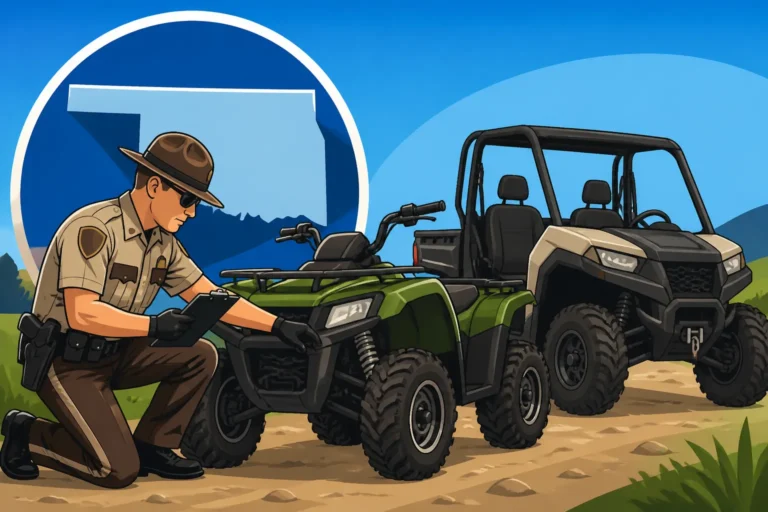
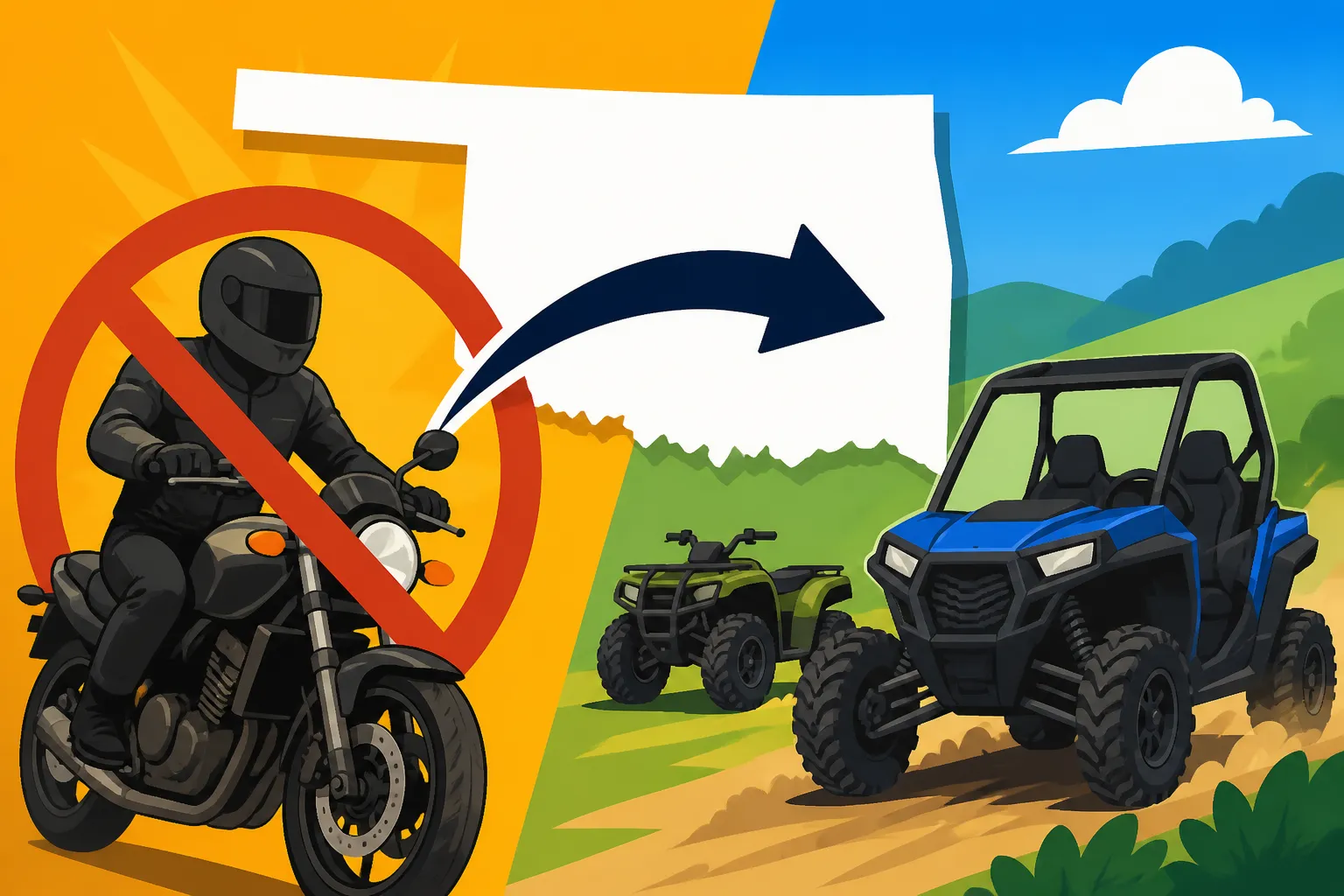
Let's cut right to the chase because this is the question that keeps many riders up at night. The good news for UTV enthusiasts in the Sooner State is that no, you typically do not need a motorcycle endorsement to operate a street-legal UTV on Oklahoma's public roads. This is a huge relief for many, as obtaining a motorcycle endorsement involves additional testing and a different class of license.
Why the Confusion Exists
It's easy to see why there's so much confusion surrounding this. For years, the lines between what constitutes an "off-road vehicle," a "motorcycle," or a "car" have been blurry, especially as UTVs have evolved. Many states classify off-road vehicles differently, and some might lump UTVs in with motorcycles due to their open-air nature or two-wheeled counterparts. Plus, if you're riding a dirt bike or an off-road motorcycle on public roads (if permitted), you absolutely need that endorsement. So, it's natural for people to assume that a UTV, which also lacks an enclosed cabin and often has handlebars (though most UTVs have steering wheels), would fall under similar licensing requirements. The very idea of an ATV or UTV on a public road used to be foreign to many, and the legal framework has had to catch up.
The lack of consistent national guidelines means that what's true in Texas might not be true in Oklahoma, or even between different counties within the same state. Riders often hear anecdotes or misinterpret broad vehicle codes, leading them to believe a motorcycle endorsement is a must-have. This widespread uncertainty often stems from the recent emergence of street-legal UTV laws themselves, which are still relatively new in many places.
The Oklahoma Law That Clarifies
Oklahoma has taken a clear stance on this. The state has established a specific classification for UTVs that are equipped to be "street legal." This classification separates them from traditional motorcycles and mandates a different set of requirements. Essentially, when a UTV meets all the criteria to be considered street-legal, it's treated more akin to a low-speed vehicle or a specialized automobile for licensing purposes, rather than a two-wheeled vehicle that requires an "M" endorsement. This legislative clarity means that riders don't have to jump through the extra hoops of motorcycle testing, as long as their machine is properly equipped and registered.
This legal distinction acknowledges the unique design and operational characteristics of UTVs, which, while capable of off-road prowess, handle differently than motorcycles on paved surfaces. For instance, most UTVs have four wheels, a steering wheel, and pedals, aligning them more closely with conventional cars than with motorcycles. The state's goal was to create a pathway for UTVs to legally use certain public roads while ensuring public safety, without imposing unnecessary licensing burdens that don't quite fit the vehicle type.
Understanding Oklahoma's Street-Legal UTV Class
Oklahoma has a specific framework in place for allowing UTVs to be driven on certain public roads. It's not just a free-for-all; there are rules, regulations, and specific equipment requirements that your UTV must meet to qualify as "street-legal." Understanding these guidelines is paramount before you ever consider leaving the dirt trails for a paved road. This system was largely solidified through legislation, creating a distinct class of vehicles rather than trying to shoehorn UTVs into existing categories like cars or motorcycles.
How the Law Defines "Street Legal"
For a UTV to be considered street-legal in Oklahoma, it means it has been modified and equipped to comply with certain safety standards and vehicle codes typically associated with on-road vehicles. This isn't just about sticking a license plate on it; it's about meeting a specific set of criteria that ensures the machine is visible, controllable, and safe for sharing the road with other traffic. The state law outlines these requirements to bridge the gap between an off-road toy and a legitimate road-going vehicle. It's about making sure your machine is predictable and understandable to other drivers, contributing to overall road safety.
This distinction is crucial because without it, any UTV on a public road would be operating illegally, regardless of how safe or well-maintained it might be. The definition of "street legal" provides a legal pathway and clear guidelines for enthusiasts who want to expand their riding horizons beyond private land or dedicated off-road parks. It’s also important to remember that these laws are specific to Oklahoma; what makes a UTV street-legal here might not apply if you cross state lines.
Key Equipment Requirements
To meet Oklahoma's street-legal criteria, your UTV must be outfitted with specific safety and operational equipment. This isn't optional; it's a mandatory checklist you need to run through. Think of it as preparing your UTV for a road-trip, not just a trail ride. These requirements include headlights (which must be on during operation), tail lights, brake lights, and turn signals for both front and rear. A horn is also a necessity, providing a crucial audible warning. You'll also need at least one rearview mirror, properly mounted to give you a clear view of traffic behind you.
Furthermore, many riders choose to upgrade their UTVs with windshields, proper tires designed for road use (as opposed to aggressive off-road treads that can be unstable on pavement), and even speedometers, though the latter might be more for convenience than a strict legal mandate. Companies like SuperATV offer complete street-legal kits that bundle many of these necessary components, making it easier for riders to convert their off-road machines without having to source each part individually. Ensuring your machine has all [Oklahoma Equipment Required for Street UTVs] is non-negotiable.
Age and Licensing for Drivers
So, if you don't need a motorcycle endorsement, what do you need? In Oklahoma, to drive a street-legal UTV on public roads, you generally need a valid, standard Class D operator's license, the same kind you'd use to drive your car or truck. The state dictates that [Oklahoma Drivers Must Be 16 for a Street UTV], meaning you must be at least sixteen years old to legally operate one on designated public roads. This age requirement aligns with the general driving age for cars, reinforcing the idea that street-legal UTVs are treated similarly to other conventional road vehicles in this regard.
It's important to differentiate this from off-road riding on private land or in designated OHV parks, where age requirements might be different or more lenient, often allowing younger riders with adult supervision. However, for public road use, the state's concern for safety and driver competence leads to the standard sixteen-year-old minimum and the requirement of a regular driver's license. This approach ensures that anyone operating a street-legal UTV on public thoroughfares has demonstrated a basic level of driving proficiency and knowledge of traffic laws.
What Kind of License Oklahoma Requires for Street UTVs
When it comes to the specific license you need to pilot your street-legal UTV down an Oklahoma road, the answer is refreshingly straightforward compared to many other states. You're not looking at a whole new set of tests or a special endorsement added to your existing license. This simplicity is a key factor in making street-legal UTVs a more accessible option for many outdoor enthusiasts who also want to use their machines for practical purposes or recreational rides on paved surfaces.
Standard Driver's License Is Usually Enough
For most riders, your regular, everyday driver's license is all you'll need. That's right, the same Class D license you use to drive your pickup truck to the grocery store or your sedan to work is typically sufficient. This simplifies the process immensely, as you don't have to go through the hassle of additional written or practical exams specifically for a UTV. The state essentially recognizes that the skills required to operate a street-legal UTV on public roads are largely covered by the standard driver's license curriculum, assuming the UTV itself meets all the necessary equipment requirements.
This approach acknowledges that a street-legal UTV, despite its off-road origins, functions much like a small, open-air car when properly equipped for the road. You're still steering with a wheel, using pedals for acceleration and braking, and adhering to the same traffic laws as other motorists. The state's focus is on ensuring the vehicle is safe and properly equipped, and that the driver has a foundational understanding of road rules, which a standard driver's license confirms.
Why No Motorcycle Endorsement?
The primary reason Oklahoma does not require a motorcycle endorsement for street-legal UTVs boils down to how the state classifies these vehicles. Motorcycles, by legal definition, typically have two or three wheels and require a specific set of operational skills that differ significantly from a four-wheeled vehicle controlled by a steering wheel and pedals. A UTV, with its four wheels, often a steering wheel, and side-by-side seating, simply doesn't fit the traditional legal definition of a motorcycle, even though it shares some open-air characteristics.
The state legislation that created the street-legal UTV class made a deliberate distinction, recognizing UTVs as a separate category of motor vehicle. This is why [Oklahoma Skips the Motorcycle Endorsement] is a fact, not a myth. It's a pragmatic decision that avoids forcing a square peg into a round hole. The skills for balancing a two-wheeled motorcycle and navigating traffic are distinct from operating a four-wheeled UTV, and Oklahoma's laws reflect that difference. It's a common source of relief for UTV owners, as getting a motorcycle endorsement can be an additional hurdle of time, money, and skill acquisition that isn't always relevant to UTV operation.
Comparing Street-Legal UTVs to Motorcycles and Cars
Understanding the licensing requirements for street-legal UTVs in Oklahoma becomes clearer when you compare them directly to other vehicle types like motorcycles and standard automobiles. This comparison helps to highlight the unique legal niche that street-legal UTVs occupy and why the state's approach to their regulation is both logical and practical. It’s all about fitting the right rules to the right machine, ensuring safety without overcomplicating the process for riders.
Differences in Licensing and Endorsements
The most obvious difference, as we've established, is the motorcycle endorsement. For motorcycles, Oklahoma requires an "M" endorsement on a driver's license. This involves specific knowledge and skill tests to ensure a rider can safely operate a two or three-wheeled vehicle, which has different handling characteristics and safety considerations than a car. For standard cars, a Class D license is all that's needed. [No Motorcycle Endorsement Needed] for street-legal UTVs places them squarely in the same licensing category as cars, meaning your existing Class D license covers it. This simplifies things tremendously for anyone who already drives a car but wants to add a street-legal UTV to their garage.
The rationale is clear: UTVs, with their four wheels and stable stance, do not demand the same balance skills as a motorcycle. While they might feel different than a car due to their open design and potentially higher center of gravity, the fundamental controls (steering wheel, pedals) are much more aligned with a car than a motorcycle. This thoughtful distinction by Oklahoma avoids unnecessary barriers for riders while still maintaining a reasonable standard of driver qualification on public roads.
Operational Restrictions Unique to Street UTVs
While the licensing is similar to a car, street-legal UTVs do come with their own set of operational restrictions that differ from both cars and motorcycles. For instance, [Oklahoma Street UTVs Stay Off Interstates]. They are typically confined to roads with lower speed limits, often 35 mph or less, although some county ordinances may permit higher speeds on certain county roads. This means you won't be cruising down I-35 in your side-by-side. These limitations are put in place due to the UTVs' design, which may not be as robust or as visible as a full-sized vehicle at highway speeds.
Another key restriction often involves nighttime driving. While street-legal UTVs do require proper lighting, some areas or specific ordinances might have additional rules for operating them after dark, especially concerning visibility. This contrasts with cars and motorcycles, which are generally permitted on all legal roads at any time, provided they have working lights. Riders of street-legal UTVs also need to be aware of [Oklahoma Rules for Riding a County Road] and [Oklahoma Rules for Riding a City Street] as these can vary. These unique operational rules are critical for UTV owners to understand, as they dictate where and when their street-legal machine can actually be used on public thoroughfares, making it distinct from the broad privileges afforded to cars.
| Feature | Standard Car Driver | Motorcycle Rider | Street-Legal UTV Driver |
|---|---|---|---|
| Minimum Age | 16 | 16 | 16 |
| License Type | Class D | Class D + M Endorsement | Class D |
| Helmet Required | No | Yes (under 18) | Yes (under 18) |
| Interstate Access | Yes | Yes | No |
| US Highway Access | Yes | Yes | Limited |
| Insurance Required | Yes | Yes | Yes (at registration) |
| Registration Type | Annual Plate | Annual Plate | Annual Decal/Plate |
Equipping Your UTV for Oklahoma Roads
Getting your UTV ready for the open road is about more than just understanding the laws; it's about making physical modifications to your machine. This transition from a purely off-road warrior to a road-worthy cruiser requires thoughtful upgrades and the installation of specific components. It’s an investment, but one that opens up new avenues for how you can use and enjoy your UTV.
Essential Street-Legal Accessories
To truly make your UTV street-legal in Oklahoma, you'll need a range of accessories that ensure compliance with state vehicle codes. First and foremost are proper lighting systems: [Oklahoma Turn Signals and Mirrors] are absolutely essential. This means front and rear turn signals that are clearly visible, allowing you to signal your intentions to other drivers. You'll also need working brake lights and tail lights, along with headlights that meet state standards for brightness and aim. A functional [Oklahoma Horns on a Street UTV] is another non-negotiable item, providing an audible warning when needed.
Beyond lighting, you'll need at least one rearview mirror, properly mounted to offer a clear view of traffic approaching from behind. Many riders opt for side mirrors on both sides for enhanced visibility. A windshield is often a smart addition, providing protection from debris and elements, though specific legal mandates can vary on this. Consider also upgrading your tires for road use; while knobby off-road tires are great in the mud, they can wear quickly and handle poorly on pavement. Street-specific UTV tires offer better traction, a smoother ride, and longer life for road travel.
Choosing Quality Components
When equipping your UTV for street legality, the temptation might be to go for the cheapest options, but this is one area where quality truly matters. These components aren't just for compliance; they're for your safety and the safety of others on the road. Investing in durable, reliable parts means less downtime for repairs and more confidence when you're driving on public roads. Think about turn signal kits that are weatherproof and brightly lit, or mirrors that resist vibration and offer a clear, undistorted view.
Brands like SuperATV are well-known in the UTV community for offering a wide range of aftermarket accessories, including comprehensive street-legal kits. These kits are often designed to integrate seamlessly with popular UTV models and can save you the headache of sourcing individual components and ensuring compatibility. They understand the nuances of off-road machines needing to meet on-road standards. When selecting accessories, look for those that are robust, easy to install, and designed to withstand the rigors of both on-road and occasional off-road use, ensuring your investment lasts.
Beyond the License: Other Rules for Street-Legal UTVs
While understanding licensing is a big step, it's just one piece of the puzzle for street-legal UTV operation in Oklahoma. There are other crucial regulations concerning where you can ride, how your machine must be registered, and what kind of insurance you'll need. Ignoring these can lead to fines, impoundment, or even serious legal issues, so it's vital to be fully informed.
Where You Can and Cannot Ride
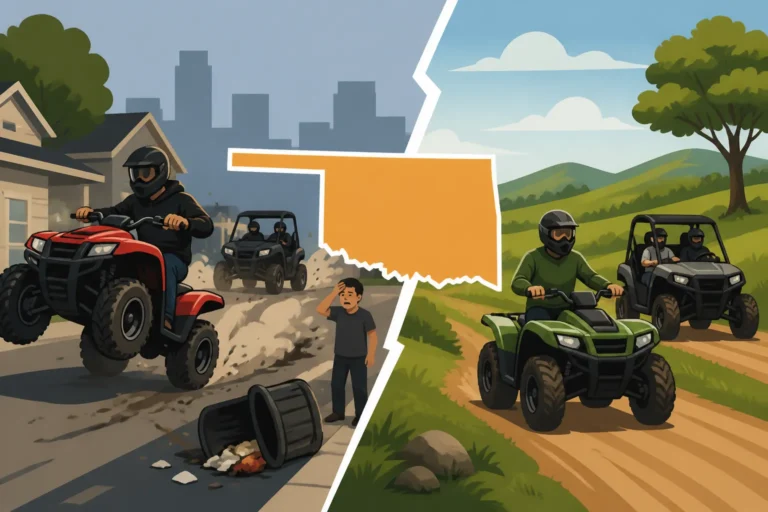
Even with a street-legal UTV and the right license, you can't just drive anywhere you please. Oklahoma has specific rules about which roads are open to street-legal UTVs. Generally, they are permitted on county roads and city streets, particularly those with posted speed limits of 35 mph or less. However, some counties and municipalities may have specific ordinances that either open or restrict certain roads, so it’s always wise to check local regulations. For example, [Oklahoma County Commissioners and ATV Roads] indicates that local authorities have power over this.
As previously mentioned, street-legal UTVs are strictly prohibited from interstates and often from U.S. highways. While you may be allowed to cross highways in daylight under specific conditions, sustained travel on them is generally not permitted. Always know the [Oklahoma Crossing Rules at 35 mph] before attempting to cross a higher-speed road. These restrictions are in place to ensure safety, as UTVs may not be designed for the higher speeds and traffic volumes found on major arterial routes. It’s always a good practice to plan your routes to avoid these restricted areas and confirm local ordinances before venturing out.
Insurance and Registration Essentials
Even if your UTV is street-legal and you have the proper driver's license, you still need to complete the full legal requirements for any road-going vehicle. This means your street-legal UTV must be properly registered with the state of Oklahoma. Unlike the one-time registration for off-road ATVs, [Oklahoma Annual Plates for Street UTVs] are required. You'll visit a tag agency for this, just like you would for a car. This registration process will also involve paying any applicable [Oklahoma Excise Tax at Titling].
Proof of liability insurance is another non-negotiable requirement for street-legal UTVs. Just like with your car, you'll need to carry adequate insurance coverage to protect yourself and others in the event of an accident. [Oklahoma Insurance at Street Registration] means you'll typically need to show proof of insurance when you register your street-legal UTV at the tag agency. While off-road machines don't always require insurance by law, once you put that UTV on public roads, it falls under the same insurance mandates as any other motor vehicle. Failing to carry insurance can lead to significant penalties, including fines and suspension of driving privileges.
Disclaimer
This article is for general informational purposes only and does not constitute professional advice. Laws, prices and regulations vary by location and change over time. Consult a qualified professional for guidance on your specific situation.