Oklahoma Annual Plates for Street UTVs
Navigating the world of off-road vehicles can sometimes feel like trying to untangle a ball of yarn, especially when you start talking about taking them on paved roads. For many Oklahoma riders, the dream of driving their UTV from their property straight to the local store or down a county road has been a distant fantasy, fraught with legal ambiguity and potential fines. This guide is here to clear up that confusion, explaining exactly what it takes to get your UTV registered with those crucial [Oklahoma Annual Plates for Street UTVs] and what rules you'll need to follow to keep it road-legal and avoid trouble.
Understanding Oklahoma's Street-Legal UTV Class
For years, the lines were blurry. You had ATVs and UTVs, and then you had street-legal vehicles. The two rarely mixed on public asphalt without significant risk. But in Oklahoma, a dedicated class for street-legal UTVs has emerged, offering a pathway for riders to enjoy their machines beyond the trails and private property. This isn't just about throwing a license plate on your side-by-side; it's about meeting a specific set of requirements that transform your off-road warrior into a machine capable of legally sharing the road with cars and trucks.
What Makes a UTV "Street Legal" in the Sooner State?
Becoming "street legal" isn't a casual affair; it's a specific designation that your UTV must earn by meeting certain equipment and registration standards. Essentially, the state wants to ensure that if your UTV is going to be mixing it up with traffic, it needs to behave and be equipped like a motor vehicle, not just a recreational toy. This means having all the necessary safety features that allow drivers to see and be seen, and to control their vehicle effectively on public roads. It's a commitment to safety and compliance, distinguishing these machines from their purely off-road counterparts.
Think about the basic requirements for any car on the road: headlights, taillights, brake lights, turn signals, a horn, mirrors, and a windshield. These aren't just suggestions for street-legal UTVs; they are mandatory. Each of these components serves a vital function in preventing accidents and ensuring that your UTV is visible and predictable to other drivers. Without these, your UTV isn't just missing a feature; it's failing to meet the foundational criteria for road use.
The Legal Framework: How This Class Came to Be
The creation of the street-legal UTV class in Oklahoma didn't happen overnight. It was the result of legislative efforts recognizing the growing popularity of UTVs and the desire of many owners to use them for more than just recreational trail riding or farm work. Prior to this, UTVs often fell into a legal gray area, sometimes treated like golf carts in certain municipalities, or strictly confined to off-road use everywhere else. This created a patchwork of rules that was confusing for riders and law enforcement alike.
The specific statute that formalized the street-legal UTV class aimed to provide clarity and a uniform set of regulations across the state. This legislative action acknowledges that UTVs, especially modern side-by-sides, are robust vehicles capable of handling road conditions, provided they are properly equipped. It's a pragmatic approach to integrate these machines into the existing traffic ecosystem, allowing them to be used for errands, short commutes, or accessing trails from nearby staging areas. This new class has brought much-needed structure to what was once a very muddled situation for UTV owners. This change in law began to be implemented by [Oklahoma Tag Agencies Started in July 2021], making the process more streamlined.
Distinguishing Street-Legal from Off-Road Only
It's crucial to understand that simply owning a UTV does not make it street-legal. The vast majority of UTVs sold are designed and intended exclusively for off-road use, and they lack the essential components required for public road travel. An off-road UTV might have headlights, for example, but they might not meet the brightness or beam pattern standards for road use. It certainly won't have turn signals, a rearview mirror, or a proper windshield unless those items have been specifically added as aftermarket modifications.
The distinction goes beyond just equipment; it's also about registration and titling. An off-road UTV will typically have an [Oklahoma ATV Registration You Pay Once] and a front decal, signifying its off-road status. A street-legal UTV, however, will have a specific "street legal" designation on its title and will be issued an actual license plate that renews annually, just like a car. This fundamental difference in registration and legal classification dictates where and how you can legally operate your machine. Don't confuse the two; attempting to drive an off-road-only UTV on public roads can lead to fines, citations, and even impoundment.
Essential Equipment for Oklahoma Street UTV Annual Plates
Getting your UTV street-legal isn't just about paperwork; it's about making sure your machine is equipped to safely operate alongside other vehicles. Oklahoma has specific requirements for the safety features and equipment your UTV must possess to qualify for those coveted annual plates. These aren't just suggestions; they are non-negotiable items that will be checked when you go to register your vehicle.
Lighting and Signaling: Seeing and Being Seen
One of the most critical aspects of street-legal conversion involves your UTV's lighting and signaling systems. On the road, communication with other drivers is paramount, and your UTV needs to be able to clearly indicate its presence and intentions. This means equipping your machine with proper headlights, taillights, brake lights, and, critically, functional turn signals. Headlights must be capable of illuminating the road ahead to a certain distance, and taillights and brake lights need to be clearly visible from the rear, especially at night or in adverse weather conditions.
Turn signals are perhaps the most noticeable addition for many off-road UTVs, as they are rarely standard equipment. You'll need amber-colored turn signals visible from both the front and rear, connected to a system that allows you to easily indicate left and right turns. Many riders turn to aftermarket suppliers for these kits, ensuring they meet the necessary visibility and functionality standards. Companies like SuperATV offer comprehensive turn signal kits, often including everything from the lights themselves to the wiring harness and a dash-mounted switch, simplifying the conversion process significantly. Remember, these systems need to be robust enough to handle vibrations and exposure to the elements that your UTV will experience. [Oklahoma Turn Signals and Mirrors] are non-negotiable.
Mirrors, Horns, and Other Safety Gear
Beyond lighting, other fundamental safety items are required. A working horn is essential for warning other drivers or pedestrians of your presence in potentially dangerous situations. You'll also need at least one rearview mirror, properly affixed to your UTV, providing a clear view of the road behind you. While many UTVs come with a basic center mirror, some states require side mirrors, so it's wise to ensure you have adequate rear visibility. Again, a simple add-on mirror from a brand like SuperATV can solve this requirement quickly and effectively.
Furthermore, a windshield is typically required to protect the driver and passengers from road debris and weather, just like in any other vehicle. This windshield must be made of safety glass or a similar shatter-resistant material. Some UTVs come with half-windshields, but for street-legal status, a full windshield is usually necessary. Additionally, a properly functioning speedometer is required to ensure you can adhere to posted speed limits. While not always explicitly listed, functional seatbelts for all occupants are also an implicit safety requirement for any road-legal vehicle. [Oklahoma Horns on a Street UTV] are a must-have.
Tires and Modifications for Road Use
While not always codified as explicitly as lights and mirrors, the type of tires you run on your street-legal UTV is an important consideration. Off-road specific tires, with their aggressive tread patterns and soft compounds, wear down extremely quickly on pavement and can handle very differently than road-optimized tires. While not strictly illegal to use them, you might find yourself replacing expensive tires far more often if you're frequently on the road. Many riders choose a more all-terrain or even specific "street" UTV tire that offers better longevity and handling characteristics on asphalt.
Beyond tires, certain structural modifications might be necessary for your UTV to truly be roadworthy. This could include adding wheel flares to prevent debris from being kicked up, or ensuring your suspension system is properly maintained and aligned for consistent road handling. The goal is to ensure your UTV is stable, predictable, and doesn't pose an undue hazard to others on the road. While not a direct equipment requirement for initial registration, ongoing maintenance and appropriate modifications for consistent road use are crucial for safety and legality.
Here's a quick overview of required equipment:
| Equipment Feature | Requirement for Street-Legal UTV in Oklahoma |
|---|---|
| Headlights | Functional, proper illumination |
| Taillights | Functional, visible from rear |
| Brake Lights | Functional, illuminate with brake pedal |
| Turn Signals | Front and rear, amber, functional |
| Horn | Functional, audible at 200 feet |
| Rearview Mirror | At least one, providing clear rear view |
| Windshield | Safety glass or shatter-resistant material |
| Speedometer | Functional and accurate |
| Seatbelts | Functional for all occupants |
| License Plate Light | Illuminates rear license plate |
| Reflectors | Often integrated into lights, but check |
The Process of Obtaining Your Annual Street UTV Plate
Once your UTV is properly equipped to meet Oklahoma's street-legal standards, the next step is navigating the registration process to get those [Oklahoma Road Plates for a Street-Legal UTV]. This involves gathering specific documents, visiting a local tag agency, and understanding the financial obligations that come with annual registration. It's a different process than the one-time registration for off-road machines, so pay close attention to the details.
Gathering Your Documentation: Title, MSO, and Proof of Insurance
The foundation of your street-legal registration begins with having the correct paperwork. If you've purchased a brand-new UTV, you'll need the Manufacturer's Statement of Origin (MSO) or Manufacturer's Certificate of Origin (MCO). This document is essentially the birth certificate of your UTV and is crucial for getting the initial title. For a used UTV, you'll need the existing title, properly signed over to you if it was a private sale. Make sure the title accurately describes the vehicle.
Another absolutely critical piece of documentation is proof of liability insurance. Just like any other motor vehicle on Oklahoma roads, your street-legal UTV must be insured. You'll need to present a current insurance card or policy declaration that meets the state's minimum liability requirements. Without this, the tag agency simply cannot process your street-legal registration. Be sure to shop around for UTV insurance, as rates can vary, and ensure your policy specifically covers road use. [Oklahoma Insurance at Street Registration] is a hard requirement.
Visiting the Tag Agency: What to Expect
With all your documents in hand – the MSO or title, proof of insurance, and a valid ID – your next stop is an authorized Oklahoma tag agency. When you arrive, be clear that you are there to register a street-legal UTV and apply for annual plates, not just an off-road decal. The process will be similar to registering a car or truck, as it falls under the same general motor vehicle laws. The clerk will review your documentation, verify your identity, and ensure your UTV meets the legal requirements for a street-legal designation.
You'll complete the necessary application forms, which will include details about your UTV's make, model, VIN, and your personal information. This is also when you'll pay the applicable fees, including the titling fee, excise tax (if applicable, which it usually is for new street-legal UTVs, unless you qualify for an [Oklahoma Agricultural Excise Tax Exemption]), and the annual registration fee. The annual registration fee for street-legal UTVs is significantly different from the [Oklahoma ATV Registration Cost] for off-road machines; it's an annual charge, similar to a car's tag.
Annual Renewal: Keeping Your Plates Current
Unlike the one-time fee for an off-road ATV decal, your street-legal UTV plates require annual renewal. This means that each year, you'll need to pay the renewal fee and provide proof of current liability insurance to keep your plates valid. Oklahoma typically sends out renewal notices as a courtesy, but it's ultimately your responsibility to ensure your registration doesn't lapse. Failing to renew can result in late fees and citations if you're caught driving with expired plates. [Oklahoma Yearly Decals for Street UTVs] are a reality you'll need to budget for.
The renewal process is usually straightforward and can often be completed online, by mail, or in person at a tag agency. Just like with the initial registration, having your current insurance information readily available is key. Staying on top of your annual renewal ensures you can continue to legally enjoy your street-legal UTV on public roads without any unexpected headaches or penalties.
Driving Your Street-Legal UTV on Oklahoma Roads
Having an annual plate means you can drive your UTV on many Oklahoma roads, but it doesn't mean all roads, and it certainly doesn't mean you can throw caution to the wind. There are still specific rules and limitations that govern the operation of street-legal UTVs, designed to ensure safety for everyone sharing the pavement. Understanding these rules is just as important as having the right equipment and registration.
Where You Can and Cannot Drive: Highways and Interstates
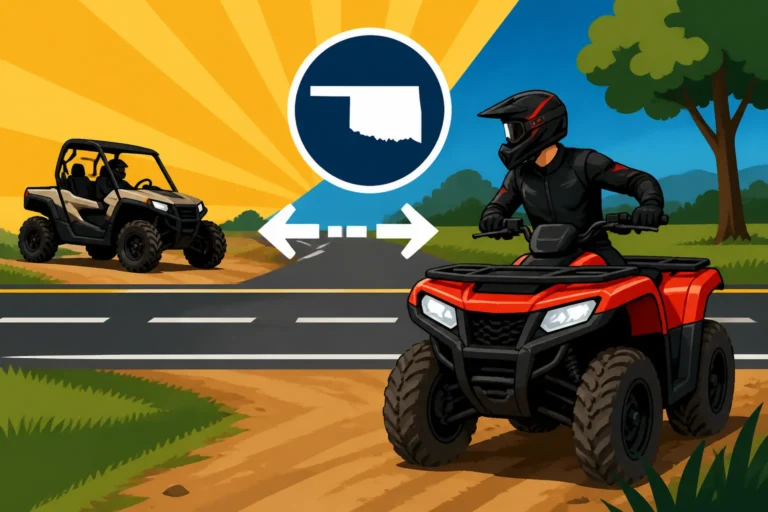
One of the most common questions riders have is about where they can actually take their street-legal UTV. The general rule is that you can operate your street-legal UTV on most public roads, including county roads and city streets. However, there are significant restrictions, particularly concerning higher-speed roadways. Street-legal UTVs are explicitly prohibited from operating on interstates and turnpikes. These roads are designed for high-speed traffic, and UTVs, even street-legal ones, simply aren't built to safely keep pace or handle the conditions. [Oklahoma Street UTVs Stay Off Interstates] is a rule that state troopers take very seriously.
In addition to interstates, UTVs are typically restricted from U.S. highways unless a specific exception is made by local authorities, or it's a designated crossing. The intent of the street-legal designation is primarily for local travel, access to trails, or for utility purposes in areas where speeds are generally lower. Always check local municipal ordinances and county resolutions, as they can sometimes open or close specific roads to UTV traffic within their jurisdictions. What's legal in one town might not be in the next, so staying informed about local rules is crucial.
Driver Requirements: Age, License, and Endorsements
Just like driving any other motor vehicle, there are specific requirements for who can operate a street-legal UTV on public roads. In Oklahoma, the driver must be at least 16 years old and possess a valid Class D operator's license. This is the standard driver's license that most people hold for driving cars and light trucks. What's notable, and a relief to many riders, is that you generally do not need a motorcycle endorsement (M endorsement) to drive a street-legal UTV. This makes the transition much simpler for drivers who aren't also licensed motorcyclists. [Oklahoma Drivers Must Be 16 for a Street UTV] and carry a valid license.
It's important to remember that all traffic laws apply to street-legal UTVs. This means obeying speed limits, stopping at stop signs, yielding right-of-way, and refraining from impaired driving. Any traffic violations incurred while operating a street-legal UTV will be treated the same as if you were driving a car and can lead to fines, points on your license, or even license suspension.
Understanding Local Ordinances and Speed Limits
While state law sets the overarching framework, local municipalities and counties often have the authority to create their own ordinances regarding UTV use on their roads. A county commission might vote to open certain county roads to UTVs, while a city council might restrict them to specific areas or ban them entirely from main thoroughfares. It's incumbent upon the UTV operator to research and understand these local rules before riding. Many a rider has found themselves in a pickle by assuming state law is the only law that applies.
Speed limits are another critical consideration. Street-legal UTVs are subject to the same posted speed limits as other vehicles. However, given the design and handling characteristics of UTVs, it's often prudent to drive below the posted limit, especially on unfamiliar roads or in adverse conditions. Driving defensively and being aware of your UTV's capabilities is paramount. While some UTVs can reach impressive speeds, sustained high-speed travel on pavement can put undue strain on components not designed for such conditions, and dramatically reduce the lifespan of your tires.
The Financial Side of Oklahoma Street UTV Ownership
Making your UTV street-legal isn't a one-time investment; it comes with initial costs for modifications and fees, as well as ongoing annual expenses. It's important to budget for these financial aspects to ensure you can legally and safely enjoy your machine on Oklahoma's roads without any unexpected burdens.
Initial Costs: Fees, Taxes, and Equipment Upgrades
The first layer of cost involves getting your UTV up to code with the required street-legal equipment. This might mean purchasing a full windshield, a complete turn signal kit, mirrors, and a horn. Depending on how many of these items your UTV already has (and if they meet specifications), this could range from a few hundred dollars to over a thousand. Aftermarket companies like SuperATV are popular choices for these accessories, offering various options to fit different UTV models and budgets. Don't forget the cost of professional installation if you're not comfortable doing it yourself.
Beyond equipment, you'll face state fees. If your UTV is new or being titled for the first time, you'll pay an [Oklahoma Excise Tax at Titling], which is 4.5% of the sales price. This is a one-time tax, similar to sales tax on a car. There will also be a titling fee, typically a small flat charge. The initial registration for the annual plate will also have its own fee, which, while not exorbitant, is distinct from the one-time $11 off-road registration. Adding all these up, the upfront investment can be substantial, so it pays to do your homework.
Annual Renewal Costs and Potential Fines
The most significant ongoing cost for a street-legal UTV is the annual plate renewal fee. This fee is paid every year to keep your UTV legally registered for road use. It's comparable to the annual tag fee for a passenger car. While specific numbers can change, this is a recurring expense you must factor into your budget. Alongside the registration fee, you'll also have the annual cost of your liability insurance policy. Insurance premiums for UTVs can vary widely based on the machine's value, your driving record, and where you live, so getting quotes is essential.
Neglecting these annual responsibilities can lead to financial penalties. Driving with expired tags or without valid insurance can result in tickets and fines, which can quickly add up. Furthermore, if your UTV is impounded due to a violation, you'll face impoundment fees, storage fees, and potentially other charges to get your machine back. Staying current on your annual renewal and insurance is not just about legality; it's about avoiding unnecessary and costly headaches down the road. [Oklahoma Late Registration Penalties] can be a real pain if you forget to renew.
Insurance Considerations for Road-Legal Machines
When you decide to make your UTV street-legal, your insurance needs shift dramatically. An off-road-only policy might cover you on trails or private property, but it's unlikely to provide the necessary liability coverage for public road use. For a street-legal UTV, you'll need a policy that provides at least the state's minimum liability coverage for motor vehicles. This protects you financially in case you cause an accident that results in injury or property damage to others.
Many riders also opt for additional coverage, such as collision and comprehensive, to protect their own investment. Collision coverage helps pay for repairs to your UTV if it's damaged in an accident, while comprehensive coverage covers non-collision events like theft, vandalism, or damage from natural disasters. Given the value of modern UTVs and the potential for off-road incidents even when primarily street-legal, these expanded coverages can provide significant peace of mind. Discuss your specific usage with your insurance provider to ensure you have adequate coverage for both street and trail riding, as some policies might have exclusions for certain types of off-road activity. This level of comprehensive protection is a wise investment for any street-legal UTV owner.
Disclaimer
This article is for general informational purposes only and does not constitute professional advice. Laws, prices and regulations vary by location and change over time. Consult a qualified professional for guidance on your specific situation.