Putting Two Names on a Single ATV Title
So, you've decided to go in on an ATV or UTV with someone special – a spouse, a sibling, or maybe a good friend – and you're wondering how to get both your names officially recognized on the title here in Oklahoma. It's a smart question, because simply having an informal agreement can lead to some serious headaches down the road if anything ever changes. This guide is all about untangling the process of putting two names on a single ATV or UTV title in Oklahoma, making sure your shared adventures start on solid legal ground.
Why Put Two Names on an ATV or UTV Title? It's More Than Just Paperwork
It might seem like a minor detail when you're caught up in the excitement of a new machine, but deciding how to title your ATV or UTV with another person is incredibly important. This isn't just about satisfying a bureaucratic requirement; it's about protecting everyone involved and setting clear expectations for the future. Without clear documentation, something as fun as a shared off-road vehicle can become a source of frustration, or worse, a legal tangle.
Shared Ownership and Legal Protection
Think about it: if only one person's name is on the title, legally, that machine belongs to them and them alone. Even if both of you contributed financially, share maintenance duties, and spend equal time out on the trails, the person whose name is on the title holds all the cards. This can create a significant imbalance, especially if circumstances change, like a falling out between friends, a divorce, or even just differing opinions on how the machine should be used or sold.
Putting both names on the title provides a layer of legal protection for both parties. It formally acknowledges each individual's stake in the asset. This shared recognition can prevent disputes before they even start, because the ownership is unequivocally established. It ensures that neither owner can unilaterally sell, transfer, or encumber the ATV or UTV without the other's consent, providing peace of mind and fairness in your joint venture. It’s like putting a solid foundation under your shared riding dreams.
Insurance and Financing Implications
When it comes to insuring your ATV or UTV, the name (or names) on the title are crucial. Insurance companies need to know who the legal owners are to properly issue a policy and, more importantly, to process claims. If only one name is on the title, the insurer might only recognize that individual as having an insurable interest. This could lead to complications if the "unlisted" owner is involved in an accident or if the machine is stolen, creating delays or even denials of coverage.
Furthermore, if you're financing your off-road machine, lenders almost universally require that all individuals responsible for the loan be listed on the title. They need that security to ensure their investment is protected. Having both names on the title aligns the ownership with the financial responsibility, making the lending process smoother and more transparent. It ensures that both owners are recognized for both the financial commitment and the asset itself, providing a clear path for comprehensive coverage.
Estate Planning and Future Transfers
No one likes to think about it, but life happens. What if one of the owners passes away? The way your ATV or UTV is titled will dramatically impact how its ownership is handled in the event of death. If only one person is on the title, and they pass, the machine could become part of their estate, subject to probate, which can be a lengthy and often costly legal process. This means delays and potential complications for the surviving co-owner or heirs who might assume they have a right to the machine.
By contrast, properly titling the machine with specific joint ownership designations can simplify future transfers. For instance, certain titling methods in Oklahoma are designed to automatically pass ownership to the surviving owner, bypassing the probate court entirely. This foresight in your initial titling choice can save your loved ones considerable stress, time, and money down the line, ensuring a smooth transition of ownership without unnecessary legal hurdles.
How Oklahoma Titles Joint Ownership for ATVs and UTVs
Oklahoma offers different ways to title jointly-owned property, and understanding these distinctions is key to choosing the right path for your ATV or UTV. The choice you make here isn't just a formality; it determines how the machine is legally owned, how decisions are made about it, and what happens to it if one of the owners is no longer able to claim their share.
Joint Tenancy with Right of Survivorship (JTWROS)
For many co-owners, especially married couples or partners who intend for the machine to belong entirely to the survivor upon one's passing, Joint Tenancy with Right of Survivorship (often abbreviated as JTWROS) is the most common and often preferred option. When you title an ATV or UTV as JTWROS, the ownership is typically recorded as "John Doe OR Jane Doe." The crucial word here is "OR."
This means that each person owns an undivided share of the entire property, and when one owner dies, their share automatically and immediately transfers to the surviving owner without needing to go through probate court. It’s a clean and efficient way to ensure continuity of ownership. For a couple buying a side-by-side to enjoy together, knowing that the machine will automatically belong to the other spouse without legal fuss is a huge relief. It’s a testament to the shared nature of the asset and a practical approach to future planning.
Tenants in Common
Another option available for co-owners is "Tenants in Common." While less common for recreational vehicles like ATVs and UTVs, it's essential to understand its implications. With Tenants in Common, the ownership is typically recorded as "John Doe AND Jane Doe." Notice the use of "AND" rather than "OR." This signifies a different legal arrangement.
Under Tenants in Common, each owner holds a distinct, undivided share of the property, but there is no right of survivorship. This means that if one owner dies, their share does not automatically pass to the surviving co-owner. Instead, that deceased owner's share becomes part of their estate and will be distributed according to their will or, if there's no will, by Oklahoma's laws of intestacy. This option might be considered if unrelated partners each want their share to go to their own heirs, rather than directly to the other co-owner. It provides more flexibility in how individual shares are bequeathed, but it also introduces the complexities of probate for the deceased owner's share.
The Titling Process at a Tag Agency
Regardless of whether you choose Joint Tenancy with Right of Survivorship or Tenants in Common, the actual titling process happens at an authorized Oklahoma tag agency. This is where the rubber meets the road, so to speak, in making your shared ownership official. When you visit the tag agency, you'll be working with clerks who are familiar with these designations, but it’s still critical that you clearly communicate your desired ownership structure.
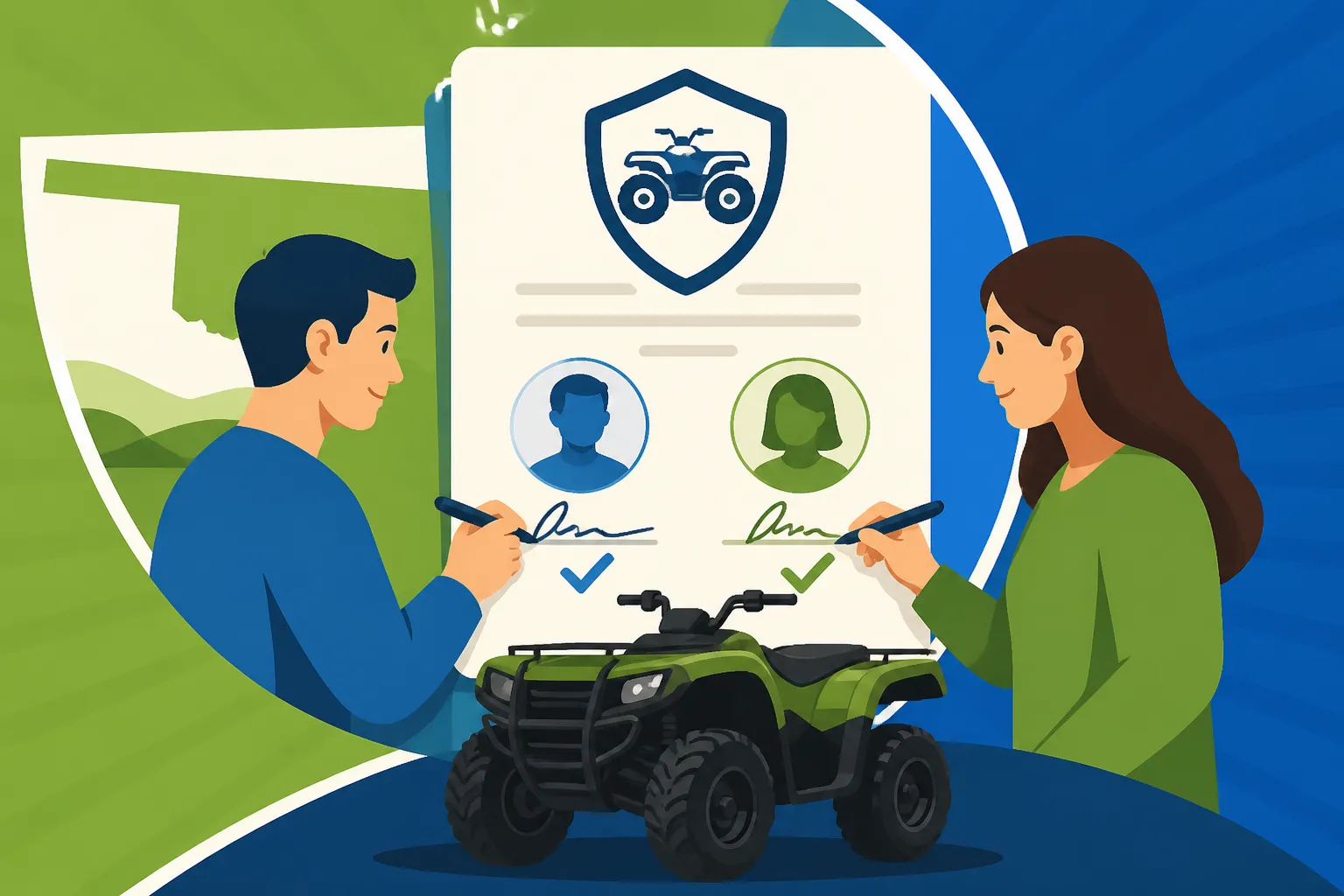
For instance, if you want JTWROS, you need to explicitly state that you want "John Doe OR Jane Doe" on the title. Simply saying "both our names" might lead to a default "AND" titling, which could have unintended consequences later. Both parties will typically need to be present with their identification, or one party might need to provide a power of attorney for the other. This ensures that all owners are consenting to the terms of ownership. The tag agency clerk will guide you through the forms, helping ensure that all necessary information, including the specific ownership language, is correctly captured on the [Oklahoma Registration Application Explained].
Practical Steps and Paperwork for Dual Owners
Once you’ve decided on the type of joint ownership that best suits your situation, it’s time to gather your materials and head to the tag agency. This isn’t a process to rush through; being prepared means a smoother experience and avoids the frustration of having to make multiple trips. Having all your ducks in a row ensures that your [Putting Two Names on a Single ATV Title] process is as efficient as possible.
Gathering Necessary Documents
The success of your titling experience hinges on having the correct paperwork ready. If your ATV or UTV is brand new, you'll need the Manufacturer's Statement of Origin (MSO) – this is essentially the birth certificate of your machine – along with the dealer invoice. For a used machine, you'll need the current title, properly signed over by the previous owner. If the machine is older and falls under specific cutoff dates where titles weren't always issued, you might need a [Oklahoma Bills of Sale for Older Machines] and a [Oklahoma Declaration of Purchase Price].
Each person who will be listed on the title must bring a valid government-issued photo identification, such as a driver's license or state ID. Sometimes, proof of address is also required. It's also a good idea to have any sales agreements or purchase contracts you might have. For those buying from a private seller, having a robust bill of sale that clearly lists both buyers can be very helpful; resources like LawDepot offer templates for such documents that can simplify this step and ensure all pertinent information is included.
Navigating the Oklahoma Tag Agency
When you arrive at the tag agency, you'll be provided with the necessary forms to transfer or apply for a new title. This includes the [Oklahoma Registration Application Explained]. Be prepared to carefully fill out all sections, ensuring that both owners' names, addresses, and other personal details are accurate. This is the moment to clearly state your desired ownership type – whether it's "John Doe OR Jane Doe" for Joint Tenancy with Right of Survivorship, or "John Doe AND Jane Doe" for Tenants in Common. Don't be shy about asking the clerk to confirm how the names will appear.
You'll also need to be ready to pay the applicable fees. This includes the standard [Oklahoma Charges $11 at Titling] registration fee (which is a one-time charge in Oklahoma, thankfully!) and the [Oklahoma Excise Tax at Titling], which is a 4.5 percent tax on the purchase price. Make sure you have your payment method ready, whether it's cash, card, or check, as accepted by the specific tag agency. If you purchased the machine from a dealer, they might handle some of this paperwork for you, but it’s always wise to double-check their process and ensure your names are applied correctly to the title. For those who used [Oklahoma Dealer Invoices at Titling], these will be vital in confirming the purchase price for tax calculation.
What to Do After Titling
Once you walk out of the tag agency with your new title, breathe a sigh of relief – the hard part is done! However, there are a few crucial steps to take next. First, make sure you keep the physical title document in a safe, secure place, but separate from the machine itself. Consider making a digital copy as well for your records. The original title is a legal document proving ownership, and replacing a lost one can be a hassle.
Next, immediately contact your insurance provider. You'll need to update your policy to reflect both owners on the title. This ensures that both individuals have proper coverage and that any future claims are processed smoothly. If you financed the ATV or UTV, notify your lender of the updated title information; they will likely want to confirm their lien is properly recorded on the new title. Finally, for machines jointly owned by multiple parties, especially if they are not family, it's often a good idea to create a separate co-ownership agreement. This document, which can be drafted with templates from LawDepot, can outline agreed-upon rules for usage, maintenance, storage, and even how to handle a potential sale, heading off future disagreements.
Common Pitfalls and Important Considerations for Joint Owners
Even with the best intentions, joint ownership of an ATV or UTV can present unique challenges. Being aware of these potential issues upfront can help you navigate them smoothly or, even better, avoid them entirely. Understanding the financial implications and what happens during major life changes is crucial for any co-owner in Oklahoma.
Understanding Excise Tax and Fees
When you title your ATV or UTV with two names, it's important to remember that the excise tax isn't doubled just because there are two owners. Oklahoma levies a [Oklahoma's 4.5 Percent Excise Tax] on the purchase price of the machine itself, not per owner. This tax is paid once when the title is first issued in your names. So, if you bought a machine for $10,000, the excise tax would be $450, regardless of whether one or two names are on the title.
However, be mindful of the difference between the excise tax and the one-time [Oklahoma Charges $11 at Titling] registration fee. These are separate charges. The excise tax is a state-level transaction tax, similar to a sales tax on vehicles, while the registration fee covers the cost of issuing your permanent decal. Understanding these distinct costs helps you budget accurately and avoid surprises when you visit the tag agency. Remember, even though the registration is $11, the tax is based on your declared purchase price. For example, if you're taking advantage of the [Oklahoma Titles After a Private Sale] process, ensuring the purchase price is accurately recorded on your bill of sale or [Oklahoma Declaration of Purchase Price] is key to a correct excise tax calculation.
What Happens if One Owner Moves or Dies
The implications of an owner moving or passing away depend heavily on how the title was initially structured. If you chose Joint Tenancy with Right of Survivorship (JTWROS – the "OR" option), the process is generally straightforward in the event of death. The surviving owner simply needs to present the death certificate and the title to the tag agency, and the machine's ownership will automatically transfer to them. This completely bypasses the probate court, making a difficult time a little bit easier.
However, if the title was held as Tenants in Common (the "AND" option), the deceased owner's share of the ATV or UTV will become part of their estate. This means it will need to go through probate, and ownership will be transferred according to their will or state law. This can lead to delays and potential complications for the surviving co-owner. If one owner simply moves away or wishes to be removed from the title, a new title application will be required, often involving a formal transfer of their share to the remaining owner, which may incur new fees and possibly even excise tax depending on the nature of the transfer.
Resolving Disputes Among Co-Owners
While it's not pleasant to consider, disputes between co-owners can arise, even among the closest family members or friends. Disagreements might revolve around who gets to use the machine when, who pays for maintenance and repairs, how to handle upgrades, or even if and when to sell it. This is where a clear, pre-existing understanding or even a written co-ownership agreement becomes invaluable.
Such an agreement, especially one created with the help of resources like LawDepot templates, can lay out the ground rules for all these scenarios. It can specify maintenance schedules, usage calendars, how to share costs, and a clear process for resolving disagreements or for one party to buy out the other's share. Without such an agreement, disputes can quickly escalate, potentially requiring legal intervention. While the tag agency helps with the official titling, it doesn't provide the framework for the day-to-day decisions of joint ownership. Proactive communication and a written understanding are your best tools for a harmonious co-ownership experience.
Important Comparison: Joint Tenancy vs. Tenants in Common
To help you decide which titling method is right for your shared ATV or UTV in Oklahoma, here's a quick comparison of the two main options for joint ownership:
| Feature | Joint Tenancy with Right of Survivorship (JTWROS) | Tenants in Common (TIC) |
|---|---|---|
| Title Notation | "Owner A OR Owner B" | "Owner A AND Owner B" |
| Ownership Share | Undivided, equal share of the entire property | Distinct, undivided share of the property (can be unequal) |
| Right of Survivorship | Yes, automatically passes to the surviving owner | No, deceased owner's share goes to their estate |
| Probate | Avoids probate for the deceased owner's share | Requires probate for the deceased owner's share |
| Ideal For | Married couples, long-term partners, family members | Business partners, unrelated co-owners, those wanting to pass their share to heirs |
| Flexibility of Transfer | Less flexible for individual shares | More flexible for individual shares |
Choosing between these options depends on your specific relationship with the co-owner and your long-term intentions for the ATV or UTV. Discussing these points openly before you visit the tag agency can prevent future complications and ensure everyone is on the same page. Remember that [What Oklahoma's $11 Registration Fee Actually Covers] is about registration, and the titling decision is about ownership. You'll also want to keep in mind that [Oklahoma Has No Odometer Rule for ATVs] or [Why an ATV Title Has No Odometer Reading], so that specific detail won't factor into your joint ownership decision. You do, however, need to be aware of [Oklahoma Late Registration Fees] if you don't get your new title and registration processed within the state's required timeframe.
Disclaimer
This article is for general informational purposes only and does not constitute professional advice. Laws, prices and regulations vary by location and change over time. Consult a qualified professional for guidance on your specific situation.