Oklahoma Registration for a UTV
Navigating the world of UTV registration in Oklahoma can feel like trying to find your way through a winding trail without a map. Many folks assume their side-by-side, especially if it's primarily used on private land for chores or hunting, might be exempt from state rules. However, the reality is that most utility vehicles in Oklahoma do require specific steps to be legally recognized, and this guide is here to help you understand exactly what's involved to get your UTV properly registered.
Understanding Oklahoma's UTV Registration Basics
It's easy to get confused when it comes to UTVs. They're not quite cars, not quite ATVs, and definitely not farm tractors, even if they spend most of their life doing farm work! But Oklahoma has clear rules for them, and understanding these basics is the first step to avoiding any headaches down the road.
Why UTVs Have Specific Rules (and Confusion)
UTVs, or Utility Task Vehicles (often called side-by-sides), are incredibly versatile machines. You see them hauling feed on a ranch, carrying tools on a construction site, or loaded with gear on a hunting trip. Their multi-passenger design and cargo beds make them distinct from traditional, single-rider ATVs. This versatility, unfortunately, is also a source of much of the confusion regarding their legal status. People often think, "If I'm just using it on my property, why bother?" or "It's not a car, so it doesn't need a license plate, right?" These are valid questions, born from the fact that UTVs often blur the lines between recreational vehicle, workhorse, and even, in some cases, a potential street-legal vehicle. But for the vast majority of UTV owners in Oklahoma, the state requires more than just good intentions; it requires registration and titling.
The Core Requirement: Titling and Registration
At its heart, Oklahoma's stance on UTVs is straightforward: if you own one, it generally needs to be titled and registered with the state. This process is handled through your local tag agency, just like a car or a boat. The good news for UTV owners, and a major difference from passenger vehicles, is that Oklahoma's off-road ATV and UTV registration is typically a one-time affair. You pay a modest fee at the time of titling, and that's it. There are no annual renewal notices filling your mailbox, and no yearly fees to remember. [Oklahoma Registration Never Renews], which is a pleasant surprise for many new owners. That initial fee, often described as an $11 charge, covers the state's administrative costs and registers your machine for its lifetime under your ownership. [Oklahoma Charges $11 at Titling] at the time of titling. This registration results in a decal that identifies your UTV as officially recognized by the state.
The Crucial Cutoff Date for UTVs
One of the most important distinctions you'll encounter when registering a UTV in Oklahoma is its date of manufacture. Oklahoma has a specific cutoff date that dictates what paperwork is required and how the machine is handled in the state's records. For UTVs, that magic date is July 1, 2008. If your UTV was manufactured on or after this date, it is treated as a newer machine that requires a title. This means you'll need a Manufacturer's Statement of Origin (MSO) if it's new, or an existing title if you bought it used.
However, if your UTV was manufactured before July 1, 2008, the process can be much simpler regarding ownership documentation. These older UTVs are often exempt from the strict title requirements, meaning you might only need a bill of sale to prove ownership. This is a significant relief for owners of vintage or well-used UTVs that might not have traditional titles floating around. Understanding [Oklahoma UTV Cutoff of July 2008] is absolutely vital before you even gather your documents, as it shapes the entire registration journey.
Step-by-Step UTV Registration Process
Once you understand the basic requirements, the actual process of registering your UTV at a tag agency can be quite smooth, provided you arrive prepared. Gathering the right documents is the most critical part, as it can save you multiple trips and a lot of frustration.
Gathering Your Essential Documents
This is where the distinction between new and used, and pre- or post-cutoff date, really comes into play. You’ll want to make sure you have everything in order before you head to the tag agency.
- For New UTVs (Manufactured July 1, 2008, or later): If you're buying a brand-new UTV from a dealer, they should provide you with a Manufacturer's Statement of Origin (MSO). This is essentially the birth certificate for your machine. Along with the MSO, you'll need the dealer's invoice, which shows the purchase price. These two documents are paramount for establishing initial ownership and calculating any applicable taxes. [Oklahoma Requires an MSO for a New Machine] and [Oklahoma Dealer Invoices at Titling] are non-negotiable for new machines.
- For Used UTVs (Manufactured July 1, 2008, or later): When buying a used UTV that falls into this "newer" category, you'll need the previous owner's signed-over title. Make sure the title is clear and that all sections for sale and transfer have been properly completed. You'll also need a bill of sale, which clearly states the purchase price, buyer, and seller information. If you're selling or buying privately and need a good template, resources like LawDepot offer reliable, state-specific bill of sale forms that can help formalize the transaction and meet the tag agency's requirements. This protects both parties and helps the tag agency accurately assess excise tax. You'll also need to fill out a Declaration of Purchase Price form.
- For Older Used UTVs (Manufactured Before July 1, 2008): This is where it gets a bit easier on the paperwork front. For these older machines, Oklahoma generally doesn't require a previous title to establish ownership. Instead, a comprehensive bill of sale is often sufficient. Again, a form from a reputable source like LawDepot can be incredibly helpful here. The key is to have a document that clearly shows you legally acquired the UTV and the price you paid. This simpler process is covered by [Oklahoma Skips Chain of Title for Old Machines].
- Proof of Identity and Residency: Regardless of your UTV's age or whether it's new or used, you'll need to bring a valid government-issued photo ID (like your driver's license) and proof of your Oklahoma residency.
The Tag Agency Visit
With all your documents meticulously gathered, it’s time for the main event: the trip to your local Oklahoma tag agency. This can sometimes feel daunting, but being prepared makes a huge difference. You'll likely fill out a specific application form, often referred to as [Oklahoma's ATV Registration Application Explained], which asks for details about your UTV (VIN, make, model, year) and your personal information. The tag agency clerk will verify all your documentation, process the transfer of ownership (if applicable), and calculate your total fees.
This is when you'll pay the $11 one-time registration fee. Additionally, unless you qualify for an exemption, you'll pay the state excise tax. Be ready for these costs. Once everything is processed, you'll typically receive your new title (if applicable), a registration receipt, and most importantly, your registration decal. This decal, which typically goes on the front of your machine, is your visible proof that your UTV is officially registered. [Oklahoma Decals on the Front of a Machine] are standard for UTVs.
Dealing with Excise Tax
A significant part of the UTV registration process in Oklahoma involves excise tax, which is essentially a sales tax on vehicles. Oklahoma levies a 4.5% excise tax on the purchase price of your UTV, whether you bought it new from a dealer or used from a private seller. This is a one-time tax paid at the time of titling and registration. [Oklahoma Excise Tax at Titling] is a common point of confusion for new owners, as it's separate from the registration fee itself. The tag agency will calculate this based on the purchase price listed on your invoice or bill of sale, so ensure that amount is accurate and clearly stated.
There is, however, a notable exemption to the excise tax for agricultural use. If your UTV is primarily used for farming or ranching operations, you may qualify for an agricultural permit. While the agricultural permit no longer exempts a machine from registration if it was manufactured after the cutoff date, it can still save you from paying the 4.5% excise tax. This is a valuable benefit for genuine agricultural users. [Oklahoma Agricultural Permit Exemptions] still hold for the excise tax, even though the broader exemptions for registration changed years ago. Remember, [Farm Permits Still Save You the Excise Tax], which can be a substantial saving on a new side-by-side. You'll need to complete a specific form declaring its agricultural use at the tag agency to claim this exemption.
| UTV Purchase Scenario | Manufacturer Date | Required Paperwork (Primary) | Excise Tax Due? | Registration Fee |
|---|---|---|---|---|
| New UTV from Dealer | July 1, 2008+ | MSO & Dealer Invoice | Yes (4.5%) | $11 |
| Used UTV Private Sale | July 1, 2008+ | Signed Title & Bill of Sale | Yes (4.5%) | $11 |
| Used UTV Private Sale | Pre-July 1, 2008 | Bill of Sale (no title often needed) | Yes (4.5%) | $11 |
| New/Used UTV (Ag Use) | Any | (As above) + Ag Exemption Form | No (with approval) | $11 |
Common Scenarios and Important Considerations
Life isn't always a straight line, and neither is UTV ownership. You might face situations like registering late or wondering about street-legal options. Being aware of these common scenarios can help you navigate the process with greater confidence.
Late Registration Penalties
So, you just bought that awesome UTV, maybe from a private seller, and a few weeks have gone by before you've had a chance to get to the tag agency. It happens! But Oklahoma does have a specific timeline for registration. You have 30 days from the date of purchase to register your UTV. This clock starts ticking from the day you sign the bill of sale or complete the purchase. [Oklahoma's 30-Day Registration Deadline] is something you absolutely want to adhere to.
If you miss that 30-day window, you're going to incur late registration penalties. The state charges a daily late fee for every day past the deadline. While this can add up quickly, there is a silver lining: Oklahoma has a cap on these penalties. The maximum late penalty you'll pay is typically $100. So, even if you're a year late, you won't be hit with an astronomical bill. It's a dollar for every day you're late, which means [Late Registration Costs a Dollar for Every Day] until it hits that hundred-dollar ceiling. It's definitely an incentive to get it done on time, but it's not the end of the world if you're a bit behind.
Registering a UTV for Road Use (Street-Legal)
This is a really important distinction for many UTV owners. The standard $11, one-time registration we've been discussing is for off-road use. This allows you to legally operate your UTV on designated trails, private property, and for permitted highway crossings. However, if your goal is to make your UTV fully street-legal to drive on public roads (beyond just crossing), that's an entirely separate and more involved process.
Oklahoma does have a class for street-legal UTVs, but it comes with a whole host of additional requirements. You'll need specific equipment like turn signals, mirrors, a horn, and often a windshield. You'll also need to carry insurance and your UTV will be issued a standard annual license plate, just like a car. This means annual renewals, yearly fees, and compliance with all traffic laws. The requirements for [Oklahoma Street Legal UTV Requirements] are extensive and different from simply registering for off-road use. It's critical not to confuse the two processes; an off-road decal does not grant you permission to drive freely on public roads. For street-legal UTVs, [Oklahoma Annual Plates for Street UTVs] are the norm, not the one-time decal.
What if You Have No Paperwork for an Older UTV?
This can be a tricky situation, especially if you've inherited a UTV, found one abandoned, or purchased one years ago without formal documentation. For UTVs manufactured after July 1, 2008, having no title at all makes registration extremely difficult, as the state expects a clear chain of title for these newer machines. However, for older UTVs (pre-July 1, 2008), which were often not titled when new, the lack of a formal title is less of an issue.
If you have an older UTV and no paperwork, your best bet is to create a detailed bill of sale. Even if it's from a friend or family member, a well-documented bill of sale explaining the transfer of ownership can often be accepted by the tag agency for machines built before the cutoff date. Again, using a template from a service like LawDepot can give your bill of sale the professional touch and necessary details the state looks for. It should include the VIN, make, model, year, purchase price, and contact information for both buyer and seller. If you truly have [Oklahoma Machines With No Paperwork] and cannot even generate a bill of sale, your options become more complex, possibly involving a bond or court order, which are typically much more cumbersome and expensive processes. It's always best to try and establish a clear paper trail, even retroactively, if possible.
Benefits of Proper UTV Registration
While the process of gathering documents and visiting the tag agency might feel like a chore, properly registering your UTV in Oklahoma offers several significant advantages. These benefits extend beyond just legal compliance, impacting your peace of mind and even the machine's value.
Legal Riding and Enforcement
The most immediate and obvious benefit of registering your UTV is that it allows you to legally operate it where permissible. This means you can confidently enjoy designated off-road trails, participate in organized rides, and make those quick, permitted crossings of public roads without fear of being stopped and ticketed. Oklahoma law allows for specific, limited highway crossings for off-road vehicles, but only if they are registered. Without that registration decal, you're essentially operating an unregistered vehicle, which can lead to fines and other penalties.
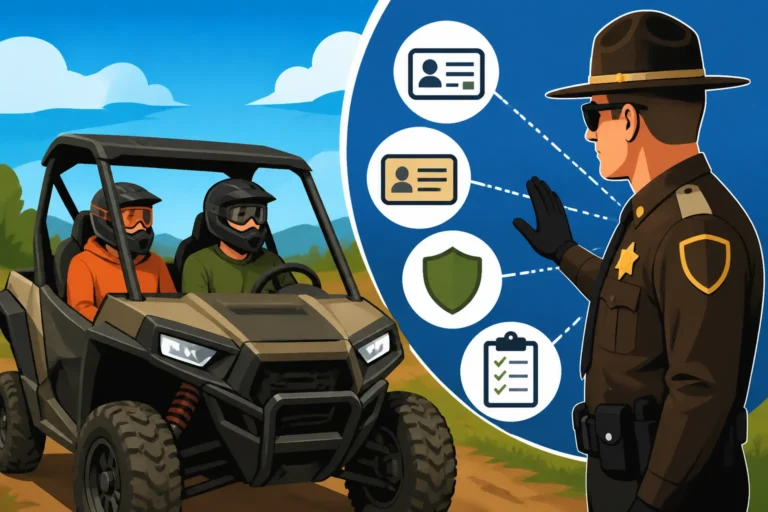
Should you encounter a state trooper, a county sheriff, or even a park ranger while riding, they are authorized to ask for proof of registration. Having your decal displayed and your registration receipt handy means a quick verification and you're on your way. You'll know [What a State Trooper Can Ask to See] and be ready to provide it, avoiding any unnecessary hassle or citations. It's about being a responsible rider and ensuring you're operating within the bounds of the law, protecting both yourself and your investment.
Proving Ownership and Resale Value
Beyond legal operation, proper registration and titling serve a crucial role in establishing and proving ownership of your UTV. Your title is the legal document that states you are the rightful owner of the machine. In the unfortunate event of theft, a clear title and registration make it much easier for law enforcement to track your UTV, recover it, and return it to you. Without proper paperwork, proving a machine belongs to you can become an incredibly difficult, if not impossible, endeavor.
Furthermore, when the time comes to sell your UTV, having a clear title and current registration is invaluable. Buyers are far more likely to pay a fair market price for a machine with a complete paper trail, as it reassures them that they won't inherit any legal headaches. A UTV without a title or registration is often viewed with suspicion and will typically command a significantly lower resale price. It's an investment in your machine's future value and ease of transaction.
Understanding What the $11 Registration Covers
Many people wonder what exactly that one-time $11 registration fee actually buys them. It's a fair question, especially since it doesn't come with annual renewals or a traditional license plate. Essentially, the $11 fee serves several important purposes within the state's framework. First, it formally enters your UTV's Vehicle Identification Number (VIN) and your ownership details into the state's database. This creates that official record of ownership that is so vital for theft prevention and recovery.
Second, the funds collected from these registrations contribute to the administration of Oklahoma's off-road vehicle programs. While it may not directly fund a new trail in your backyard, it supports the infrastructure and personnel involved in managing these regulations, which ultimately benefits the riding community by maintaining order and legal clarity. So, when you pay that modest fee, you're not just getting a sticker; you're securing legal recognition for your machine and contributing to the system that governs off-road vehicle use in Oklahoma. It’s what [What Oklahoma's $11 Registration Fee Actually Covers] – peace of mind and legal standing.
Disclaimer
This article is for general informational purposes only and does not constitute professional advice. Laws, prices and regulations vary by location and change over time. Consult a qualified professional for guidance on your specific situation.