Oklahoma Registration Before Your First Ride
You've just gotten your hands on an awesome ATV or UTV, and that feeling of hitting the trails for the very first time is buzzing in your mind. But before you even think about firing up that engine and kicking up some Oklahoma dust, there's a crucial step that many new owners overlook or simply don't understand: getting your machine properly registered. It can be confusing, frustrating, and honestly, a bit intimidating when you're faced with government paperwork. This guide is here to cut through the jargon, validate your concerns, and walk you through exactly what you need to do to get your ATV or UTV registered in Oklahoma before your first ride, so you can hit the trails legally and with peace of mind.
The Oklahoma Registration Requirement: What You Need to Know
Alright, let's talk brass tacks. You might be wondering if you really need to register that quad or side-by-side if you're only using it on private land, or if you're not planning on hitting any public roads. This is a common question, and it's where a lot of confusion begins. In Oklahoma, the law is pretty clear: if you own an ATV or UTV, it needs to be registered with the state. This isn't just a suggestion; it's a requirement. Ignoring it can lead to some pretty unwelcome surprises down the road, especially if you ever have an incident or simply get pulled over while crossing a county road.
Why Registration Matters for Every Rider
Think of registration as your machine's official identity card. It links your ATV or UTV directly to you as the owner, which is incredibly important for a few reasons. Firstly, it's about legality. The state wants to know who owns these machines, just like they do with cars and trucks. Secondly, it offers a layer of protection for you. If your machine is ever stolen, having it properly registered and titled makes it much easier for law enforcement to track it down and prove it belongs to you. Without it, you're essentially riding a ghost, and that can make things incredibly difficult if anything goes wrong. It's about being a responsible owner and avoiding unnecessary headaches.
Beyond the legal and security aspects, registration ensures you're contributing to the system that often maintains the very trails and public lands many of us love to ride. While the direct link isn't always obvious, these funds help support the infrastructure that makes off-roading possible and enjoyable in Oklahoma.
Which Machines Need to Be Registered
So, what exactly counts as an ATV or UTV for registration purposes? Generally, if it's designed for off-road use, has a saddle or bench seat, and typically has four or more wheels (though some off-road motorcycles also fall under this umbrella), it’s going to need registration. This includes your standard four-wheel ATVs (quads), side-by-sides (UTVs), and even certain dirt bikes if they're not explicitly used for competition on private tracks.
There was a time when certain exemptions, like for agricultural use, might have influenced whether you needed to register or title your machine. However, the rules have been updated, making it pretty universal. For ATVs purchased after July 1, 2005, and UTVs purchased after July 1, 2008, registration and titling are a definite. If you're unsure about an older machine, it's always best to check, but most modern off-road vehicles will need their paperwork sorted. You'll find that even if you only plan to use your machine on your own ranch, the state still requires that one-time registration.
The Difference for New vs. Used Machines
The process isn't drastically different whether you buy new or used, but the specific paperwork you'll bring to the tag agency will vary. If you're buying a brand-spanking-new machine from a dealership, they'll usually help guide you through the initial steps. They're familiar with the Manufacturers Statement of Origin (MSO) and getting that first title in your name. For used machines, especially those bought in a private sale, the responsibility falls squarely on your shoulders to gather the correct documents. This is where things can get a little tricky, particularly if the previous owner wasn't diligent with their paperwork. Don't worry, we'll cover what you need for both scenarios next.
Gathering Your Paperwork Before You Go
Okay, this is where the rubber meets the road. Before you even think about heading down to your local tag agency, you need to have your ducks in a row with the right documentation. Showing up unprepared is a surefire way to waste your time and leave frustrated. Trust me, I've seen it happen. The key here is to assemble everything cleanly so the process is as smooth as possible.
Essential Documents for New Purchases
If you just picked up that shiny new quad or side-by-side from a dealer, you're usually in a good starting position. The dealer typically provides you with the crucial documents you'll need.
- Manufacturer's Statement of Origin (MSO): This is essentially the birth certificate for your new machine. It proves that the vehicle is new and has never been titled before. The dealer will sign this over to you, indicating the transfer of ownership. It's a non-negotiable piece of paper for a new registration. You'll need to bring your [Oklahoma Requires an MSO for a New Machine].
- Dealer Invoice: This document shows the purchase price of your machine. It's essential because it's what the tag agency will use to calculate any applicable excise tax. Make sure it clearly itemizes the sale price. [Oklahoma Dealer Invoices at Titling] are critical here.
- Identification: Don't forget your valid photo ID, like a driver's license. They need to verify who you are!
- Proof of Residency: Sometimes they'll ask for something like a utility bill with your current address, just to confirm you're an Oklahoma resident.
Gather these items, put them in a folder, and double-check them before you leave the house.
Required Forms for Used Machines
Buying a used ATV or UTV can be a fantastic way to save some money, but it often means you have more legwork to do yourself when it comes to registration. The biggest challenge here is often ensuring you have a proper record of the sale.
- Bill of Sale: This is the absolute cornerstone of a private transaction. It needs to include:
- The date of sale.
- The full names and addresses of both the buyer and seller.
- A detailed description of the ATV/UTV, including make, model, year, and most importantly, the Vehicle Identification Number (VIN).
- The agreed-upon purchase price.
- The signatures of both the buyer and seller.
You can find templates for these online, even from services like LawDepot, which can help ensure all the necessary legal language is included. A well-drafted [Oklahoma Bills of Sale for Older Machines] is your best friend.
- Original Title: This is paramount. The seller must provide you with the original, signed-over title. Without it, you're going to have a much harder time proving ownership. Make sure the VIN on the title matches the VIN on the machine perfectly. If the machine is very old and falls under specific cutoff dates, it might not have been titled before, but always check. Sometimes, for older machines, [Oklahoma Skips Chain of Title for Old Machines], but this is for very specific scenarios.
- Declaration of Vehicle Purchase Price: Even if you have a bill of sale, the state typically requires you to fill out a separate form declaring the purchase price. This is another safeguard for calculating excise tax. This is crucial for [Oklahoma Declaration of Purchase Price]. Again, online legal document services like LawDepot can help you create a formal bill of sale that ensures you have all the information needed for this declaration.
- Identification and Proof of Residency: Just like with a new purchase, have your valid photo ID and proof of an Oklahoma address ready.
When purchasing from a private seller, it's a good idea to meet at a tag agency during business hours if possible. This way, you can transfer the title and register the machine immediately, ensuring all paperwork is correct before the seller is out of reach.
Proof of Identity and Residency
This might seem obvious, but it's worth a specific mention. You're trying to prove who you are and that you live in Oklahoma.
- Photo ID: A valid, non-expired Oklahoma driver's license or state-issued ID card is typically all you need. If you're a new resident, you'll need to establish your residency with a few documents.
- Proof of Address: Usually, your driver's license is enough, but sometimes they might ask for a utility bill, a lease agreement, or a bank statement to further verify your current address. Having an extra document on hand, just in case, is never a bad idea. This helps with your [Oklahoma Registration for a New Resident].
Understanding the Costs and Fees Involved
Nobody likes hidden costs, especially when you're excited about a new toy. Knowing what to expect financially before you visit the tag agency will save you from any unwelcome surprises. Oklahoma's system is a bit unique, especially regarding registration renewals.
The One-Time Registration Fee
This is perhaps one of the most talked-about aspects of Oklahoma's ATV/UTV registration. Unlike most states where you pay an annual fee, Oklahoma charges a one-time registration fee for your off-road machine. That's right, you pay it once, and you're done! It's an initial cost, but once it's paid, you won't get those yearly renewal notices in the mail. This particular fee is often described as minimal. You'll typically pay this at the time of titling. Knowing about [Oklahoma ATV Registration You Pay Once] is pretty great news, isn't it? In fact, [The $11 Registration You Pay Once and Never Renew] is a phrase you'll often hear because that's generally what it costs.
Excise Tax: What It Is and When It Applies
Beyond the registration fee, you'll also encounter something called excise tax. This is similar to a sales tax on a vehicle, but it's specifically for things like ATVs and UTVs (and cars, trucks, etc., when sold). In Oklahoma, the excise tax rate for vehicles is a flat percentage of the purchase price.
- New Machines: When you buy from a dealer, this tax will be calculated based on your dealer invoice.
- Used Machines: For private sales, the excise tax is calculated based on the purchase price you declare on your bill of sale or the Declaration of Vehicle Purchase Price form. It's crucial to be honest about the sale price, as misrepresenting it can lead to issues.
There are a few historical cutoff dates for certain older machines that might exempt them from excise tax, but for most machines purchased recently, you can expect to pay it. Understanding [Oklahoma Excise Tax at Titling] is key to budgeting your purchase. If you're buying a machine specifically for certain agricultural uses, there are very limited exemptions for the excise tax, but these are pretty specific and often require an agricultural permit, which itself has certain limitations. [Oklahoma Ag Permit Holders Pay No Excise] is a specific detail to research if you believe you qualify.
Potential Late Fees and How to Avoid Them
Oklahoma has a pretty strict 30-day deadline for registering your newly acquired ATV or UTV. If you wait longer than 30 days from the date of purchase (or the date you brought an out-of-state machine into Oklahoma), you'll start accruing late fees. These late fees can add up daily, although there is a cap on how much they can accumulate. Nobody wants to pay extra money just for being slow, so it's really important to prioritize getting to the tag agency within that initial month. [Oklahoma Late Registration Fees] can definitely take a bite out of your riding budget if you're not careful. This daily fee can sneak up on you, but thankfully, there's a [Why Late Penalties Stop Climbing at $100]. Still, it's better to avoid them entirely!
Here's a quick comparison of the common documents needed for registration:
| Scenario | Essential Documents | Additional Info |
|---|---|---|
| New Purchase | Manufacturer's Statement of Origin (MSO) | "Birth certificate" for the machine, signed over by dealer. |
| Dealer Invoice | Shows purchase price for excise tax calculation. | |
| Valid Photo ID & Proof of Residency | Driver's license, utility bill. | |
| Used Purchase | Signed-Over Original Title | Crucial proof of ownership from previous owner. VIN must match. |
| Bill of Sale | Detailed document including buyer/seller info, VIN, purchase price. LawDepot can assist with templates. | |
| Declaration of Vehicle Purchase Price | State form declaring sale price for excise tax. | |
| Valid Photo ID & Proof of Residency | Same as new purchase. | |
| All Scenarios | Completed [Oklahoma ATV Registration Application Explained] | This form is available at the tag agency or sometimes online, requires all machine and owner details. |
Where to Go and What to Expect
You've gathered all your documents, mentally prepared for the fees, and now it's time for the final step: visiting a tag agency. Don't let this part intimidate you. It's a standard process, and knowing what to expect can make it much smoother.
Navigating Your Local Tag Agency
Oklahoma's tag agencies are privately owned businesses authorized by the state to handle vehicle registrations and titling. This means their operating hours and specific procedures might vary slightly from one agency to another, though the core requirements remain consistent.
- Find Your Nearest Agency: A quick online search for "Oklahoma tag agency near me" will give you a list. Many operate during standard business hours, but some might have extended hours or Saturday availability.
- Be Prepared to Wait: While many agencies are efficient, busy times can mean a wait. Bring something to occupy your time – a book, your phone, or simply be ready to observe the fascinating ballet of bureaucracy.
- Have All Your Documents: I cannot stress this enough. Re-read the previous sections and ensure you have everything in your folder. A missing signature or document will send you right back home.
- Be Prepared for Payment: You'll typically need to pay the registration fee and excise tax on the spot. Tag agencies usually accept various forms of payment, but it's wise to have a backup, like a debit card, credit card, or check.
When you present your documents, the clerk will process everything, verify the VIN, calculate the fees, and then issue your registration and title.
What Happens After Registration is Complete
Once you've navigated the paperwork and paid your dues, you'll walk out with a few key items:
- The Title: This is the official document proving ownership of your ATV or UTV. Keep this in a safe place, like a fireproof safe, as you'll need it if you ever sell the machine. [Oklahoma Titles ATVs and UTVs] are generally standard titles, without things like odometer readings (which aren't relevant for off-road machines).
- The Registration Decal: This is the physical sticker you'll affix to your machine. In Oklahoma, for ATVs and UTVs, this is a front decal, not a plate. It usually goes on the front, visible part of your machine. Make sure you understand [Where the Registration Decal Goes on an ATV] or [Oklahoma Decals on the Front of a Machine] for a side-by-side.
- The Registration Card: This small card is proof that your machine is registered. You should carry this with you whenever you're riding, especially on public lands or when crossing roads.
Common Mistakes to Avoid on Your First Trip
Heading to the tag agency for the first time can feel like a gauntlet, but by being aware of common pitfalls, you can smooth the process considerably.
- Missing Signatures: Double-check every single line on your bill of sale and title (if used) to ensure both buyer and seller have signed where required. A missing signature means you'll have to track down the seller again, which can be a huge hassle.
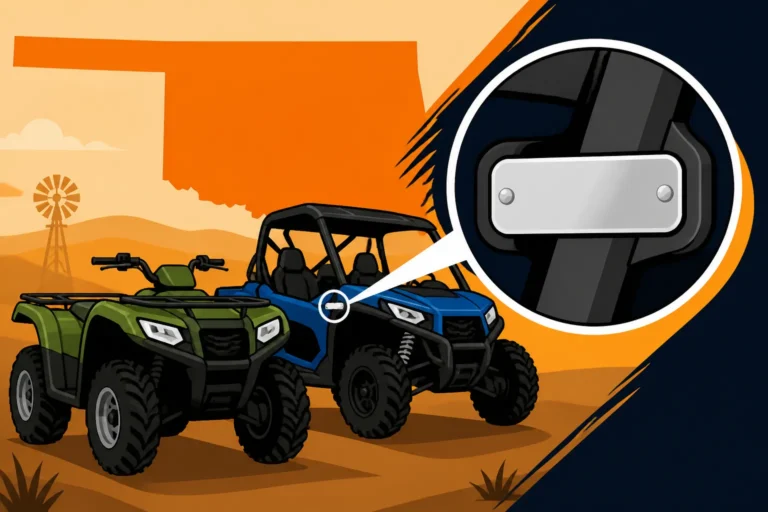
- Incorrect VIN: Verify the VIN on your paperwork matches the VIN stamped on your machine. Any discrepancy, even a single digit, will halt the process.
- Not Having a Valid ID: Obvious, but easily overlooked if you're rushing.
- Waiting Too Long: Remember that 30-day deadline! Don't let those late fees start accumulating. It's truly a shame to pay extra money just for procrastination. [You Have Thirty Days to Register After Buying], so plan accordingly.
- Not Budgeting for Excise Tax: Many new owners forget to factor in this additional cost beyond the registration fee. Make sure it's part of your financial plan.
By taking the time to understand these steps and gather your documents beforehand, you'll make your registration experience in Oklahoma as painless as possible. Then, and only then, can you truly enjoy that first ride with the confidence that you're riding legally and responsibly.
Disclaimer
This article is for general informational purposes only and does not constitute professional advice. Laws, prices and regulations vary by location and change over time. Consult a qualified professional for guidance on your specific situation.