Oklahoma Decals on a Motorcycle Fork
Riders in Oklahoma often find themselves scratching their heads when it comes to understanding where exactly that crucial registration decal needs to be displayed on their off-road machines. While ATVs and UTVs have a fairly straightforward placement, off-road motorcycles, dirt bikes, and even some three-wheelers present a unique challenge, often leading to confusion about the specific requirement for decals on a motorcycle fork. This guide aims to clear up that head-scratching mystery, detailing Oklahoma's specific rules for decal placement, especially for those machines that look more like a dirt bike than a quad or side-by-side.
Understanding Oklahoma's Off-Road Vehicle Decal System
Oklahoma has a pretty distinct system for registering off-road vehicles, and it's certainly not like registering your car or even a street-legal motorcycle. We're talking about a one-time registration, a unique decal, and specific placement rules that can catch even seasoned riders off guard if they don't know the nuances. The main goal, from the state's perspective, is clear visibility for law enforcement and park rangers who need to quickly identify if a machine is legally registered to operate on public lands, designated trails, or even when crossing certain roadways. It’s all about making sure everyone is playing by the same rules for safety and accountability.
The "Single Decal" Rule for ATVs and UTVs
For most traditional ATVs and UTVs (side-by-sides), Oklahoma's registration system issues a single decal. This isn't like a license plate that gets renewed annually; it's a one-and-done sticker that essentially says, "Yep, this machine has been through the state's registration process." The intent behind this is to simplify things for riders who mostly use their machines off the beaten path, where a full license plate might be easily damaged or obscured by mud and debris. The simplicity is certainly appreciated, but it does mean that the placement of that single decal becomes paramount. [Oklahoma Issues a Front Decal, Not a Plate] for off-road vehicles, so don't expect a metal plate for your quad or side-by-side.
This single decal serves as your machine's official identifier, much like a permanent registration sticker. Once it's affixed, it's meant to stay there for the life of the machine under that ownership. If you happen to sell the machine, the new owner will go through their own registration process and receive a new decal. The state isn't just handing out stickers for fun; this decal confirms that the machine has been titled, if applicable, and that any necessary excise taxes have been paid. It's a small sticker that carries a lot of legal weight, so knowing its proper home is half the battle.
Why Motorcycles Are a Special Case for Decals
Now, here's where things get a bit more specific and often lead to confusion: off-road motorcycles. When we talk about "motorcycles" in the context of off-road vehicle registration in Oklahoma, we're generally referring to dirt bikes, trail bikes, and other two-wheeled machines designed exclusively for off-highway use. These aren't the street-legal cruisers or sportbikes that carry traditional license plates and annual renewals. Because their design is different from a quad or a side-by-side, the state has had to adapt its decal placement rules to ensure the decal remains visible and secure on these unique vehicles.
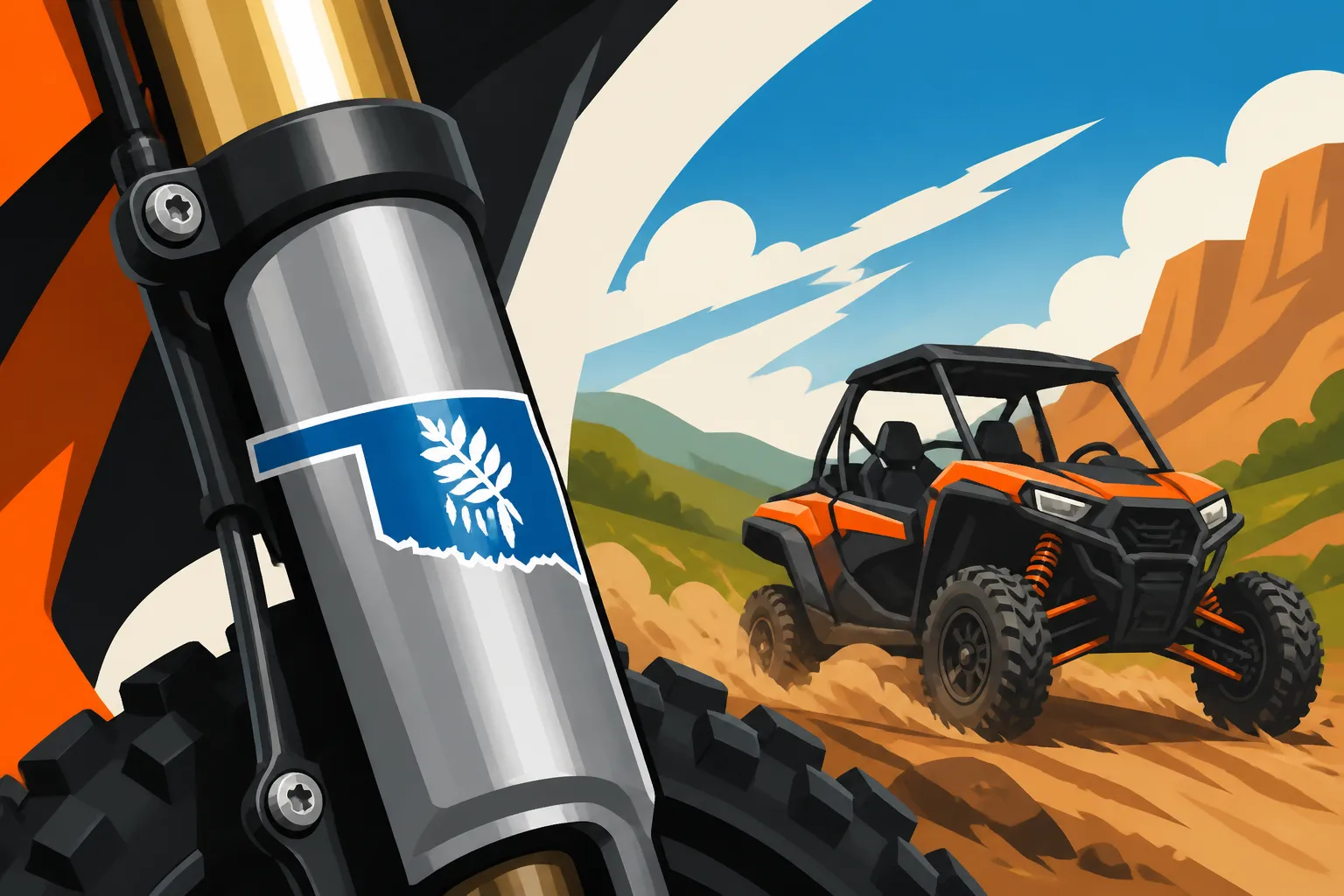
The unique structure of an off-road motorcycle, particularly the presence of front forks and often a lack of a flat, easily accessible front panel like on an ATV, necessitates a different approach. The rules are designed to ensure that even with the varied designs of dirt bikes—from enduro models with small headlamps to motocross bikes with just a number plate—the decal has a consistent and visible location. It’s a pragmatic solution to a diverse fleet of machines, acknowledging that a one-size-fits-all approach wouldn't work for something as distinct as a dirt bike compared to a UTV. This specific requirement is explicitly outlined, and it’s one that riders of these machines absolutely need to understand. Oklahoma Decals on a Motorcycle Fork is a very particular requirement, and it’s important to get it right.
Where Your ATV or UTV Decal Actually Goes
For the vast majority of off-road enthusiasts in Oklahoma, their machine is either a quad (ATV) or a side-by-side (UTV). These machines, while different in their construction and riding style, share a common requirement for decal placement that differs significantly from their two-wheeled cousins. Understanding this standard placement is key to avoiding issues, whether you're just tooling around your private land or venturing out onto approved public trails.
Front and Center: The Standard Placement for Quads and Side-by-Sides
When you register a quad or a side-by-side in Oklahoma, the instructions are pretty clear: the decal goes on the front of the machine. Specifically, it should be placed in a conspicuous, visible location. For most ATVs, this means the front plastic, often near the handlebars or on the front rack. For UTVs, it's typically on the front fascia, often below the windshield or on a flat panel near the front bumper. The key words here are "conspicuous" and "visible." This isn't a sticker you hide under the seat or on the side where it's easily obscured. It needs to be readily identifiable by anyone looking at the front of your machine. [Oklahoma Decals on the Front of a Machine] is a directive designed for quick identification.
Think about it from a park ranger's perspective: they might be observing multiple machines on a trail or at a staging area. They need to be able to glance at the front of a vehicle and immediately see if it's got its proper registration decal. If it's tucked away or covered in mud, it defeats the purpose. So, when you get that decal, take a moment to find a clean, flat surface on the front of your quad or side-by-side that won't be easily obstructed by mud, branches, or accessories like a winch or light bar. It should be applied to a surface that is part of the machine's permanent structure, not a removable piece of gear.
What Happens If You Put It Somewhere Else
While the state of Oklahoma is generally rider-friendly, compliance with registration rules is something they do take seriously. Misplaced decals, or worse, no decal at all, can lead to unnecessary headaches. If you decide to put your ATV or UTV decal on the rear fender, the side, or any location other than the front where it's clearly visible, you run the risk of being stopped by law enforcement. A state trooper, game warden, or park ranger might interpret this as an unregistered vehicle, even if you have the physical decal somewhere else.
The consequences for improper placement aren't usually as severe as not having a decal at all, but they can still be an inconvenience. You might receive a warning, be asked to immediately move the decal to the correct position, or in some cases, even face a minor citation. It's truly not worth the hassle. Imagine being out on a long ride at Robbers Cave OHV Area, enjoying the trails, only to be pulled over because your decal is on your rear fender and not clearly visible from the front. A quick stop at a [Oklahoma Tag Agencies Started in July 2021] will sort out initial registration, but it's up to you to follow the placement rules. To avoid cutting into your riding time with explanations or fixes, simply follow the clear guidance: front and center for ATVs and UTVs.
Navigating the Motorcycle Fork Placement Rule in Oklahoma
This is where the rubber meets the dirt, specifically for our two-wheeled off-road comrades. Unlike the front plastic of a quad or side-by-side, dirt bikes and off-road motorcycles have a much more minimalist front end. A flat, prominent surface for a decal is often non-existent. Because of this design difference, Oklahoma has a very specific instruction for these machines that can sometimes be overlooked by riders more familiar with ATV regulations.
The Specifics of Motorcycle Fork Placement
For off-road motorcycles, the Oklahoma registration decal must be affixed to the left front fork. Not the right fork, not the triple clamp, not the front fender – specifically the left front fork. And it needs to be in a location that is clearly visible. This means somewhere on the upper portion of the fork tube, ideally where it won't be covered by mud, roost, or debris from riding. You want it to be easily spotted when someone is looking at the front left side of your machine. This prescriptive instruction removes any ambiguity, ensuring uniformity across all registered off-road motorcycles.
The reason for specifying the left fork is twofold: consistency and accessibility. By having a universal placement, enforcement officers know exactly where to look. It also tends to be an area that is less prone to damage than, say, a flimsy plastic front number plate, which can get torn off in a crash or rough riding conditions. When you receive your decal for your dirt bike or off-road motorcycle, take your time to clean the fork tube thoroughly before applying it. Ensure the surface is free of dirt, grease, and old sticker residue for maximum adhesion. A properly applied decal will last longer and prevent you from needing a [Oklahoma Decal Replacement If Lost] sooner than necessary.
Why This Placement Is Crucial for Law Enforcement
From the perspective of law enforcement, whether it's a game warden checking for permits on wildlife management areas like Honobia Creek WMA, or a state park ranger at Little Sahara State Park, having a consistent and visible decal placement is incredibly efficient. Imagine a situation where an officer has to chase down every machine just to check its registration, or worse, where decals are hidden, leading to suspicion of unregistered activity. This specific fork placement streamlines their job, allowing for quick visual verification of compliance.
When an officer approaches your off-road motorcycle, they expect to see that decal precisely where the law dictates. If it's not there, or if it's on the wrong fork or obscured, it immediately raises a red flag. This could lead to them pulling you over for a more thorough check of your paperwork, potentially delaying your ride. [What a State Trooper Can Ask to See] includes proof of registration, and a clearly displayed decal is your first line of defense in demonstrating that you're legal. It’s a simple visual cue that you’ve done your due diligence and registered your off-road machine in the Sooner State. Getting it right ensures a smoother, uninterrupted riding experience for everyone involved.
Common Misconceptions and Troubleshooting Decal Issues
Despite the relatively clear rules, it's easy to get mixed up, especially with so many different types of off-road vehicles out there and different rules for street-legal machines. Riders often come across situations that leave them wondering if they've got everything sorted. Let's tackle some of those common points of confusion and practical problems.
"But My Machine Isn't a Street Motorcycle!"
This is a common refrain, and it highlights a crucial distinction in Oklahoma law. Many riders understand that their street motorcycles need plates and regular renewals, but they struggle to differentiate their dirt bike from that category. For the purpose of off-road vehicle registration, an "off-road motorcycle" or "dirt bike" is distinct from a "street motorcycle." Even if it looks like a motorcycle, if it's designed and intended for off-highway use only, it falls under the off-road vehicle registration rules. This means it gets the one-time decal registration, not an annual plate.
The key here is the vehicle's original manufacturer's intent and design. If it came from the factory without headlights, tail lights, turn signals, and mirrors necessary for street use, it's almost certainly an off-road motorcycle. So, while it might feel counterintuitive to put a decal on a fork when you're used to seeing full plates on motorcycles, rest assured, this is the correct procedure for your dirt bike. [Oklahoma Registration for an Off-Road Motorcycle] confirms this classification and the associated decal requirements. Don't try to fit it into a street-legal mold unless it's genuinely designed and equipped for it, and has gone through the separate street-legal UTV process.
Dealing with Lost, Damaged, or Faded Decals
Life on the trails can be tough on equipment, and that includes your registration decal. Mud, rocks, branches, pressure washing, or even just prolonged sun exposure can cause a decal to peel, fade, or get ripped off entirely. If this happens, don't just keep riding with a compromised or missing decal. A missing or unreadable decal is essentially the same as not having one at all in the eyes of the law. You'll need to get a replacement.
The process for replacing a decal typically involves revisiting a tag agency. You'll likely need to provide proof of ownership and the original registration information. There might be a small fee for the duplicate decal. It’s a good idea to keep a copy of your initial registration paperwork somewhere safe, perhaps a digital copy on your phone or in a cloud storage service, in case you need to reference it. When applying for a replacement, be sure to ask the tag agency if there are any specific forms required for a duplicate decal. Having your paperwork in order can make this process much smoother. If you've recently bought a used machine and somehow the decal is missing or damaged, and you're struggling to locate the original bill of sale for registration, online resources like LawDepot can provide customizable bill of sale templates that can help you create a valid document to present at the tag agency, ensuring you have the necessary proof for a new decal. [Oklahoma Decal Replacement If Lost] is a straightforward process, but preparation helps.
Ensuring Compliance and Smooth Trail Riding
Once you've got your decal correctly placed, your job isn't entirely done. Maintaining its integrity and understanding what to do if you're ever questioned by authorities are the final steps in ensuring your off-road adventures are always legal and hassle-free. A little bit of proactive maintenance and knowledge goes a long way.
Pre-Ride Checks for Your Decal
Just like you check your tire pressure, oil levels, and chain tension before a ride, make a quick visual inspection of your registration decal part of your routine. It only takes a second and can save you from potential trouble down the line. Look for signs of peeling, fading, or damage. Is it still securely attached? Is it clean enough to be easily read? If you're heading out to a particularly muddy or dusty area, you might even consider giving it a quick wipe down before you hit the trail, and again before you load up to head home.
It's a simple habit, but it's effective. Imagine you're riding through Three Rivers WMA during hunting season, and a game warden stops you. The first thing they'll look for is your visible decal. If it's intact and legible, that interaction is likely to be very brief and pleasant. If it's caked in mud or peeling off, it could lead to more questions and potential delays. Taking care of that decal is a small task that reaps big rewards in peace of mind and hassle-free riding.
What to Do When Stopped by an Officer
Even with a perfectly placed and pristine decal, there might come a time when you're stopped by a park ranger, game warden, or state trooper. Don't panic! Remain calm and courteous. The first thing you should do is safely stop your machine and turn off the engine. Keep your hands visible, perhaps on the handlebars or helmet. When the officer approaches, let them initiate the conversation.
They will likely ask for your identification and possibly your machine's registration paperwork. A clearly visible decal on your machine's left front fork (for off-road motorcycles) or front fascia (for ATVs/UTVs) will go a long way in confirming your compliance right away. If asked, you should be able to present proof of ownership, such as your title or bill of sale, and any other relevant permits, like a Land Access Permit for wildlife management areas. Having a copy of your [Oklahoma ATV Registration Application Explained] or a purchase receipt from a dealer can also be helpful. If you’ve prepared a strong bill of sale for a private transaction, remember LawDepot offers templates that are legally sound, which could make presenting your proof of ownership much smoother. Remember, courtesy and cooperation are your best assets in these situations.
Navigating Specific Off-Road Vehicle Types and Decal Nuances
Oklahoma's approach to off-road vehicle registration tries to cover a broad range of machines. While ATVs, UTVs, and off-road motorcycles are the most common, there are other types of machines, and specific scenarios, that can introduce nuances to the decal rules. Understanding these can prevent surprises down the road.
The Decal for Youth Quads and Smaller Machines
Youth quads and smaller ATVs designed for younger riders still fall under the same registration requirements as their full-sized counterparts. This means they, too, need to display the Oklahoma registration decal on the front of the machine. The challenge here is often finding a suitable, flat, and visible spot on a smaller machine. Sometimes the front plastic on a youth ATV is more curved or has less available surface area.
When applying the decal to a youth quad, look for the most prominent flat area on the front. It might be on a small front bumper, the lower part of the front fender, or a dedicated flat panel. The principles remain the same: it must be conspicuous and visible from the front. Ensuring a youth machine is properly registered and decaled is not just about compliance, but also about instilling good habits in young riders. They learn from observing you, so set a good example by making sure their machine is just as legal as yours.
Decals for Custom Builds or Heavily Modified Machines
Custom-built or heavily modified off-road machines can sometimes pose a unique challenge for decal placement. If your machine started as a factory ATV or UTV and you've added extensive modifications—like custom bumpers, light bars, or body panels—you need to make sure these additions don't inadvertently obscure your registration decal. The spirit of the law is still visibility.
If your modifications cover the original intended decal location, you'll need to find an alternative spot on the front of the machine that is equally conspicuous. This might require some creative thinking or even contacting your local tag agency for guidance if you're unsure. The goal is to avoid any situation where an enforcement officer might struggle to see or read your decal. Sometimes, for these unique builds, you might consider taking a photo of your decal placement for your records, especially if it's in an unconventional but still compliant location. This could be helpful if you ever need to explain its position.
When an Agricultural Exemption Applies (and Doesn't) to Decals
Oklahoma offers certain agricultural permit exemptions for off-road vehicles used exclusively for farm or ranch work. However, it's critical to understand what these exemptions cover and what they don't. While an agricultural permit might exempt you from paying the excise tax at the time of purchase, it generally does not exempt you from the basic registration and titling requirements for the machine itself. This is a common point of confusion. [Oklahoma Agricultural Permit Exemptions] are primarily about taxes, not registration.
Even if you primarily use your side-by-side or quad solely for hauling feed, checking fences, or moving equipment on your own property, if you ever intend to ride it on public roads (even briefly for crossing), designated trails, or any public land, it needs to be registered and display that front decal. The agricultural permit is about the purpose of the machine for tax reasons, not a blanket pass on registration when operating beyond private property. Therefore, for most farm and ranch machines, you'll still go through the standard registration process, pay the [Oklahoma ATV Registration Cost], and affix that decal prominently on the front.
The Broader Context of Off-Road Vehicle Registration
Understanding decal placement is just one piece of the puzzle when it comes to legally operating your ATV or UTV in Oklahoma. It fits into a larger framework of state regulations designed to ensure safety, account for ownership, and manage the use of these vehicles on various terrains. Getting your registration right from the start sets a positive tone for your entire ownership experience.
The Initial Registration Process and Your Decal
Your journey to obtaining that precious decal begins with the initial registration process. Whether you're buying a brand new machine from a dealer or a used one from a private seller, you'll need to visit an authorized Oklahoma tag agency. This is where you'll present your proof of ownership—an MSO (Manufacturer's Statement of Origin) for new machines, or a bill of sale and possibly a previous title for used ones. This is also where you'll pay the one-time registration fee, which covers the cost of processing your paperwork and issuing the decal. [Oklahoma Registration Processing Time] is generally quick if you have all your documents in order.
The tag agency clerk will guide you through the [Oklahoma's ATV Registration Application Explained]. They will process your information, ensure all taxes are paid, and then provide you with your permanent registration decal. It's a physical sticker that you then take home and carefully apply to your machine in the correct location. It's important to remember that this decal is typically issued on the spot once all requirements are met. It's not something that arrives in the mail weeks later; you walk out with it, ready to affix to your machine.
Decals, Titles, and Proof of Ownership
It’s easy to conflate the registration decal with the vehicle title, but they serve different purposes. The title is your legal document of ownership, proving that you are the rightful owner of the machine. The registration decal, on the other hand, is the visible proof that your machine has been properly recorded with the state and that any necessary fees have been paid to allow its legal operation on designated lands. For new owners, getting both your title and decal at the same time is the ideal scenario. [Oklahoma Titles ATVs and UTVs] as part of the overall ownership process.
When you're dealing with a private sale, it's crucial to ensure you get a clear and complete bill of sale, and ideally, a properly assigned title, if the machine was titled by the previous owner. If you're unsure about the documentation needed, especially for older machines where titles might not exist, a service like LawDepot can assist you in generating a robust bill of sale that captures all the necessary details, protecting both buyer and seller. Proper paperwork ensures a smooth transfer of ownership and makes getting your new decal a breeze. Without proper proof of ownership, you won't be able to register the machine and obtain that vital decal.
The "Never Renews" Aspect and Decal Longevity
One of the most unique aspects of Oklahoma's off-road vehicle registration is that it never renews. Once you pay the initial $11 registration fee, that's it for the life of your ownership of that particular machine. This means the decal you receive is intended to be a permanent fixture. This "Oklahoma Registration Never Renews" policy is certainly rider-friendly in terms of ongoing costs and hassle, but it places a greater emphasis on the longevity and durability of that single decal.
Given that your decal needs to last, choosing the right spot and applying it properly is even more important. Clean the surface thoroughly with rubbing alcohol before application. Apply it smoothly, working out any air bubbles, and avoid placing it over seams or areas that flex significantly. While the state aims for durable decals, extreme conditions or improper application can still lead to wear and tear. If your decal does become unreadable over time, you'll need to follow the replacement process described earlier. The one-time nature of the registration is a huge benefit, but it also means that little sticker carries a lot of responsibility. [What Oklahoma's $11 Registration Fee Actually Covers] is a lifetime registration for that machine under your ownership.
| Off-Road Vehicle Type | Decal Placement Rule | Typical Location Example |
|---|---|---|
| ATV (Quad) | Must be visible on the front of the machine. | Front plastic, near handlebars/rack. |
| UTV (Side-by-Side) | Must be visible on the front of the machine. | Front fascia, below windshield/on front bumper. |
| Off-Road Motorcycle | Must be visible on the left front fork. | Upper portion of the left fork tube. |
| Youth ATV | Must be visible on the front of the machine. | Small front fender, bumper, or flat panel. |
Disclaimer
This article is for general informational purposes only and does not constitute professional advice. Laws, prices and regulations vary by location and change over time. Consult a qualified professional for guidance on your specific situation.