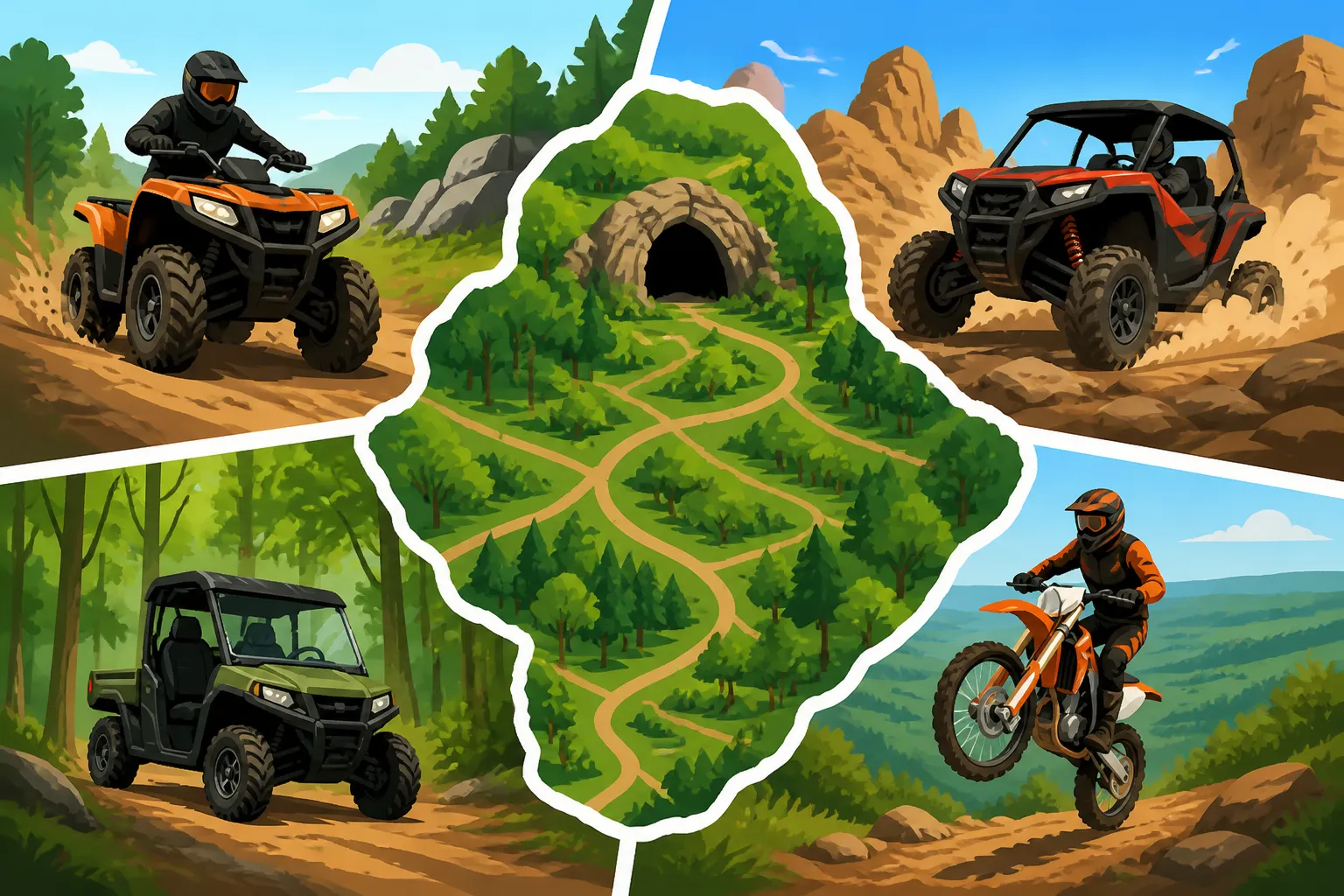
What Fits Into Robbers Cave’s 250-Acre Riding Area
A 250-acre riding area can sound roomy until you picture a busy weekend, a mixed-skill group, and a few hours of riding on unfamiliar trails. Robbers Cave’s OHV area is a compact, hilly place to ride near Wilburton, not a sprawling trail system where you can assume every road or path is open. This guide explains what the area can fit, how to plan, and what to check before unloading.
What the 250-acre figure means at Robbers Cave
A compact OHV area, not 250 acres of uninterrupted trail
Robbers Cave’s riding area is commonly described as covering about 250 acres. That number refers to the area, not to 250 acres of smooth, continuous trails or a guaranteed amount of rideable ground on any particular day. A riding area includes the terrain between routes, turns, slopes, and other spaces that make up the site.
That distinction matters when you’re deciding whether the area suits your group. A small group looking for a few hours of off-highway riding may find a compact site appealing. A group hoping to spend an entire day covering new ground, or expecting a large network of long-distance routes, should set more modest expectations and confirm what is open before making the drive.
The area is part of Robbers Cave State Park near Wilburton, in southeast Oklahoma. For a broader overview of the riding site and its setting, see [Robbers Cave OHV Area in Oklahoma]. Keep the park’s designated riding area separate in your mind from the larger state park: being inside a park does not mean every road, trail, or patch of land is open to OHV use.
How the terrain changes the ride
Robbers Cave sits in the San Bois region, where hilly ground can make a relatively small riding area feel more varied than a flat acreage figure suggests. Elevation changes, bends, and uneven surfaces can slow a ride down. A short route on a map may take longer than expected if the terrain is unfamiliar or your group stops often.
The hills also shape who is likely to enjoy the area. Riders who like a changing surface and a little elevation may appreciate the sense of variety. Newer riders, younger riders, and anyone who prefers broad, easy paths may want to take the first loop slowly and decide how the terrain feels before committing to more challenging sections.
Treat the acreage as a clue about the scale of the site, not as a measure of trail difficulty. Conditions and route availability can change, and a trail that looks manageable to one rider may feel demanding to another. If you want to compare Robbers Cave with other places to ride in the state, [Oklahoma ATV Trails: Where to Ride] offers a useful starting point for thinking about different riding-area styles.
Who is most likely to enjoy a smaller riding area
A compact OHV area can work well for a family or small group that wants a manageable outing rather than a mileage challenge. It can also be practical when riders have different levels of experience, because the group can pause, regroup, and reassess instead of trying to keep up over a long route.
It may be less satisfying for riders who measure a successful day by how many miles they cover. If that describes your group, discuss expectations before leaving home. Someone planning a relaxed ride may be happy to repeat a favorite section; someone expecting hours of exploration could feel disappointed if the available riding area seems limited.
For a first visit, plan around the experience rather than a mileage target: arrive with enough daylight, ride at a pace that lets everyone stay together, and leave room for breaks. That approach is especially helpful when the hills or trail conditions are new to your group.
Planning a ride that fits the site
Set expectations before you unload
Before the trip, check the park’s current information about the OHV area, hours, access, permitted machine types, and any closures or restrictions. Don’t rely on a general map or an old trip report to answer questions about what is open today. Conditions can change, and park-specific rules take priority over what a route-planning app appears to show.
Digital mapping can still be useful for getting oriented and discussing a plan with your group. Some riders use onX Offroad to look at route context before a trip, but an app should not be treated as confirmation that a route is open or authorized. Compare what you see in onX Offroad with the park’s official guidance and any posted signs when you arrive.
It also helps to agree on a simple group plan: who rides at the front, who stays at the back, where you’ll stop if the group gets separated, and what everyone should do if a machine has a problem. Even on a compact site, a little planning prevents the frustrating moment when one rider assumes the group has taken one turn and everyone else has taken another.
Match the ride to your machine and experience
A machine’s size and handling affect how comfortable it feels on hilly ground. Before setting out, check that the machine is suitable for the routes the park allows, and confirm current access rules for your specific vehicle type. The term “OHV” can cover different kinds of machines, but access rules are not automatically identical for every vehicle.
For a UTV or side-by-side, consider the width of the machine, turning space, and your passengers’ comfort on uneven ground. For a quad, think about the rider’s experience with hills and changing surfaces. In either case, don’t assume that a route is appropriate just because another rider completed it. If someone in the group is uneasy, turning back is a sensible choice, not a failed ride.
A first lap is a good time to observe rather than push. Notice where the ground becomes rougher, how visibility changes around bends, and whether everyone can maintain a safe gap. Riders who use onX Offroad for pre-ride orientation can compare the map with what they actually see, but should stop somewhere safe before checking a phone.
Plan around daylight and breaks
Robbers Cave’s OHV riding is described as a daylight-hours activity. Build your schedule around the time you need to park, unload, prepare machines, and still finish riding with a comfortable margin before dark. A late arrival can turn an otherwise enjoyable outing into a rushed attempt to squeeze in one more loop.
Breaks matter more on hilly terrain than people sometimes expect. Riders may need time to cool down, drink water, check equipment, and let less-experienced members of the group reset. A short break can also prevent the group from getting spread out when one rider needs extra time on a section.
If you’re camping, make sure your campsite plan and riding plan work together. Robbers Cave has camping options associated with the park, and the relationship between the OHV area and nearby camping can make an overnight trip appealing. For more on that setup, see [Robbers Cave Rides Across From Deep Fork Campground] and [Two Campgrounds at One OHV Area]. Confirm site availability and park arrangements directly before you travel.
What a day at Robbers Cave can look like
A practical ride plan for a first visit
A first visit goes more smoothly when you avoid treating the ride as a race to see every possible route. Start by checking in, reviewing signs and rules, and giving the group time to get ready. If the park provides a map or current route information, use it to choose a conservative first section rather than heading out without a shared plan.
Once riding, keep the group together and pause at safe spots when needed. On a compact site, repeated sections can be part of the experience; there’s no need to turn every lap into a push for distance. If everyone is comfortable, you can adjust the plan. If the terrain feels more demanding than expected, shorten the ride and enjoy the outing without forcing a difficult section.
Before leaving, allow time to load carefully and check that no gear, trash, or personal items have been left behind. If you want to compare your route notes afterward, a map app such as onX Offroad may help you remember the general layout, but keep the park’s own information as your reference for access and restrictions.
What can make the area feel busy
A 250-acre site can feel quite different depending on the number of riders present, how people are using the trails, and which sections are available. On a quiet day, a group may find it easy to stop and regroup. On a busier day, riders may encounter other machines more often, so patience and predictable riding matter.
Stay alert at bends and changes in elevation, where sightlines may be limited. Keep a safe distance from the rider ahead, avoid sudden stops in places where others may not see you, and use designated areas for breaks. If you’re riding with children or newer operators, keep them within a distance where you can supervise and communicate effectively.
A compact area also makes courtesy especially important. Let faster riders pass where it is safe, avoid blocking narrow routes while taking a break, and follow posted directions. If you’re looking for ideas on what to bring and how to prepare for a trail day, [Oklahoma Trail Etiquette Locals Expect] and [Oklahoma Trail Conditions Before You Tow] are relevant planning reads.
Choosing Robbers Cave and preparing to go
Compare the riding experience you want
Robbers Cave may suit riders who want a smaller, hilly setting and are comfortable spending time learning the layout. It can be a sensible choice for a shorter outing or an overnight park visit. It may not match the expectations of someone looking for a vast, open riding network or a high-mileage day.
| Your priority | How Robbers Cave may fit | What to check before leaving |
|---|---|---|
| A compact ride close to park facilities | The smaller scale may make the outing easier to manage | Current OHV access, hours, and facility arrangements |
| Hilly terrain and a change from flat routes | The San Bois setting offers a different feel | Current trail conditions and your group’s experience |
| A full day of long-distance riding | The acreage may feel limited for mileage-focused riders | How much riding is open and whether another area better fits |
| Riding with mixed ages or skill levels | A modest plan can make regrouping easier | Machine rules, rider requirements, and safe route choices |
| Camping as part of the trip | Park camping may complement the ride | Campsite availability, fees, and current park rules |
If a longer network matters more to your group, compare destinations before you commit to the drive. The right choice depends not only on acreage but also on what machines are allowed, how challenging the terrain feels, whether camping is available, and how much open riding your group wants.
Use maps as a planning aid, not permission
A route map can help you understand the general area, estimate travel time, and discuss where to meet. Apps such as onX Offroad can be part of that preparation, particularly when a group wants to look at terrain before arriving. Still, a digital line on a map does not establish that a route is open, legal for your vehicle, or safe under current conditions.
Use park information and signs to verify access once you arrive. If a map and a posted notice appear to conflict, follow the posted direction and ask park staff for clarification. This is a useful habit at any riding area, but especially at a state park where designated recreation areas sit alongside land with other uses.
Before the trip, check the basics: allowed machine types, riding hours, required equipment, fees, parking or unloading arrangements, camping rules, and any temporary closures. For broader preparation, [Oklahoma OHV Camping With Trail Access] can help you think through how riding and camping plans fit together, while [Oklahoma Trail Etiquette Locals Expect] is a reminder that considerate riding makes a compact area more enjoyable for everyone.
A simple pre-trip checklist
A short checklist can prevent the familiar last-minute scramble when the trailer is loaded but nobody has checked the park’s rules. Make these checks before you leave:
- Confirm the OHV area is open and verify its current riding hours.
- Check that your machine type is allowed and review any equipment requirements.
- Look at the forecast and recent conditions, then be ready to adjust your plan.
- Bring water, basic tools, protective gear, and a way to contact your group.
- Agree on a regrouping plan and set a conservative pace for the first ride.
- Confirm camping or other park arrangements separately from OHV access.
- Leave enough daylight to finish riding, load safely, and travel out without rushing.
Robbers Cave’s 250-acre scale is best understood as an invitation to plan a focused ride, not a promise of endless mileage. With realistic expectations, attention to the park’s rules, and a pace that suits the least-experienced rider in your group, the area can make for a rewarding outing in southeast Oklahoma.
Disclaimer
This article is for general informational purposes only and does not constitute professional advice. Laws, prices and regulations vary by location and change over time. Consult a qualified professional for guidance on your specific situation.