Dunes 25 to 75 Feet High
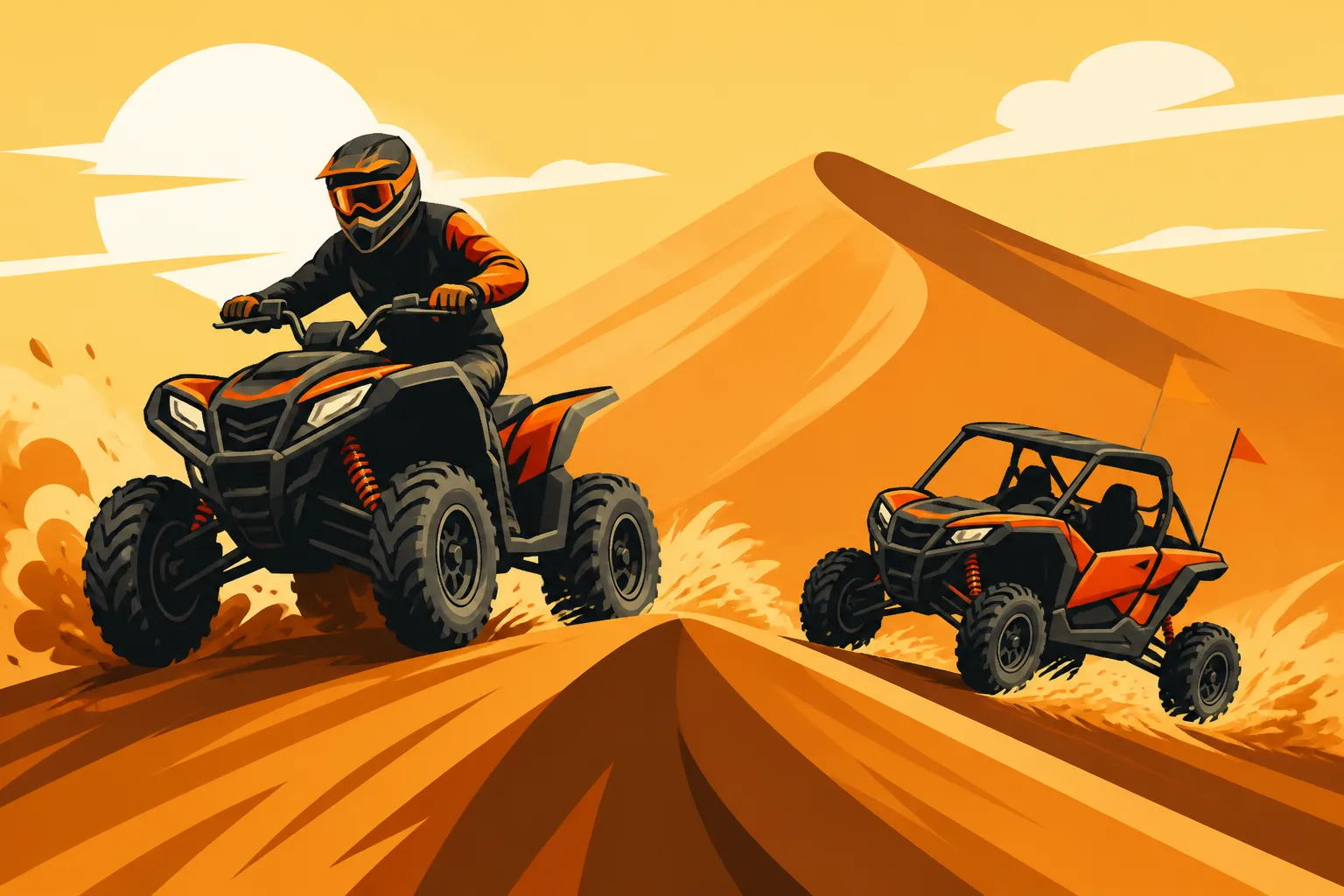
At Little Sahara State Park near Waynoka, Oklahoma, dunes rise roughly 25 to 75 feet, and that range can feel very different from the driver’s seat. A gentle-looking slope may hide a steep face or shifting sand. This guide explains what the dune heights mean, how to prepare for the terrain, and how to make a safer riding plan.
What 25 to 75 feet means on Little Sahara’s dunes
The height describes the dune, not the whole ride
A dune’s height is not a promise that every slope is equally steep or that each climb will feel manageable. Sand can form rounded ridges, sharp crests, bowls, and faces that change shape as machines pass over them. Two dunes with similar heights can offer very different approaches and visibility.
The 25-to-75-foot range gives you a useful sense of scale: these are substantial sand formations, not small bumps in a level field. But the number alone does not tell you whether a particular line is safe. Slope, soft or compacted sand, traffic, wind, and your machine’s capability all matter.
If you’re new to dune riding, start by watching the terrain from a safe place before you head into it. Take time to notice where other riders climb, where they turn, and how the sand behaves. The park’s setting and riding-area details are covered in [Little Sahara State Park in Oklahoma], while [Little Sahara's Dune Heights in Oklahoma] focuses specifically on the formations’ reported scale.
A crest can hide what is on the other side
One of the most important things to understand about a dune crest is that you may not be able to see what lies beyond it. A rider approaching from the opposite direction can also be hidden from view. That makes blind crests a poor place to assume the route is clear, even when the slope looks familiar.
Avoid charging over a crest simply because another machine has just crossed it. Slow down well before the top, approach under control, and choose a line that gives you the best possible view. If you cannot see beyond the crest, treat the area as occupied until you know otherwise. A moment spent checking is much less costly than a collision or a rollover.
The same caution applies when following friends. Leave enough distance that the lead rider can stop or change direction without you arriving on their rear tires. Dust and glare can make visibility worse, so don’t rely on seeing a rider at the last second to tell you where they are.
Sand changes how a machine responds
Loose sand can make steering feel less direct than it does on firm ground. A machine may drift, bog down, or respond differently as the surface changes across a slope. If you’re used to trails with hard-packed dirt, that difference can be surprising—especially on a climb or while turning near the top of a dune.
Avoid making sudden steering or throttle changes just because the machine feels unfamiliar. Smooth, deliberate inputs and a speed suited to the terrain give you more time to respond. If a section feels beyond your comfort level, turn around where it is safe rather than forcing a climb. Choosing a less demanding route is good judgment, not a failure.
| Dune feature | What it can mean for a rider | Practical approach |
|---|---|---|
| Rounded ridge | The route may look gentle but still conceal traffic beyond the crest | Slow down and check what you can see before crossing |
| Steep face | The climb may demand more from the rider and machine | Skip it if the slope, sand, or traffic feels uncertain |
| Bowl or low area | Riders may enter from several directions | Watch for cross-traffic and keep space around your machine |
| Loose or churned sand | Steering and traction may feel less predictable | Use controlled inputs and avoid abrupt maneuvers |
| Busy approach | Other riders may be climbing or descending nearby | Wait for a clear line rather than squeezing through |
How to prepare for dune riding
Match the route to your experience and machine
A first visit can be exciting enough that it’s tempting to follow the fastest or boldest riders in your group. Resist that pressure. The right route is the one you can ride with control, not the one that looks most impressive from the parking area. A steep climb, crowded bowl, or blind crest can turn into a stressful situation quickly if the group has different skill levels.
Before riding, agree on a plan with your group. Decide who will lead, where you’ll stop, and what everyone should do if the group gets separated. Newer riders should be able to choose a less challenging line without having to explain or defend the decision. Make sure each person knows how to stop safely and how to get the group’s attention.
A navigation app such as onX Offroad can help you review your general location and plan where to ride, but don’t treat a displayed route as proof that a specific dune line is open, safe, or suitable for your machine. Use the park’s posted information and conditions as your guide, and check [Oklahoma ATV Trails: Where to Ride] for broader planning context.
Carry the safety equipment the riding area calls for
Little Sahara’s dunes have specific riding rules, so check requirements before unloading. Riders should understand the park’s whip and flag requirements, including [Oklahoma's 10-Foot Whip Rule] and [Oklahoma's Orange Flag Requirement]. A clearly visible whip and flag help other riders spot a machine in a landscape where dunes can block sightlines.
If you expect to ride after dark, review [Oklahoma Night Lighting on Dunes] before you go. Lighting requirements matter because visibility changes dramatically when the sun goes down and machines approach from different directions. Make sure your equipment is in working order before you reach the dunes, rather than discovering a problem after your group has already set out.
Helmet requirements and other safety rules deserve the same attention. In particular, check the applicable rule for riders under 18 before the trip. A child’s comfort and confidence matter too: a helmet that fits poorly or a ride that feels overwhelming can make an otherwise fun day unpleasant. For a first outing, build in breaks and give younger riders the option to stop.
Check access and conditions before towing
A long drive to a riding area is frustrating enough; arriving to find that conditions or access have changed can make it worse. Before leaving home, check the park’s current notices and plan for weather that may affect sand, visibility, or the roads you’ll use to reach the area. [Oklahoma Trail Conditions Before You Tow] is a useful reminder to make that check part of your trip routine.
Pack for the whole day, not just the ride itself. Bring water, sun protection, food, basic tools, and any machine-specific supplies you normally need. Sand and heat can make a day feel more tiring than expected, and a minor issue can become a bigger inconvenience if your group has no way to handle it or take a break.
Use onX Offroad or another map tool as a planning aid, but keep your attention on signs, posted boundaries, and what is happening around you once you’re on-site. If the map and a sign appear to disagree, don’t guess your way through the uncertainty. Stop in a safe place and confirm the route with park information or staff before proceeding.
Riding the dunes with better judgment
Start with observation, not speed
When you first arrive, give yourself a few minutes to watch how the terrain and traffic work together. Notice where riders tend to gather, how they approach climbs, and whether certain areas have blind crests or crossing lines. Watching from a safe location can help you understand the rhythm of the riding area before you add your machine to it.
Once you begin, keep your first few runs conservative. Get used to the sand and how your machine responds before attempting more demanding terrain. If you’re riding with someone more experienced, ask them to point out a suitable route—but make your own decision about whether it feels manageable. Their comfort level may not match yours.
Keep enough separation from other machines to leave room for a stop or a change in direction. Avoid following so closely that dust blocks your view, and don’t assume that the rider ahead has checked the far side of a crest. [Oklahoma Trail Etiquette Locals Expect] offers useful reminders for sharing riding space respectfully.
Make a plan for getting separated or stuck
Groups can spread out quickly across open sand. Before starting, choose a simple meeting point and agree on what to do if someone loses sight of the others. A plan matters even when everyone has a phone: reception, battery life, and the distraction of a busy riding day can all get in the way of a quick call.
If a rider becomes stuck or has a mechanical issue, the rest of the group should avoid crowding the machine. Keep other riders away from the immediate area, make sure the person is in a safe position, and assess the situation before trying to move or recover the machine. A rushed recovery can create new hazards, especially if there is traffic nearby or the machine is on a slope.
A map app such as onX Offroad may help your group understand its general position, but it should support—not replace—your agreed meeting plan and awareness of park signs. Make sure everyone knows how to find the meeting point and what to do if they can’t reach the group.
Leave room for other riders and the changing terrain
Dunes are shared riding space, and people may approach from directions you can’t see. Avoid stopping in a place where another rider is likely to crest a hill or turn into your path. If you need a break, move to a safe area with good visibility and check that your machine is out of the way.
It also helps to keep your expectations flexible. A dune may be more crowded, softer, or less visible than it looked from a distance. Conditions and traffic can change over the course of the day, so a route that felt comfortable earlier may not be the best choice later. Turning back, waiting for a clear stretch, or taking a gentler line are all sensible options.
For a deeper overview of dune riding, review [Oklahoma Dune Riding Explained]. The practical takeaway is simple: the stated height range helps set expectations, but safe decisions depend on what you can see, the machine you’re riding, your experience, and the conditions in front of you.
Disclaimer
This article is for general informational purposes only and does not constitute professional advice. Laws, prices and regulations vary by location and change over time. Consult a qualified professional for guidance on your specific situation.