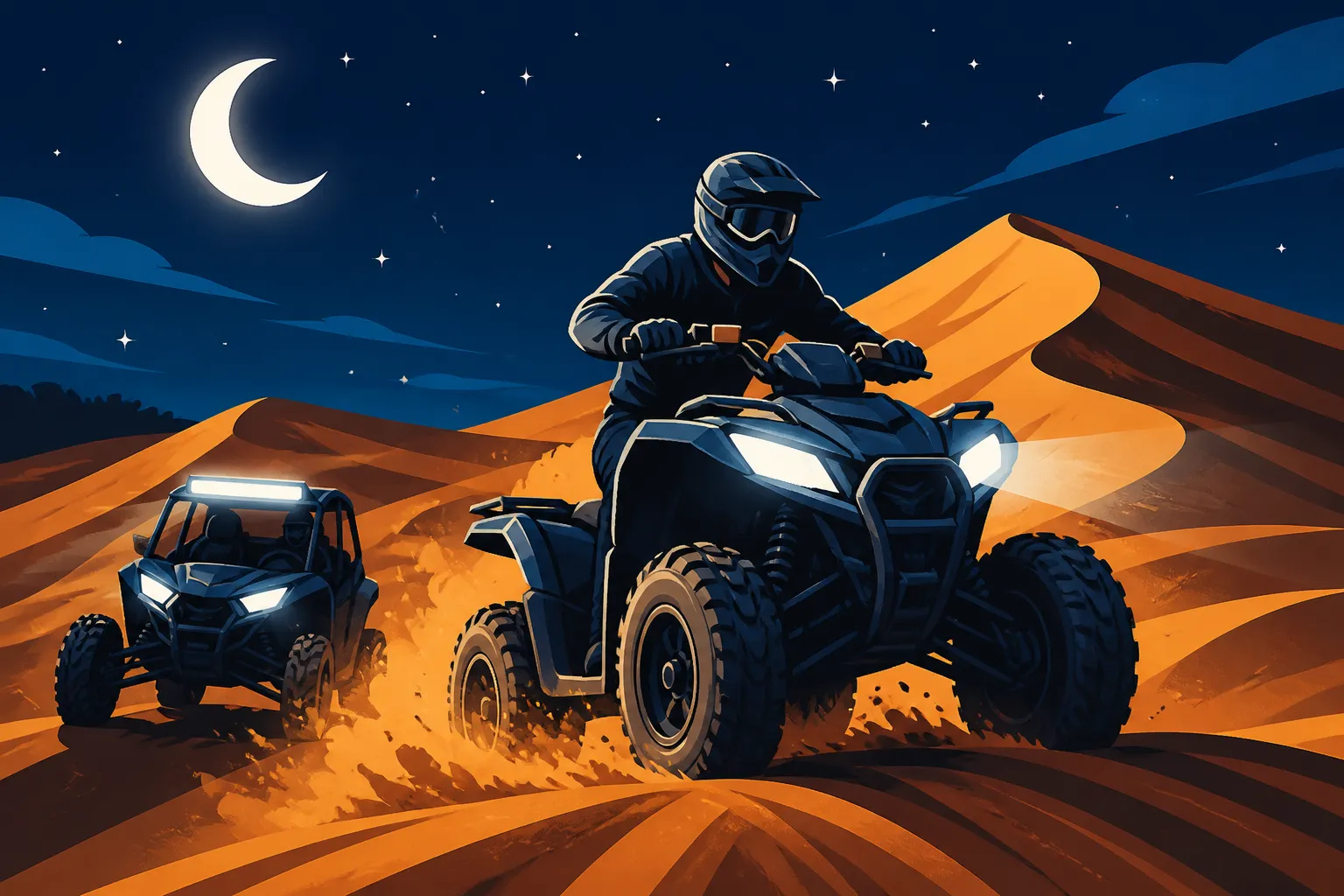
Riding Little Sahara’s Dunes at 2 a.m.
A 2 a.m. ride at Little Sahara can feel unforgettable, but darkness turns familiar dunes into a place where you can lose sight of the route, miss another rider, or misjudge a crest in seconds. This guide covers the practical planning, lighting, group habits, and safety checks that help riders make a late-night outing more deliberate—and know when it is smarter to stay in camp.
Plan a 2 a.m. ride before you leave camp
Confirm access and park rules first
Little Sahara State Park is near Waynoka in northwest Oklahoma, and riders are drawn there by its open sand and changing dunes. But a late-night plan should start with a current check of the park’s access, operating conditions, and rules—not an assumption that every area is open at every hour. Conditions and instructions can change, and an open riding area is not the same thing as permission to ride wherever you can see sand.
Before unloading, ask the park office or check the park’s official information for current access details, any closures, and requirements for your machine and gear. If you are staying overnight, confirm that your campsite or overnight arrangements allow you to come and go when you intend to ride. A trip that begins with a locked entrance or a last-minute rule surprise can leave you scrambling at the exact time you hoped to be on the dunes.
Night riding also calls for a clear agreement among everyone in the group. Decide where you may ride, how long the outing will last, and what you will do if someone wants to turn back. If the group cannot agree on those basics before leaving camp, it is better to pause and sort them out in daylight.
For a wider overview of the riding area and the experience of riding it, see [Little Sahara State Park in Oklahoma]. If nighttime lighting is on your checklist, review [Oklahoma Night Lighting on Dunes] and confirm the current park requirements before you set out.
Check the forecast and the sand, not just the clock
A late start changes what you need to pay attention to. Wind can move loose sand across tracks, dust can hang in the air, and a route that looked straightforward before dark may be harder to follow when visibility drops. Recent rain can also change the feel of the surface. Do not treat a familiar daytime route as automatically safe at 2 a.m.
Look at the forecast before bed, then take a moment to assess the conditions when you wake up. If the wind has picked up, dust is suspended over the riding area, or you cannot clearly see the trail ahead, postpone the ride. The same goes for weather that brings lightning, heavy rain, or poor visibility. A planned ride is not a promise you have to keep.
It is worth building a simple alternative into the plan: ride earlier, shorten the route, or wait until dawn. That gives the group permission to make a sensible call without turning the decision into a debate about who is being overly cautious. A night ride should feel challenging in an enjoyable way, not like a test of whether you can push through conditions you can no longer read.
For broader planning advice, [Oklahoma Trail Conditions Before You Tow] can help you think beyond the ride itself, while [Oklahoma Riding Season Month by Month] offers context for how seasonal conditions can shape a trip.
Prepare your machine for darkness and sand
Make your lights visible and dependable
At night, lights are not just there to help you see. They also help other riders understand where you are, which direction you are facing, and whether you are moving or stopped. Check the front and rear lighting before you leave camp. Little Sahara’s dune guidance includes white lights at the front and red lights behind; confirm the current requirements and make sure your setup is visible from the angles that matter.
Turn the lights on and inspect them rather than relying on a quick glance at the switch. Look for cracked housings, loose wiring, weak connections, or sand and dust covering the lenses. If your machine has multiple lighting settings, test the settings you plan to use and make sure everyone in the group understands how to signal a stop or a problem.
More light is not automatically better. A poorly aimed auxiliary lamp can make it harder for an approaching rider to see, especially if it shines straight into their eyes. Keep lights secure and aimed responsibly. If you notice that your lights are flickering, dimming, or failing to stay on, fix the problem before the ride rather than hoping it will hold up over rough sand.
Secure the whip, flag, and safety gear
The whip and flag help make a machine easier to spot among dunes, particularly when riders approach from different directions. Little Sahara is known for a 10-foot whip requirement and a bright orange flag measuring 6 by 12 inches, but always verify the park’s current specifications. Check that the whip is firmly mounted, rises as intended, and is not obstructed by gear or equipment.
Inspect the flag before riding. A torn, folded, or dirt-darkened flag may be much less noticeable than a clean, bright one. Make sure it is attached securely and sits where it can be seen. If you are carrying spare gear, keep it tied down so it cannot interfere with the whip, lights, controls, or a passenger.
Helmets and protective equipment matter just as much in the dark as they do during the day. A helmet that fits poorly, a loose strap, or goggles that fog up can distract you at the worst moment. Riders under 18 should pay particular attention to the applicable helmet rules, including the circumstances involving machines without a protective cage. See [Oklahoma's Orange Flag Requirement] and [Helmets for Riders Under Eighteen Without a Cage] for more information, then check the park’s current guidance before riding.
Use a pre-ride check that fits a nighttime outing
A quick inspection before every ride can catch problems that are easy to miss in camp. Check tire condition and pressure according to the machine and riding conditions, look for leaks or loose parts, and confirm that the throttle and brakes behave normally. Make sure the machine has enough fuel for the planned outing, with a margin for an unexpected delay or a slower return.
Pay attention to equipment that can become harder to manage in darkness. A loose cargo strap can flap into a light beam, an unsecured tool can shift, and a cracked lens may be almost impossible to notice once you are moving. Keep essential items in a consistent place so you can find them without rummaging around in the dark.
Use the table below as a final check. It is not a substitute for the park’s own rules or the machine manufacturer’s instructions, but it can help the group catch avoidable oversights before the engines start.
| Check | What to confirm before leaving camp | Why it matters at night |
|---|---|---|
| Front and rear lights | Lights work, lenses are clean, and lights are aimed responsibly | Helps you see and makes your machine easier for others to recognize |
| Whip and flag | Secure mount, clear visibility, and compliance with current park rules | Makes your machine more visible over and between dunes |
| Helmet and eye protection | Correct fit, secure strap, clean goggles or visor | Reduces distraction and helps protect against sand and debris |
| Fuel and machine condition | Sufficient fuel, normal controls, no obvious leaks or loose parts | Reduces the chance of a breakdown far from camp |
| Communications | Phones or radios charged and a simple group plan agreed on | Helps the group respond if riders become separated |
| Map and route | Route reviewed before departure, with any offline navigation prepared | Reduces dependence on a signal or screen while moving |
Ride dunes differently after dark
Treat every crest as a blind approach
A dune crest blocks your view of what lies beyond it. In daylight, you may be able to read the shape of the sand, notice tracks, and see another machine approaching. At 2 a.m., your lights may reveal only a short section in front of you. A steep or unfamiliar face can conceal a drop, another rider, or a change in terrain.
Approach crests slowly enough that you can stop if the view is unclear. Do not launch over the top just because the machine has enough power to do it. Pause where you can safely assess what lies ahead, and give the next rider room to do the same. If you cannot see a safe path on the other side, choose a different line.
Avoid following another machine so closely that its dust or lights become your only guide. Keep enough space to see the terrain yourself and to react if the rider ahead slows or changes direction. If the dust is thick enough to hide the ground, wait for it to clear rather than trying to ride through a wall of sand.
Keep the group together without bunching up
A group can be reassuring at night, but only when everyone knows how it will operate. Choose a lead rider who knows the area and a sweep rider who watches for anyone falling behind. Agree on a regrouping point and a simple signal for stopping. Make sure less experienced riders know they can ask to turn around without being pressured to keep up.
Give each machine enough room to see and maneuver. Riding too close can put a rider into the dust plume ahead, while spreading out without a plan can make it easy to lose track of one another. Use a pace that the least experienced rider can manage, and check in at planned stops rather than waiting for someone to fall far behind.
If a rider becomes separated, stop in a safe place and follow the group’s agreed plan. Do not have multiple riders race off in different directions to search. One person should coordinate the response while the others remain accounted for. Before the trip, you can review the route together using a map app such as onX Offroad, but do that planning while parked. A phone screen should not become the lead rider’s main view of the dunes.
Use navigation as a backup, not a substitute for attention
A route saved before the ride can be useful if a rider needs to orient themselves or explain where the group last stopped. But electronic navigation has limits: a device can lose power, a screen can be difficult to read, and a mapped line does not guarantee that the terrain ahead is passable or appropriate for your machine. Download any map data you expect to need before heading out, and keep your phone secured where it will not become a distraction or a loose object.
onX Offroad can help riders prepare by reviewing an area and organizing a route before they start. It is best treated as one layer of preparation, alongside local signs, park directions, and the group’s own awareness. If you use onX Offroad, check the screen while stationary and return your attention to the terrain before moving again.
Mark or remember a simple route back to camp, and discuss what to do if visibility gets worse. Do not rely on a single person’s phone as the group’s only navigation plan. Another rider should know the intended route, and someone should carry a charged device or another suitable way to communicate if the group separates.
Manage fatigue, visibility, and emergencies
Be honest about tiredness
Two in the morning is late even for people who consider themselves night owls. Fatigue can make it harder to judge speed, notice changing terrain, and react smoothly. Riders may also feel alert at first because the outing is exciting, then become sluggish once they have been in the dark and dust for a while.
Keep the planned ride short enough that people are not trying to squeeze an entire daytime outing into the middle of the night. Set a return time before leaving, and take a break if anyone feels foggy, irritable, or unusually slow to respond. If a rider is struggling to stay focused, ending the ride is the safer choice. A machine can wait; a tired rider has less room to correct a mistake.
Avoid starting a ride after alcohol or other impairing substances. Little Sahara’s dune-area rules prohibit alcohol, and impairment makes a demanding environment even less forgiving. Keep the group’s plan clear: no one should be expected to ride after drinking, and no one should be teased for choosing to stay at camp.
Make yourself visible without confusing other riders
In the dark, other riders may have only a brief moment to recognize your position. Keep your lights clean, maintain a clear line of sight when you can, and avoid stopping in a spot where another machine is likely to crest toward you. If you must stop, move to a safer location away from a blind crest or active line of travel, then make your machine visible to the rest of the group.
Do not assume that a rider has seen you just because you can see their lights. Lights can blend into the background, and a dune can hide part of a machine. Slow down around other riders, communicate clearly, and leave enough room for them to choose their own line. If you see a machine stopped unexpectedly, approach cautiously rather than assuming the rider is simply taking a break.
onX Offroad may help with pre-ride route planning, but it cannot tell you whether another machine is just beyond the ridge or whether a patch of sand has changed. Keep scanning the terrain and listening for other engines. If visibility becomes too poor to make good decisions, turn around or wait rather than pressing farther into the riding area.
Know what to do if something goes wrong
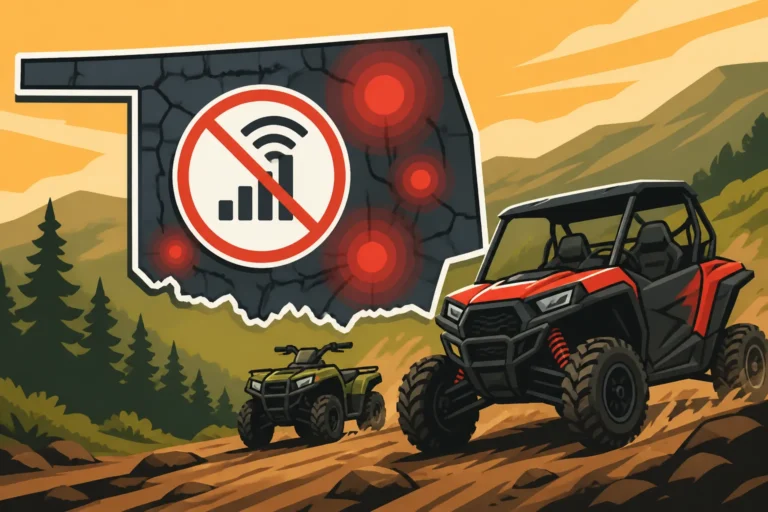
Before you leave, make sure the group knows who to contact and where the outing is taking place. Share your plan with someone at camp, and agree on a check-in time. Carry a charged phone and, if your group uses radios, test them before the ride. Do not assume that a phone will have reliable service everywhere.
For a breakdown, move the machine and riders out of active traffic if it is safe to do so. Use your lights and flag to stay visible, and avoid making repairs in a blind approach or on a dune face where another rider may come over the crest. If the issue is beyond a simple fix, contact park staff or emergency services as appropriate and give a clear location description rather than wandering around looking for a signal.
If anyone is injured, prioritize the person’s safety and get help. Do not move an injured rider unnecessarily if you suspect a serious injury, unless remaining where they are presents an immediate danger. The rest of the group should stay together, keep other machines clear, and share accurate information with responders.
Decide when to ride and when to wait
Use a simple go or no-go conversation
A reliable late-night ride begins with a group decision, not one person’s enthusiasm. Ask whether everyone is rested, whether the machines and lights have passed inspection, and whether the conditions allow the group to see and communicate. If any answer is uncertain, adjust the plan. That might mean a shorter route, a slower pace, or waiting until daylight.
Set a clear turnaround point or time. A defined endpoint helps prevent the ride from stretching into a longer outing simply because everyone is already out there. It also gives the group a natural moment to check on fatigue and decide whether continuing still makes sense.
Make the decision easy to revisit. Wind can rise, dust can thicken, or a rider can become uncomfortable after the group has already started. Agree in advance that anyone can call for a stop without being mocked or pushed to continue. That small bit of courtesy can prevent a tired or uneasy rider from hiding a problem.
Keep a daylight option in the itinerary
If this is your first night ride at Little Sahara, consider scouting the area and your equipment during daylight before attempting a 2 a.m. outing. Daylight gives you a chance to understand how your lights work, how your machine handles the sand, and how the group communicates. It also helps you recognize a route without having to make every decision from a narrow beam of light.
A daylight ride can also reveal practical issues that are easy to overlook at camp. You may find that a strap blocks a light, a flag mount rattles loose, or a route takes longer than expected. Fixing those issues before dark is far easier than improvising on the dunes in the middle of the night.
For related planning, [Oklahoma Dune Riding Explained] covers the broader experience of riding sand, while [Little Sahara's Dunes Rise 25 to 75 Feet] offers useful context for why dune shapes and visibility deserve respect. A late-night ride can be rewarding, but the best plan is one that leaves room to stop, turn around, or save the outing for another time.
Disclaimer
This article is for general informational purposes only and does not constitute professional advice. Laws, prices and regulations vary by location and change over time. Consult a qualified professional for guidance on your specific situation.