Little Sahara’s Dunes Rise 25 to 75 Feet
Little Sahara’s dunes near Waynoka are often described as rising 25 to 75 feet, but that range can be hard to picture until you’re looking up a sandy slope from your machine. The changing terrain affects visibility, traction, route choices, and how confidently you should ride. This guide explains what the dune heights mean and how to plan a safer, more enjoyable visit.
What 25 to 75 Feet Looks Like at Little Sahara
The height range describes varied terrain
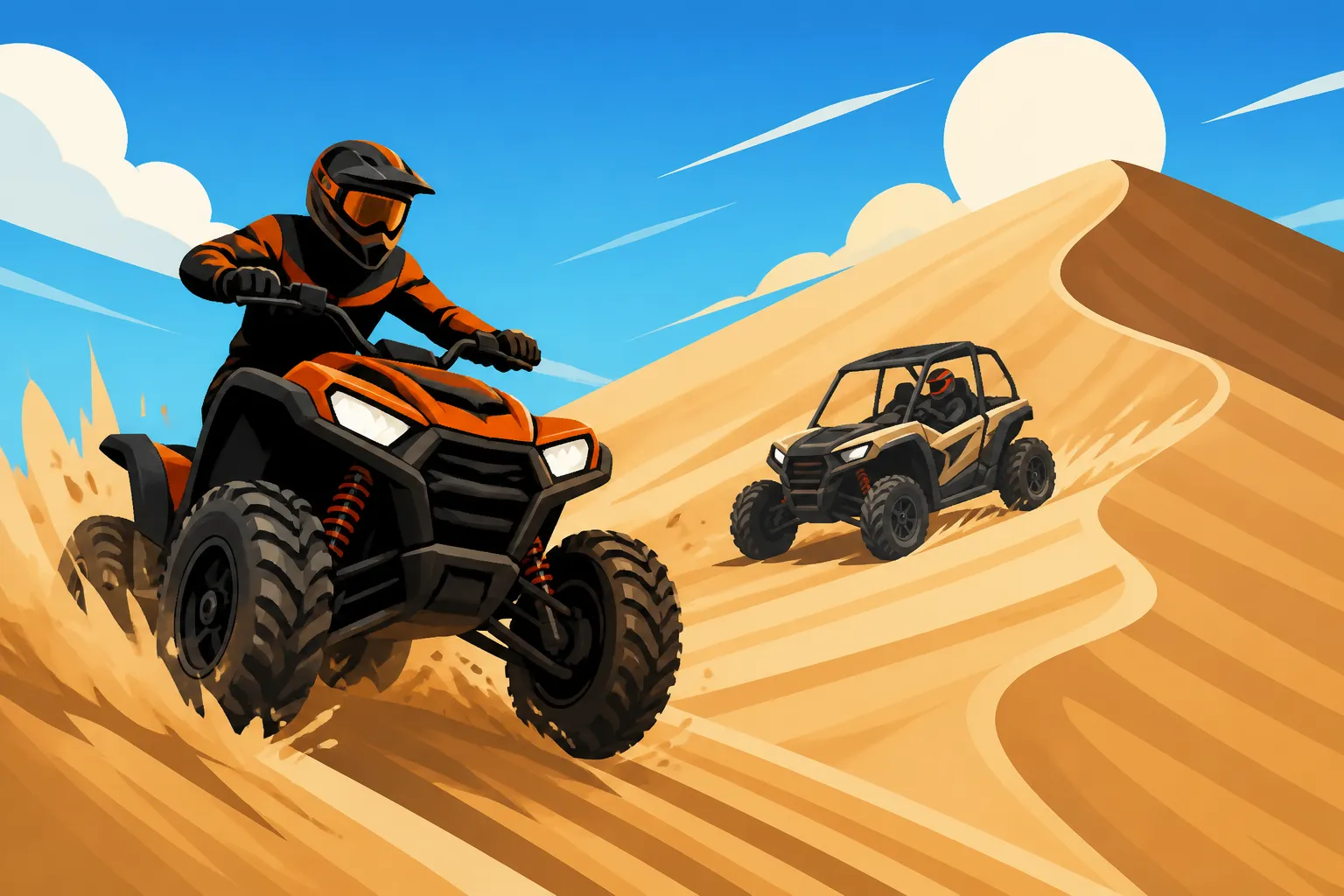
Little Sahara State Park is known for its open sand and rolling dunes, but the riding area is not one uniform field of hills. The commonly cited 25-to-75-foot range gives you a sense of scale: some slopes feel modest and manageable, while others look tall enough to block your view of the ground beyond the crest. You may ride across a broad, gently rolling section and then encounter a steeper dune that changes the feel of the route completely.
It helps to think of dune height as a description of the landscape, not a promise that every hill has a neatly measurable rise from its base. Sand can shift, and the shape of a slope can vary along its length. A dune may look gradual from one angle and much steeper from another. The line you choose also matters: crossing a long, sloping face feels different from approaching a short, sharp rise head-on.
For riders accustomed to wooded trails, the openness can be surprising. There may be no trees, fences, or rocks to make distance and elevation easier to judge. A dune’s outline can appear smooth while hiding a drop-off, a sharp change in slope, another machine, or a softer patch of sand near the top. Give yourself time to read the terrain rather than assuming every hill is alike. For a broader overview of the riding landscape, see [Oklahoma Dune Riding Explained].
Sand changes the way a hill feels
A 25-foot rise made of loose sand can demand more attention than a similar-looking hill on firm ground. Tires may dig in or spin if you apply power abruptly, and steering can feel vague when the front tires are riding over soft sand. The machine’s momentum, tire setup, rider position, and the condition of the slope all affect how the climb feels. Height is only one part of the challenge.
The surface can also vary across a single dune. Wind may leave one section firm and another loose, while traffic can create ruts or uneven tracks. Near the crest, the slope may flatten, roll over, or fall away more sharply than you expect. Because the sand and contours change, a route that seemed comfortable earlier may not feel identical later in the day.
That uncertainty is one reason it’s sensible to approach unfamiliar slopes cautiously. Stop where you can see clearly, look for other riders, and choose a line with enough room to respond if the surface changes. If you cannot see the far side of a crest, do not assume it is clear. Being patient on a dune is not a lack of skill; it is a practical way to avoid turning a fun ride into a recovery or collision situation.
The views are part of the appeal
The taller dunes can offer an impressive perspective across the sandy riding area, especially when you pause at a safe place and take in the curves of the landscape. From a higher point, the rolling pattern becomes easier to see: one ridge leads into another, and the open sand can seem to stretch farther than expected. That scenery is a big part of what makes a dune visit memorable.
But a scenic crest is not automatically a safe place to stop. Other riders may be climbing toward it from the opposite side, and someone approaching from below may not see a stationary machine silhouetted near the skyline. Choose a stopping location with good visibility and room for others to pass. Avoid lingering where you block a common route or sit directly in a blind spot.
If you want a better sense of the scale before you go, combine park information with a map view and recent local knowledge. Mapping tools such as onX Offroad can help you orient yourself and understand the broader layout, but a digital map cannot show every soft patch, newly formed rut, or machine coming over a ridge. Treat it as a planning aid rather than a substitute for watching the terrain in front of you.
How Dune Height Affects Riding Choices
A taller slope calls for more deliberate decisions
A steep or unfamiliar dune can make riders feel pressure to commit quickly, especially when friends are already moving. Try not to let the pace of the group decide your line for you. Before you climb, take a moment to consider the slope, your machine’s condition, the available space, and whether you can see enough of the route to make a safe choice.
If the crest hides the far side, the unknown terrain is part of the decision. There could be a drop, another rider, or a route that turns unexpectedly. A climb that looks straightforward from the bottom may leave you with limited options once you reach the top. If the view is blocked or the line feels beyond your current comfort level, choose another route or wait until you can assess it more safely.
This is especially important for newer riders, children, and people operating a machine they have not ridden on sand before. A familiar ATV can feel different when the tires are moving over loose dunes. Start with gentler ground and build confidence gradually. A rider who can make controlled turns and stops on easier terrain is better prepared to judge a more demanding slope than someone who begins the day by attempting the tallest dune they can see.
Your machine and experience matter as much as the hill
Different machines respond differently on sand. A light sport quad, a utility ATV carrying equipment, and a side-by-side do not all handle the same way. Weight, power delivery, tires, suspension, and the number of people on board can change how a machine climbs and turns. Even riders on similar machines may have very different comfort levels and experience.
A heavier machine may need a different approach to maintain control, while a smaller machine may have less power available on a soft incline. Passengers can affect balance and how the vehicle responds to turns or changes in slope. Do not assume that because a friend climbed a dune, your own machine will handle the same line in the same way. Their setup, momentum, skill, and route may all be different.
Before the trip, check that your machine is in sound condition and suited to the ride you intend to take. Pay attention to tires, brakes, steering, throttle response, and any equipment that could come loose over rough ground. If you are towing a machine to the park, it is also worth checking your route and arrival plan before leaving; [Oklahoma Trail Conditions Before You Tow] covers practical planning considerations for getting to a riding area.
Group riding needs clear communication
A group can make dune riding more enjoyable, but it can also create pressure and confusion if riders do not know where to wait or how to communicate. Agree on a pace that works for the least experienced person, and identify a regrouping point before anyone heads onto a new stretch of terrain. That way, a rider who takes a slower line is not left wondering whether the rest of the group has gone on without them.
Avoid climbing directly behind another machine when you cannot see what is happening ahead. Sand can reduce visibility, and a machine may slow, turn, or stop unexpectedly. Leave enough space to react, and do not crowd another rider at the base or crest of a hill. If someone is already working through a slope, wait until the route is clear rather than entering their line.
A simple plan helps when the group gets spread out. Use agreed meeting points that are easy to identify, and make sure everyone understands what to do if they lose sight of the group. onX Offroad may be useful for checking your general position and keeping a group oriented, but do not rely on a phone screen while moving or assume every rider has dependable service. Stop in a safe place if you need to check a map or contact someone.
| Dune or riding situation | What it may feel like | A sensible response |
|---|---|---|
| Lower, gradual slope | Easier to see across and approach at a controlled pace | Use it to get comfortable with the sand and your machine |
| Taller slope with a hidden crest | The far side may be difficult to assess | Do not climb until you can make a safe, informed decision |
| Loose or rutted sand | Tires may lose traction or track unevenly | Reduce pressure to rush and choose a line you can control |
| Busy route near a crest | Riders may approach from either side | Keep moving only when the route is clear and visible |
| Group with mixed experience | Riders may choose different speeds and lines | Agree on a pace and regrouping points before spreading out |
Planning a Little Sahara Visit
Learn the layout before you arrive
Little Sahara is a substantial riding area, and its dunes can make it easy to lose your sense of direction once you are away from a familiar staging point. Knowing where you intend to park, unload, meet your group, and take breaks makes the first part of the visit less stressful. Review the park’s official information before your trip, and make sure everyone in your group knows the basic plan.
A map can help you understand the general area and identify useful reference points. onX Offroad is one option for looking at off-road mapping information, but no digital tool should be treated as a complete description of current riding conditions. Signal may be unreliable in some places, phone batteries can drain, and map lines do not reveal every change in soft sand. Consider downloading or saving the information you need before you leave a strong-service area.
It can also help to think in terms of manageable sections rather than trying to explore everything at once. For example, your group might begin near a familiar area, take a break, and then decide whether to continue farther. That approach gives new riders a chance to settle in and gives the group opportunities to reassess conditions. For a broader sense of the park’s footprint, read [Little Sahara's 1,600 Acres in Oklahoma].
Check rules and equipment requirements ahead of time
Dune areas may have requirements that are easy to overlook if you focus only on the ride itself. Little Sahara has specific safety rules, including requirements related to visibility equipment and night riding. Review the park’s current guidance before you leave home, rather than expecting to sort out every detail at the entrance. Rules and procedures can change, so rely on the park’s own information for the requirements that apply to your visit.
A tall visibility flag is particularly relevant in rolling dunes because a crest can hide a machine from someone approaching on the other side. The rule is not simply about making your vehicle look distinctive; it helps other riders spot you sooner in terrain with limited sightlines. For details on the equipment requirement, see [Why Little Sahara Requires a 10-Foot Whip] and [6 by 12 Inches of Bright Orange Flag].
Check that your flag, mount, lights, helmet, and other required equipment are secure and working before unloading. A loose mount can become a problem after repeated vibration, and a damaged light may not be obvious until you need it. Bring basic tools and supplies suited to your machine, but keep them secured so they do not shift during the ride. A quick walk-around before each outing is often easier than discovering a problem after you have crossed into the dunes.
Build in time for breaks and changing conditions
A dune ride can be more tiring than the distance suggests. Riding in sand requires steady attention, and heat, dust, and repeated climbs can wear people down. Plan water and rest breaks before the group becomes exhausted. A rider who feels rushed, dehydrated, or uncomfortable may make poorer choices on a hill than they would after a short pause.
Leave room in the day for a slower pace than you expected. A group may need extra time to help a new rider get comfortable, adjust equipment, or wait for a clear route. If conditions change or someone’s machine develops a problem, having a flexible schedule makes it easier to handle the situation without pressure to continue. Avoid treating a planned route as something everyone must complete regardless of how the day is going.
Before leaving, check the park’s visitor information for access details, fees, operating guidance, and any restrictions that matter to your plans. Those details can affect where you enter, how you prepare, and what you need to bring. [Little Sahara's Day Fees in Oklahoma] is a useful related topic to review as part of your trip planning, while the park remains the place to confirm current visitor information.
Staying Visible and Safe Around the Dunes
Blind crests are a real riding hazard
A dune crest can hide both the shape of the ground and the people using it. If two machines approach the same ridge from opposite sides, neither rider may see the other until very late. Even with a visibility flag, the shape of the sand can limit how much warning you get. Slow down when sightlines narrow, and avoid treating a ridge as a place to accelerate without first checking what lies beyond it.
Try to approach a crest in a controlled way that leaves you able to respond. Do not stop abruptly in the middle of a route where another rider could be following. If you need to pause, move to a safe area with visibility and space whenever possible. Likewise, do not park at the top simply because the view is appealing; a machine at the skyline may be difficult for someone climbing from the other side to see.
The same caution applies when descending. The far slope may be steeper or softer than it appeared from above, and another rider could be moving through the area below. Choose a route that gives you a clear view and room to maneuver. If you cannot confidently see where your line leads, stop in a safe place and reassess rather than committing to a blind descent.
Flags and lights help others notice you
A flag is most useful when it is securely mounted and high enough to be visible over the surrounding terrain. Follow the park’s current rules for the required flag and mount. The bright color and elevation help distinguish a moving machine from the sand, but they do not guarantee that every rider will see you. Keep a cautious speed near crests and intersections, even when your visibility equipment is in place.
Lighting matters when riding in low-light conditions. Confirm what the park requires before riding after dark, and inspect your lights before setting out. Headlights help you see the route, while rear visibility helps other riders notice you from behind. Dirt, sand, vibration, or a loose connection can affect equipment during the day, so check it again if you have been riding for several hours.
Visibility rules are one part of a broader safety approach. Read [Oklahoma's Orange Flag Requirement] and [Oklahoma Night Lighting on Dunes] for related information, then confirm the rules that apply directly to your visit. Even when all required equipment is installed, leave space, ride at a pace that suits your ability, and avoid entering a route where you cannot see enough to act safely.
Keep the day manageable for young or inexperienced riders
A child’s confidence can rise quickly when other riders are having fun, but that does not mean the child is ready for every dune. Start on terrain suited to the rider’s age, skill, and machine. Give clear instructions about following distance, stopping, and what to do if they cannot see the group. An adult should be close enough to supervise without creating pressure to keep up with faster riders.
New adult riders benefit from the same patient approach. Practice basic control on gentler ground before attempting steeper slopes. Explain how the group will signal a stop and where everyone will meet if separated. It is much easier to discuss these details while parked than to try to communicate over engine noise and wind once riders are spread across the sand.
Make sure helmets and protective equipment fit properly and are used consistently. Confirm any age-related park rules before the visit, and do not assume that a rider’s experience on pavement or firm trails transfers directly to dunes. Sand adds different handling challenges, and the best first day is often one where a new rider finishes feeling comfortable enough to want to return.
Choosing Dunes That Match Your Ability
Use an easy start to learn how your machine behaves
The first ride of the day is a good time to understand how your machine responds to the sand. Begin with a route that lets you practice gradual acceleration, gentle turns, and controlled stopping. Pay attention to how the tires behave and whether the machine feels balanced. This gives you useful information before you decide whether to attempt a taller or steeper dune.
If the machine feels difficult to steer, bogs down, or behaves differently from what you expected, do not immediately look for a more challenging slope. Check the basics, take a break, and ask an experienced rider for practical help if needed. A small adjustment to your route or riding pace may make the day more comfortable, while forcing the machine up an unsuitable line can create unnecessary risk.
Riders sometimes mistake confidence for readiness. Feeling excited is normal, but the best choice is the one that matches your ability and the conditions you can see. A lower dune can still be enjoyable, and repeated controlled rides often build more useful skill than one dramatic attempt. The goal is not to prove something at the tallest crest; it is to enjoy the landscape and return safely.
Avoid following tracks without judging them yourself
A set of tire tracks can make a route look obvious, but it does not tell you whether the line is safe for your machine or your experience level. The rider who made those tracks may have been on a different machine, traveling at a different speed, or using a route that has since changed. Sand may have softened, traffic may have created ruts, or the view beyond the crest may be blocked from your approach.
Before using a visible track, assess the slope and the space around it. Look for other riders, consider where the route goes, and think about what you would do if you needed to stop or turn. If you cannot see enough to make a reasonable judgment, choose a more visible route. A track can be a clue, but it is not a guarantee.
This is where a map can help with orientation without replacing real-time observation. onX Offroad can offer a way to review mapped information before or during a break, but it cannot tell you whether a particular dune face is clear at that moment. Use maps to support decisions about the general area, then make riding choices based on what you can actually see from your position.
Know when to turn around
Turning back is often the smartest option, especially when a slope is steeper than it looked, a crest is blind, or the group is not comfortable with the route. You do not need to reach a particular dune to have a worthwhile day. A safe alternative may be nearby, and everyone can continue enjoying the park without taking a risk that feels unnecessary.
Agree as a group that any rider can ask to stop or choose a different route without being teased or pressured. That matters for children and new riders, but it is useful for everyone. Someone may notice a mechanical issue, feel tired, or become uneasy as conditions change. Respecting that decision helps the group stay together and keeps a fun outing from becoming a test of pride.
A practical rule is to make decisions while you still have options. If the route ahead is unclear, stop before entering it. If a machine is not handling well, pause before trying a harder climb. If the group is spread out, regroup before moving into an unfamiliar area. Little Sahara’s 25-to-75-foot dunes are part of its appeal, but enjoying them does not require riding every slope. The best line is the one you can assess, control, and ride within your limits.
Disclaimer
This article is for general informational purposes only and does not constitute professional advice. Laws, prices and regulations vary by location and change over time. Consult a qualified professional for guidance on your specific situation.