Oklahoma Dune Areas Open Around the Clock
Little Sahara’s dunes near Waynoka are known for riding after dark, but an all-night riding area still demands careful planning. Darkness changes how quickly you can spot another machine, judge a dune’s shape, or find your way back to camp. This guide explains what 24-hour access means, how to prepare for a night ride, and what to check before leaving home.
What around-the-clock dune access means
Little Sahara is the main Oklahoma destination for night dune riding
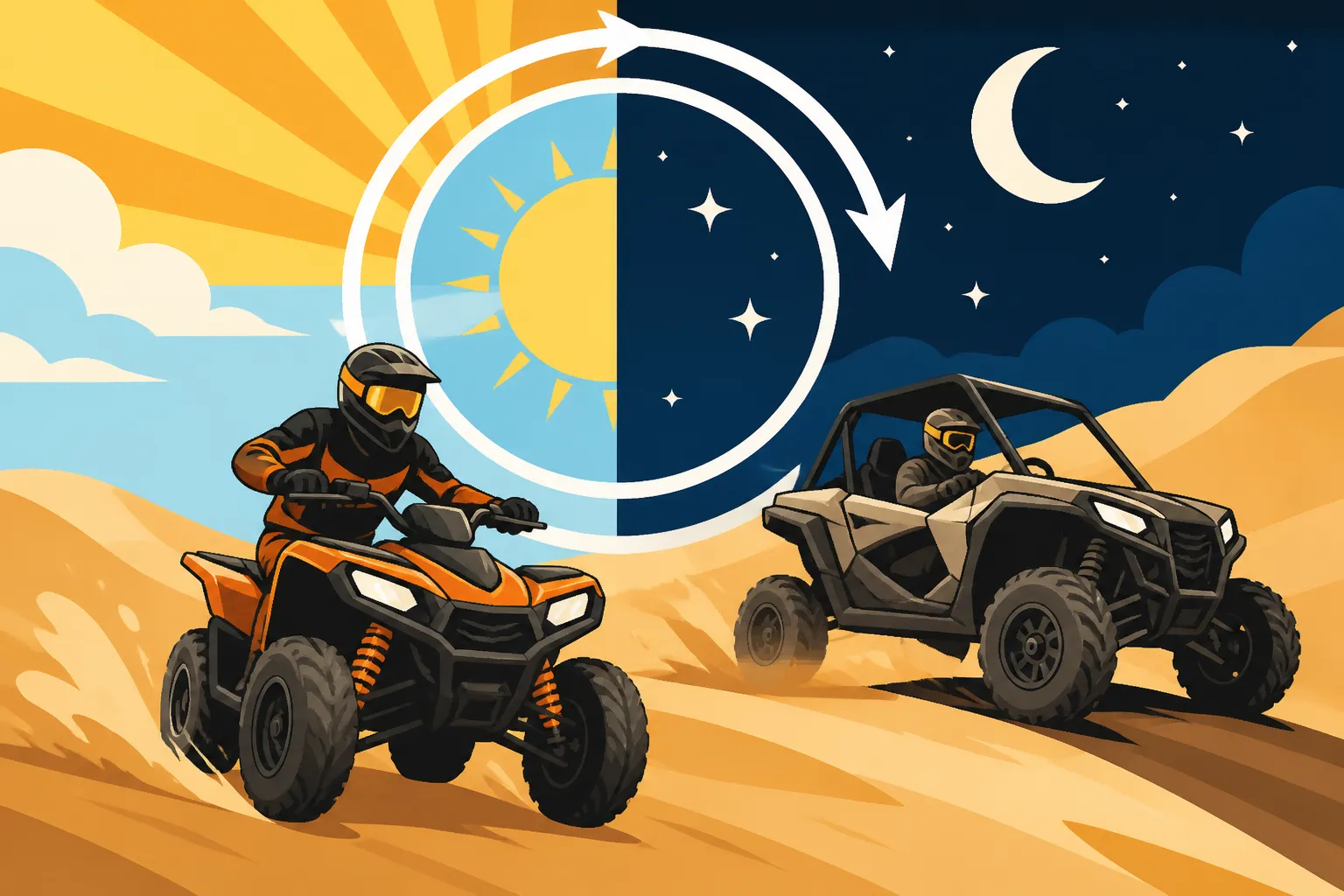
When riders talk about Oklahoma dune areas open around the clock, they are usually referring to Little Sahara State Park near Waynoka. Its sand dunes offer a very different experience after sunset: familiar slopes lose their depth, dust and lights can affect visibility, and it becomes harder to identify landmarks from a moving machine. Night riding is possible, but it is not simply a daytime ride with the sun switched off.
The phrase “open around the clock” describes access to the riding area, not a guarantee that every service operates all night. Park offices, payment arrangements, campground facilities, and staff availability may follow their own schedules. Before setting out, check the park’s current information and any posted notices about fees, closures, and operating procedures. For an overview of the destination, see [Little Sahara State Park in Oklahoma].
A late-night arrival can also change what you need to do first. If you reach the park after dark, you may need to locate an available payment point, find your campsite, unload safely, and confirm your group understands the riding rules before heading onto the dunes. Don’t assume that arriving after the office closes means you can skip check-in or payment; find out how the park handles after-hours arrivals before you travel.
Access hours are different from office and campground hours
A park that permits riding at night can still have limited services after normal business hours. That distinction matters when you need directions, have a mechanical problem, or discover that your planned campsite is unavailable. It also matters when your group reaches the entrance at different times: one vehicle may have handled arrangements earlier, while another arrives when staff are no longer on site.
Plan your basic logistics before leaving home. Confirm how to pay, whether reservations or check-in steps apply to your chosen camping area, where the park expects visitors to park trailers, and what facilities you can reasonably expect to use overnight. Park details can change, so a familiar routine from a previous visit is not a substitute for checking current instructions. [Oklahoma Campgrounds With Fee Kiosks] may help you think through the practical difference between a payment kiosk and a staffed office.
It is also worth agreeing on a fallback plan. If your group arrives late and cannot resolve a payment, parking, or access question, decide in advance whether you will wait, contact the park, or use another legitimate place to stay. That is much less stressful than trying to sort out an uncertain situation beside a dark entrance with trailers behind you.
How to prepare for riding the dunes after dark
Make lighting and visibility a first priority
Night visibility is about being seen as much as seeing. A bright headlight helps you read the sand in front of your machine, while a rear light helps riders behind you track your position. Keep lights clean and check their operation before unloading; a light that worked in the driveway may be obscured by dust, sand, or a loose connector after a day of riding.
Check the specific rules for required equipment before your trip, including what is required for riding after dark. The park’s posted instructions should take priority over assumptions based on another riding area. For a focused explanation of the lighting topic, see [Oklahoma Night Lighting on Dunes]. If a lamp stops working, treat that as a reason to stop riding until you can repair it or safely return to camp—not as a minor inconvenience to work around.
Visibility also depends on what is attached to your machine and how it is mounted. Little Sahara has a whip-and-flag requirement, and the required height and flag details are important when machines crest dunes or move through areas where riders may approach from different directions. Review [Oklahoma's 10-Foot Whip Rule] and [Oklahoma's Orange Flag Requirement] before packing. Check that the whip is secure, visible, and not likely to snag during transport or riding.
Pack for a colder, longer, and less predictable outing
A night ride can feel quite different from the afternoon session that came before it. Temperatures may drop, fatigue builds, and a small repair can take longer when you are working by flashlight. Pack water, a basic first-aid kit, a charged phone, a suitable light for repairs, and the tools needed for ordinary problems such as a loose fastener or a puncture. Carry enough water for the whole outing rather than assuming you will be back at camp soon.
Dress for the conditions you may encounter at the end of the ride, not only the warmth you feel while unloading in daylight. A layer that seemed unnecessary at sunset can make the ride back to camp much more comfortable. Eye protection matters, too: sand and dust can be irritating even in daylight, and night conditions make it harder to anticipate a blast from another machine. Keep a clean spare lens or goggles somewhere easy to reach.
Before leaving camp, tell someone where you plan to ride and when you expect to return. If you are with a group, set a meeting point and a simple response plan for a separated rider. Choose a place everyone can identify, rather than relying on “the big dune” when the landscape is dark and several ridges look alike. Agree that no one rides off alone to search without telling the group.
| Before the ride | What to check | Why it matters after dark |
|---|---|---|
| Lights | Headlight, rear light, connections, and lenses | Helps you see terrain and helps other riders see you |
| Whip and flag | Attachment, visibility, and applicable park requirements | Makes the machine easier to notice around dunes |
| Communication | Phone charge, meeting point, and group plan | Reduces confusion if riders become separated |
| Equipment | Water, first aid, tools, and repair light | Makes a delay easier to manage safely |
| Park logistics | Payment, access instructions, and campsite plan | Avoids arriving without a clear after-hours plan |
Riding dunes safely at night
Reduce speed and leave more room
The safest night ride is usually slower and more deliberate than a daytime run. Darkness compresses the time available to react: a dip, another rider’s track, or a machine cresting a slope may become visible later than expected. Keep enough space between machines to respond without making a sudden turn, and do not follow so closely that another rider’s dust or rear light is all you can see.
Avoid assuming that a familiar line will feel identical at night. Wind, traffic, and changing sand conditions can alter the surface, and the slope may be harder to read without daylight. If you cannot confidently judge a crest or landing area, stop in a safe location and reassess rather than charging forward. This is particularly important for riders who have only visited during the day and are tempted to rely on memory.
Keep group size and ability in mind. A route that is manageable for an experienced rider may be stressful for a new rider who is tired or unfamiliar with dunes. Let the least comfortable rider help set the pace, and agree that anyone can call for a break without pressure. A night ride should not become a test of who can keep up.
Choose routes and stopping points carefully
Before riding, discuss where the group intends to go and how it will return. Use recognizable features and keep the route modest until everyone is comfortable with the conditions. Avoid splitting the group to explore separate areas unless you have a clear plan for rejoining. If someone becomes separated, stopping in a safe, visible place and following the agreed procedure is usually more useful than continuing to roam.
Use a mapping tool as a planning aid, not as permission to ride anywhere. Apps such as onX Offroad can help riders review mapped areas and think through a route before unloading. Still, an app screen cannot replace current park directions, signs, barriers, or a rider’s judgment on the ground. Keep your phone protected from sand, consider saving useful map information for offline access, and do not stare at the screen while moving.
Choose stopping points where your group can pull clear of active riding lines and be visible to approaching traffic. Avoid stopping just beyond a crest, in a low spot, or in a place where another rider would have little time to react. If you need to regroup, move to a location with good sightlines and communicate that choice to everyone before the ride begins.
Planning a Little Sahara trip from home
Confirm the rules and practical details before towing
A smooth trip begins with a few checks before the trailer is loaded. Confirm access arrangements, fees, current park notices, camping options, and any restrictions that may affect your machine or riding plans. If you are unsure whether the entire area or a specific service is available overnight, ask the park directly rather than relying on an old post or a friend’s memory.
Think through the route to Waynoka and your arrival time. Towing after dark on unfamiliar roads can be tiring, especially after a long workday. Build in time to fuel, check the trailer, and unload without rushing. If several vehicles are traveling together, pick a meeting place before you lose cell coverage or get separated on the drive.
Weather and sand conditions deserve a separate check. Heavy rain can affect travel and riding conditions, while heat and wind can make a day at the dunes more demanding than expected. Review [Oklahoma Trail Conditions Before You Tow] and [Oklahoma Dune Riding Explained] as part of your planning. Those topics can help you prepare for the terrain and conditions, but verify park-specific updates before departure.
Use maps without mistaking them for permission
Mapping apps can be useful for the drive, for organizing a route, and for keeping a general sense of your position. onX Offroad may help you review mapped riding information before you arrive, especially if you want to discuss a meeting point or understand the broader area with your group. Save what you need in advance if you expect limited signal, and make sure riders know how to use the map before the ride—not during a stressful separation.
A mapped line should never be treated as proof that a particular route is open. Follow signs, barriers, park directions, and posted restrictions. If a route is unclear, ask park staff when available or stay on an area you know is permitted. This is a good habit even when your phone shows a clear line: mapping data is a planning tool, while on-site instructions govern what visitors can do.
Keep your phone secure from sand and vibration, and carry a backup navigation option that does not depend entirely on a battery or cell service. A paper note with the campsite location, a saved map, and a clearly agreed meeting point can be more useful than a phone that has overheated or lost power. Tell the group how you will find each other if devices stop working.
Making a late-night ride a better experience
Start with a daylight orientation when possible
If this is your first visit, consider arriving with enough daylight to understand the entrance, campsite layout, and general riding environment before going out at night. A short orientation can help you notice landmarks, confirm where you can safely park, and make the return route less confusing. It also gives newer riders time to get comfortable with the machine and terrain before visibility becomes limited.
A daylight visit can help you assess equipment, too. You can notice whether a whip is mounted securely, whether the rear light is visible from different angles, and whether your group’s communication plan makes sense. If you find a problem, it is easier to fix it at camp than to discover it after dark at a distance from your trailer.
When the group is ready, begin with a conservative ride rather than heading straight for the most challenging terrain. Let riders settle into the reduced visibility, check that everyone can see the machines ahead and behind, and stop early if dust or fatigue makes conditions uncomfortable. There is no prize for staying out longer than the group can ride safely.
Know when to call it for the night
Fatigue can sneak up after a full day of towing, unloading, riding, and socializing. If a rider is missing turns, reacting slowly, or struggling to keep a steady pace, that is a useful signal to stop. The same is true if lights fail, visibility becomes poor, or the group cannot maintain contact. Returning to camp early is a sound decision, not a failed outing.
Set a simple group rule before riding: any rider can ask to stop, and the group pauses without arguing about it. This helps younger or less experienced riders speak up before a manageable concern turns into a risky situation. If someone needs assistance, keep other machines out of active travel lines and make the stopped group as visible as possible.
Night riding at Little Sahara can be memorable, but the best experience is one where the ride stays within the group’s ability and preparation. Check the park’s current instructions, bring working lights and required visibility equipment, ride with space and patience, and keep a realistic plan for returning to camp. For more on a late outing, see [Riding Little Sahara's Dunes at 2 a.m.]. If you are still preparing your lighting setup, [White Lights Front and Red Behind] offers another useful topic to review.
Disclaimer
This article is for general informational purposes only and does not constitute professional advice. Laws, prices and regulations vary by location and change over time. Consult a qualified professional for guidance on your specific situation.