Oklahoma’s Orange Flag Requirement
A bright orange flag is easy to forget when you are loading a machine, but at a dune area it can be a key part of safe riding and park compliance. The main thing to know is that the requirement is not automatically the same across every Oklahoma trail. This guide explains where the rule matters, how to prepare your flag setup, and what to check before you ride.
Where Oklahoma’s orange flag requirement applies
A dune-area rule is not a statewide trail rule
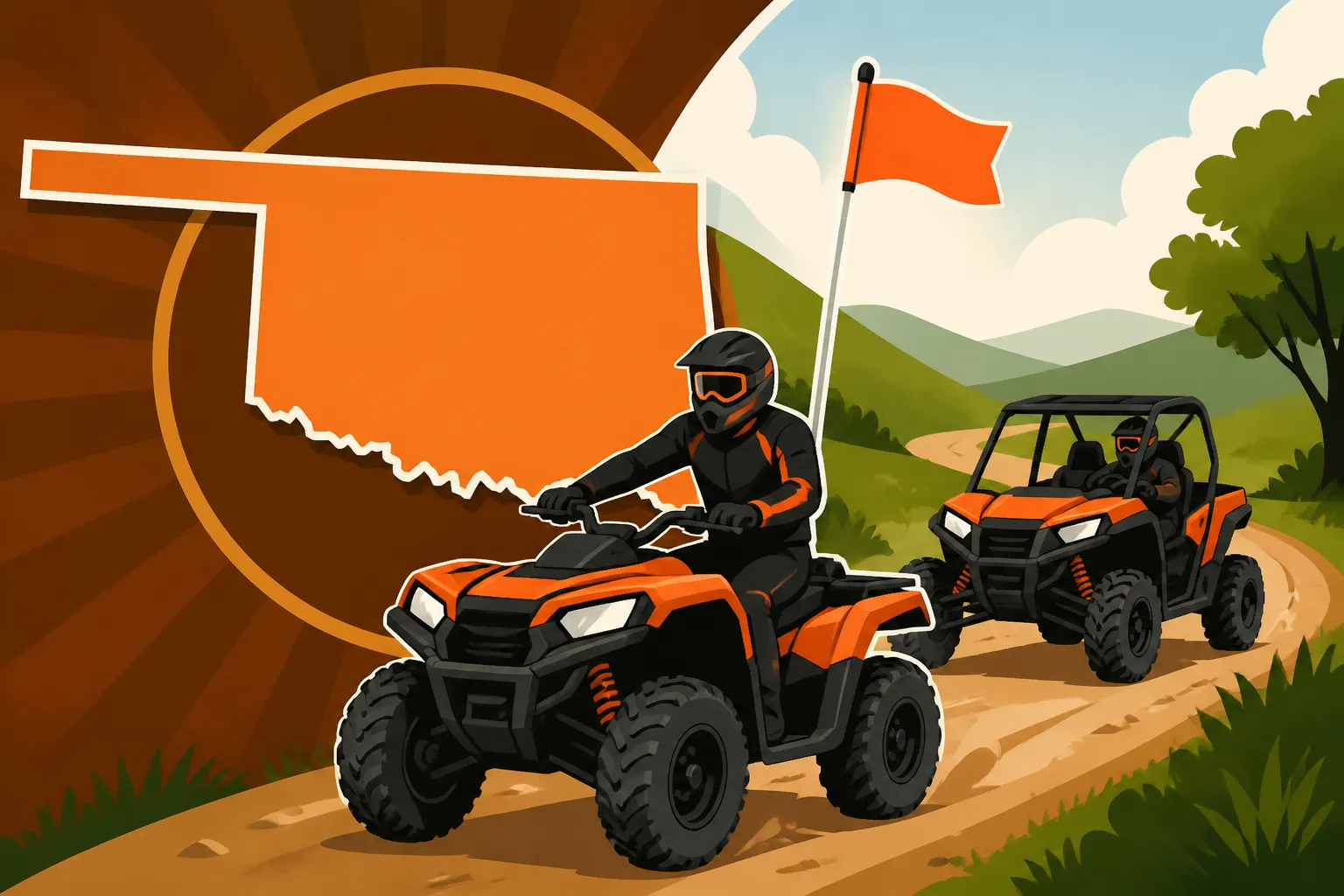
Oklahoma riders often hear that an ATV or UTV needs an orange flag and assume the rule applies everywhere. In practice, a flag requirement can be tied to a particular riding area and its posted rules. Little Sahara State Park is the best-known example: riders should plan on using a tall whip with a bright orange flag there, and confirm the park’s current requirements before unloading.
That distinction matters if your weekend plans include more than one destination. A setup that satisfies a dune park’s rules may be unnecessary at a different trail system, while another private riding area may set its own equipment conditions. Do not treat an online discussion about one park as proof of a rule at every public road, forest trail, or riding property.
For a broader look at the setting and what to expect, start with [Little Sahara State Park in Oklahoma] and [Oklahoma Dune Riding Explained]. Then check the rules for the specific place you intend to visit. The safest approach is to verify the requirement with the park or land manager rather than relying on memory, an old post, or a friend’s setup from another location.
What the flag is meant to do
On dunes, the terrain itself can block a rider’s view. A machine may be climbing the far side of a ridge just as another rider approaches from the opposite direction. A flag lifted above the machine gives people a better chance of seeing someone before the vehicles meet at the crest.
The flag is a visibility aid, not a force field. It does not guarantee that every rider can see you, especially in dusty conditions, in low light, or when several machines are moving close together. Riders still need to slow down near blind crests, keep a safe distance, and avoid assuming that a flag gives them the right of way.
Flags also help make a machine easier to spot in a busy area. That can be useful when riders are spread across open sand or when a group is trying to keep track of one another. The benefit depends on the flag being visible, securely attached, and high enough to do its job—not folded around the whip or buried in dust and gear.
Choosing and mounting a compliant flag setup
Check the flag size and whip height
Little Sahara’s commonly cited setup includes a tall whip and a bright orange flag. The reference standard for the flag is 6 by 12 inches, and riders should pay attention to both the flag’s size and the height at which it flies. For the related details, see [Oklahoma's 10-Foot Whip Rule] and [6 by 12 Inches of Bright Orange Flag].
A common point of confusion is whether “ten feet” refers to the whip itself or the height of the flag above the ground once the whip is installed. Do not guess based on how tall a loose whip looks in your garage. Check the riding area’s posted language, and ask staff if the measurement is unclear. The machine’s suspension, tire size, mounting point, and whip angle can all affect the flag’s actual height when the vehicle is parked on the sand.
A practical pre-trip check is to place the machine on level ground, install the whip as you plan to ride with it, and make sure the orange flag is easy to see. If the whip bends sharply or the flag sits lower than expected, adjust the setup before reaching the park. A compliant-looking flag that is mounted too low or hidden behind cargo may not provide the visibility riders expect.
Mount the flag securely and where it can be seen
The flag should be attached near the top of the whip, where it has the best chance of clearing the machine and surrounding terrain. The whip itself should be firmly secured to a suitable mounting point. A loose mount can wobble, shift, or come free over rough ground, and a flag that twists around the whip may be much less visible from the side.
For placement pointers, see [Mounting the Flag Near the Top of Your Whip]. Before every ride, tug gently on the mount and inspect the attachment for cracks, loose hardware, or signs of wear. Pay particular attention if the whip has been bent or stressed during transport. A setup that stayed secure on the highway trailer may still need to be checked after the machine is unloaded and moved over uneven sand.
It is also worth checking the flag after a few laps. Wind, vibration, brush, and contact with other gear can loosen a clamp or turn the flag out of view. If you are riding in a group, ask another person to look at your setup from several angles. What looks visible from the driver’s seat may be blocked from behind or from the side.
| Setup detail | What to check | Why it matters |
|---|---|---|
| Flag color | Use a clearly visible bright orange flag where required | Helps distinguish the marker against sand and other surroundings |
| Flag size | Check the riding area’s stated dimensions, including the commonly referenced 6-by-12-inch flag | A small flag may be difficult to spot |
| Whip height | Confirm the required height and how the park measures it | Installed height can differ from the whip’s loose length |
| Mount | Check that the whip is firmly attached | A loose or broken mount can make the flag ineffective |
| Position | Keep the flag near the top of the whip and unobstructed | Cargo or a twisted flag can reduce visibility |
| Before riding | Inspect the setup after unloading and during the day | Transport and vibration can loosen parts |
Planning for different machines and riding conditions
ATVs and UTVs need a setup that suits the machine
The basic visibility purpose is the same for a quad and a side-by-side, but their mounting points and accessories differ. A quad rider may have a compact rear rack or limited space around the seat and cargo. A UTV may have a roll cage, roof, spare tire, or other equipment that affects where the whip can be mounted without obstruction.
Before buying or installing hardware, think about how the machine is actually configured. A UTV’s roof can block a flag placed too low, while a flag mounted where it catches on a trailer or garage door can become a repeated headache. For destinations that allow side-by-sides, check [Oklahoma Trails That Allow Side-by-Sides] alongside that location’s equipment rules. Access rules and flag rules are separate questions: permission to bring a machine does not necessarily mean its existing setup meets every requirement.
Consider how the whip behaves when the vehicle is moving. A flexible whip may bend with airflow or contact, but it should not be so loose that the flag spends the ride folded or dragging. A rigid mount may keep the flag in position but needs to be installed where it will not create a hazard during loading or storage. The goal is a visible, secure setup that works with your machine rather than an accessory that simply checks a box.
Dust, glare, and changing light affect visibility
A flag is most useful when it stands out from the background. Dust can soften the outline of a machine, while strong sun and glare can make it harder to pick out details. In those conditions, a clean, untangled flag and a clear view above the machine matter even more. A faded, torn, or mud-covered flag may still be orange, but it may not be easy to recognize from a distance.
Night riding brings a different set of visibility concerns. An orange flag does not replace required lighting, nor should riders assume that a daytime flag setup makes a machine suitable for riding after dark. Review [Oklahoma Night Lighting on Dunes] and [Oklahoma Dune Areas Open Around the Clock] before planning a late ride. The park’s access hours and the machine’s lighting requirements are distinct from the flag question.
Weather and surface conditions can change quickly. Wind can push a whip backward, rain or mud can soil the flag, and a crowded riding area may make it harder to keep track of nearby machines. Make a habit of checking the flag when you stop for water or regroup with friends. If it is tangled or loose, fix it before setting off again rather than hoping it will straighten itself out at speed.
Getting ready before you leave home
Confirm rules for every stop on the itinerary
A weekend ride may involve a state park, a private OHV area, or public land with specific access rules. The orange flag requirement at one destination does not establish the rule at the next. Write down each planned stop and check its official riding information separately, including equipment requirements, operating hours, trail closures, and whether the machine type is allowed.
If a park’s wording is unclear, contact the office before you tow. Ask direct questions: Is an orange flag required for every ATV and UTV? What size must it be? How tall must the whip be, and how is that height measured? Are there other visibility rules for riding after dark? A short call can save a long drive followed by an uncomfortable conversation at the entrance.
Route planning tools can help you understand where roads, trail networks, and riding areas sit in relation to one another, but a map is not a substitute for a land manager’s rules. Some riders use onX Offroad to review routes and get a better sense of the area before leaving home. Whatever tool you use, confirm closures and equipment rules with the actual destination. A line on a map cannot tell you whether the park requires a particular flag setup that day.
Pack a small flag-check kit
A few basic supplies can prevent a minor equipment issue from turning into a frustrating delay. Carry the right wrench or driver for your mount, spare fasteners that fit it, and a replacement flag if yours is worn or torn. Store the flag where it will not be crushed under fuel cans, tools, or other heavy gear. If you use a removable whip, check that the whip and mount travel securely and are easy to find after unloading.
Build the inspection into your normal loading routine. For example, check the flag before securing the machine on the trailer, then check it again after you unload. That second inspection catches the small problems transport can create: a loosened clamp, a bent whip, or a flag that has become caught under a tie-down. It is far easier to fix those things at home or in the parking area than on the trail.
When riding with family or friends, make the flag check part of the group’s pre-ride conversation. One person can inspect the mount while another confirms that each machine is carrying the required equipment. This is especially helpful when the group includes a mix of quads and UTVs, since their mounting setups may not be identical.
Common mistakes and practical fixes
Assuming any orange marker will do
A small flag, a piece of orange fabric, or a flag mounted low behind the machine may not satisfy a riding area’s stated requirements. The safer choice is to follow the dimensions and height specified by the destination, not to improvise at the last minute. If you arrive with a setup that looks questionable, ask staff before riding rather than hoping no one notices.
Another frequent mistake is overlooking the flag because the machine already has bright accessories. A colorful helmet, reflective tape, or a vivid machine body does not automatically replace a required flag. Those items can add visibility, but they serve different purposes and may not meet the park’s rule.
A damaged flag is easy to miss when it is folded during storage. Unroll it before the trip and check for tears, heavy fading, or a loose attachment point. Replacing a worn flag before departure is a simple fix compared with arriving at the riding area and discovering that your setup needs attention.
Treating the flag as permission to ride carelessly
The flag improves visibility, but it does not make blind dune crossings safe at speed. Approach crests cautiously, keep enough space to stop, and avoid climbing a ridge directly into the path of another rider. If you cannot see what lies beyond the crest, assume someone may be coming the other way.
It is also a mistake to assume that everyone else’s flag is working properly. A whip can be bent, a flag can be obscured by dust, and riders may not follow the same line you expect. Stay alert, communicate within your group, and take extra care in congested areas. The flag is one layer of safety, not a substitute for judgment.
Finally, do not confuse a flag requirement with general permission to ride. You still need to confirm that the area allows your type of machine and that you are following its access rules. Before towing, check [Oklahoma Trail Conditions Before You Tow] and [Questions to Ask the Park Office Before You Go]. Those checks help avoid the familiar frustration of arriving ready to ride only to discover a closure, a machine restriction, or an equipment rule you did not know about.
Disclaimer
This article is for general informational purposes only and does not constitute professional advice. Laws, prices and regulations vary by location and change over time. Consult a qualified professional for guidance on your specific situation.