Oklahoma Rules for Riding a River Bottom
There's a special kind of thrill that comes with riding your ATV or UTV through an Oklahoma river bottom. The unique blend of water crossings, sandy stretches, thick mud, and challenging terrain offers an adventure unlike any other. However, the allure of these wild spaces often hides a complex web of ownership and access laws that can quickly turn a fun day into a costly legal headache. This guide is here to unravel those complexities, helping you understand the rules of the river bottom and ensuring your next off-road excursion is both exhilarating and entirely legal.
The Allure and the Legal Minefield of River Bottom Riding
Oklahoma's landscapes are incredibly diverse, from the sandy dunes of Little Sahara to the rocky trails of the Ouachita Mountains. But for many riders, the true heart of off-roading lies in exploring the state's countless river and creek bottoms. It’s a completely different experience, yet one filled with potential pitfalls if you're not fully aware of the legal landscape.
Why River Bottoms Call to Riders (and Why They're Tricky)
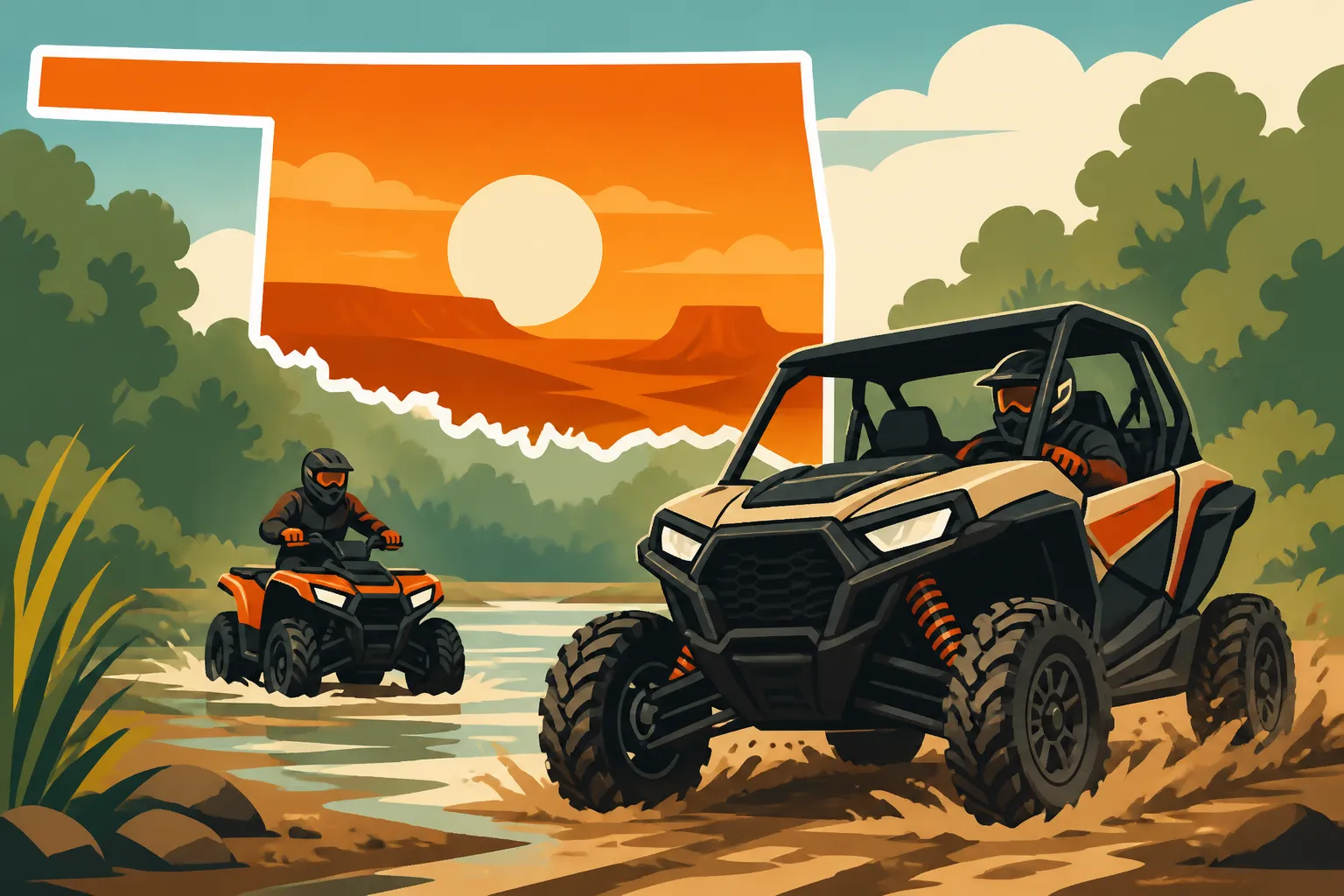
Imagine the spray of water as your side-by-side splashes through a shallow creek, the satisfying thrum of your engine pushing through a muddy bog, or the quiet beauty of ancient trees lining a hidden river bend. River bottoms offer a dynamic environment where no two rides are ever quite the same. The terrain is constantly shifting with the water levels, revealing new challenges and hidden gems. You might encounter slick, red clay after a rain, deep sandbeds, or rocky outcroppings that demand careful navigation. It’s a place where you can truly test your machine and your skills.
However, this untamed beauty often comes with a significant legal catch: ownership and access. Unlike designated OHV parks or clear-cut public lands, the legal status of river bottoms can be incredibly ambiguous. Many riders mistakenly assume that if it's a river or creek, it must be public property. This is a common and often expensive misconception. The reality is far more nuanced, and misunderstanding it can lead to serious charges of trespass, property damage claims, or even the impoundment of your machine. Before you even think about dropping your tires into a riverbed, you need to understand whose land you're on.
Navigating Public vs. Private Lands
The most crucial distinction when considering river bottom riding in Oklahoma is whether the land beneath your tires is public or private. This isn't always as simple as looking for a "No Trespassing" sign, as many rural riverbeds might not be explicitly marked.
Public Lands: In Oklahoma, the beds of certain navigable rivers are considered public property. This means that the state holds these lands in trust for public use. However, "public use" primarily refers to navigation, fishing, and related activities. It doesn't automatically grant ATV or UTV access, especially if getting to the riverbed requires crossing private property. Think of it like a public beach with no public road leading to it – you can technically use the beach, but getting there without permission might be impossible or illegal.
Private Lands: The vast majority of Oklahoma's smaller creeks, streams, and non-navigable riverbeds are entirely private property. Even along larger, navigable rivers, the land extending from the "high water mark" up the banks, including any adjacent fields or timber, is almost certainly privately owned. Without express permission from the landowner, riding your ATV or UTV on these private river bottoms is considered trespassing. And let me tell you, landowners in Oklahoma take trespass seriously. It can lead to fines, confrontations, and a very bad day. This is why [Getting Written Permission Before Riding Private Land] is not just a good idea, it's essential.
Understanding Oklahoma's Laws on Navigable and Non-Navigable Waters
Oklahoma's laws regarding river and stream access are deeply rooted in historical legal precedents, primarily focused on the concept of "navigability." This isn't about whether you can float a canoe down it today; it's about whether it was historically used for commercial navigation when Oklahoma became a state. This distinction is critical for understanding where you might legally have access and where you absolutely do not.
What Makes a River "Navigable" in Oklahoma?
The legal definition of a "navigable" waterway in Oklahoma is often misunderstood. Many assume it means any stream wide enough to float a boat, but the legal standard is much stricter. Historically, a river was deemed navigable if it was capable of being used "in its natural and ordinary condition as a highway for commerce" at the time of statehood. This typically involved carrying goods by steamboat or other commercial vessels.
As a result, only a select few major rivers in Oklahoma are officially considered navigable by the courts. These include significant portions of the Arkansas River, the Red River, the Cimarron River, the Canadian River, and the Verdigris River. For these waterways, the riverbed itself, up to the mean high water mark, is generally considered public property. However, it's vital to remember that just because the riverbed is public, the land leading to the riverbed often is not. Accessing these public riverbeds without crossing private property can be extremely challenging, if not impossible, in many locations. Don't assume public riverbed equals public ATV access; it simply means the bed itself isn't privately owned.
The Importance of the High Water Mark
Even on rivers legally classified as navigable, the public's right to access is generally limited to the riverbed below the "mean high water mark." This invisible line is incredibly significant. The mean high water mark is essentially the average line reached by the water during its normal high stages, but not including floodwaters. Everything below this line on a navigable river is typically considered public land. Everything above this line, including the banks, floodplains, and adjacent lands, is almost always private property.
Here's why this matters for ATV and UTV riders:
- No Bank Access: Even if you're riding in a public riverbed, you generally cannot ride up onto the banks without trespassing on private land. This means no exploring the trees lining the river or taking shortcuts across seemingly empty fields.
- Access Challenges: Finding a legal entry point to a public riverbed can be incredibly difficult. Unless there's a designated public access point (like a state park boat ramp or a WMA that explicitly allows OHV access to the river), getting your machine to the public portion of the riverbed without crossing private land is often impossible.
- Non-Navigable Waterways: For the vast majority of Oklahoma's creeks and smaller rivers, which are not legally navigable, both the riverbed and the banks are considered private property. Any riding on these waterways requires explicit permission from the landowner. Understanding the difference between [Oklahoma's 2005 and 2008 Cutoff Dates] for ATVs and UTVs might seem unrelated, but it highlights the historical legislative changes that sometimes create confusion around vehicle classifications and where they can legally operate.
Here's a quick comparison of river access scenarios:
| Scenario | Navigable River (e.g., Arkansas River) | Non-Navigable River/Creek (Most small waterways) |
|---|---|---|
| Riverbed Ownership | Generally Public (below mean high water mark) | Generally Private (entire bed and banks) |
| Bank Ownership | Generally Private (above mean high water mark) | Generally Private |
| ATV/UTV Riding in Bed | Technically allowed if accessed legally without crossing private land. | Not allowed without landowner permission. |
| Access to River | Often requires crossing private land, thus needing permission. | Almost always requires landowner permission for access. |
| Primary Risk | Trespassing to access the river; riding on private banks. | Trespassing on both the riverbed and banks. |
| What You Need | Legal public access point OR landowner permission for private access. | Explicit landowner permission. |
Practical Steps for Responsible River Bottom Riding
Given the legal complexities, being a responsible rider in Oklahoma's river bottoms means being prepared, doing your homework, and prioritizing respect for the land and its owners. This isn't just about avoiding a ticket; it's about preserving access for everyone and protecting these beautiful natural areas.
Researching Land Ownership and Seeking Permission
This is by far the most critical step. Never, ever assume that a river bottom is fair game.
- Identify the Area: Pinpoint exactly where you want to ride. Use mapping apps with satellite imagery to get a good sense of the terrain.
- Check County Assessor Maps/GIS: Most Oklahoma counties have online Geographic Information System (GIS) maps or county assessor websites that allow you to look up property ownership by parcel. These maps are invaluable for identifying the exact boundaries and names of landowners adjacent to the river or creek you're interested in. Look for details on how to use these maps – they can be a bit tricky at first, but worth the effort.
- Contact the Landowner: Once you have a name, try to find contact information. This might involve a polite phone call or a well-crafted letter. When you reach out, be respectful, clear, and upfront about your intentions.
- Be Polite and Professional: Introduce yourself, explain why you're calling (your interest in riding your ATV/UTV on their land), and specify the exact area you'd like to access.
- Offer to Meet: Suggest meeting them in person to discuss your request and perhaps even show them the exact route you'd like to take. This builds trust.
- Address Concerns: Be prepared to discuss their concerns about gates, fences, livestock, noise, and environmental impact. Show them you're committed to [What Posted Land Means Before You Ride] and respecting their property.
- Get it in Writing: If permission is granted, always ask for it in writing. A simple, signed agreement stating the dates, specific areas, and any conditions (like staying on established trails, "no alcohol," etc.) can save a world of trouble later. This protects both you and the landowner.
- Consider State-Managed Lands: Some Wildlife Management Areas (WMAs) or state parks might have rivers or creeks running through them, and they might allow OHV access on specific designated trails or for specific activities (like deer retrieval during hunting season). Always check the specific WMA or park rules, as these can vary significantly. For instance, [Oklahoma WMA Riding Only in Deer Season] is a common restriction to be aware of.
Environmental Stewardship and Safety on the River Bottom
Riding in river bottoms means interacting directly with sensitive ecosystems. Your actions have consequences, and being a good steward is crucial for continued access and the health of these environments.
- Leave No Trace: Pack out everything you pack in, and perhaps even a little extra trash you find. Avoid creating new trails; stick to existing paths or the riverbed itself where permitted. Be mindful of disturbing wildlife, especially during nesting or breeding seasons.
- Avoid Sensitive Habitats: Be aware of areas like fish spawning beds, bird nesting sites, or fragile plant communities. If the ground feels excessively soft or saturated, consider turning back to prevent deep ruts and erosion.
- Water Crossings: Be cautious of water depth and current. Never ride into water that's too deep for your machine or that has a strong current. Hidden obstacles like submerged rocks, logs, or deep holes can be incredibly dangerous. Always walk new water crossings first if possible. Consider accessories that enhance water capability, like snorkels – a quality snorkel kit could earn its price in creek water. You might find reliable options for such upgrades from brands like SuperATV, known for their durable off-road accessories.
- Ride with a Buddy: River bottoms can be isolated and unpredictable. Riding alone is risky. If you get stuck, break down, or have an accident, a riding partner can be a lifeline. Make sure someone knows your route and expected return time.
- Proper Gear: Helmets are a given, but consider waders or waterproof boots. Have recovery gear like a winch (a powerful winch is practically a necessity in deep mud or sand), tow straps, and a shovel. A good first aid kit is also non-negotiable – consider [What a First Aid Kit Needs on Timber Land] for a comprehensive list.
- Check Conditions: Rain upstream can quickly turn a calm creek into a raging torrent. Always check local weather and stream gauge reports before you head out. [Why Oklahoma Red Clay Turns Slick After Rain] is a real phenomenon that can make even familiar terrain treacherous.
Common Misconceptions and What to Avoid
Many riders harbor misconceptions about river bottom riding that can lead to legal trouble or dangerous situations. Clearing up these myths is essential for safe and lawful enjoyment of Oklahoma's waterways.
"It's a River, So It Must Be Public!" — A Costly Assumption
This is arguably the most dangerous misconception. As discussed, very few rivers in Oklahoma are legally considered "navigable" in a way that grants public access to their beds. And even for those that are, accessing them often requires crossing private land. The idea that "if it's flowing water, it's public" is simply not true in Oklahoma.
The Risks:
- Trespassing Charges: Riding on private river bottom land without permission is a direct violation of Oklahoma's trespass laws. This can lead to fines, court costs, and a criminal record.
- Property Damage Claims: If your machine damages fences, crops, or other property while trespassing, you can be held liable for civil damages, which can be far more expensive than any fine.
- Machine Impoundment: Law enforcement has the authority to impound your ATV or UTV if you are caught trespassing. Getting your machine back can be a lengthy, costly, and frustrating process.
- Confrontation: Landowners have a right to protect their property. Unauthorized riders risk angry confrontations, which can escalate into dangerous situations. Remember, the safest approach is always to seek [Getting Written Permission Before Riding Private Land].
Think about it this way: if a river flows through someone's backyard, you wouldn't assume you can walk through their yard to get to the river, even if you planned to only stay in the water. The same principle applies to ATVs and UTVs. The only way to ensure legal access is through permission or by using designated public access points that explicitly allow OHV use.
Equipment Considerations for River Bottom Terrain
River bottoms demand a specific kind of toughness from your machine and your gear. The environment is harsh, with mud, water, rocks, and unpredictable surfaces. Having the right setup can make the difference between an epic ride and being stranded.
- Tires: For river bottom riding, aggressive mud tires are often your best friend. They provide the traction needed to claw through thick mud and soft sand. Consider tires with deep, self-cleaning lugs. While [Paddle Tires on Oklahoma Dunes] are great for sand, they won't offer the same bite in mud.
- Winch: A powerful winch is an absolute must-have. You will get stuck. Whether it's deep mud, a slick bank, or a submerged obstacle, a winch can be your only way out. Look for a winch with sufficient pulling power for your machine's weight, and make sure it's properly mounted and regularly maintained. Many riders trust brands like SuperATV for their robust winches and other recovery gear, knowing they can depend on them in tough situations.
- Lift Kits and Ground Clearance: While not always necessary, a lift kit can significantly increase your ground clearance, helping you navigate over rocks, logs, and deeper ruts without getting hung up. [Skid Plates for Rocky San Bois Trails] are also crucial for protecting your undercarriage from damage.
- Snorkel Kits: If you plan on deep water crossings, a snorkel kit can protect your engine by raising the air intake and exhaust. Water ingestion can cause catastrophic engine damage, so if you're going to push the limits, a snorkel is a smart investment. As mentioned earlier, [When a Snorkel Earns Its Price in Creek Water] is a real consideration for serious river riders.
- Recovery Gear: Beyond a winch, carry snatch straps, tree saver straps, D-rings, and a shovel. A small axe or saw can also be useful for clearing downed branches.
- Waterproofing: Protect your electronics! Even if your machine is rated for water, adding extra protection to sensitive components can prevent headaches. Consider waterproof storage for your phone, wallet, and other essentials.
- Pre-Ride Checks: Before every river bottom adventure, perform a thorough check of your machine. Inspect tires, brakes, fluid levels, and ensure all lights are working. After the ride, always give your machine a good wash, especially in hard-to-reach areas, to remove corrosive mud and grit.
Being prepared with the right equipment not only enhances your experience but also drastically improves your safety and the longevity of your machine. Don't skimp on the tools and accessories that can get you out of a sticky situation.
Disclaimer
This article is for general informational purposes only and does not constitute professional advice. Laws, prices and regulations vary by location and change over time. Consult a qualified professional for guidance on your specific situation.