Oklahoma Rules for a Child Passenger
One of the most exciting parts of owning an ATV or UTV in Oklahoma is sharing the adventure, especially with the younger generation. But when it comes to carrying child passengers, many riders feel a knot of confusion and worry. You want to make sure your kids are safe, but also that you're following the law and avoiding any trouble. This guide is here to untangle the rules, clarify what's allowed and what's not, and help you create safe, unforgettable memories with your family on Oklahoma's trails and lands.
Oklahoma's Stance on Child Passengers: The Core Rules
Let's cut right to the chase: Oklahoma law is pretty specific about carrying passengers, especially children, on off-road vehicles. It’s not just about throwing an extra seat on the back; it's about the vehicle's original design and intent. This is where a lot of riders get tripped up, and understanding these foundational rules is crucial before you even think about hitting the trail with a little one. The state is really focused on rider safety, and that extends doubly to our most vulnerable passengers.
What the Law Specifically Says
Oklahoma's statutes generally state that an off-road vehicle (which includes most ATVs and UTVs) should only carry as many people as it was designed by the manufacturer for. This is the golden rule, and it often means a big difference between quads and side-by-sides. If your machine was never intended for a passenger, adding one could put you squarely outside the law. It’s a common frustration for parents who just want to give their child a ride, but the law prioritizes preventing accidents that can occur when a machine is overloaded or a passenger isn't properly secured. You might hear park rangers or local deputies talk about the "manufacturer's specifications" – they're referring to this.
The law also takes into account where you're riding. While private land might have different enforcement nuances, the state's rules are primarily designed for public lands and roads where ATVs and UTVs are permitted. Ignoring these rules can lead to citations, and more importantly, can compromise your child's safety. For instance, you should also be familiar with [Oklahoma ATV Helmet Law Age] requirements, which apply to all riders under 18, passengers included.
The "Designed for Passengers" Clause
This phrase is key. For most traditional ATVs (quads), they are generally designed for a single operator. If your quad has a seat that only accommodates one person, without separate footrests and grab handles for a passenger, then it's almost certainly not "designed for passengers." Trying to squeeze a small child on the seat in front or behind you, even if they fit, goes against this core principle. Manufacturers spend countless hours on engineering and safety testing, and modifying that original design for a passenger can have serious implications for stability, braking, and overall control, especially with a child's unpredictable movements.
On the other hand, many UTVs, or side-by-sides, come from the factory with multiple seats and seatbelts, clearly indicating they are "designed for passengers." These machines offer a much safer and legally compliant way to bring children along for the ride. The presence of dedicated seating, seatbelts, and often roll cages and doors, aligns perfectly with the state's emphasis on machines being fit for purpose. This distinction often surprises new riders, who might assume all ATVs are the same in the eyes of the law. Make sure to check [Oklahoma Rules for Passengers on a UTV] for more details specific to side-by-sides.
Decoding Designated Seating and Machine Capacity
When it comes to carrying children, it's not just about whether the machine can physically hold another person, but whether it's legally and safely designed to do so. This distinction is paramount and often misunderstood. Let's break down the differences between quads and side-by-sides regarding passenger capacity and what to consider when it comes to aftermarket modifications.
Quads: The Single-Rider Reality
For the vast majority of traditional ATVs, or quads, they are designed and built as single-rider machines. This means one seat, one set of footrests, and controls meant for one operator. Even if you see a quad with a longer seat, if it doesn't have separate, dedicated footrests and grab handles for a second person from the factory, then it's still considered a single-rider machine under Oklahoma law. Trying to fit a child on the same seat as you, whether in front or behind, significantly alters the balance of the machine. It can make it much harder for you to shift your weight properly, reach the controls, or react quickly to changing terrain.
Think about it this way: your ATV's suspension and frame are engineered for a certain weight distribution and center of gravity. Adding a passenger, especially a squirming child, changes everything. It can increase the risk of rollovers, make braking less effective, and even affect steering. The state's position, and frankly, common sense safety, is that if the manufacturer didn't explicitly design it for two, don't force it. These rules are in place to prevent accidents, which can be particularly devastating with children involved.
Side-by-Sides: Built for More
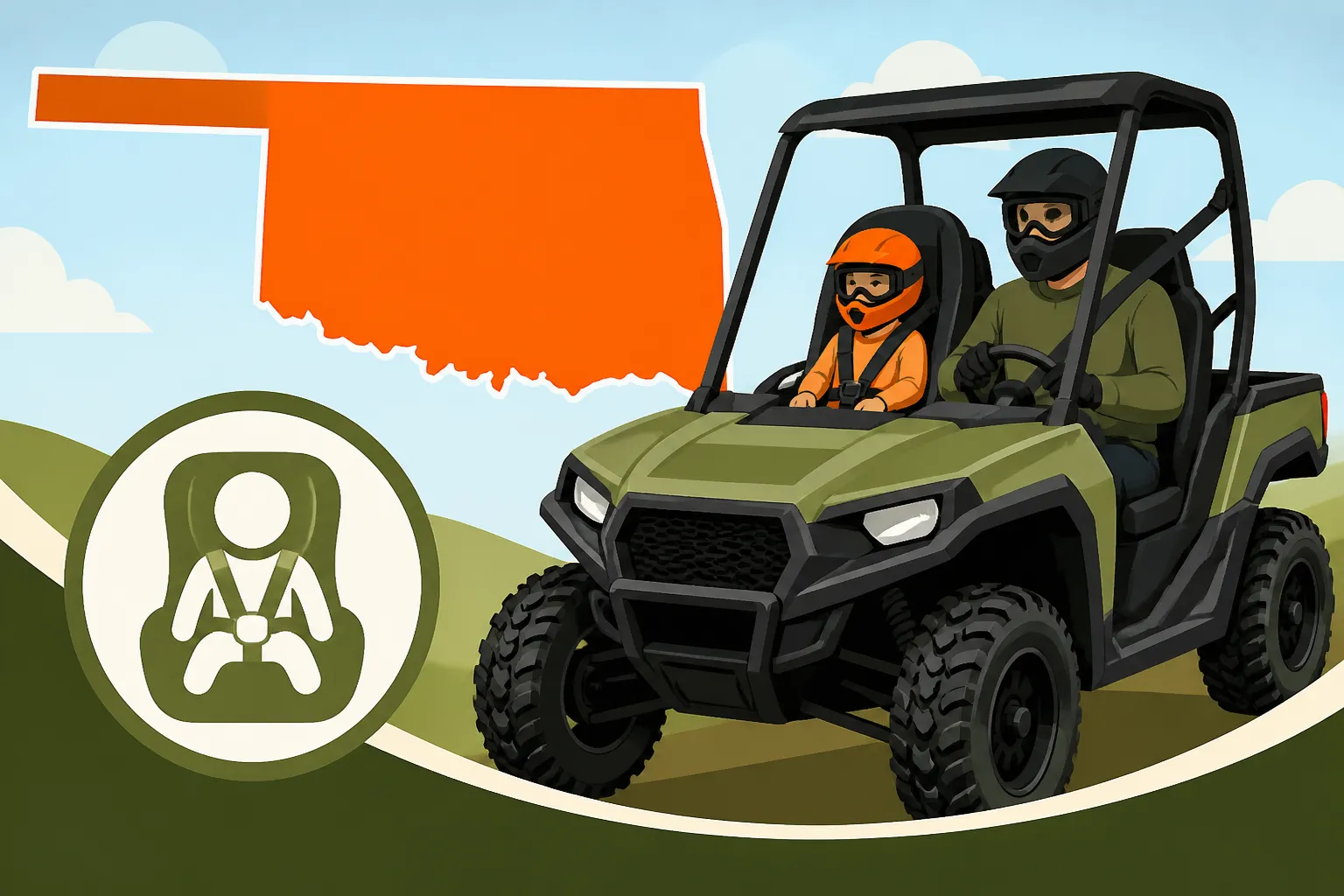
This is where UTVs shine when it comes to family riding. Most side-by-sides are manufactured with multiple seats (two, four, or even six-seater configurations are common), complete with individual seatbelts and passenger grab handles. These machines are purpose-built for carrying passengers and often feature roll-over protection structures (ROPS) and doors, offering a much higher degree of safety for all occupants. This aligns perfectly with Oklahoma's "designed for passengers" rule.
When you're loading up a UTV with kids, you're usually well within the manufacturer's design parameters, provided you don't exceed the number of designated seating positions. This makes UTVs an excellent choice for family outings, offering a much more secure and comfortable experience for child passengers. You’ll find that [Oklahoma Passengers the Factory Allowed] is a concept UTVs inherently embrace. Many riders look to enhance their UTVs for safety and comfort, and companies like SuperATV offer a vast array of accessories, from sturdy grab handles to upgraded harnesses, that can contribute to a safer riding experience for all occupants, especially when you have little ones on board. These additions, when installed correctly, can often improve upon the factory setup for an even more secure ride.
Aftermarket Seating: What You Need to Know
This is a tricky area, and it's where riders often misinterpret the rules. Adding an aftermarket seat to a single-rider ATV, even one designed specifically for children, generally does not make it legal to carry a passenger if the machine was not originally designed by the manufacturer for multiple riders. The key is the original manufacturer design, not modifications you make later. While some aftermarket seats may seem sturdy, they can still compromise the ATV's handling and stability in ways the original engineers never intended.
For UTVs, the situation is different. If your UTV has designated seating positions, you can certainly upgrade or enhance those seats and harnesses. However, adding additional seating beyond the manufacturer's intended capacity can still be problematic legally and, more importantly, from a safety standpoint. Always consider how any modification affects the vehicle's integrity, weight limits, and handling characteristics. When exploring options, remember that while SuperATV offers many useful UTV accessories, ensure any additions respect the machine's original design limits for passenger capacity and safety, especially with children. Always verify that any accessory seating or harness is compatible with your machine and doesn't infringe on the manufacturer's safety guidelines.
Beyond the Law: Prioritizing Child Passenger Safety
Even if your machine is legally compliant for carrying a child passenger, the law is just the baseline. As parents and guardians, we have a much higher responsibility to ensure the safety and well-being of our little ones when they're riding with us. This means going above and beyond, considering every aspect of the ride from head to toe.
Mandatory Helmets and Protective Gear
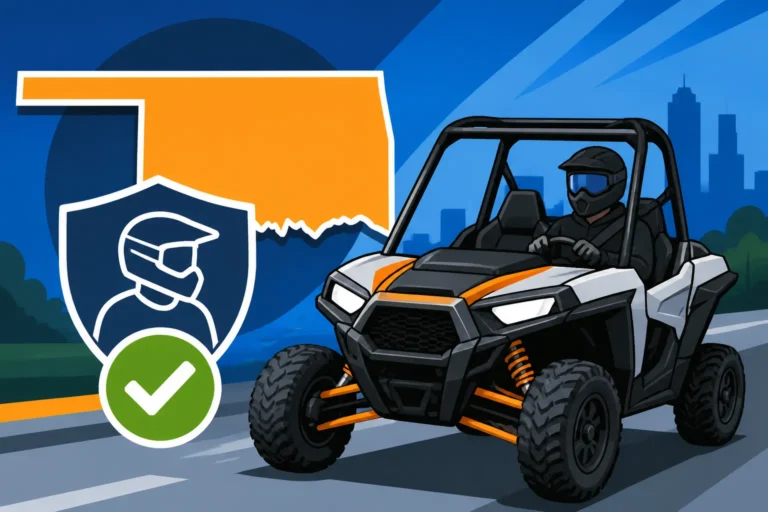
This is non-negotiable in Oklahoma. If your child is under the age of 18, they must wear a helmet when riding an ATV or UTV, whether as an operator or a passenger. And not just any helmet – it needs to be one that meets federal safety standards, like those set by the Department of Transportation (DOT). This is a vital piece of protection, as head injuries are among the most serious risks in any off-road incident. Make sure the helmet fits snugly, doesn't wobble, and has a secure chin strap. You can learn more about specific requirements by checking [Oklahoma Helmet Standards for Young Riders].
Beyond the helmet, think about other protective gear:
- Eye Protection: Goggles or a full-face shield are crucial to protect from dust, debris, and insects.
- Long Sleeves and Pants: Even on a hot day, sturdy long sleeves and pants (denim or thicker materials are best) can prevent scrapes, cuts, and burns from exhaust or engine parts.
- Gloves: Can help prevent blisters and scrapes, and improve grip.
- Over-the-Ankle Boots: Protect feet and ankles from impacts, hot surfaces, and terrain hazards.
It might seem like a lot, especially for a short ride, but these items are incredibly effective at preventing common injuries and discomfort.
Choosing the Right Terrain and Speed
When you have a child on board, your riding strategy needs to change dramatically. Forget about aggressive riding, tight turns, or conquering challenging obstacles. Stick to flat, open, and familiar terrain. Gentle trails, open fields, or designated easy riding areas are your best bet. Avoid anything with steep inclines, deep mud, large rocks, or dense brush that could cause unexpected jolts or instability.
Speed is another critical factor. Always ride at a pace that is comfortable and safe for your youngest passenger. This usually means much slower than you might ride alone. Sudden acceleration or braking can unbalance a child, even if they're belted in a UTV. Smooth, predictable movements are key. Remember, the goal is to enjoy the scenery and the experience together, not to test the limits of your machine or your riding skills. If you're riding on public lands, be mindful that [Oklahoma Park Rangers as Enforcers] will be paying close attention to these rules.
Supervision and Communication
Even when riding side-by-side in a UTV, maintaining constant communication with your child is important. Before you even start, talk to them about what to expect: explain the sounds, the bumps, and the importance of keeping their hands and feet inside the vehicle. Teach them basic hand signals if they're old enough, or simply establish a system for them to communicate if they're uncomfortable or need to stop.
Throughout the ride, periodically check in with them. Are they still having fun? Are they comfortable? Are they secure? Their comfort and engagement are good indicators of their safety. If they start to get fidgety or look nervous, it's time to slow down, take a break, or even call it a day. Remember that a child's attention span and tolerance for bumps and vibrations will be much shorter than an adult's. Always ensure that the adult operator is fully focused on the ride and the child's safety, free from distractions.
Common Scenarios and Avoiding Costly Mistakes
Navigating the rules and safety considerations can sometimes feel overwhelming, but understanding common situations and pitfalls can save you a lot of headache and heartache. Knowing where you can ride, what law enforcement is looking for, and what to avoid will help ensure your family's off-road adventures are memorable for all the right reasons.
Riding on Public vs. Private Land
The distinction between public and private land is crucial. State laws regarding passenger capacity, helmets, and general operation are strictly enforced on public lands, such as state parks like Little Sahara or designated OHV areas like Robbers Cave, and any county roads where ATVs/UTVs are permitted. If you're caught violating passenger rules or helmet laws on public land, you could face fines and be asked to leave. You should also be aware of [Oklahoma Penalties Capped at $25] for certain ATV violations, though more serious infractions could lead to higher costs.
On private property, the enforcement might be different, but that doesn't mean the safety rules become irrelevant. While a sheriff's deputy might not cite you for a passenger violation on your own ranch, the inherent dangers of carrying an extra, unprotected passenger on an undesigned machine remain. Many private riding parks also have their own strict rules that often mirror or exceed state regulations, especially concerning minors. Always check [Oklahoma Private Park Waivers and Rules] before visiting, as they often require specific gear and adherence to capacity limits. Regardless of where you ride, making responsible choices is paramount to protecting your child.
What Law Enforcement Looks For
Oklahoma law enforcement officers, whether it's the Highway Patrol, a county deputy, or a park ranger, are primarily looking for compliance with basic safety regulations. When they see an ATV or UTV with passengers, their first mental checklist will include:
- Vehicle Type: Is it a quad or a side-by-side? This immediately tells them about the manufacturer's original design intent.
- Number of Passengers: Are there more people than the machine was designed for?
- Designated Seating: For side-by-sides, are passengers in actual seats with seatbelts? For quads, is there any passenger at all?
- Helmets: Are all riders under 18 wearing a properly secured, DOT-compliant helmet? This is one of the most visible and easily enforceable rules.
- Age of Operator: Is the operator of the machine of appropriate age? (This ties into general [Oklahoma ATV Age Requirements]).
They're not trying to ruin your fun; they're trying to prevent serious injuries and fatalities. A quick glance can tell them if you're putting your child at undue risk. Understanding these points can help you prepare and ensure you’re always operating within the law, whether you’re riding on [Oklahoma Rules for Riding a County Road] or just exploring your own land.
By understanding and adhering to Oklahoma's laws and prioritizing safety above all else, you can ensure that your child's experience on an ATV or UTV is not only thrilling but also secure. It's about making smart, informed decisions that protect the ones you love most.
| Feature / Scenario | Traditional ATV (Quad) | UTV (Side-by-Side) |
|---|---|---|
| Manufacturer Design | Primarily single-rider | Often multi-passenger (2, 4, 6+ seats) |
| Passenger Seating | Generally not designed for passengers | Dedicated seats with seatbelts and grab handles |
| Child Passenger Legality | Generally not legal if not factory-designed for two | Legal if within manufacturer's seating capacity |
| Helmet Rule (<18) | REQUIRED for operator and passenger | REQUIRED for operator and passenger |
| Aftermarket Seating | Does not typically make it legal to add a passenger | Can enhance existing legal seats (e.g., harnesses) |
| Stability/Handling | Compromised with added, undesigned passenger | Engineered for multiple passengers |
| Safety Features | Limited for passengers (no seatbelts/roll cage) | Seatbelts, roll cage, often doors |
| Recommended Terrain | Only single operator on appropriate terrain | Smooth, familiar trails with passengers |
| Speed with Child | Never with a passenger on a single-rider quad | Slower, smoother, predictable movements |
Disclaimer
This article is for general informational purposes only and does not constitute professional advice. Laws, prices and regulations vary by location and change over time. Consult a qualified professional for guidance on your specific situation.