Oklahoma Equipment Required for Street UTVs
There's a unique thrill that comes with the idea of taking your UTV from the dusty trails to the paved roads of Oklahoma. Maybe you just want to run to the corner store, visit a neighbor a few miles down the county road, or simply make your machine more versatile for farm tasks that involve crossing a highway. But that dream can quickly turn into a headache when you start wondering, "What exactly do I need to add to my UTV to make it legal on Oklahoma streets?" It's a common question, and frankly, the rules can feel a bit like reading hieroglyphs at first glance. This comprehensive guide is here to cut through the confusion and meticulously detail every piece of equipment required to transform your off-road warrior into a legitimate street-legal vehicle in Oklahoma, helping you navigate the process without second-guessing yourself.
Understanding Oklahoma's Street-Legal UTV Classification
For years, many of us in Oklahoma wished we could legally drive our beloved side-by-sides on public roads without constantly looking over our shoulders. The idea of using our UTVs for quick errands, property maintenance, or just cruising around the rural routes felt like a natural extension of their utility. Before recent changes, it was a grey area, leaving many riders scratching their heads and risking fines. The frustration was real, as these machines are incredibly useful, and limiting them strictly to off-road use felt like a missed opportunity for convenience and efficiency.
The Journey to Street Legality
The ability to make UTVs street-legal in Oklahoma didn't just happen overnight. It was a journey driven by the increasing popularity and versatility of these machines. For a long time, the legal framework primarily focused on traditional ATVs, and UTVs often fell into an ambiguous category. This left many owners feeling frustrated, as their capable side-by-sides were perfectly suited for short trips on county roads, but the law hadn't quite caught up. This legal limbo often meant riders were either breaking the law unknowingly or had to trailer their machines for even the shortest on-road distances, which totally defeated the purpose of their utility.
Thankfully, the state of Oklahoma recognized this growing need and, through legislative action, created a specific classification for street-legal UTVs. This was a game-changer, providing a clear path for owners to equip their machines for road use. It wasn't about turning every UTV into a highway cruiser, but rather about allowing responsible use on designated roads, acknowledging their role in rural communities and beyond. This development finally brought clarity and opportunity for UTV owners who desired that added flexibility. [Oklahoma's Street-Legal UTV Class Explained]
What a "Street-Legal" UTV Actually Means
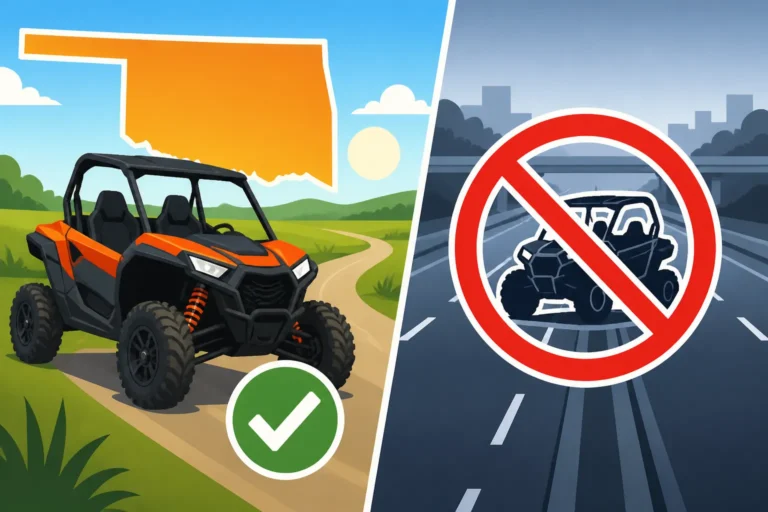
So, what does it truly mean when we talk about a "street-legal" UTV in Oklahoma? It means your UTV, once equipped with the proper safety features and registered correctly, can operate on certain public roads and highways within the state. However, it's crucial to understand that this isn't a carte blanche to drive anywhere. There are still restrictions, such as prohibitions against driving on interstates or multi-lane divided highways, and specific speed limits often apply. This is a common misconception, where folks assume "street-legal" means "car-legal," and that's simply not the case for UTVs.
The designation also comes with specific registration requirements that differ significantly from a standard off-road ATV or UTV registration. Instead of the one-time, non-renewing registration for off-road machines, a street-legal UTV requires an [Oklahoma Annual Plates for Street UTVs] and [Street UTV Decals Renew Every Single Year], similar to a regular vehicle. This annual renewal helps the state keep track of these vehicles and ensures they continue to meet safety standards. It's a small but significant difference that highlights the commitment to roadworthiness.
Distinguishing From Other Off-Road Vehicles
It's really important to draw a clear line between street-legal UTVs and other off-road vehicles like traditional ATVs or even golf carts, because the rules are distinct. While an ATV might be able to cross a road under specific circumstances or travel a short distance on a county road for agricultural purposes, it does not, and cannot, become "street-legal" in the same way a UTV can. ATVs lack the structural components and typically the seating design that would allow them to safely integrate with road traffic. Attempting to modify an ATV to meet street-legal UTV standards is generally not feasible or recognized by the state.
Similarly, golf carts, while often found on local streets in certain communities, operate under entirely different, usually municipal-specific, ordinances. Their top speed and safety features are designed for low-speed environments like golf courses or planned communities, not the general public road system. A street-legal UTV, by contrast, is built with a more robust chassis, better suspension, and a higher top speed, making it suitable for a broader range of road conditions and interactions with other vehicles. Understanding these distinctions is key to ensuring you're compliant with the correct set of regulations for your particular machine.
Mandatory Lighting and Signaling Equipment
When you think about taking your UTV on the road, visibility is paramount. On the trail, you might get by with minimal lighting, but on public roads, you're sharing space with cars, trucks, and motorcycles, all of which expect clear signals and visible lights. This is where many off-road machines fall short right out of the box, and why adding the right lighting and signaling equipment is not just a legal requirement but a critical safety upgrade. Skimping here isn't just risking a ticket; it's risking your safety and the safety of others.
Headlights and Taillights for Road Use
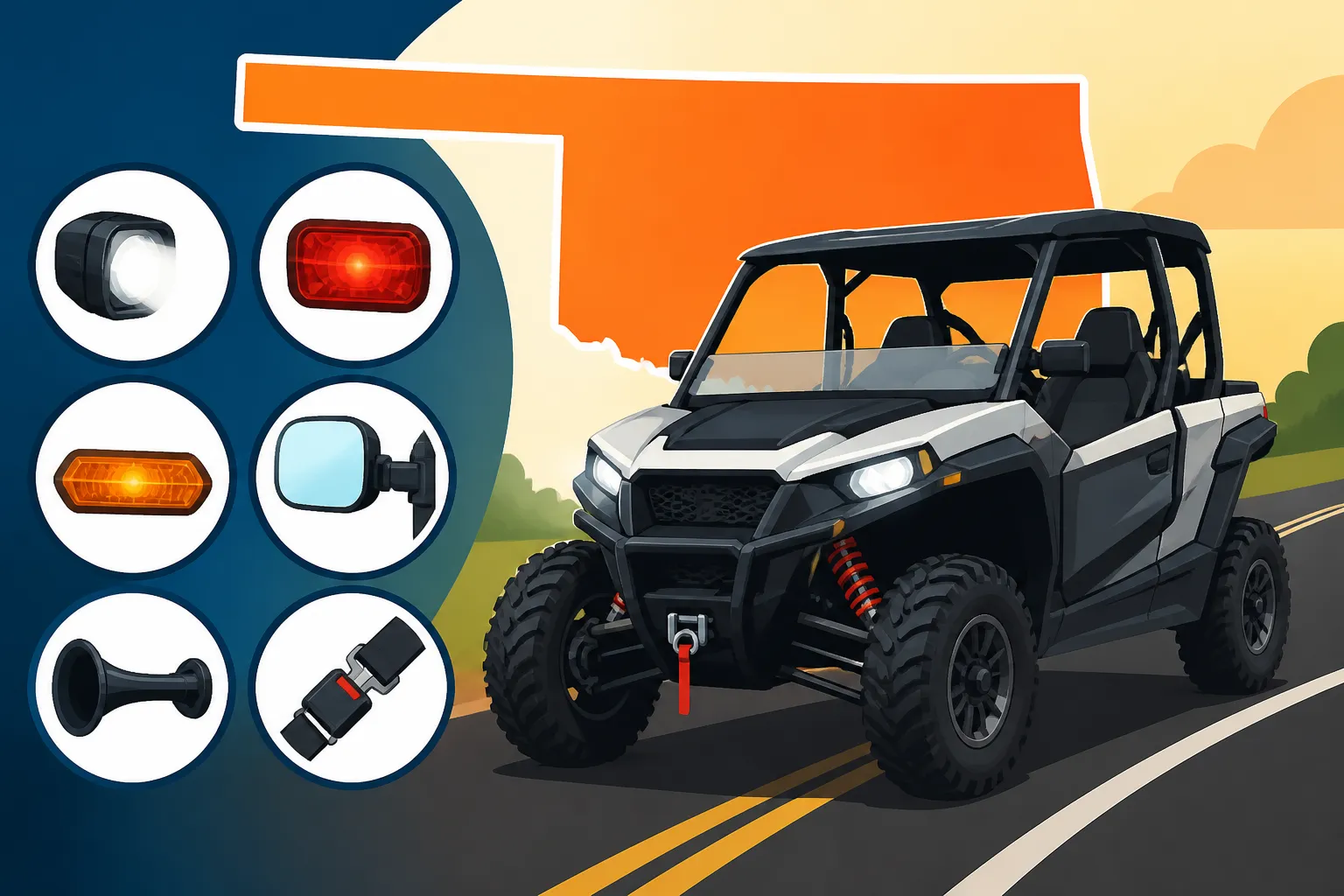
First and foremost, your street-legal UTV must be equipped with proper headlights that meet Department of Transportation (DOT) standards. This isn't just about having lights that turn on; they need to be effective for road use. This typically means having both a low-beam and a high-beam setting, allowing you to properly illuminate the road ahead without blinding oncoming traffic, and then switch to high beam for better visibility on darker roads. Many factory UTV headlights are designed more for off-road floodlighting than precise road illumination, so an upgrade or adjustment might be necessary to meet this standard.
Equally important are the taillights and brake lights, which must be clearly visible from the rear. These lights signal your presence and your intentions to drivers behind you. Taillights should be constantly illuminated when your headlights are on, providing continuous rear visibility. Brake lights, on the other hand, need to activate brightly when you apply the brakes, giving a clear warning that you are slowing down or stopping. Additionally, your UTV will need rear reflectors, typically red, to ensure you're visible even if your electrical system fails. These simple, often overlooked components are lifesavers, especially during dawn, dusk, or inclement weather when visibility is naturally reduced.
Turn Signals and Hazard Lights
Imagine trying to turn onto a busy county road without turn signals – it's a recipe for disaster! That's why fully functional turn signals are absolutely non-negotiable for a street-legal UTV. You'll need amber-colored turn signals prominently displayed on both the front and rear of your machine. These signals must blink clearly and consistently to indicate your intent to turn left or right. Most UTVs don't come with these from the factory, so this will almost certainly be an aftermarket installation. Many riders opt for integrated kits that provide a clean, factory-like appearance, such as those offered by SuperATV.
Beyond standard turn signals, your UTV must also be equipped with hazard lights, sometimes called emergency flashers. These lights activate all four turn signals simultaneously, providing a crucial warning to other motorists if your UTV is stopped on the side of the road, moving unusually slowly, or experiencing an issue. Think about pulling over to check a tire or having a mechanical problem on a less-traveled road; hazard lights are your best friend in those scenarios, making your stationary vehicle much more noticeable. [Adding Turn Signals to a Street-Legal Side-by-Side] is a common project for UTV owners looking to achieve street legality.
Brake Lights and License Plate Illumination
When it comes to slowing down or stopping, your brake lights are the primary way you communicate this to the vehicles behind you. For a street-legal UTV, the brake lights must activate when any brake is applied, whether that's the foot pedal or a hand lever (if your UTV has both and they are integrated into the braking system). These lights need to be sufficiently bright to be seen clearly in all lighting conditions, even on a sunny Oklahoma afternoon. Many off-road UTVs have basic brake lights, but sometimes an upgrade to brighter LED units might be beneficial for added safety on the road.
Finally, just like any other motor vehicle, your street-legal UTV needs a proper setup for its license plate. This means not only having a securely mounted license plate but also ensuring that it's illuminated by a white light when your headlights are on. This illumination allows law enforcement and other drivers to clearly read your license plate number during nighttime hours. It's a small detail, but it's part of the comprehensive visibility package required for road operations, ensuring your machine is fully identifiable at all times.
Visibility and Auditory Requirements
Beyond the essential lighting, a street-legal UTV needs to ensure its driver has a clear view of their surroundings and can audibly alert others. These requirements are all about enhancing awareness – both your awareness of other traffic and other traffic's awareness of your presence. It's easy to get focused on the bigger ticket items like tires and turn signals, but these seemingly smaller details play an enormous role in road safety.
Rearview and Side Mirrors
Having a clear view of what's happening behind and to the sides of your UTV is absolutely critical when you're sharing the road with other vehicles. Oklahoma law for street-legal UTVs typically requires at least one rearview mirror mounted to provide the driver with a clear view of the road behind the vehicle. Most often, this translates to either a single central rearview mirror, like you'd find in a car, or a driver-side mirror. However, many riders prefer the added safety and visibility provided by having both a driver's side and a passenger's side mirror, or at minimum, a good quality wide-angle central mirror.
The challenge with UTVs is that they vibrate more than a typical car, which can make cheap mirrors wobble and distort your view. Investing in robust, high-quality mirrors specifically designed for UTVs is a smart move. Brands like SuperATV offer durable, shatterproof mirror options that can withstand the rigors of both road and occasional off-road use, ensuring you maintain a clear line of sight at all times. A state trooper conducting a roadside check will definitely be looking for these, so ensuring they are properly adjusted and provide an unobstructed view is paramount. [Mirrors a Trooper Will Look For] are a basic but critical component of your street-legal setup.
The Indispensable Horn
You might be used to shouting to get attention on the trail, but on the road, that's simply not effective or safe. A functional horn is an absolute requirement for any street-legal UTV in Oklahoma. This isn't about having a novelty horn; it needs to be an audible warning device capable of alerting pedestrians and other drivers to your presence. Imagine a situation where a child darts into the road or a car starts to merge into your lane – a quick, effective blast of the horn can prevent an accident.
The horn should be easily accessible to the driver and produce a sound that is distinct and loud enough to be heard over ambient road noise. While you might be tempted to install a comical "ooga" horn, it's best to stick with something that sounds like a standard vehicle horn – clear, concise, and attention-grabbing. It's a fundamental safety feature that allows you to communicate quickly and effectively in potentially hazardous situations. [Does a Street-Legal UTV Need a Horn?] Absolutely, it's a non-negotiable item. [Oklahoma Horns on a Street UTV] are specifically addressed in the regulations.
Windshield, Wipers, and Speedometer
When you're driving on public roads, you need protection from debris, insects, and weather, which is why a proper windshield is mandatory for a street-legal UTV. This isn't just any piece of plexiglass; the windshield must be made of safety glass (often designated AS1 or AS2) that won't shatter into dangerous shards upon impact. It needs to provide an unobstructed view for the driver, meaning no excessive tinting or damage that impairs visibility.
Along with a windshield, a functional windshield wiper system is also required. Rain, mud splatter, or even heavy dust can quickly obscure your vision, making wipers essential for maintaining clear sightlines. A single wiper might be sufficient, but it must effectively clear a portion of the windshield to allow for safe operation. Finally, and crucially, your UTV needs an accurate and functional speedometer. You're expected to obey posted speed limits, and without a reliable way to measure your speed, you'll be guessing. Many UTVs come with a digital display that includes a speedometer, but if yours doesn't, or if it's unreliable, you'll need to install an aftermarket unit to ensure you're always aware of your rate of travel.
Essential Safety and Operational Components
Beyond just seeing and being seen, a street-legal UTV needs fundamental safety and operational components to protect its occupants and ensure it can interact safely with other road users. These are the systems that directly contribute to the structural integrity and control of your machine, making it a reliable vehicle on asphalt as well as dirt.
Seatbelts and Occupant Restraints
Safety begins with keeping occupants securely in their seats. For a street-legal UTV, all designated seating positions must be equipped with seatbelts. These aren't just for show; they need to be fully functional, in good condition, and capable of restraining an occupant in the event of a sudden stop or collision. Most modern UTVs come from the factory with at least three-point harnesses for the driver and front passenger, and lap belts for rear passengers. These factory-installed restraints are typically compliant.
If you've made any modifications to your UTV's seating or restraint system, it's paramount that these upgrades still meet or exceed safety standards. Avoid using worn-out or damaged belts, as they won't provide adequate protection. The intention here is clear: to ensure that everyone riding in your street-legal UTV is as protected as they would be in any other passenger vehicle on the road.
DOT-Approved Tires and Fenders
On the trails, you might favor aggressive, knobby tires designed for maximum traction in mud or sand. However, for road use, different standards apply. Your street-legal UTV must be equipped with DOT-approved tires. These tires have specific tread patterns and construction materials that make them safe and durable for paved surfaces, offering better grip and handling at road speeds, and usually a smoother, quieter ride. Using non-DOT tires on the road can be a significant safety hazard due to reduced traction, faster wear, and potential for blowouts at sustained higher speeds.
In addition to the right tires, fenders or mud flaps are also typically required. Imagine a UTV kicking up mud, gravel, or water onto another vehicle or pedestrian. Fenders are designed to contain this spray, keeping it off other drivers and improving visibility for everyone on the road. They also protect your own UTV from excessive road grime. Often, aftermarket fender flares or mud flap extensions are needed, especially if your UTV has a wider stance or larger tires than stock.
Exhaust System and Spark Arrestor
The exhaust system on your street-legal UTV needs to be more than just a pipe; it must be fully functional and designed to minimize noise and emissions, much like a regular vehicle. While Oklahoma doesn't typically require annual emissions testing for UTVs, the exhaust system should still be in good repair, free of leaks, and not excessively loud. Many aftermarket exhaust systems designed purely for performance can exceed legal noise limits, so if you've modified yours, you'll need to ensure it's still compliant for road use.
A crucial component of the exhaust system, especially for any off-road machine, is a spark arrestor. This device prevents hot carbon particles from escaping the exhaust pipe, which can be a significant fire hazard, especially in dry grassy areas or near brush. Even though you're on the road, the requirement for a spark arrestor usually carries over, serving as a layer of fire prevention. It’s an environmental protection measure that ensures your machine isn't inadvertently starting fires, particularly important in Oklahoma's often dry climate. [Does Your Quad Need a Spark Arrester in Oklahoma?] Yes, it's generally a wise and often required feature.
Other Important Considerations for Street-Legal UTVs
Beyond the core equipment, there are other critical aspects to consider when preparing your UTV for road legality in Oklahoma. These details contribute to overall safety, legal compliance, and long-term enjoyment of your street-legal machine. Ignoring them can lead to unexpected issues down the road.
Fuel System and Emissions Compliance
While specific emissions testing for UTVs isn't a regular part of Oklahoma's street-legal registration process, the general expectation is that your machine's fuel system is safe and compliant with federal standards. This means a sealed, leak-free fuel tank and lines, and a system that prevents excessive fuel evaporation. The goal is to ensure your UTV isn't posing an environmental hazard or a fire risk due to faulty fuel delivery.
For most modern, factory-built UTVs, the fuel system will already meet these general expectations. However, if you've done significant modifications or are working with an older machine, it's worth a thorough inspection to ensure everything is in good working order. Safety is paramount, and a compromised fuel system can have serious consequences, far beyond just an emissions concern.
Vehicle Identification Number VIN
Just like any other vehicle on the road, your street-legal UTV must have a clearly legible and properly affixed Vehicle Identification Number (VIN). This 17-character code is the unique identifier for your machine, essential for registration, titling, insurance, and law enforcement identification. The VIN is usually stamped onto the frame of the UTV, often in a visible location like the front frame rail or under the driver's seat.
When you go to register your UTV as street-legal, the tag agency will verify this VIN against your ownership documents. If the VIN is missing, obscured, or tampered with, you'll run into significant hurdles. Always verify the VIN matches your title or Manufacturer's Statement of Origin (MSO) when purchasing a UTV, especially from a private seller, to avoid any headaches later on. It's the machine's fingerprint, and it needs to be clear and correct.
Maintaining Compliance and Avoiding Fines
Getting your UTV equipped and registered as street-legal is a fantastic achievement, but the journey doesn't end there. Maintaining compliance is an ongoing responsibility. This means regularly checking all your required equipment – making sure your lights are working, mirrors are intact, tires are in good condition, and your horn still honks loudly. Just like a car, components can wear out or become damaged. A simple pre-ride check can save you a lot of trouble.
Failing to maintain compliance can lead to significant headaches, including potential fines and citations from law enforcement. A trooper might pull you over for a burnt-out headlight or a missing mirror, and those small infractions can quickly add up. While [Oklahoma Penalties Capped at $25] for certain ATV violations, consistent non-compliance or serious safety issues could lead to more severe consequences. It's not just about avoiding tickets; it's about ensuring your UTV remains safe for you, your passengers, and everyone else you share the road with. Staying proactive in checking your equipment is always the best policy. Oklahoma Equipment Required for Street UTVs covers everything you'll need.
Street-Legal UTV Equipment Checklist
To make it easier to keep track of all the essentials, here's a quick checklist of the mandatory equipment for a street-legal UTV in Oklahoma:
| Equipment Category | Specific Requirements | Why It's Needed | Common UTV Status (Stock vs. Aftermarket) |
|---|---|---|---|
| Lighting & Signals | DOT-compliant Headlights (high/low beam) | Visibility for driver & other traffic; legal operation at night. | Often requires upgrade or aiming adjustment |
| Taillights & Brake Lights (bright, visible) | Rear visibility; signaling stops/slowdowns. | Usually stock, but brighter LEDs are an upgrade | |
| Rear Reflectors (red) | Passive visibility if lights fail. | Often stock | |
| Amber Turn Signals (front & rear, functional) | Signaling turns to other motorists. | Almost always aftermarket | |
| Hazard Lights (all four signals flash) | Emergency warning when stopped or moving slowly. | Almost always aftermarket (often with turn signal kit) | |
| License Plate Illumination (white light) | Ensures plate readability at night. | Almost always aftermarket | |
| Visibility & Auditory | Rearview Mirror (at least one, clear view of rear) | Driver's awareness of traffic behind. | Often needs upgrade for durability/view |
| Functional Horn (audible warning device) | Alerting others to your presence or hazards. | Often aftermarket or upgrade | |
| Safety-Glass Windshield (AS1 or AS2 rated) | Protection from debris & weather; clear visibility. | Almost always aftermarket | |
| Windshield Wiper System (functional) | Maintaining clear vision in rain/mud. | Almost always aftermarket | |
| Speedometer (accurate & functional) | Observing posted speed limits. | Usually stock, but verification needed | |
| Safety & Operational | Seatbelts/Restraints (for all seating positions, functional) | Occupant safety in case of sudden stop/collision. | Usually stock (verify condition) |
| DOT-Approved Tires | Safe traction and durability for road speeds. | Often requires change from off-road tires | |
| Fenders/Mud Flaps (prevents debris spray) | Protects other motorists & your own UTV. | Often requires aftermarket extensions | |
| Exhaust System (quiet, no leaks) & Spark Arrestor | Noise/emission control & fire prevention. | Check for excessive noise or missing spark arrestor | |
| Documentation & Compliance | Clear VIN (Vehicle Identification Number) | Vehicle identification for registration & law enforcement. | Verify clarity and match to paperwork |
| Annual Registration (street-legal specific) | Legal operating status. | Required annually (differs from off-road) |
Disclaimer
This article is for general informational purposes only and does not constitute professional advice. Laws, prices and regulations vary by location and change over time. Consult a qualified professional for guidance on your specific situation.