Oklahoma Crossing Rules at 35 mph
Navigating the roads with your ATV or UTV in Oklahoma can feel like a tangled web of regulations, especially when you just want to get from one section of land to another. Many riders get frustrated trying to understand if they can even touch a paved road, let alone cross one safely and legally. This comprehensive guide is here to untangle those rules, focusing specifically on the critical 35 mph crossing stipulation, so you can confidently and legally operate your off-road machine across public roadways in the Sooner State.
Understanding Oklahoma's Basic ATV/UTV Road Rules
Before we dive into the specifics of crossing, it's crucial to understand the fundamental stance Oklahoma takes on ATVs and UTVs on public roads. Generally speaking, these machines are designed for off-road use, and the state's laws reflect that by limiting their access to paved roads. This can be a huge source of confusion and even anxiety for riders who simply need to get from one part of their property to another, or access a trail system that requires a brief stint on a county road.
Why Off-Road Machines Stay Off Public Roads
The primary reason ATVs and UTVs are restricted from most public roads comes down to safety and vehicle design. Unlike cars, trucks, or even motorcycles, ATVs and UTVs are typically not built with the same safety features required for highway speeds and heavy traffic. They often lack turn signals, mirrors, adequate lighting, and the structural integrity to withstand collisions at higher speeds. This distinction is vital because it explains why the law differentiates so clearly between off-road use and on-road operation. For years, riders have grappled with this, often feeling like the law doesn't quite fit the reality of rural Oklahoma living, where a quick hop across a road might be the only way to reach a hunting lease or a distant pasture.
It's not about punishing riders; it's about minimizing risk for everyone on the road. The state wants to prevent situations where a slow, less visible off-road machine might pose a hazard to faster-moving vehicles. This is why you won't generally see unplated ATVs cruising down Main Street or zipping along a state highway. The rules are in place to manage the unique characteristics of these vehicles and the environments they were truly designed for. Ignoring these fundamental differences can lead to not only fines but also dangerous situations for both the ATV rider and other motorists.
Exceptions and Exemptions to the General Rule
While the default is "no ATVs on public roads," Oklahoma law does provide several key exceptions that allow for limited road use, and understanding these is your first step toward legal riding. These exceptions are often the lifelines for landowners, farmers, and recreational riders who need to bridge gaps between off-road areas. Without them, daily chores and access to vast tracts of land would become incredibly challenging, if not impossible. One of the most common exceptions revolves around agricultural use.
For instance, machines used for agricultural purposes can often operate on public roads under specific conditions, often defined by the "instrument of husbandry" rule. This means if you're using your UTV to check fences, herd cattle, or transport tools directly related to farming or ranching, you might have more leeway. However, this isn't a blanket permit to joyride; the use must be directly related to agricultural work. Beyond agriculture, the biggest game-changer has been the creation of a "street-legal" UTV class, which, while distinct from traditional ATV rules, offers another pathway for road access. We'll delve deeper into the specific crossing rules that apply to all off-road machines, whether they have an agricultural exemption or not, and how these exceptions don't necessarily override the crossing stipulations.
The "35 mph" Crossing Rule Explained
This is where many riders get hung up, and for good reason! The idea of crossing a road seems simple, but Oklahoma law has very specific requirements tied to vehicle speed on the road you're crossing. It's not about how fast your ATV can go, but how fast the cars on the road you're traversing are allowed to go. Getting this detail wrong can mean a ticket, or worse, a dangerous encounter with traffic.
What the 35 mph Posted Limit Means for Riders
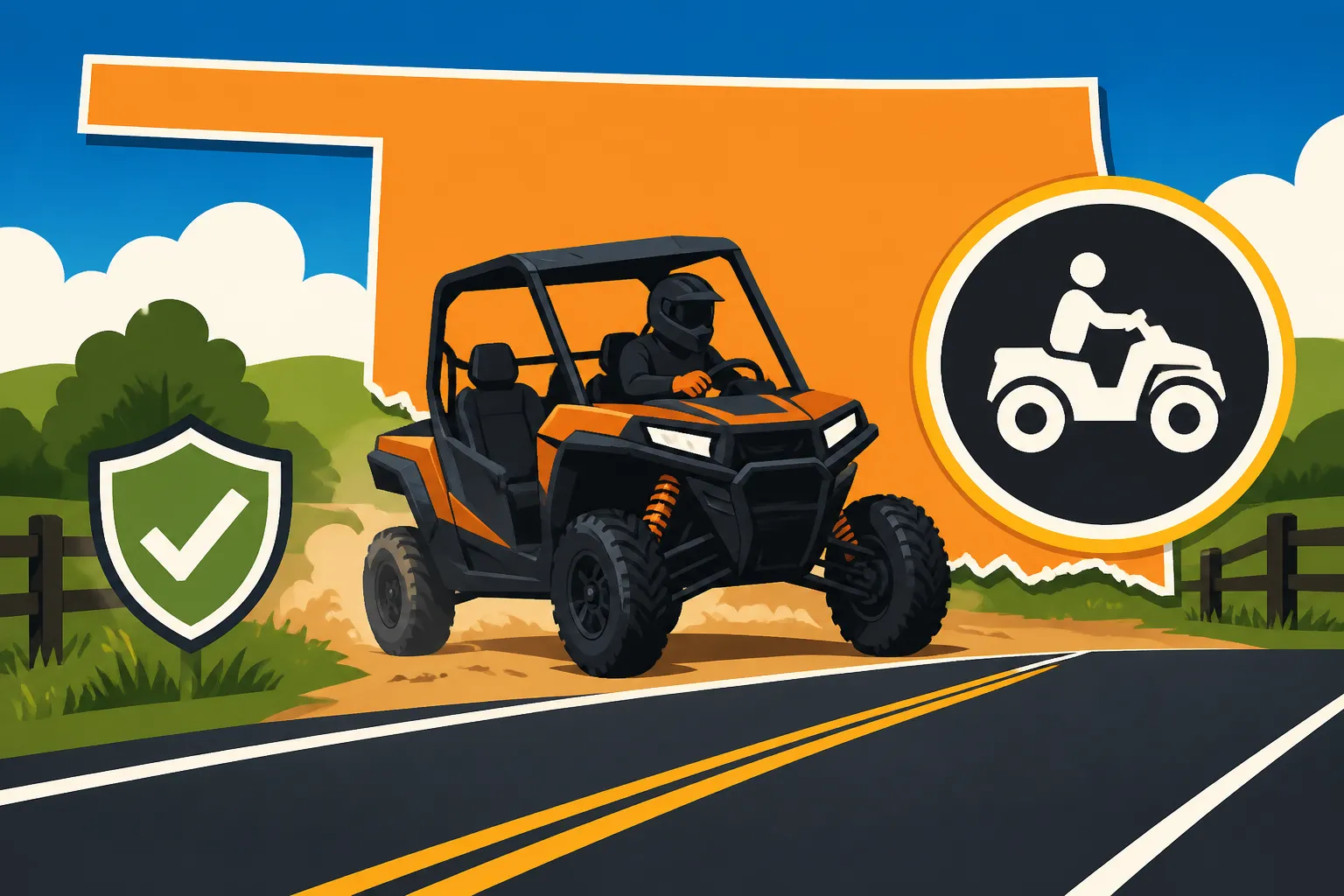
Oklahoma law is pretty clear: you can only cross a public road if the posted speed limit of that road is 35 mph or less. This isn't a suggestion; it's a hard and fast rule. What this means for you, the rider, is that before you even think about putting a tire on the pavement, you need to look for speed limit signs. If that sign says 40 mph, 45 mph, or anything higher than 35 mph, you simply cannot cross that road with an unregistered, off-road ATV or UTV. This applies whether it's a small county road, a state highway, or a city street. This rule is a critical piece of [Oklahoma ATV Road Rules Under 11-1116].
This rule is designed as a safety measure. Roads with higher speed limits generally have faster-moving traffic and often carry greater volumes of vehicles. Introducing a slower-moving ATV or UTV into such an environment, even for a brief crossing, significantly increases the risk of an accident. The 35 mph threshold acts as a buffer, ensuring that crossings only occur where traffic is expected to be moving at a slower, more manageable pace, giving both the ATV rider and other motorists more time to react. It's a pragmatic compromise aimed at balancing agricultural and recreational needs with overall public road safety.
Why 35 mph? The Safety Angle
The choice of 35 mph as the cutoff isn't arbitrary; it's deeply rooted in traffic safety principles. At 35 mph, drivers typically have a greater field of vision and significantly more reaction time compared to roads posted at 55 mph or 65 mph. A vehicle traveling at 35 mph covers about 51 feet per second, while one at 65 mph covers nearly 95 feet per second. That difference in distance and time is enormous when a relatively small, less visible ATV suddenly appears from a ditch or driveway.
Moreover, the difference in kinetic energy between a vehicle traveling at 35 mph versus one at 65 mph is substantial, directly impacting the severity of any potential collision. By limiting crossings to lower-speed roads, the state aims to reduce both the likelihood and the potential impact of accidents involving off-road vehicles. This rule also tends to confine ATV crossings to more rural, less traveled roads, or specific areas within towns where speed limits are naturally lower due to residential areas or commercial zones. It's a way of saying, "If you absolutely must cross, do it where the risk is lowest."
Differentiating Crossing From Riding On a Road
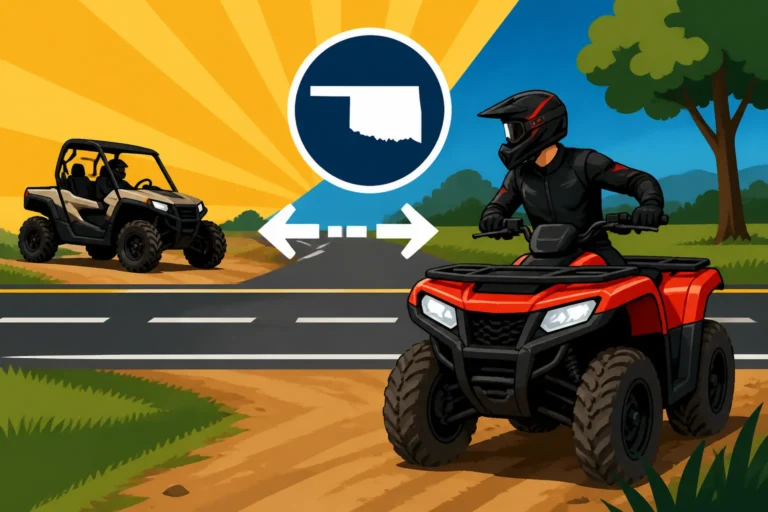
This is a point of frequent misunderstanding that can lead to big headaches for riders. The 35 mph rule specifically refers to crossing a road, not riding on it for any appreciable distance. A crossing implies going directly from one side to the other, as perpendicular to the roadway as safely possible, and then immediately exiting the road. It's not an excuse to drive down the middle of a county road for a mile, even if that road's speed limit is 35 mph or less.
Riding on a public road with an ATV or UTV that isn't street-legal is generally prohibited in Oklahoma, regardless of the speed limit. The "crossing" provision is a narrow exception for essential travel, not a loophole for general road use. Imagine you're riding your quad on private land, and there's a small two-lane county road separating your field from your neighbor's pasture. The road is posted at 30 mph. You can make a quick, safe, straight-across crossing. What you cannot do is turn right, drive half a mile down the road, and then turn off onto the next property. Understanding this distinction is paramount to staying within the bounds of the law and ensuring your safety.
Specific Scenarios: Crossing State Highways, County Roads, and Municipal Streets
The type of road you encounter impacts whether and how you can cross it. While the 35 mph rule is universal, the practical application can differ slightly based on the jurisdiction and typical traffic patterns.
Crossing State Highways: When Is It Possible?
State highways, even those that appear rural and quiet, often have speed limits well above 35 mph. Because of this, [Oklahoma Highway Crossings in Daylight] are generally very restricted for off-road vehicles. It's rare to find a state highway, even in the most sparsely populated areas, where the posted speed limit is 35 mph or less. If you do, it will likely be within a small town or a highly developed area where speed limits are reduced.
If a state highway's speed limit is indeed 35 mph or less, then the crossing rule technically applies. However, even in such a scenario, extreme caution is advised. State highways often carry more traffic, including heavy commercial vehicles, than local county roads. Visibility, traffic volume, and the ability to execute a quick, safe crossing become even more critical. Many riders, even if the speed limit allows, choose to find alternative routes or simply avoid crossing state highways due entirely to the increased risk involved. Safety should always be your top priority, even when the letter of the law permits an action.
Navigating County Road Crossings
County roads are typically where Oklahoma riders have the most flexibility for crossings. Many rural county roads in Oklahoma are posted at 35 mph or even lower, especially those that are gravel or lead to isolated properties. This is where the 35 mph crossing rule truly shines for farmers, ranchers, and recreational riders connecting properties or reaching trailheads. For many, a [Oklahoma Rules for Riding a County Road] means utilizing these short, direct crossings.
When crossing a county road, always approach with extreme caution, checking both directions multiple times for traffic. Even if the road is quiet, assume a vehicle could appear suddenly. Consider using hand signals if appropriate, and make eye contact with any approaching drivers if possible. The goal is to make your presence and intent clear to others. Always cross directly and efficiently; don't linger on the roadway. And remember, while crossing is allowed under the specific speed limit, using a county road as a thoroughfare for your off-road machine is still generally prohibited unless your UTV is fully street-legal or you fall under a specific agricultural exemption for travel on the road.
Crossing Municipal Streets: City Ordinances and the 35 mph Rule
Within city limits, the rules become a bit more layered. While the state's 35 mph crossing rule still applies, municipalities often have their own specific ordinances regarding ATVs and UTVs on city streets. Some cities might explicitly forbid any ATV or UTV presence on streets, regardless of speed limits, unless the machine is street-legal. Other cities might have specific designated routes or exceptions.
It is absolutely crucial to check local city ordinances before attempting to cross any municipal street. A city's rules can supersede or add to state regulations, and what's allowed in one town might get you a ticket in the next. Even if a city street is clearly posted at 25 mph, allowing for a technical crossing under state law, a local ordinance could still prohibit it. This is particularly relevant for those who live on the outskirts of towns or near urban trail systems. Always do your homework; a quick call to the local police department or city hall can save you a lot of trouble and confusion.
Daylight and Visibility Requirements for Crossings
Beyond the speed limit of the road, when and how you cross are equally important considerations for safety and legality. Visibility is paramount, and Oklahoma law often reflects this concern by placing stipulations on the conditions under which crossings are permitted.
The "Daylight Only" Stipulation
For most off-road machines, crossings are restricted to daylight hours only. This is a common safety provision in many states and is directly applicable in Oklahoma for most ATV/UTV road interactions. The reasoning here is straightforward: off-road vehicles, by their nature, often lack the comprehensive lighting systems of street-legal vehicles. Headlights and taillights on an ATV might be sufficient for trail riding, but they typically don't meet the stringent visibility standards required for safe night operation on public roads.
Crossing a road in low light conditions, such as at dawn, dusk, or night, significantly increases the risk of not being seen by other motorists. Even if you have aftermarket lights, the state's general rule aims to reduce the overall risk. This means if you're out hunting or working late and need to cross a 30 mph county road, you might need to reconsider your timing or find an alternative method of transport for your machine. Prioritizing safety by adhering to daylight-only crossing rules is a simple way to avoid accidents and stay within legal boundaries. [Oklahoma Daylight Crossing Rules] are not to be overlooked.
Enhancing Visibility During a Crossing
While crossings are generally limited to daylight, taking steps to enhance your visibility is always a wise decision. Even on a bright, sunny day, an ATV or UTV can be harder to spot than a full-sized vehicle, especially in rural settings with visual obstructions like tall crops, trees, or rolling terrain. Wearing bright, fluorescent clothing (think safety vests in orange or yellow) can make a significant difference.
Beyond apparel, consider adding reflective tape to your machine, particularly on the front, sides, and rear. This is a relatively inexpensive modification that can pay dividends in safety. Some riders even opt for a tall whip flag, like those required at dune parks such as Little Sahara, to increase their profile, even if not strictly mandated for road crossings. While companies like SuperATV offer a wide range of accessories for enhancing visibility, from brighter LED lights to safety flags, the key is to be proactive. Assume other drivers might not see you and take every reasonable precaution to make yourself as conspicuous as possible before, during, and immediately after a crossing.
Equipment Considerations for Safe Road Crossings
Even though you're only crossing a road, certain equipment can dramatically improve your safety and sometimes even ensure compliance with other state laws. While your off-road machine isn't expected to meet full street-legal requirements for a brief crossing, being prepared makes a difference.
Basic Lighting and Reflectors
Your ATV or UTV should, at a minimum, have working headlights and taillights. While the law mandates daylight-only crossings for most machines, having these lights operational is crucial for any low-light situations that might arise unexpectedly, or simply to make you more visible even in bright sunshine. Many off-road machines come equipped with basic lighting from the factory. Ensure these are clean, functional, and properly aimed. For older machines or those used heavily, corrosion or damage can sometimes render lights inoperable, so a quick check before a ride that involves road crossings is a good habit.
Additionally, consider adding reflectors if your machine doesn't have ample ones. Red reflectors on the rear and amber reflectors on the sides can significantly increase your machine's visibility to approaching traffic from different angles. This simple, often inexpensive addition can be a lifesaver, especially on dusty rural roads where your machine might blend into the background. For example, SuperATV offers various lighting and reflector kits that are easy to install and significantly boost your machine's profile. You want to give other drivers every possible chance to see you before you even begin your crossing maneuver.
Mirrors and Turn Signals: While Not Always Required, They Help
For a direct, perpendicular road crossing, traditional turn signals and side mirrors aren't always legally mandated for off-road machines that aren't street-legal. However, their absence highlights a significant safety gap compared to road vehicles. If you frequently find yourself needing to cross roads, or if your machine is also used for a mix of agricultural tasks that might involve brief stints on county roads, investing in these accessories is a smart move.
Aftermarket mirrors, especially a wide rearview mirror, can provide crucial awareness of traffic approaching from behind, allowing you to gauge gaps and make safer crossing decisions. Similarly, adding turn signals, even if they're simple, easily visible LED pods, can clearly communicate your intentions to other drivers. This is particularly helpful in situations where you might need to make a slight adjustment before or after a crossing, or if you're approaching an intersection. While not a strict legal requirement for crossing, equipping your machine with these common-sense safety features can make a big difference in avoiding misunderstandings and potential accidents. [Oklahoma Lighting Rules on a Machine] touch on these important points.
Helmets and Rider Safety Gear
While the 35 mph crossing rule dictates conditions for the machine, rider safety gear is equally, if not more, important. Oklahoma law requires helmets for all ATV and UTV riders under the age of 18. This rule applies universally, whether you're on a trail, private land, or making a brief road crossing. Ignoring this can lead to fines and, more importantly, puts young riders at severe risk. [Oklahoma Helmet Law for Riders Under 18] is unambiguous on this point.
For adult riders, while helmets aren't legally mandated for off-road use, wearing one is always recommended, especially when interacting with public roads. A helmet offers critical protection in the event of a fall or collision, which, even at low speeds, can have severe consequences. Beyond helmets, consider wearing other protective gear like eye protection, gloves, long sleeves, and sturdy footwear. A brief crossing on a public road, even at a low speed, exposes you to potential interactions with faster-moving, heavier vehicles, making personal protection paramount. Don't skimp on safety gear; it's a small investment for your well-being.
Legal Implications and Penalties for Non-Compliance
Breaking the rules, even inadvertently, can lead to more than just a stern warning. Oklahoma has specific penalties for illegal ATV and UTV operation on public roads, and understanding these can help reinforce the importance of following the law.
Fines and Citations for Illegal Road Use
Operating an ATV or UTV on a public road in violation of Oklahoma law can result in a citation and fines. While specific amounts can vary, the financial penalties can quickly add up, especially if you're also found in violation of other statutes, such as not having proper registration (if applicable) or for allowing an underage rider to operate without a helmet. A single incident can easily turn into a costly mistake.
For instance, if you're caught riding your off-road quad down a 45 mph state highway, even for a short distance, you could face a citation for illegal operation on a public roadway. If you were crossing a 50 mph road, that's another violation. These aren't typically minor traffic infractions; they relate to the fundamental legal use of your machine. Enforcement can come from local law enforcement, county sheriffs, or even Oklahoma Highway Patrol troopers, all of whom are familiar with these regulations. Always assume that the rules are being enforced, and act accordingly. Remember, [Oklahoma Penalties Capped at $25] might apply to some violations, but not all, and court costs can add up.
Potential for Impoundment and Other Consequences
Beyond fines, there's always the possibility that law enforcement could impound your ATV or UTV if it's being operated illegally on public roads. This usually happens in more egregious or repeated violations, or if the operation is deemed particularly dangerous. Impoundment means not only paying the fines but also incurring towing and storage fees, which can quickly become a significant financial burden. Getting your machine back can be a complicated and expensive process, often requiring proof of ownership and payment of all outstanding fees.
In addition to impoundment, illegal road use could have implications for your insurance coverage. Most standard ATV/UTV insurance policies are designed for off-road use and may not cover incidents that occur while operating illegally on a public road. This means if you get into an accident while violating road rules, you could be personally liable for damages and injuries, potentially leading to substantial out-of-pocket expenses. The legal consequences serve as a strong reminder that these rules are serious and should be taken seriously by every rider.
The Broader Picture: Street-Legal UTVs vs. Off-Road Machines
It's important to distinguish between the limited crossing rules for off-road machines and the dedicated "street-legal" category that some UTVs now fall into. These are two very different pathways for road access, with distinct requirements and implications.
What Makes a UTV Street-Legal in Oklahoma?
Oklahoma created a specific class for "street-legal" UTVs through legislation. This means that certain UTVs, once properly equipped and registered, can operate on specific public roads just like cars or trucks. This is a game-changer for many riders, offering much broader road access than the limited crossing rules for traditional off-road machines. However, becoming street-legal isn't as simple as slapping on a license plate; it requires a host of modifications and specific registration steps.
To qualify as street-legal, a UTV typically needs features like headlights, taillights, brake lights, turn signals, a horn, a rearview mirror, and sometimes even a windshield and wipers. These are often aftermarket additions, with companies like SuperATV providing comprehensive kits designed to meet these requirements. Once equipped, the UTV must be titled and registered with the state, usually receiving an [Oklahoma Road Plates for a Street-Legal UTV] and an annual decal. The driver must also be at least 16 years old and hold a valid driver's license – no special motorcycle endorsement is needed, but insurance is required. [Oklahoma Street-Legal UTV Class Explained] covers this in detail. This street-legal option opens up many more possibilities for using UTVs for errands, commuting in smaller towns, or connecting vast trail systems, but it comes with a much higher bar for equipment and ongoing costs like annual renewals.
When a Road Plate Replaces Your Off-Road Decal
For a UTV that becomes truly street-legal, its road plate and annual decal replace the need for the typical off-road ATV registration decal. This means you won't have two decals on your machine; the road plate signifies its new legal status for on-road use. This is a crucial distinction, as the off-road decal is primarily for identification and registration within the state's system, but doesn't grant widespread road access.
A street-legal UTV, with its road plate, is then subject to many of the same rules as other motor vehicles on the road, including traffic laws, speed limits, and insurance requirements. It gains access to most public roads, with some notable exceptions, such as interstates and sometimes specific U.S. highways. This contrasts sharply with the off-road machine that relies solely on the 35 mph crossing rule. That machine still wears its single, permanent off-road decal, signifying its limited road privileges. For many, the choice between limited crossings and full street-legal status depends on how frequently and how extensively they need to use public roads. If your needs are truly just a quick hop across a low-speed road, the street-legal route might be overkill. But for those who want more freedom, it's a valuable option.
Practical Tips for Oklahoma Riders Navigating Road Crossings
Even with a firm grasp of the rules, putting them into practice safely requires good judgment and adherence to best practices. Here are some practical tips to ensure your road crossings are as safe and legal as possible.
Always Check the Posted Speed Limit
This is the golden rule for road crossings: always confirm the posted speed limit of the road you intend to cross. Don't guess, don't assume, and don't rely on what you "think" the speed limit usually is. Speed limits can change, especially as you approach towns or specific zones. If you can't clearly see a speed limit sign, or if there's any ambiguity, it's safer to assume the limit is too high and find an alternative. A moment spent double-checking a sign is far better than the consequences of an illegal or unsafe crossing. This is the single most important piece of information you need before making your move.
If you regularly cross the same roads, make it a habit to periodically re-verify the speed limits, especially if there's been recent road construction or changes in the area. What was 35 mph last year could be 45 mph today. This diligence is a small effort that yields significant peace of mind and keeps you on the right side of the law.
Practice Safe Crossing Techniques
When it's time to cross, execute the maneuver with utmost care and efficiency.
- Stop Completely: Before entering the roadway, come to a complete stop. Look left, then right, then left again. Scan for any approaching vehicles, bicycles, or pedestrians.
- Wait for a Clear Gap: Only proceed when there is a clear and safe gap in traffic that allows you to cross the entire width of the road without rushing or impeding other vehicles. Don't try to "beat" oncoming traffic.
- Cross Perpendicularly: Cross the road as close to perpendicular (at a 90-degree angle) as safely possible. This minimizes your time in the roadway and presents the smallest profile to oncoming traffic.
- No Lingering: Once you start your crossing, do so decisively and don't stop in the middle of the road. Get off the pavement as quickly and safely as you can.
These simple steps, while seemingly obvious, are crucial for minimizing risk and demonstrating responsible operation to any law enforcement personnel who might be observing.
Planning Your Route to Minimize Road Interaction
The best way to stay safe and legal when it comes to ATVs and UTVs on roads is to minimize your interaction with them altogether. When planning your ride, whether for recreation or work, try to map out routes that utilize private land, designated trails, or areas where road crossings are absolutely unavoidable and clearly legal.
Explore your options:
- Are there alternative paths through fields or along fence lines that avoid a high-speed road?
- Can you trailer your machine a short distance to avoid a challenging crossing?
- Are there specific trails or properties where [Oklahoma Rules for Riding a Ditch] allows you to bypass a section of road?
Being proactive in route planning can save you from having to make risky crossings and helps ensure a smoother, more enjoyable, and lawful riding experience. Understanding nuances like [Oklahoma Rules for Riding a Section Line] can sometimes provide legal alternatives to traversing paved surfaces directly. This foresight is part of being a responsible and informed rider in Oklahoma.
Disclaimer
This article is for general informational purposes only and does not constitute professional advice. Laws, prices and regulations vary by location and change over time. Consult a qualified professional for guidance on your specific situation.