Carrying Your Registration on a Section Road
You've just loaded up your quad or side-by-side, maybe a cooler, and you're heading out to enjoy some of Oklahoma's wide-open spaces, likely down a dusty section road. It’s easy to get caught up in the excitement of the ride, but have you ever stopped to think about what paperwork you need to have with you? Many riders mistakenly believe that because ATVs and UTVs aren't cars, the same rules don't apply, leading to frustrating roadside stops and unnecessary headaches. This guide will walk you through exactly why and how you should carry your ATV or UTV registration when you're out on Oklahoma's section roads and other public access areas, helping you avoid common pitfalls and ensuring your ride stays smooth.
The Essential Need to Carry Your ATV/UTV Registration in Oklahoma
Let’s be honest, few things can spoil a perfectly good ride faster than a law enforcement officer pulling you over. While you might not always be "on the road" in the traditional sense, navigating Oklahoma's extensive network of section roads often puts you in a gray area where state laws for off-road vehicles intersect with public road rules. A county deputy, state trooper, or even a game warden has every right to inquire about your machine, and that includes asking for proof of ownership and registration.
Think about it from their perspective: they’re seeing an unregistered vehicle on what might be public access land, or at least a road used by the public. They need to ensure the machine isn’t stolen, that it’s legally owned, and that it meets state requirements. It's not about being a killjoy; it's about upholding the law and ensuring everyone's safety and property rights. Without your registration readily available, you're looking at potential delays, a drawn-out conversation, and possibly even a citation if they can’t verify your compliance. We all know how quickly a quick chat can turn into a big hassle when you don't have the right documents.
Oklahoma's ATV and UTV registration system is unique, especially for those of us who appreciate simplicity. Unlike cars that require annual renewal, [Oklahoma ATV Registration You Pay Once] for your off-road machine. This means you won’t get a yearly renewal notice in the mail, which can sometimes make riders forget the importance of having that initial registration proof. However, that "once-and-done" payment doesn't negate the need to prove you've actually paid it and the machine is officially registered. You’ll receive a small paper document and a distinct front decal. [Oklahoma Issues a Front Decal, Not a Plate], which should be clearly visible on the front of your machine. This decal is your most immediate and visible proof of registration.
Imagine this common scenario: You're cruising down a section line, perhaps moving from one hunting lease to another, or simply enjoying the scenery. A county deputy pulls up behind you, lights flashing. Your heart sinks a little, even if you know you haven't done anything wrong. The first thing they'll likely ask for, after your driver's license (if you're operating on a public roadway), is proof of registration for your ATV or UTV. If you have nothing to show them, that brief stop can quickly become an interrogation. It’s far easier to simply hand over your registration card and be on your way than to try and explain why you don't have it. This small piece of paper is the tangible evidence that you've completed your part as a responsible owner, confirming [What Oklahoma's $11 Registration Fee Actually Covers].
What Constitutes Valid Proof of Oklahoma Registration
Okay, so we’ve established that you need to carry something. But what exactly is that "something"? In Oklahoma, your primary proof of registration is the official registration card issued by a tag agency or Service Oklahoma. This is a paper document that lists your name, your machine's Vehicle Identification Number (VIN), and confirms its registration status. This isn’t a title, which is a separate document proving legal ownership. The registration card simply states that the machine has been registered for off-road use within the state.
Along with this paper card, your machine should also prominently display its registration decal. As mentioned, [Oklahoma Issues a Front Decal, Not a Plate], so this decal should be affixed to the front of your ATV or UTV where it's easily visible. This decal acts as a quick visual cue for law enforcement that your machine is, in fact, registered. If the officer spots the decal but you can't produce the corresponding paper card, it might still raise questions, but it's a far better starting point than having neither.
Many people wonder about digital proof in our increasingly paperless world. While a photo of your registration on your phone might satisfy some officers in a pinch, it's generally not considered official documentation. Technology can fail – your phone battery dies, or there's no signal to pull up a document from the cloud. The best practice is always to have the physical paper registration card with you. This eliminates any ambiguity or technical hurdles.
It's also crucial to understand the distinction between proof of registration and proof of ownership. Your registration card shows the machine is registered. Your title, however, is the document that proves you are the legal owner. In some scenarios, like a private landowner questioning who you are or how you came by your machine, showing a bill of sale might also be helpful. For those buying or selling older machines, having a proper [Oklahoma Bills of Sale for Older Machines] can be critical. Tools like LawDepot can be really useful for drafting these kinds of official documents, ensuring they include all the necessary details to protect both buyer and seller. While not your registration, clear ownership paperwork can sometimes help explain things if there are questions about the machine itself. Likewise, if you've filed a [Oklahoma Declaration of Purchase Price], having a copy of that could also support your claims of legal ownership.
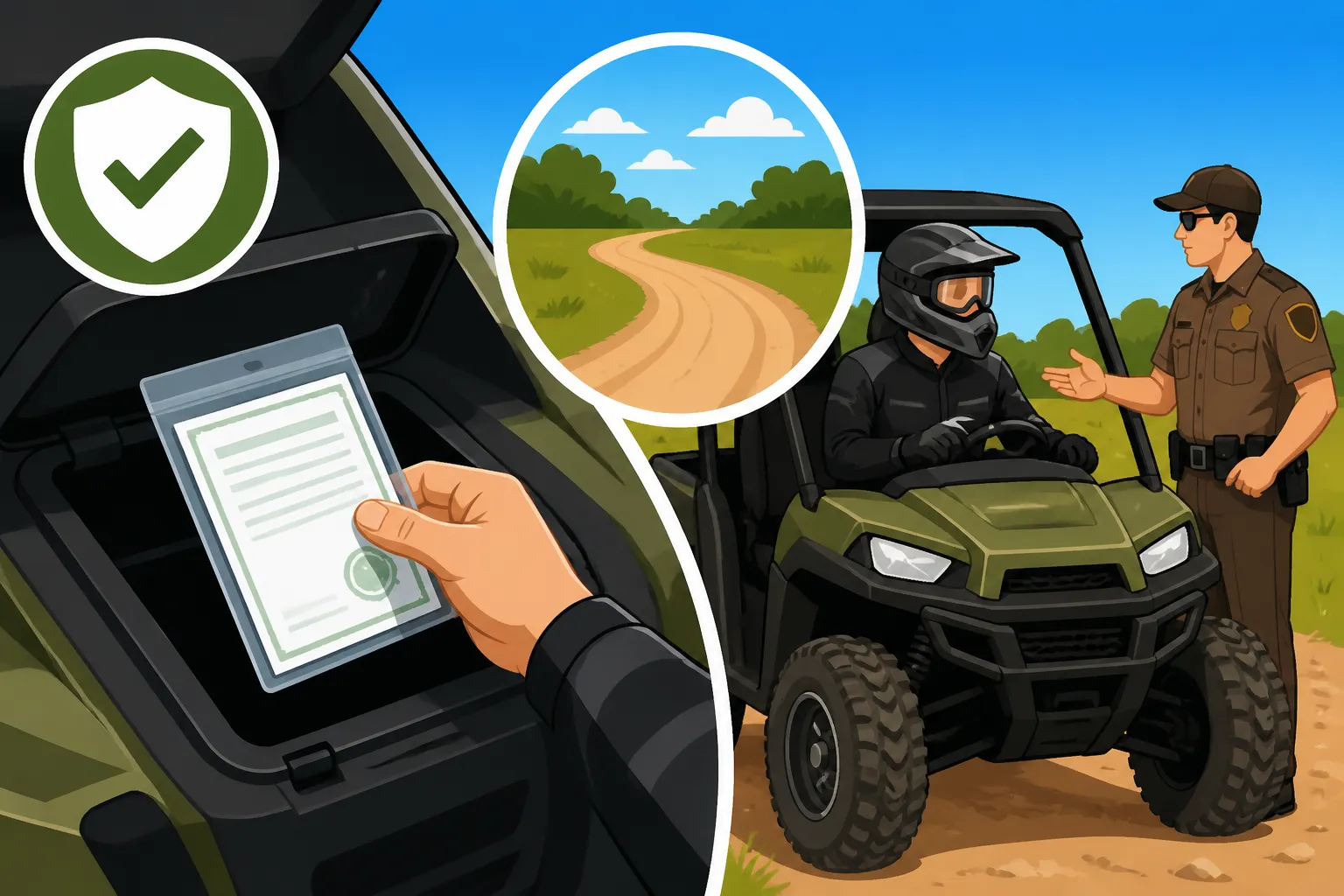
Consider a different scenario: You're pulling your UTV out of a trailer at a public riding area, or maybe just parked near a fishing spot. A game warden approaches, asking to see your paperwork. They're primarily interested in ensuring you're not trespassing and that your machine is legally compliant for use on public lands or while engaged in activities like hunting. Having your registration card handy, coupled with a visible decal, makes this interaction quick and painless. It demonstrates you're a responsible rider, respecting the rules of the land.
Practical Ways to Secure and Carry Your Registration Documents
Now that we know what to carry, let's talk about how to carry it. These documents are small pieces of paper, and off-road riding isn't exactly a clean or gentle activity. Dust, mud, water, and vibrations are all enemies of paper.
Here are some practical tips to keep your registration safe and accessible:
- Waterproof Protection: This is paramount. A small, sturdy waterproof pouch or a zip-top bag is your best friend. You can find these designed specifically for documents, or even use a heavy-duty freezer bag.
- Laminate It (with caution): Some riders choose to laminate their registration card. This offers excellent protection from the elements. However, be aware that official documents sometimes have security features that can be affected by lamination, or some agencies might prefer an original. If you laminate, also carry a high-quality, unlaminated copy, just in case.
- On Your Person: The most secure place for critical documents is often on your person. A waterproof wallet, a chest pouch, or a zippered pocket in your riding jacket can keep the registration close, protected, and less likely to be lost if you part ways with your machine unexpectedly (heaven forbid!).
- On the Machine (Securely): If you prefer to keep it with the machine, choose a secure, lockable, waterproof compartment. Many side-by-sides have glove boxes or under-seat storage. For ATVs, a small dry box strapped to a rack can work. The key is "securely" – you don't want it bouncing out or getting saturated with mud.
- Make Copies: Always keep a digital copy (photo on your phone, scanned PDF in cloud storage) and a physical copy at home. If your original gets lost or damaged on the trail, these copies can expedite getting a replacement. Remember that [Oklahoma Decal Replacement If Lost] is a possibility, so knowing your registration details can help you get a new one.
- Supplementary Documentation: While not required, having a digital or physical copy of your bill of sale or even a printout of a document prepared through a service like LawDepot for other related legal paperwork (like an affidavit of ownership if you bought it without a clear title, which is rarer but happens with older machines) can sometimes help in tricky situations where ownership is questioned alongside registration. It’s about building a comprehensive picture of legitimate ownership.
When thinking about where to store your documents, consider the specific challenges of riding [Oklahoma Rules for Riding a Section Line]. These roads can be smooth gravel, bumpy dirt, or even just two ruts through a field. Your machine is going to vibrate, bounce, and get dirty. Whatever storage method you choose, test its resilience before you rely on it.
Common Scenarios and What to Expect
Understanding what might prompt an officer to ask for your registration can help you be better prepared.
1. Routine Traffic Stops on Public Roads:
If you're riding your ATV or UTV on a county road or public section line, even if it's just for a brief crossing, you're subject to traffic laws. A state trooper or county deputy might pull you over for a variety of reasons – perhaps you were speeding, or your lighting wasn't adequate for the conditions, or maybe they just want to verify your compliance. As [What a State Trooper Can Ask to See] includes your vehicle's registration, having it ready makes the encounter much smoother. They'll likely also check for the front decal.
2. Encounters with Game Wardens on Public Lands:
When you're riding in Wildlife Management Areas (WMAs), state parks like Little Sahara, or other public access lands, game wardens and park rangers have authority. They're often focused on conservation and ensuring permitted activities are being followed. They might ask for your hunting or fishing license, but also for your ATV/UTV registration to ensure legal use of the land. They want to ensure you're not operating an unregistered vehicle or potentially causing damage that an unregistered vehicle can lead to.
3. Interactions with Private Landowners:
This is less about law enforcement and more about courtesy and avoiding trespass issues. If you accidentally wander onto private land or are simply riding near a property line, a landowner might approach you. While they can't demand to see your registration in the same way an officer can, having your official paperwork (including a bill of sale, if relevant, perhaps prepared via LawDepot) can quickly establish your legitimacy as a responsible owner and show you’re not trying to hide anything. It can help de-escalate a potentially tense situation and prove you’re not on someone else’s property with a stolen machine.
4. What to Do if Your Documents Are Lost or Damaged:
Even with the best precautions, accidents happen. If your registration card gets lost or becomes unreadable, you’ll need to apply for a duplicate. Knowing that [Oklahoma Registration Processing Time] can vary, it’s best to address this quickly. While Oklahoma’s ATV registration doesn't expire and [Why Oklahoma Sends No Renewal Notice], having accurate, up-to-date documentation on hand is always your responsibility. You'll generally need your VIN and possibly proof of identification to get a replacement at a tag agency.
Here’s a quick overview of document types and recommended carrying methods:
| Document Type | Purpose | Recommended Carrying Method | Additional Notes |
|---|---|---|---|
| Registration Card | Proof of current registration | Waterproof pouch, on person | Essential for all public access riding. |
| Registration Decal | Visible proof of registration | Affixed to the front of machine | Law enforcement's first visual check. |
| Vehicle Title | Proof of legal ownership | Do NOT carry on person/machine | Keep in a secure location at home. A photo on phone is okay. |
| Bill of Sale | Proof of purchase (private sale) | Waterproof pouch, with reg card | Useful for older machines or if ownership is questioned. |
| Insurance Card | Proof of liability insurance | Waterproof pouch, on person | Not strictly required for all off-road registration, but wise. |
By being prepared and carrying your registration responsibly, you ensure that your adventures on Oklahoma's section roads and trails remain focused on fun, not frustrating paperwork.
Disclaimer
This article is for general informational purposes only and does not constitute professional advice. Laws, prices and regulations vary by location and change over time. Consult a qualified professional for guidance on your specific situation.