What a State Trooper Can Ask to See
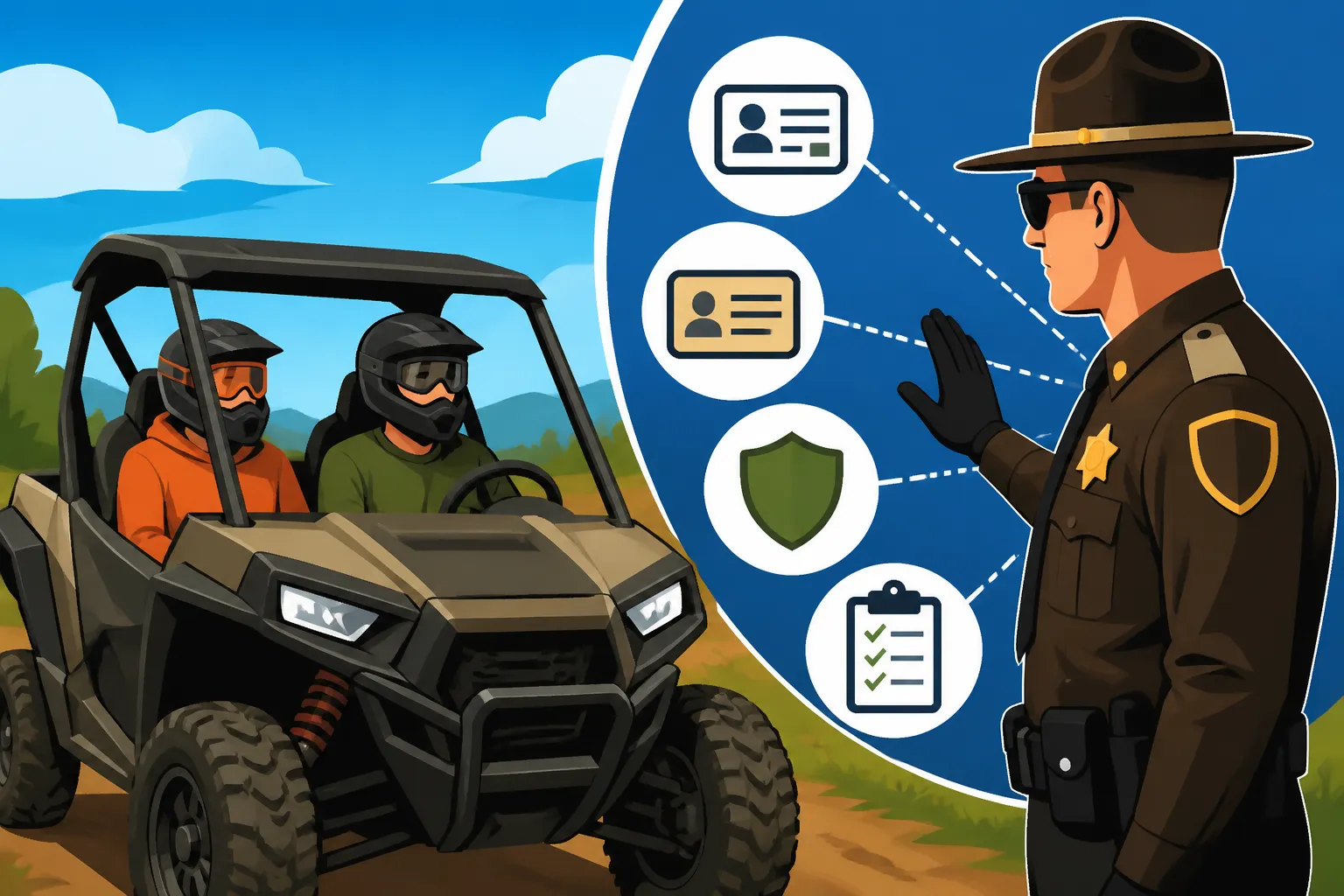
It's an all too common scenario: you're out enjoying a fantastic ride on your ATV or UTV, cruising down a county road (where permitted, of course!), or simply heading from one part of your property to another, and you see flashing lights in your rearview mirror. Your heart sinks a little, even if you know you haven't done anything wrong. The big question often pops into riders' minds: "What exactly can a state trooper or local law enforcement officer ask me to produce?" This guide is here to demystify those encounters, helping you understand precisely what paperwork, identification, and equipment checks an Oklahoma officer is authorized to request, ensuring your ride is as smooth and worry-free as possible.
The Basics: Registration and Decal
When you’re out on your quad or side-by-side, especially if you’re venturing beyond private property onto public roads, trails, or even just crossing a section line, law enforcement officers need to ensure you’re operating your machine legally. Two of the most fundamental things they'll look for relate to your machine's registration status.
Proof of Registration
Just like with a car, Oklahoma law requires ATVs and UTVs to be registered if they are operated on any public land, including roads, highways, or public trails. When a state trooper pulls you over, one of the very first things they'll ask for is proof of this registration. This isn't just a suggestion; it's a legal requirement designed to ensure accountability and track ownership. The proof you receive after registering your machine at a tag agency is usually a small paper document that you should keep readily accessible. Many riders keep a laminated copy in a waterproof bag attached to their machine, or carry it in their wallet. Having this physical proof avoids any doubt or delay.
It's crucial to remember that [Oklahoma ATV Registration You Pay Once]. This means once you register your machine, that's generally it for the lifespan of that specific machine under your ownership. You won't be getting annual renewal notices in the mail. However, that lifetime registration status doesn't exempt you from having to show proof that you actually completed the initial registration process. This unique "pay once" system often surprises new riders or those from other states where annual renewals are the norm. But even though [Oklahoma Registration Never Renews], having that initial proof of registration on hand is non-negotiable when an officer asks for it. It's your official document verifying your machine's legal status for public use.
Displaying Your Decal
Beyond the paper proof of registration, Oklahoma has a very specific visual requirement: a registration decal. This isn't just a sticker; it's a clear indicator that your machine has been properly registered. A state trooper will certainly be looking for this decal before they even approach your machine, as it's the most immediate visual confirmation of compliance. The decal itself is distinct and placement is critical. [Oklahoma Issues a Front Decal, Not a Plate] for ATVs and UTVs, which sets it apart from typical vehicle registrations. You won't have a license plate on the back of your quad or side-by-side, but rather a prominent decal on the front.
This decal must be affixed to the front of your machine in a highly visible location. For most ATVs, this means the front fender or the front rack. For UTVs, it's often on the front hood or a visible part of the front bumper. The idea is that it should be easily seen by an officer approaching from the front. If your decal is obscured by mud, dirt, or accessories, it could lead to an officer stopping you to investigate further. Ensuring your decal is clean, properly affixed, and clearly visible is a simple step that can save you from an unnecessary stop. Knowing [Where the Registration Decal Goes on an ATV] and ensuring it's always in its proper place is part of responsible riding.
Ownership and Identification
Beyond proving your machine is registered, a state trooper needs to verify who owns the machine and who is operating it. This is about ensuring legitimate possession and proper identification of the rider.
Proof of Ownership Title or Bill of Sale
Proving you actually own the ATV or UTV you're riding is just as important as showing it's registered. This is where your machine's title or a valid bill of sale comes into play. If your machine is newer or was bought after Oklahoma's cutoff dates, it absolutely must have a title. [Oklahoma Titles ATVs and UTVs] ensures a clear chain of ownership, similar to cars and trucks. The title document records the Vehicle Identification Number (VIN) and lists you as the legal owner. This is the gold standard for proving ownership, especially for machines bought from dealerships or after the cutoff years.
However, many riders in Oklahoma operate older machines, particularly quads manufactured before July 2005, or UTVs before July 2008. For these machines, a formal title might not exist, or it might have been lost decades ago. In such cases, a detailed and properly executed bill of sale becomes your vital proof of ownership. [Oklahoma Bills of Sale for Older Machines] serve as a legal document transferring ownership from a seller to you. It should clearly list the buyer and seller's information, the sale date, the purchase price, and most importantly, the VIN of the machine. Without a title, a trooper will expect to see a comprehensive bill of sale. If you're creating one, consider using a template from a service like LawDepot to ensure all the necessary legal information is included. The VIN itself is a unique identifier for your machine, and an officer will cross-reference it with your ownership documents and potentially with stolen vehicle databases. Always be prepared to show either your official title or a complete bill of sale to prove legitimate possession of your off-road vehicle.
Your Personal Identification
Operating any vehicle, whether on or off-road, requires you to be identifiable. Just like when driving your car, a state trooper will ask for your personal identification. This typically means a valid driver's license or a state-issued identification card. This is about confirming your identity as the operator of the ATV or UTV.
While the question "Do you need a license for a UTV in Oklahoma?" has specific nuances, especially concerning operation on private land versus public roads, if you are stopped on a public road or in a public riding area, an officer will expect you to be able to identify yourself. This is standard procedure for any law enforcement interaction. Even if you don't need a driver's license to operate an ATV on private property, you will certainly need a valid form of ID if you are in a situation where a trooper might stop you, such as crossing a highway, riding on a county road, or in an OHV park. This proves who you are and helps the officer record the interaction accurately. Make sure your ID is current and readily available.
Age and Safety Requirements
Oklahoma has specific regulations designed to promote safety, particularly for younger riders. A state trooper will be observant of these rules, and if they pull you over, they may inquire about the age of the operator and ensure proper safety gear is being used.
Helmet Law Compliance
Safety is paramount, and Oklahoma has a clear stance on helmet use for younger riders. If you or someone in your riding party is under a certain age, a helmet is not optional. A state trooper will absolutely be checking for compliance with this rule. [Oklahoma Helmet Law for Riders Under 18] is pretty straightforward: if you're operating or riding as a passenger on an ATV or UTV and you are under eighteen years of age, you must wear a safety helmet. This isn't just a suggestion; it's a legal requirement.
When an officer stops you, they'll look to see if any minors are wearing helmets. They might also ask for proof of age for younger riders if there's any doubt. The helmet must meet certain safety standards, generally recognized as those approved by the Department of Transportation (DOT). It's not enough to just wear any hat; it has to be a legitimate safety helmet. This law is in place to protect the most vulnerable riders, and officers take it seriously. Ensuring all riders under 18 are properly helmeted can prevent serious injuries and keep you from receiving a citation.
Age Restrictions for Operators
Beyond helmets, Oklahoma also has age guidelines for who can operate an ATV or UTV, especially in different contexts. While children can certainly ride youth-sized ATVs under parental supervision on private land, these rules change significantly when you venture onto public areas or roads. [Oklahoma ATV Age Requirements] dictate that generally, you must be at least 16 years old to operate an ATV or UTV on public roads or in public riding areas without direct adult supervision. For street-legal UTVs, the operator must be at least 16 and hold a valid driver's license.
If a trooper observes a very young operator on public land, they might stop you to verify the rider's age and ensure they meet the legal requirements for that specific location and machine type. They may ask for identification to confirm age or speak with a parent or guardian if present. These rules are in place not to spoil fun, but to ensure that operators have the maturity, strength, and experience to safely handle these powerful machines, especially where they might interact with other traffic or varying terrain. Understanding these age requirements is essential for family outings and group rides to ensure everyone stays within the bounds of the law.
Special Circumstances: Road Use and Agricultural Permits
Not all ATV/UTV riding is the same, and Oklahoma law reflects this by having specific provisions for certain types of use. If you're operating your machine in these particular ways, a state trooper will be looking for additional documentation or proof of eligibility.
Street-Legal UTV Documentation
The ability to make a UTV "street legal" in Oklahoma has opened up new avenues for riders, but it also comes with added responsibilities and documentation. If you've gone through the process to get a road plate for your UTV and you're operating it on public roads, you're essentially driving it like a car in many respects. When a state trooper pulls you over, they'll expect to see all the documentation associated with a street-legal vehicle. [Oklahoma's Street-Legal UTV Class Explained] details this special category of off-road machines.
This means you'll need:
- Proof of Registration for Road Use: This is separate from the standard ATV/UTV registration and will involve an annual renewal and a different type of decal or plate.
- Proof of Insurance: Just like a car, a street-legal UTV must carry liability insurance. The officer will ask for proof of this coverage.
- Your Driver's License: You must possess a valid driver's license to operate a street-legal UTV on public roads. There's no special endorsement needed, but a standard Class D driver's license is required.
- Proof of Equipment Compliance: While they might not conduct a full inspection on the spot, an officer can visually verify that your UTV meets the required equipment standards for street legality (headlights, taillights, brake lights, turn signals, mirrors, horn, etc.).
Essentially, if you're using your UTV on the road, an officer will treat it much like any other vehicle in terms of what they expect to see. Being prepared with all of these documents is crucial. Make sure you understand [Oklahoma Street UTV Requirements] before you hit the blacktop.
Agricultural Permit Exemptions
For those who use their ATVs or UTVs primarily for agricultural purposes, Oklahoma offers some specific exemptions, particularly regarding excise tax. While the general rule is that you still need to register your machine for public land use, an agricultural permit can play a role in what a trooper might check or what fees you've paid. [Oklahoma Agricultural Permit Exemptions] were primarily designed to ease the financial burden on farmers and ranchers.
Historically, these permits sometimes exempted machines from certain registration requirements or fees if they were used exclusively on private agricultural land. However, the laws have evolved. Today, the most significant benefit of an ag permit is that [Farm Permits Still Save You the Excise Tax] when you purchase a new machine. This doesn't necessarily mean a trooper will ask to see your agricultural permit as a primary document for public road use. Instead, if there's any question about why your machine might not have certain documentation, or if you're operating it specifically in an agricultural context on county roads as an "instrument of husbandry," the permit could be relevant. An officer might inquire about the nature of your use if it seems to fall into an agricultural exemption category. It's always wise to understand the specific limitations and benefits of your agricultural permit and have relevant documentation if your riding situation often involves farm or ranch work on public access ways.
Here's a quick summary of what a state trooper might ask to see:
| Document/Item | Primary Purpose | When It's Needed | What It Looks Like |
|---|---|---|---|
| Proof of Registration | Verifies machine is registered for public use. | Riding on any public land (roads, trails, parks). | Paper document from tag agency. |
| Registration Decal | Visual proof of registration. | Affixed to the front of the machine, visible. | Small sticker, usually on front fender/hood. |
| Title | Legal proof of ownership (for newer machines). | For machines bought after specific cutoff dates. | Official state document listing VIN and owner. |
| Bill of Sale | Legal proof of ownership (for older machines). | For machines without titles (pre-2005 ATV, pre-2008 UTV). | Detailed document with buyer, seller, VIN, price. |
| Driver's License/ID | Identifies the operator. | Any time operating on public land. | State-issued driver's license or ID card. |
| Helmet | Safety compliance. | For all riders/passengers under 18. | DOT-approved safety helmet. |
| Street-Legal UTV Plate | Road-use registration. | Operating a street-legal UTV on public roads. | Annual license plate/decal, usually on the rear. |
| Street-Legal UTV Ins. | Financial responsibility for road use. | Operating a street-legal UTV on public roads. | Insurance ID card or policy document. |
| Agricultural Permit | Eligibility for excise tax exemption. | Primarily at time of purchase, sometimes for specific farm use on roads. | Document proving farm/ranch status. |
Riding ATVs and UTVs in Oklahoma is an absolute blast, offering incredible opportunities to explore our beautiful state. Being prepared for a routine stop by a state trooper is just part of being a responsible rider. By understanding what documents and items you need to have ready, you can ensure that any interaction with law enforcement is quick, polite, and allows you to get back to enjoying your ride. Always keep your documents safe, clean, and accessible, and ride safely and respectfully on all Oklahoma lands.
Disclaimer
This article is for general informational purposes only and does not constitute professional advice. Laws, prices and regulations vary by location and change over time. Consult a qualified professional for guidance on your specific situation.