Insuring an Off-Road Machine That Has No Plate
It’s a common worry among Oklahoma ATV and UTV owners: "My machine doesn't have a street-legal plate, so how can I possibly insure it?" This question often comes from a place of genuine concern about protecting a significant investment and, more importantly, protecting yourself from potential financial disaster. The good news is, you absolutely can and should insure your off-road machine, even without that road plate. This guide will walk you through the ins and outs of getting proper coverage, explaining why this myth persists, what options are available, and how off-road insurance truly works in the Sooner State.
Why the "No Plate, No Insurance" Myth Persists in Oklahoma
Let's face it, when we think of vehicle insurance, our minds often jump straight to cars, trucks, and motorcycles – machines that require a license plate to be on the public roads. This ingrained association leads many off-road enthusiasts to mistakenly believe that if their ATV or UTV isn't street-legal, it can't be insured. It’s a completely understandable leap, given how vehicle registration and insurance are typically tied together in our everyday lives. However, off-road machines operate under a different set of rules when it comes to coverage, and separating the concepts of road-legal plates from insurable assets is crucial.
The Road Plate vs. Off-Road Decal Distinction
In Oklahoma, you might have heard about street-legal UTVs that can get an actual license plate for road use. This is a relatively new development that allows certain side-by-sides to legally drive on designated public roads, much like a car or truck. These street-legal UTVs certainly need insurance, just like any other road-going vehicle, and their insurance policies often resemble auto policies, sometimes even including liability for on-road incidents. [Oklahoma Street-Legal UTV Class Explained] delves into the specifics of this.
However, the vast majority of ATVs and UTVs in Oklahoma are purely off-road machines. They don't qualify for a road plate and instead get a registration decal that attaches to the front of the machine. [Oklahoma Issues a Front Decal, Not a Plate] explains this process. This decal simply shows that you've paid the one-time registration fee and your machine is on record with the state for off-highway use. It’s not about road legality; it’s about state recognition for recreational or agricultural purposes. The key takeaway here is that the presence, or absence, of a road plate doesn't dictate whether a vehicle is insurable. It only dictates where it can legally operate and, consequently, the type of risks the insurance needs to cover.
How Vehicle Insurance Traditionally Works
Think about how car insurance functions. It primarily covers risks associated with driving on public roads: collisions with other vehicles, hitting a pole, or causing injury to another person in traffic. Because these risks are so pervasive and potentially costly, states mandate liability insurance for all road-legal vehicles. This creates a strong link in people's minds between a vehicle being "legal" (having a plate) and being "insurable."
For off-road machines, the risks are different. While collisions still happen, they're often with trees, rocks, or other off-road machines rather than passenger cars at an intersection. Theft, fire, or damage while hunting or ranching are also major concerns. Insurance companies, being experts in risk assessment, have developed specific policies tailored to these unique off-road scenarios. They understand that an ATV isn't a car, and its coverage needs to reflect its typical operating environment – whether that's the sandy dunes of Little Sahara, the rugged trails of Robbers Cave, or the sprawling fields of a working farm. They don't look for a "plate" in the same way; they look at the vehicle type and its intended use.
Understanding Off-Road Insurance Coverage Options
Just like with your car, there are various types of coverage available for your ATV or UTV. Knowing what each covers will help you make an informed decision and ensure you're protected from the most common (and costly) off-road misfortunes. Don't assume that just because your machine doesn't have a plate, the insurance options are limited. In fact, you'll find a robust array of choices designed specifically for the off-road lifestyle.
Liability Coverage for ATVs and UTVs
This is arguably the most crucial type of coverage, even if your machine never touches a public road. Liability insurance protects you financially if you cause an accident that injures another person or damages their property. Imagine you're riding at [Little Sahara State Park in Oklahoma] and accidentally collide with another rider's brand-new side-by-side, or perhaps you lose control on a trail at Cross Bar Ranch and take out a section of fence. Without liability coverage, you'd be personally responsible for those repair bills or medical expenses, which can quickly add up to thousands of dollars.
Many state parks and private riding areas require proof of liability insurance to enter, recognizing the inherent risks of shared riding spaces. Even if you only ride on your own private land, liability can be invaluable. What if a guest rider on your property gets injured due to an incident involving your machine? While specific circumstances and waivers play a role, having liability coverage can offer a critical layer of protection. It truly is about protecting your assets from claims made by others, regardless of whether you have a road plate. LawDepot, for instance, provides templates for liability waivers for guests, but genuine insurance remains the primary safeguard for financial risk.
Protecting Your Machine: Comprehensive and Collision
Beyond protecting others, you'll want to protect your own investment. ATVs and UTVs are not cheap, and they can be just as susceptible to damage, theft, or natural disasters as any other vehicle. This is where collision and comprehensive coverages come into play, offering financial peace of mind.
- Collision Coverage: This pays for damage to your ATV or UTV if it's involved in an accident, regardless of who was at fault. Whether you misjudge a turn and hit a tree, roll your side-by-side on a steep incline, or have a minor fender-bender with another machine, collision coverage helps cover the repair or replacement costs (minus your deductible). For many riders, especially those who frequently tackle challenging terrain, this coverage is non-negotiable.
- Comprehensive Coverage: This is your safety net for non-collision incidents. Think about events like theft – a very real concern for valuable off-road machines stored in garages, sheds, or even out in a pasture. [Does Comprehensive Cover a Quad Stolen From a Barn?] addresses this directly. Comprehensive also covers damage from fire, vandalism, falling objects (like a tree limb), hail, floods, or even hitting an animal. If you wake up to find your UTV submerged after a heavy rain or discover it's been pilfered from your hunting camp, comprehensive coverage is what will help you recover financially. These coverages are not dependent on a road plate; they are about insuring a valuable piece of property against a range of predictable risks.
Additional Coverages to Consider
While liability, collision, and comprehensive are the core pillars, several other coverages might be worth exploring for your specific needs:
- Uninsured/Underinsured Motorist: If you're involved in an accident with another off-road machine and the at-fault rider either doesn't have insurance or doesn't have enough to cover your damages, this coverage can help. It essentially steps in to pay what the other party cannot.
- Medical Payments/Personal Injury Protection (PIP): This helps cover medical expenses for you and your passengers, regardless of fault, if injured in an ATV/UTV accident. Even with health insurance, this can fill gaps, cover deductibles, or provide immediate funds for treatment.
- Accessory and Custom Parts Coverage: Many off-road enthusiasts spend significant money on upgrades like winches, light bars, custom tires, lift kits, or GPS units. Standard policies might only cover factory equipment. Make sure to discuss [Insuring the Winch and Accessories You Added Later] with your agent to ensure these valuable additions are protected.
- Roadside Assistance: While less common for purely off-road machines, some policies offer towing or recovery services if your machine breaks down far from your truck or trailer. This could be a lifesaver if you're deep in a WMA.
- Trailer Coverage: If you haul your ATV or UTV on a trailer, consider if your auto policy extends to the trailer itself or if you need separate coverage, especially if it's a dedicated enclosed trailer.
Understanding these options is key to building a policy that truly protects you and your machine. Don't hesitate to ask your agent for a detailed breakdown of [Oklahoma ATV Insurance Costs] for various levels of coverage.
Finding the Right Policy for Your Unplated Machine
The idea of insuring a vehicle without a traditional "plate" can feel a bit like uncharted territory, but it’s a well-established practice within the insurance industry. The trick is knowing where to look and what questions to ask to ensure you get a policy that truly understands the unique risks associated with off-road riding in Oklahoma.
Insurance Providers That Understand Off-Road Risks
You might be surprised to learn that many of the big-name insurance companies you already know and trust for your car or home also offer specialized ATV and UTV insurance policies. Companies like Progressive, GEICO, Allstate, State Farm, and others have dedicated divisions or specific products designed for off-road vehicles. Beyond these, there are also specialty insurers that focus exclusively on powersports vehicles, which might offer even more tailored coverage options.
The important thing is to be clear with your agent or when filling out an online quote that you are looking to insure an off-road vehicle (ATV, UTV, dirt bike, etc.) that will not be street-legal. They are very familiar with this concept. In fact, the majority of ATVs and UTVs they insure don't have road plates. They understand that the risks are different from driving a car, and their policies are structured accordingly. Don't let the absence of a road plate deter you from seeking out comprehensive protection.
Key Information Needed for a Quote
When you're ready to get a quote, having the right information handy will make the process smooth and accurate. Just like with any other vehicle, the insurer will need specific details about your machine and how you plan to use it:
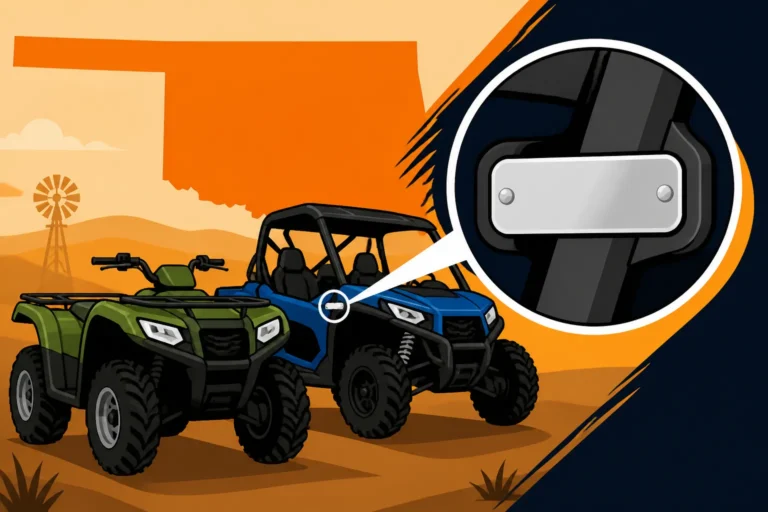
- Vehicle Identification Number (VIN): This is crucial. Every ATV and UTV has a unique VIN, usually found on the frame. This helps the insurer identify the exact make, model, and year of your machine. [Reading the VIN Plate on a Pre-2005 Machine] can help locate it.
- Make, Model, and Year: For example, a 2023 Polaris Ranger XP 1000 or a 2018 Honda Foreman Rubicon.
- Intended Use: Will you be using it primarily for recreation (dune riding, trail riding), farm work (hauling feed, checking fences), hunting, or a mix of activities? This affects the risk profile. [Oklahoma Registration for a Farm Machine] is a good example of specific use cases.
- Primary Riding Locations: Do you frequent state parks like Little Sahara, private riding parks, or mostly stick to your own property or [Oklahoma Farm Use on County Roads]?
- Storage Location: Where is the machine typically stored when not in use (e.g., locked garage, open shed, outdoors)? This impacts theft risk.
- Modifications and Accessories: Any significant aftermarket parts or accessories (winches, plow kits, custom cages, performance upgrades) should be noted, especially if you want them covered.
- Rider Information: Details about the primary operator and any other regular riders (age, driving record, safety course completion).
- No Odometer Reading: Don't worry if your ATV or UTV doesn't have an odometer; many off-road machines only track engine hours, and insurers are used to this. [Oklahoma Has No Odometer Rule for ATVs] confirms this.
Providing accurate and complete information ensures you get a fair quote and that your policy will cover you when you need it most.
Reading the Fine Print: Exclusions and Limitations
Just like any insurance policy, off-road ATV/UTV insurance comes with specific terms, conditions, exclusions, and limitations. It's incredibly important to read these carefully or have your agent explain them in detail before you commit.
Common exclusions might include:
- Racing or Stunt Use: Policies often won't cover damage or injury sustained during organized racing events or extreme stunt riding.
- Illegal Activities: If you're involved in an accident while committing an illegal act, your coverage will likely be void.
- Commercial Use: If you're using your ATV/UTV for business purposes (e.g., guiding tours, landscaping for hire) and your policy isn't specifically endorsed for commercial use, you might not be covered. This is particularly relevant if you're a small business owner. In such cases, you might even consider using a service like LawDepot to draft specific contracts or agreements related to commercial operations or liability waivers for employees.
- Unlicensed Operators: If someone without a valid driver's license (or a minor operating against park rules) is driving your machine when an accident occurs, coverage could be denied.
- International Use: Policies are typically restricted to the United States (or specific territories) and won't cover incidents outside those geographic boundaries.
Pay close attention to your deductible (the amount you pay out-of-pocket before insurance kicks in) and your coverage limits (the maximum amount the insurance company will pay for a claim). Understanding these elements is crucial for managing your financial exposure. The good news is that the lack of a road plate does not typically lead to automatic exclusions; rather, it's the manner and location of use that can affect coverage. Always clarify any uncertainties with your agent to ensure your policy aligns with your riding habits.
Real-World Scenarios: When Off-Road Insurance Kicks In
Sometimes it helps to think through hypothetical situations to truly grasp the value of off-road insurance. These real-world scenarios illustrate how different types of coverage can save you from significant financial headaches, whether your machine has a road plate or not.
Accidents on Public Riding Areas
Imagine a beautiful Saturday at [Robbers Cave OHV Area in Oklahoma], you're enjoying the challenging trails, and suddenly, you misjudge a turn. Your UTV swerves and clips another rider's quad, causing significant damage to both machines. The other rider is shaken but not seriously hurt, though their ATV needs a new front end.
- Without Insurance: You would be staring down potentially thousands of dollars in repair costs for the other rider's machine, plus your own. If they decided to pursue a personal injury claim, even for minor injuries, that could escalate quickly.
- With Liability Coverage: Your liability insurance would step in to cover the damage to the other rider's ATV and any medical expenses for their minor injuries, up to your policy limits. This protects your personal savings and assets.
- With Collision Coverage (for your machine): Your collision coverage would then pay for the repairs to your UTV, after your deductible. You're back on the trails without emptying your wallet.
This is a classic scenario where off-road insurance proves its worth. These incidents can happen to even the most experienced riders, and having the right coverage turns a major financial setback into a manageable deductible.
Theft or Damage on Private Property
Let's consider a different kind of incident. You keep your prized hunting quad, a substantial investment, in a barn on your rural Oklahoma property. One morning, you go out to get it ready for a trip to Honobia Creek WMA, only to discover the barn door pried open and your ATV gone. Or perhaps a severe hailstorm rolls through, leaving your UTV with a shattered windshield and dented body panels while it was parked outside on your ranch.
- Without Insurance: The theft of your ATV would mean a total loss, leaving you to absorb the entire cost of replacement. The hailstorm damage would also come directly out of your pocket.
- With Comprehensive Coverage: This is where comprehensive coverage shines. It would cover the loss of your ATV due to theft, paying you the actual cash value or replacement cost (depending on your policy) after your deductible. Similarly, the damage from the hailstorm would be covered, allowing you to repair your machine without a massive financial burden. [Does Comprehensive Cover a Quad Stolen From a Barn?] highlights just how vital this protection is for such a valuable asset. Make sure you keep records and photos of your machine and any modifications; this can be invaluable for claims.
Riding on Farm or Ranch Land
Many Oklahoma residents own ATVs and UTVs primarily for utility purposes on their farms or ranches. These machines are workhorses, used for everything from hauling tools and feed to checking livestock and fences. [Oklahoma Farm Use on County Roads] is a common scenario, though even on private land, accidents are a possibility. What if your UTV, while moving hay bales, accidentally backs into a critical piece of farm equipment, causing damage? Or, an employee or visitor using the machine sustains an injury?
- Without Insurance: You'd be responsible for repairing the damaged farm equipment, which could be very expensive. If an employee or guest was injured, you could face medical bills or a lawsuit, potentially jeopardizing your farm's financial stability.
- With Liability Coverage: Your ATV/UTV liability coverage would protect you from claims related to property damage or bodily injury to others caused by your machine, even on your own land. This is particularly important for those operating commercial farms or ranches where multiple people might be around or using the equipment. When considering liability for guests or employees on your property, resources like LawDepot can assist in drafting appropriate waivers or usage agreements, but robust insurance is your ultimate financial safeguard.
These examples clearly demonstrate that off-road insurance is not a luxury, but a necessity, regardless of whether your machine qualifies for a street-legal plate. It's about smart financial planning and protecting yourself, your passengers, your machine, and your peace of mind.
| Coverage Type | What It Protects | Common Scenarios | Key Benefit |
|---|---|---|---|
| Liability | Others' property & injuries | Collision with another ATV, hitting a fence, injuring a bystander | Protects your assets from claims by others. |
| Collision | Your ATV/UTV from accident damage | Rolling your machine, hitting a tree, colliding with another off-road vehicle | Covers repair/replacement costs for your machine after an accident. |
| Comprehensive | Your ATV/UTV from non-collision damage & theft | Theft from barn, fire, vandalism, hail damage, hitting an animal | Protects against a wide range of non-accident perils. |
| Medical Payments | Your & passengers' medical expenses | Any accident causing injury, regardless of fault | Helps cover immediate medical costs for injuries. |
| Accessory/Custom | Aftermarket parts & modifications | Damage to a winch, custom wheels, light bar in an accident or theft | Ensures value of upgrades is covered beyond factory parts. |
| Uninsured Motorist | Your damages if other party lacks insurance | Another rider hits you and has no insurance to cover your repairs/injuries | Protects you if the at-fault party can't pay. |
Disclaimer
This article is for general informational purposes only and does not constitute professional advice. Laws, prices and regulations vary by location and change over time. Consult a qualified professional for guidance on your specific situation.