Hauling a Machine to a Dune Park
There's nothing quite like the thrill of planning a weekend getaway to Oklahoma's incredible dune parks or expansive trail systems. But before you can feel the sand beneath your tires or navigate those winding wooded paths, you've got to get your precious ATV or UTV there safely. The process of hauling your off-road machine can feel like a daunting task, filled with worries about secure loading, road hazards, and having all your ducks in a row for park entry. This comprehensive guide is here to walk you through every step, ensuring your journey to adventure is as smooth as your ride will be.
The Logistics of Transporting Your ATV or UTV to Oklahoma's Dune Parks
Getting your ATV or UTV from your garage to a place like Little Sahara State Park isn't just about throwing it on a trailer and hitting the road. It requires careful planning and the right equipment to ensure both your machine and other road users stay safe. The journey itself is part of the adventure, and starting it off right makes all the difference.
Choosing the Right Trailer for Your Ride
The first big decision is what kind of trailer you'll use. You have a few main options, and each comes with its own set of pros and cons.
An open utility trailer is probably the most common choice. These are generally more affordable, lighter, and easier to maneuver, especially if you're only hauling one or two machines. They come in various sizes, from single-axle units perfect for a quad to larger tandem-axle trailers that can handle a full-size side-by-side or multiple ATVs. The key here is to ensure the trailer's weight capacity is well above the combined weight of your machine(s) and any gear you're bringing. You also need enough deck space so your machine fits comfortably without overhanging, and ideally, enough room to allow for proper weight distribution over the trailer axles. Open trailers mean your machine is exposed to the elements and road grime, so consider a cover if that's a concern.
Enclosed trailers, on the other hand, offer superior protection from weather, road debris, and even curious eyes at rest stops. They also provide secure storage for your gear, tools, and riding apparel. However, they are significantly heavier, more expensive, and can be trickier to tow, especially in crosswinds. They also require a more capable tow vehicle. If you're hauling multiple machines or frequently travel long distances, an enclosed trailer can be a fantastic investment. Just remember to factor in the added weight when calculating your tow vehicle's capacity.
Finally, consider specialized ATV/UTV trailers. These are often designed with specific features like drive-on/drive-off ramps, multiple tie-down points, and even integrated fuel storage. While often pricier, they can make loading and unloading a breeze and are built to handle the unique demands of off-road vehicle transport. No matter which type you choose, make sure it has proper working lights, good tires, and a sturdy hitch for the journey ahead.
Essential Pre-Trip Checks for Your Trailer and Tow Vehicle
Before you even think about loading your machine, dedicate some time to a thorough inspection of your trailer and tow vehicle. Skipping these steps can lead to frustrating delays, costly repairs, or even dangerous situations on the road.
Start with your tow vehicle. Check all fluid levels: engine oil, transmission fluid, coolant, and brake fluid. Ensure your tires, including the spare, are properly inflated to the manufacturer's recommended pressures for towing. Inspect your brake pads for wear and test all lights – headlights, tail lights, turn signals, and brake lights – to make sure they're functioning correctly. If you have an integrated trailer brake controller, test that it's working properly before you hit the highway.
Next, move to the trailer. The tires are paramount; inspect them for proper inflation, tread wear, and any signs of cracking or bulging. Don't forget the trailer's spare tire! Check all trailer lights – running lights, brake lights, and turn signals. If your trailer has electric brakes, ensure they're functioning. Lubricate the hitch coupler and check the safety chains, ensuring they're properly crossed under the coupler and securely attached to your tow vehicle. Inspect all structural components of the trailer for cracks, bends, or loose fasteners. Finally, make sure any ramps are clean and securely stowed to prevent them from bouncing or detaching during transit.
Taking the time for these checks might seem like a chore, but it's a small investment compared to the headache of a roadside breakdown or, worse, an accident.
Securing Your Machine for the Journey: It's More Than Just a Strap
Once your trailer and tow vehicle are road-ready, the next critical step is securing your ATV or UTV. Many riders underestimate the forces at play during transport, leading to machines shifting, straps loosening, or even falling off the trailer. Proper securing isn't just about preventing theft; it's about ensuring your machine stays put, even through sudden stops, bumps, or evasive maneuvers.
Proper Tie-Down Techniques and Equipment
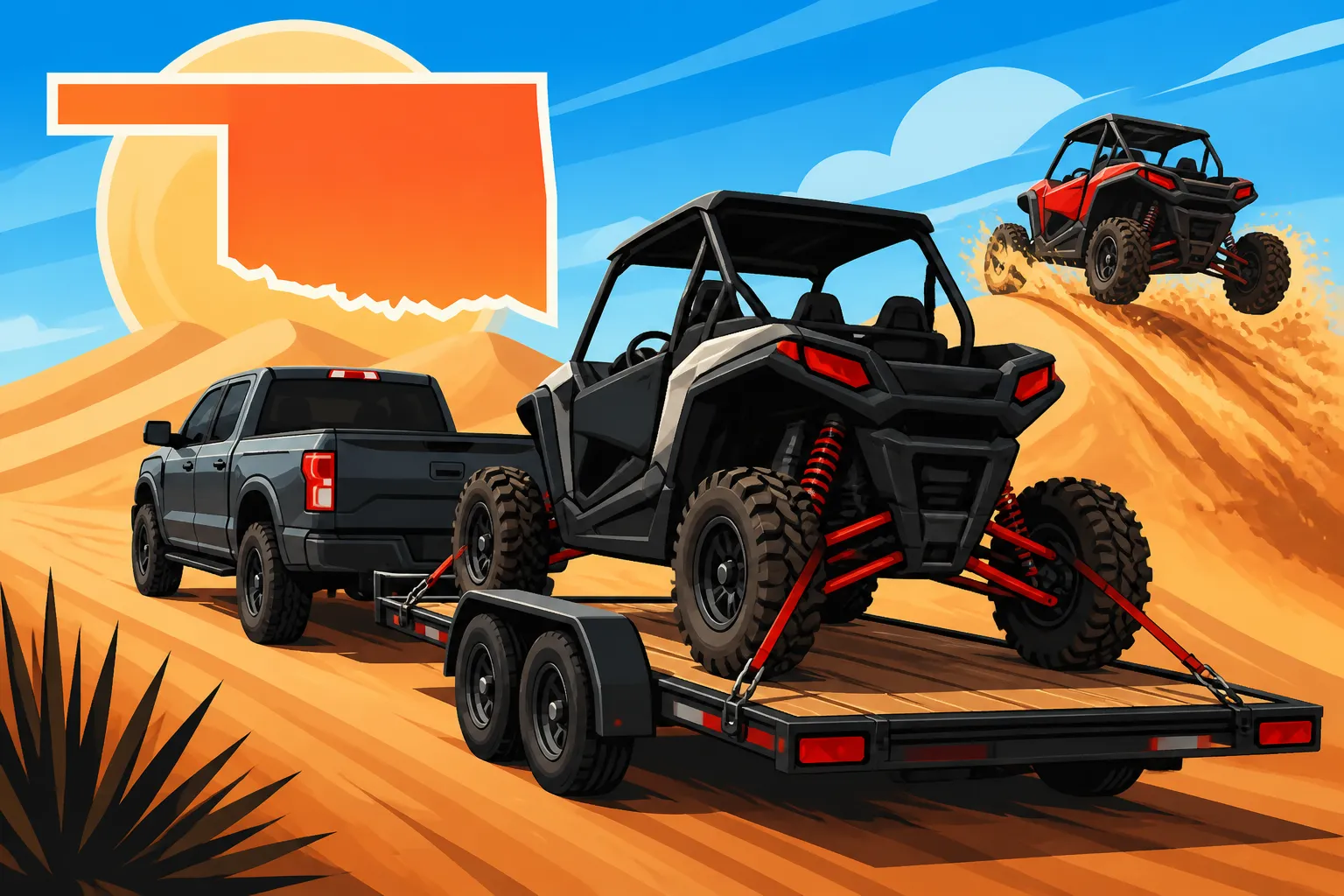
The golden rule for tie-downs is simple: use more than you think you need, and ensure they are rated for the job. For most ATVs and UTVs, you'll want at least four sturdy ratchet straps, one for each corner, pulling down and slightly outward.
Here’s a breakdown of effective techniques:
- Compression is Key: You want to compress the machine's suspension slightly. This prevents the machine from bouncing and slackening the straps. Don't over-tighten to the point of damaging components, but make sure there's firm downward pressure.
- Anchor Points Matter: Attach your straps to strong, structural points on your ATV or UTV, such as the frame, A-arms, or sturdy bumper points. Avoid plastic bodywork, handlebars, or anything that could bend, break, or come loose. Similarly, ensure your trailer's D-rings or anchor points are robust and securely fastened to the trailer frame.
- Multiple Directions: Straps should pull not just downwards, but also slightly forward and backward to prevent any longitudinal movement. Imagine your machine trying to move in every direction; your straps need to counteract all of them.
- Strap Type: High-quality ratchet straps are generally preferred over cam buckle straps for their superior holding power. Ensure the strap material is in good condition, free from fraying, cuts, or sun damage. Wide straps distribute pressure better and are less likely to damage plastics or painted surfaces. For added protection, consider using soft loops around axles or control arms to prevent direct contact between metal hooks and your machine's frame.
- Check and Re-check: After the initial tightening, drive a short distance (5-10 miles) and then stop to re-check all your straps. They often loosen slightly as the machine settles. It's common practice to re-check at every fuel stop on longer trips.
Remember, the goal is to make your ATV or UTV a solid, immovable extension of your trailer. When it comes to specific machine details, you'll find that for registration purposes, things like mileage aren't even recorded. [Oklahoma Has No Odometer Rule for ATVs], so you won't need to worry about that particular detail during transport or titling.
Protecting Your ATV or UTV During Transit
Beyond securing your machine, you'll want to take steps to protect it from the rigors of the road. Road debris, bugs, and weather can all take a toll during transport.
- Road Grime and Debris: If your machine is on an open trailer, it's going to get dirty. Consider investing in a heavy-duty, form-fitting ATV or UTV cover. These not only keep dust, bugs, and road spray off your machine but also provide an extra layer of security against prying eyes. If you don't have a cover, at least remove any loose items like flags, coolers, or small accessories that could fly off.
- Rock Chips: Towing can kick up stones and debris, which can chip paint or even crack plastic components. Mud flaps on your tow vehicle are a good first line of defense. For added protection, some riders place cardboard or moving blankets over the front of their machine, securing them with bungee cords or tape, especially for long hauls.
- Sensitive Components: If you have mirrors, windshields, or other easily damaged accessories, consider removing them or covering them securely. Some riders even go as far as to remove the rear view mirror on a side-by-side to prevent wind damage.
- Preventing Theft: While dedicated thieves might find a way, making your machine less appealing or harder to steal is always a good idea. Secure your ATV or UTV with a wheel lock, a cable lock through the frame and wheel, or even a specialized hitch lock on the trailer. If you stop for food or gas, try to park in well-lit, visible areas. Never leave your machine unattended for long periods, especially overnight, unless it's in a secure, locked area.
A little proactive protection goes a long way in ensuring your machine arrives at the dunes looking as good as it did when it left home.
Navigating Oklahoma Roads and Park Entry for Dune Riders
Hauling your machine isn't just about the equipment; it's also about understanding the rules of the road and the specific requirements of your destination. Oklahoma has its own set of expectations for trailers and off-road park access.
Oklahoma Road Rules and Considerations for Hauling
When you're towing a trailer in Oklahoma, you're expected to drive defensively and be aware of how your expanded vehicle affects others.
- Speed Limits: While Oklahoma's highway speed limits can be generous, towing a trailer often means you should reduce your speed, especially with a heavier load or in windy conditions. Pay attention to any posted speed limits specifically for vehicles towing trailers, though these are less common on state highways. A good rule of thumb is to drive at a speed where you feel completely in control and can stop safely in an emergency.
- Lane Changes and Turning: Be mindful that your overall length is significantly increased with a trailer. This means you need more space to change lanes and make turns. Always signal well in advance and check your mirrors thoroughly. When turning, allow for a wider arc to prevent the trailer from clipping curbs or other vehicles.
- Visibility: Your standard rear-view mirror might not give you an adequate view around your trailer. Consider installing extended towing mirrors on your tow vehicle. These significantly improve visibility and reduce blind spots, making lane changes and backing up much safer.
- Road Conditions: Oklahoma roads can vary. Be extra cautious on gravel roads, during heavy rain (which can make the infamous Oklahoma red clay incredibly slick), or in strong crosswinds. These conditions can destabilize a trailer quickly.
- Following Distance: Increase your following distance significantly when towing. It takes much longer to stop a vehicle with a heavy trailer attached. This extra space gives you more time to react to sudden stops or hazards ahead.
Knowing your limits and operating within them is crucial when you're responsible for a valuable machine behind you. While this article focuses on hauling to a park, it's worth noting that if you were to ride your machine on roads, you'd need to be aware of specific regulations, such as those covered in [Oklahoma Rules for Riding a County Road].
Preparing for Little Sahara State Park Entry
Little Sahara State Park in Waynoka is a gem for dune riders, but it has specific rules and requirements to ensure everyone's safety and preserve the park. Arriving prepared makes for a much smoother entry and a better riding experience.
- Park Fees and Permits: Upon arrival, you'll need to pay an entrance fee. These can typically be day fees or you might opt for an annual pass if you plan on frequent visits. It's always a good idea to check the park's official website for current rates before you go, as fees can change. For example, knowing about [Oklahoma Little Sahara Day Fees] beforehand can save you time at the gate.
- Whip Flags: This is a non-negotiable safety requirement at Little Sahara. Every ATV and UTV must have a whip flag. The general rule is that the flag must extend at least 10 feet above the ground when your machine is sitting level. This is critical for visibility over the dunes. [Oklahoma's 10-Foot Whip Rule] is enforced for good reason – it helps prevent collisions on blind crests.
- Orange Flag Requirement: On top of the whip, you'll need a bright orange flag. This flag must be at least 6×12 inches in size. Again, this enhances visibility, particularly against the sand backdrop. Make sure your flag meets these specifications, as detailed in [Oklahoma's Orange Flag Requirement].
- Spark Arrestors: All machines operating in Little Sahara (and most other public riding areas) are required to have a U.S. Forest Service-approved spark arrestor. This prevents sparks from escaping your exhaust and potentially igniting dry vegetation, which is a serious fire hazard.
- Helmets: While not always mandatory for adults in a caged UTV, helmets are highly recommended for all riders. For anyone under 18, helmets are often required. Always err on the side of safety.
- Lights for Night Riding: Little Sahara is open 24/7, meaning you can ride at night. If you plan to do so, your machine must be equipped with working headlights and taillights. White lights are required in the front, and red lights in the rear.
Understanding and adhering to these rules, which are part of the broader [Oklahoma Dune Riding Explained] guidelines, ensures you and your fellow riders have a safe and enjoyable time.
Paperwork, Safety, and Unexpected Hurdles
Even with the best preparation, things can sometimes go sideways. Having your essential documents organized and knowing what to do in a pinch can make a world of difference.
Essential Documents to Carry When Hauling
While you might not be riding your machine on the street, carrying proper documentation for both your tow vehicle and your off-road machine is crucial. This helps prove ownership, ensures you're legally operating your vehicles, and can expedite any necessary roadside assistance or interactions with law enforcement.
- Driver's License and Vehicle Registration: Always have your current driver's license and the registration for your tow vehicle. This is standard for any driving scenario.
- Proof of Ownership for Your ATV/UTV: Even if your machine isn't street legal, you should carry a copy of its title or a clear bill of sale. This proves that you are the rightful owner. If you've just purchased a used machine, a solid, legally sound bill of sale is critical. Resources like LawDepot can be incredibly helpful for generating a professional and legally compliant bill of sale, ensuring all the necessary details are captured. This is especially important if you're ever questioned about the machine's origin, which can happen if you're involved in an accident or if the machine is mistaken for a stolen one. Remember, [Oklahoma ATV Title Requirements] specify what's needed for official ownership. If for some reason you don't have a traditional bill of sale, you might need to explore options like [Oklahoma Registration Without a Bill of Sale] or procedures for [Oklahoma Bills of Sale for Older Machines].
- Insurance Information: Carry proof of insurance for your tow vehicle. While ATV/UTV insurance isn't always legally mandated for off-road use, it's highly recommended. If you have it, keep that policy information handy as well.
- Park Permits/Reservations: If you've pre-purchased any park passes or made camping reservations, have those documents readily accessible.
- Emergency Contact Information: Have a list of emergency contacts, medical information, and any relevant allergies or conditions for yourself and your riding group.
Keeping these documents in a waterproof bag or secure compartment in your tow vehicle is a smart move. When you get to the park, make sure you've fulfilled requirements like those for [Oklahoma Registration Before Your First Ride], even if you're just hauling it there. LawDepot can also assist with other legal documents, such as a declaration of purchase price if your situation requires it for titling purposes, making sure your paperwork is always squared away.
Dealing with Roadside Issues and Emergencies
No one likes to think about breakdowns, but they happen. Being prepared can turn a major headache into a minor inconvenience.
- Emergency Roadside Kit: Your tow vehicle should always have a well-stocked emergency kit. This includes a first-aid kit, jumper cables, basic tools, a flashlight with extra batteries, reflective triangles or flares, a tire pressure gauge, and a can of tire sealant for minor punctures. Consider adding a small air compressor to reinflate tires if needed.
- Flat Tires: Having a spare tire for both your tow vehicle and your trailer is essential. Know how to change them and ensure your jack and lug wrench are compatible and easily accessible.
- Breakdowns: If you experience a breakdown, pull over to a safe location as far off the road as possible. Turn on your hazard lights and place reflective triangles or flares to warn other drivers. If you have roadside assistance through your insurance or an auto club, have their number ready.
- Interaction with Law Enforcement: Should you be pulled over, remain calm and cooperative. Present your driver's license, vehicle registration, and proof of insurance when requested. Be polite and answer questions truthfully. Remember that [What a State Trooper Can Ask to See] includes your vehicle documents, even if you’re just transporting an ATV. If you believe you’ve been unfairly cited, familiarize yourself with processes such as [How to Fight an ATV Citation in Court], but always handle the immediate interaction respectfully.
- Fuel and Water: Keep your fuel tank at least half full, especially on longer trips through rural areas where gas stations might be sparse. Carry extra water, both for drinking and for any minor engine cooling needs.
A little forethought and preparation for these less-than-ideal scenarios will give you peace of mind and help ensure you still make it to the dunes for that exhilarating ride.
Disclaimer
This article is for general informational purposes only and does not constitute professional advice. Laws, prices and regulations vary by location and change over time. Consult a qualified professional for guidance on your specific situation.