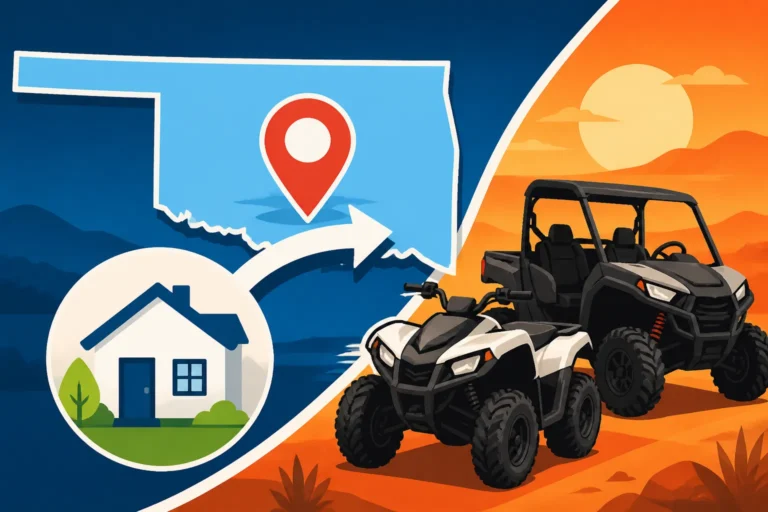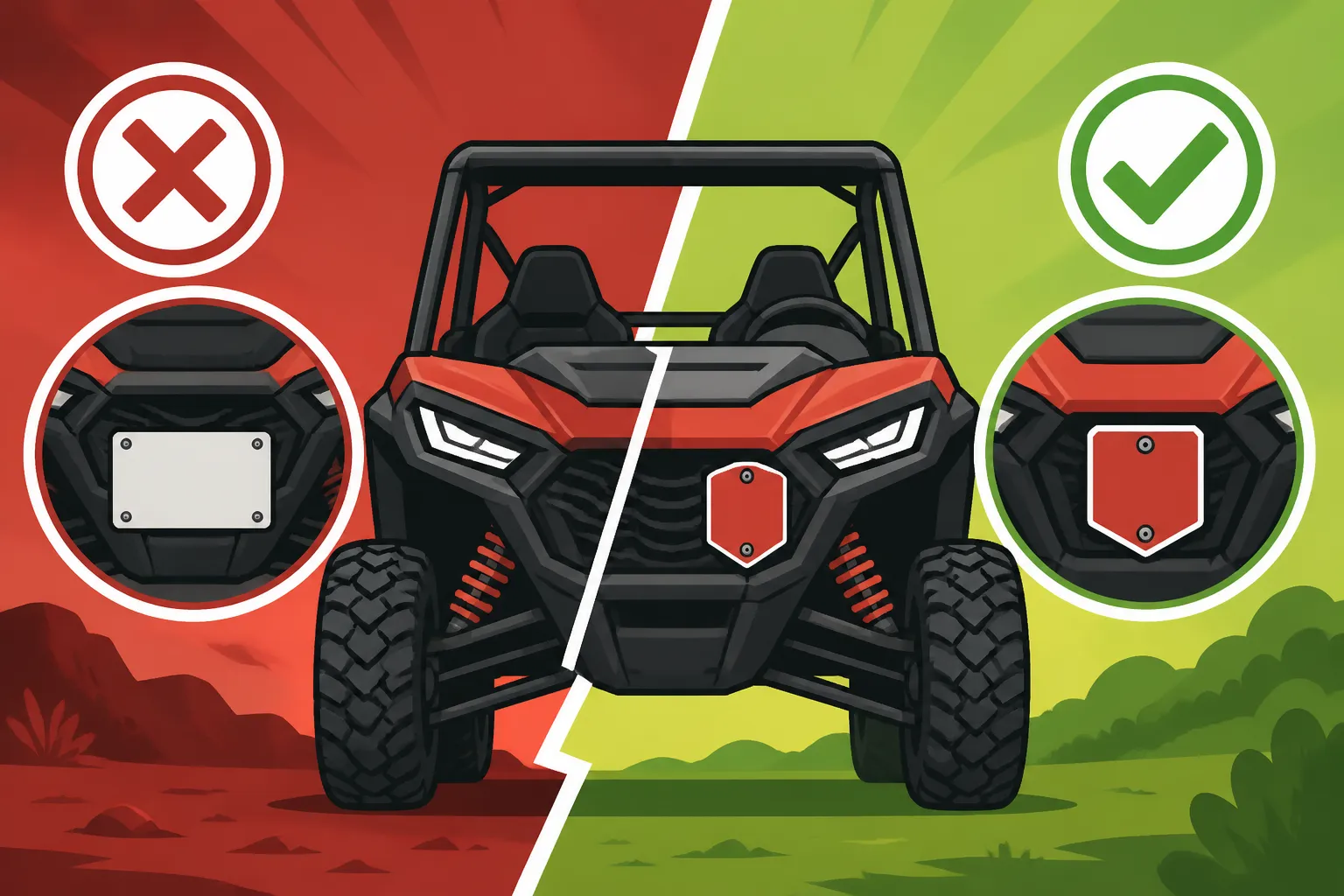
Why You Get a Front Decal, Not a Plate
Navigating the world of ATV and UTV registration in Oklahoma can feel a little like trying to read a map printed in invisible ink – especially when you see a simple decal on the front of a machine instead of a traditional license plate. Many riders, particularly those new to the Sooner State or getting their first off-road vehicle, wonder why this is the case. This guide is here to clear up that confusion, explaining precisely why your ATV or UTV gets a front decal and not a plate, and what that means for you as a rider.
The Core Difference: Decals vs. License Plates
When you think of a vehicle, you almost automatically picture a license plate on the back, sometimes one on the front too, right? That’s because for cars, trucks, and motorcycles designed for street use, a license plate is a universal identifier, a sort of rolling passport that tells the world – and law enforcement – that the vehicle is properly registered, taxed, and legal for the road.
What a License Plate Signifies for Road Vehicles
For your everyday car or pickup, a license plate is far more than just a piece of metal. It's tied directly to annual or biennial registration renewals, proof of insurance, and often, vehicle inspections. This plate, with its unique alphanumeric code, allows state agencies to track everything from ownership changes to traffic violations. It signifies that the vehicle meets specific safety and emissions standards for public highway use, and that the owner is contributing to the infrastructure through various fees and taxes that typically come with annual renewals.
When you see a license plate, you inherently understand that the vehicle is intended for, and permitted on, public roads and highways. It’s a dynamic identifier, often changing designs and stickers each year or as registration periods renew, acting as a clear, real-time indicator of the vehicle's current legal status for street operation.
Why Off-Road Machines Are Treated Differently
Now, off-road vehicles like ATVs and UTVs are a different breed entirely. Their very design and purpose are centered around leaving paved roads behind, tackling trails, dunes, farm fields, and rugged terrain. While they might occasionally cross a road or traverse a section line, their primary operating environment is off the public highway system. Because of this fundamental difference in purpose and use, states like Oklahoma have developed a distinct approach to their registration and identification.
The state's interest isn't in tracking their daily movements on major roadways or subjecting them to the same emissions and safety checks as cars. Instead, the focus is on establishing clear ownership for theft prevention, enabling proper titling, and ensuring a basic level of identification for machines that might occasionally interact with public land or limited road crossings. This distinction is key to understanding why a simple decal suffices where a full-blown license plate does not.
Oklahoma's Specific Approach to ATV/UTV Registration
Oklahoma's system for registering ATVs and UTVs is quite unique and often a pleasant surprise for new owners. Unlike the never-ending cycle of annual renewals for your car, the state takes a much simpler, one-and-done approach for most off-road machines.
The $11 One-Time Registration Fee
This is where Oklahoma really sets itself apart. When you register an ATV or UTV in Oklahoma, you typically pay a single, flat fee. This isn't an annual expense; it's a one-time charge that covers the machine's registration for as long as you own it. You literally [Oklahoma ATV Registration You Pay Once] and it [Oklahoma Registration Never Renews]. This approach dramatically simplifies the ownership experience, eliminating the recurring headache of renewal notices and deadlines that often plague traditional vehicle ownership.
This one-time fee primarily covers the administrative costs associated with processing your initial registration and issuing the decal. It’s important to note that this registration is inextricably linked to the machine's title, which you also obtain at the time of purchase or transfer. So, while the fee is low and non-recurring, it’s a crucial step in formalizing your ownership and getting your machine ready for the trails.
The Purpose of the Front Decal
So, what exactly is that decal for? In Oklahoma, the front decal serves as your visible proof of registration and titling. It’s a small, adhesive sticker that declares your off-road machine has been properly recorded with the state. This decal is how law enforcement, game wardens, or park rangers can quickly verify that the machine isn't stolen and that its ownership has been legally established. Oklahoma specifically [Oklahoma Issues a Front Decal, Not a Plate] to signify this.
The decal itself is designed to be prominently displayed on the front of your machine, ensuring it's easily seen. You’ll find detailed instructions on [Oklahoma Decals on the Front of a Machine] in your paperwork, but generally, it goes on a visible, flat surface. Its main role is identification and proof of official registration, not to grant any special road-going privileges.
Understanding Limited Road Use and the Decal's Role
While your ATV or UTV decal doesn't magically make your machine street-legal, it plays a subtle role in the limited scenarios where off-road vehicles might legally operate on or cross public roads. Oklahoma law, specifically [Oklahoma ATV Road Rules Under 11-1116], outlines very specific conditions under which an ATV or UTV can be driven on public roads – typically for crossing, agricultural purposes, or on county roads where local commissioners have opened them to off-road traffic.
In these situations, having your registration decal properly displayed is a basic requirement. It demonstrates to any patrolling officer that your machine has valid state records, even if its presence on the road is restricted. The decal isn't an open invitation to cruise down Main Street; rather, it’s a necessary piece of the puzzle for legitimate, limited road interactions, alongside following all other rules established by [Oklahoma County Commissioners and ATV Roads] or state statutes for such use.
Practical Implications for Riders and Enforcement
Understanding the "why" behind the decal is one thing, but knowing the "how" it impacts your riding life and interactions with authorities is equally important. It's about ensuring you're compliant and avoiding any unnecessary headaches while out enjoying your machine.
Where to Place the Decal and Why It Matters
Proper placement of your registration decal is crucial for compliance. The state of Oklahoma requires the decal to be affixed to the front of the machine, in a clearly visible location. For most ATVs, this means the front plastic, often near the headlights or on the front rack. For side-by-sides, it’s typically on the front fascia or hood. The goal is for the decal to be easily read without obstruction. If you're wondering [Where the Registration Decal Goes on an ATV] or specifically [Oklahoma Decal Placement on a Side-by-Side], consult your registration paperwork for exact guidelines or ask a tag agency clerk.
The "why" behind this placement is straightforward: visibility for enforcement. A deputy or game warden should be able to quickly glance at the front of your machine and confirm its registered status. Improper placement, or a decal that's obscured by mud, accessories, or damage, can lead to questions from authorities and potentially a citation, even if your machine is technically registered.
What a Law Enforcement Officer Looks For
When a law enforcement officer encounters an ATV or UTV, especially in areas where road use might be permitted or regulated, one of the first things they'll look for is that front decal. It’s their quick visual cue that the machine has been registered and titled in Oklahoma. They'll also compare the decal to the machine itself, ensuring the vehicle identification number (VIN) matches the records associated with the decal.
Beyond the decal, officers will also be looking for proof of ownership (like your title or registration card, which you should carry), and compliance with any other local or state regulations concerning off-road vehicle operation. This includes things like age restrictions, helmet laws for minors, and adherence to speed limits or restricted areas. Having all your paperwork in order and your decal clearly displayed makes any interaction with law enforcement much smoother. If you’re ever asked about paperwork for a private sale, a clear bill of sale, perhaps generated using a template from a service like LawDepot, can be incredibly helpful.
The Importance of Keeping Your Decal Visible and Intact
Given that your decal is the primary visual proof of registration, it's vital to keep it in good condition. Off-road riding is tough on vehicles, and decals can peel, fade in the sun, or get scratched and muddy. A faded or damaged decal might not be readable, defeating its purpose. Regularly cleaning the area around your decal and inspecting it for wear can prevent issues.
If your decal becomes illegible or is lost, you absolutely need to get a replacement. Fortunately, replacing a lost or damaged decal is a straightforward process at an Oklahoma tag agency. Details on how to obtain an [Oklahoma Decal Replacement If Lost] are usually available on the Service Oklahoma website or by contacting your local tag agency. Don't risk a fine or hassle just because your decal has seen better days – a fresh one is a small price to pay for peace of mind.
Common Misconceptions and Clarifications
The distinction between off-road vehicle identification and traditional vehicle plates often leads to confusion. Let's clear up some of the most common misunderstandings riders have about Oklahoma's system.
Decal vs. Street-Legal UTV Plate
Perhaps the biggest source of confusion for many riders is the difference between the standard ATV/UTV front decal and an actual license plate. While most ATVs and UTVs get the one-time front decal, Oklahoma does offer a path for UTVs to become street-legal and receive a traditional, annually renewed license plate. This is a very specific class of vehicle, covered by [Oklahoma's Street-Legal UTV Class Explained], and it comes with a host of additional requirements.
A UTV that qualifies as "street-legal" must meet stringent equipment standards (like turn signals, mirrors, horns, headlights, taillights, brake lights, and sometimes windshields), must be insured, and requires annual renewal of its registration, just like a car. These machines receive a standard license plate that must be displayed, typically on the rear, along with yearly renewal decals. This is a completely separate process from the initial, one-time front decal for off-road use. Don't confuse your simple front decal with the [Oklahoma Annual Plates for Street UTVs] that a street-legal UTV would display. They serve very different purposes under the law.
Why Oklahoma's System is Different from Other States
It's common for riders who've moved from other states, or who ride across state lines, to be surprised by Oklahoma's decal-only system for off-road machines. Many neighboring states, such as Arkansas or Missouri, might use a more traditional plate system or different types of stickers that renew annually. This variation reflects the diverse approaches states take to regulating off-highway vehicles, balancing recreational access, revenue generation, and law enforcement needs.
Oklahoma's decision to implement a one-time registration and front decal speaks to a philosophy that acknowledges the primary off-road nature of these machines, while still ensuring they are identifiable and legally owned. It minimizes the administrative burden on both the state and the rider, focusing on a clear, initial establishment of ownership rather than continuous, costly monitoring for road use. This streamlined process is often lauded by riders for its simplicity and affordability compared to other jurisdictions. When dealing with out-of-state purchases or sales, ensure your bill of sale is complete – LawDepot provides customizable templates that can help with this.
Here’s a quick comparison to help solidify the differences:
| Feature | Traditional Vehicle License Plate (e.g., Car, Street-Legal UTV) | Oklahoma ATV/UTV Front Decal (Off-Road) |
|---|---|---|
| Purpose | Continuous road legality, annual identification, tax collection | Proof of one-time registration and titling, ownership verification |
| Renewal Frequency | Annual or biennial | One-time, never renews |
| Placement | Rear (and often front), highly visible | Front, highly visible |
| Road Legality | Designed for, and permitted on, public roads | Primarily for off-road use, very limited road crossing |
| Associated Fees | Annual registration fees, potential taxes, inspection fees | Single, low initial registration fee |
| Identification Type | Alphanumeric plate, typically with renewal stickers | Adhesive decal with serial number |
| Required Equipment | Extensive safety equipment (lights, signals, mirrors, etc.) | Basic factory safety equipment (no added road equipment) |
| Insurance Requirement | Mandatory for road use | Not legally mandated for off-road registration |
Ultimately, Oklahoma's system provides a straightforward and cost-effective way to get your ATV or UTV registered and titled. That simple front decal is your confirmation that you've done your part, allowing you to focus on enjoying the trails and open spaces that make off-road riding in the state so much fun. Just remember, the decal is for registration, not a green light for unrestricted road use – always know your local rules and ride responsibly!
Disclaimer
This article is for general informational purposes only and does not constitute professional advice. Laws, prices and regulations vary by location and change over time. Consult a qualified professional for guidance on your specific situation.