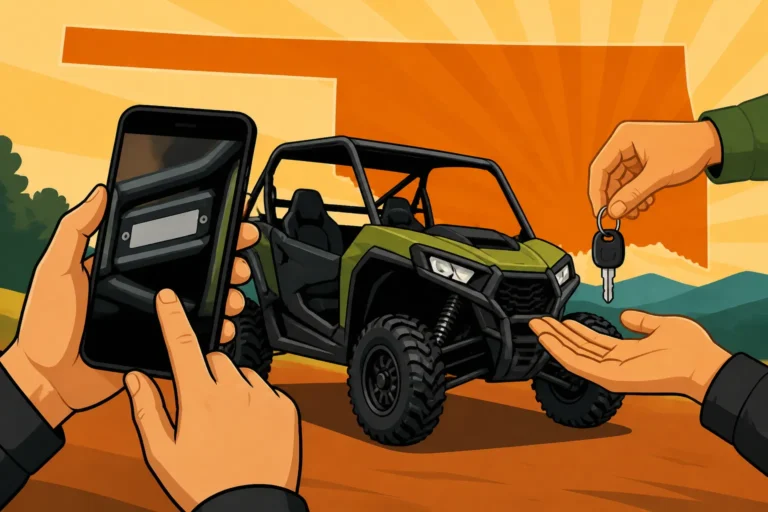
Oklahoma Machines Stored Over Winter
When the crisp air of autumn turns into the biting chill of winter, many of us, myself included, tuck our beloved ATVs and UTVs into the garage, shed, or barn. It’s a natural impulse to secure them against the elements and forget about them until the promise of spring riding season calls us back to the trails. However, while your off-road machine might be out of sight and out of mind during these quieter months, Oklahoma’s unique registration and titling rules are still very much in effect. This guide aims to clear up any confusion about what happens with your ATV or UTV's registration and title status when it's stored over winter, ensuring you're fully prepared and compliant when it’s time to hit the dirt again.
The "Set It and Forget It" Reality of Oklahoma ATV/UTV Registration
One of the most common misconceptions I hear from new ATV and UTV owners in Oklahoma is about annual renewals. Many folks are used to renewing their car tags every year, so they naturally assume their off-road machine follows the same pattern. But here in the Sooner State, things are a little different – and in a good way, especially for machines that might sit idle for months.
How Oklahoma's Lifetime Registration Works
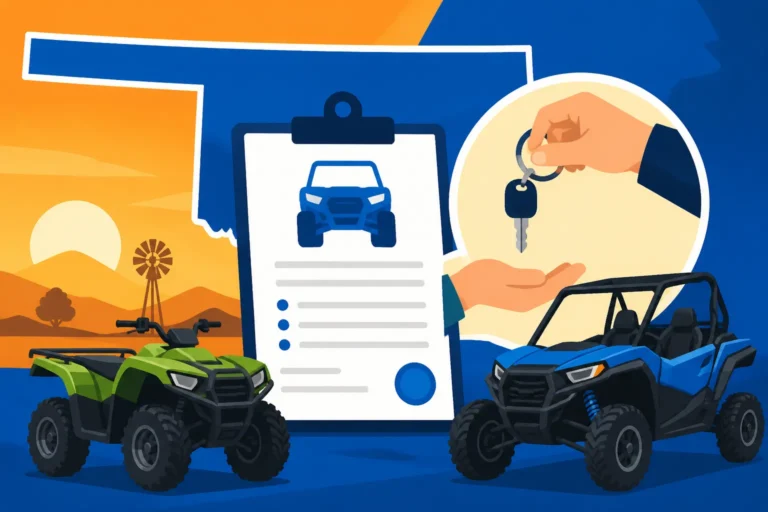
Let's just get straight to the good news: Oklahoma has a remarkably rider-friendly registration system for ATVs and UTVs. Once you register your machine, that's it. You pay a single, one-time fee of just $11. This isn't an annual fee; it's a lifetime registration. This means whether your side-by-side is tearing up the dunes at Little Sahara every weekend or gathering dust in your barn from November to March, its registration status doesn't change. There’s no looming expiration date, no frantic rush to renew before spring, and absolutely no stress about forgetting to pay a fee while your machine is tucked away. It’s truly a "set it and forget it" system, making winter storage a lot less complicated from a compliance perspective. You can learn more about this by reading [Oklahoma ATV Registration You Pay Once] and [Oklahoma Registration Never Renews].
This permanent registration is a huge relief for many, especially those who only ride seasonally or own multiple machines that might not see constant use. You don't have to worry about the registration lapsing while your quad is winterized. The state isn't sending you renewal notices for an ATV or UTV because, well, there's nothing to renew! This distinction is critical because it means that even if your machine is hibernating for several months, its registered status remains active and valid. This singular payment covers the entire lifespan of your ownership in Oklahoma, removing a common administrative headache that riders in other states often face.
What the Decal Means for Stored Machines
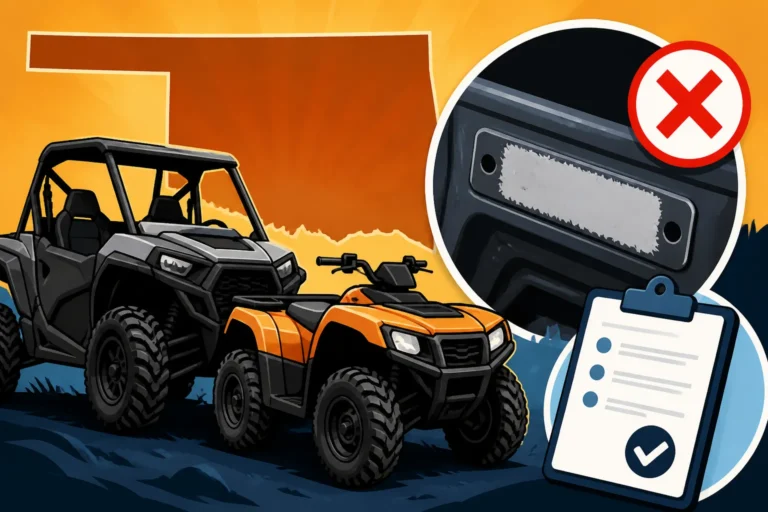
With this "once and done" registration, what tangible proof do you have? Oklahoma doesn't issue traditional license plates for ATVs and UTVs. Instead, you'll receive a small, adhesive decal. This decal is meant to be displayed prominently on the front of your machine. It's not just a sticker; it's your official proof that your ATV or UTV is registered in Oklahoma. [Oklahoma Issues a Front Decal, Not a Plate] explains this in more detail.
Now, for a machine stored over winter, you might think, "Who cares where the decal is if it's not being ridden?" But it's still important. First, it signifies that the machine is registered. If, for any reason, a law enforcement officer or state park ranger needs to verify its status (perhaps if your garage is broken into, or if you simply forget to apply it before spring), having that decal ready is key. Second, it gets you into the habit of proper display. When spring finally arrives and you pull your machine out for that first exhilarating ride, you won't want to be scrambling to find the decal or realize it fell off months ago. Ensure it's affixed securely and remains visible, even if the machine itself is out of commission for a while. You can find guidance on proper placement in [Where the Registration Decal Goes on an ATV]. Keeping that decal in good condition through the winter means one less thing to worry about when you’re itching to get back on the trails.
Titling Your Machine: A Separate But Connected Process
While registration might be a breeze in Oklahoma, titling is a different beast entirely. It’s a crucial step that often causes confusion, especially when machines are older or have been tucked away for years without ever being properly titled. Unlike registration, which is about the right to operate, titling is all about proving ownership. And this is a step you definitely don't want to skip, whether your machine is out on the trails or sleeping soundly in your shed.
The Importance of a Proper Title
A title is the legal document that establishes you as the owner of your ATV or UTV. Think of it as the birth certificate and deed rolled into one for your machine. This is absolutely critical for several reasons, regardless of whether you ride year-round or only seasonally. Firstly, without a proper title in your name, selling your machine becomes a significant headache. Buyers will be wary, and you might struggle to fetch a fair price. Secondly, if your machine is ever stolen, a title is essential for reporting it to the police and for insurance claims. Without it, proving ownership can be nearly impossible, complicating recovery or compensation efforts.
Oklahoma does title ATVs and UTVs, but there are some important cut-off dates to remember. For ATVs, if your machine was manufactured after July 1, 2005, it must be titled. For UTVs, the cutoff is July 1, 2008. If your machine falls after these dates, titling is mandatory. Even if your ATV or UTV has been sitting unused in storage for years, the legal requirement to title it doesn't disappear. It merely means you've delayed a necessary step. Ignoring this for a stored machine can lead to substantial late penalties when you finally decide to title it or sell it. Reviewing [Oklahoma Titles ATVs and UTVs], [Oklahoma ATV Cutoff of July 2005], and [Oklahoma UTV Cutoff of July 2008] can help you determine if your machine needs a title.
Handling Paperwork for Older or Inherited Machines
What if your machine is older, perhaps pre-dating those July 2005 or July 2008 cut-off dates, and therefore doesn't require a title? Or what if you inherited a machine that doesn't have a title? In these cases, a robust bill of sale becomes your primary proof of ownership. Even for machines that do require a title, a detailed bill of sale is crucial when you purchase it, especially from a private seller, as it's the document that links you to the previous owner and justifies the transfer of ownership at the tag agency.
A well-drafted bill of sale should include the buyer's and seller's full names and addresses, the date of sale, the purchase price, and a detailed description of the ATV or UTV, including its VIN (Vehicle Identification Number). Having a professional, clear document can save you immense trouble down the line. Resources like LawDepot offer templates and guidance for creating these essential documents, ensuring they meet legal standards. This is particularly useful for older machines where previous owners might have lost original paperwork or for inherited machines where a clear chain of ownership needs to be established. Learning about [Oklahoma Bills of Sale for Older Machines] and [Oklahoma Titles for an Inherited Machine] can provide further clarity on what's needed to properly document your ownership, regardless of how long your machine has been in storage.
What Happens If You Forget or Delay Registration (Even for Stored Machines)?
It's easy to assume that if your ATV or UTV is sitting unused, the clock on registration deadlines stops. Unfortunately, that's not how it works in Oklahoma. The state's deadlines and potential penalties apply from the moment you acquire the machine, regardless of its operational status. This is a critical point that many owners overlook, leading to unexpected costs down the road.
Understanding Oklahoma's 30-Day Deadline
When you purchase an ATV or UTV in Oklahoma, you have a strict 30-day window from the date of purchase to complete the titling and initial registration process. This isn't a suggestion; it's a hard deadline. Whether you buy it in the middle of summer and hit the trails immediately, or you buy it in November and immediately put it into winter storage, that 30-day clock starts ticking. There's no exception for machines that aren't being ridden or for machines that are undergoing repairs.
Many riders get caught off guard because they purchase a machine, intend to register it, but then get busy or decide to store it for the winter, thinking they'll take care of the paperwork in the spring. By the time spring rolls around, that 30-day window has long since slammed shut. It's a common mistake, but an avoidable one. Even if your new-to-you quad is going straight into hibernation, make that trip to the tag agency within the first month. Understanding [Oklahoma's 30-Day Registration Deadline] is crucial to avoiding extra fees.
Late Penalties and How They Add Up (or Cap Out)
Missing that 30-day deadline comes with consequences, primarily in the form of late penalties. Oklahoma charges a daily late fee for failing to register and title your ATV or UTV within that initial 30-day period. This fee accumulates for every day you're late. While it might start small, it can quickly add up, especially if your machine sits unregistered through an entire winter season.
The good news, however, is that Oklahoma does have a cap on these late penalties. The maximum late fee you'll face for an ATV or UTV is $100. So, while it's certainly better to avoid the fees entirely, you won't be looking at thousands of dollars in penalties if you're significantly overdue. Still, an extra $100 is an extra $100 that could have been spent on fuel, gear, or trail passes. It’s a strong incentive to get the paperwork done promptly, even if your machine won't see dirt for several months. For more details on these fees, check out [Oklahoma Late Registration Penalties] and [Oklahoma Late Penalties Capped at $100]. You might also find [What You Owe If You Register Two Months Late] helpful for specific examples.
Excise Tax and Agricultural Exemptions
Beyond the registration fee and potential late penalties, you'll also encounter Oklahoma's excise tax when you title your ATV or UTV. This is a 4.5% tax on the purchase price of the machine, paid at the tag agency when you complete the titling process. It’s important to factor this into your budget, whether you’re buying new or used, and whether the machine is destined for immediate use or winter storage.
However, there's a valuable exemption for those who use their machines primarily for agricultural purposes. If your ATV or UTV is used exclusively for farming or ranching activities, you may be eligible for an agricultural exemption from this excise tax. This can be a significant saving, but it requires proper documentation and declaration at the time of titling. It’s not an exemption that retroactively applies, so you need to claim it upfront. Again, having the correct forms and understanding the requirements is key, and resources like LawDepot can assist in ensuring your declarations are accurate. Even if your farm machine is stored during the off-season, its agricultural purpose still allows for this exemption, provided you meet the criteria. Look into [Oklahoma Excise Tax at Titling] and [Oklahoma Agricultural Excise Tax Exemption] for more information.
| Aspect | If Registered Within 30 Days | If Registered After 30 Days (Stored or Used) |
|---|---|---|
| Registration Fee | $11 (one-time) | $11 (one-time) |
| Titling Required | Yes (if applicable) | Yes (if applicable) |
| Excise Tax (4.5%) | Paid at titling | Paid at titling |
| Late Penalties | None | Daily fee, capped at $100 |
| Agricultural Exemption | Available (if eligible) | Available (if eligible) |
| Risk of Legal Issues | Low | Higher (unregistered, untitled machine) |
Preparing Your ATV/UTV for Winter Storage and Spring Revival
Whether you've just bought a machine or you're a seasoned rider, proper winter storage is key to ensuring your ATV or UTV starts up reliably in the spring and performs well for years to come. It’s not just about compliance; it's about mechanical longevity. And equally important is knowing your machine is legally ready to roll once the weather breaks.
Pre-Storage Checklist for Off-Road Machines
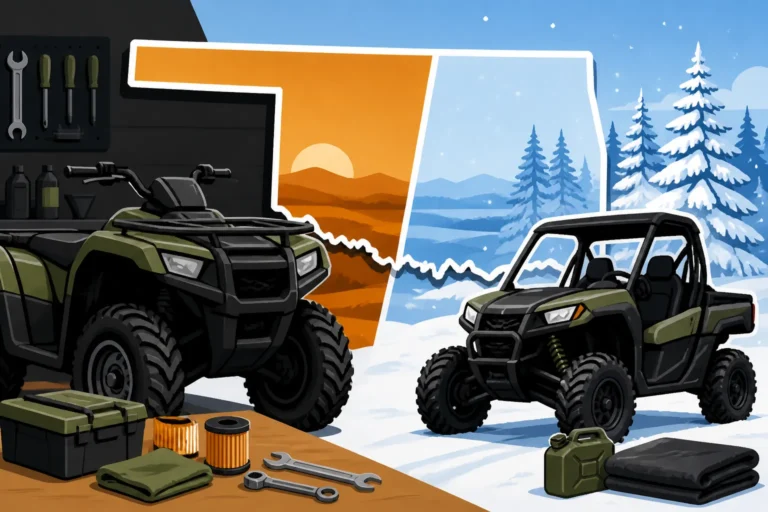
Before you tuck your quad or side-by-side away for several months, taking a few preventative steps can save you a lot of headaches (and repair bills) in the spring. First and foremost, address the fuel system. Ethanol in gasoline can wreak havoc on carburetors and fuel injectors over time, especially when sitting. Add a good quality fuel stabilizer to a full tank of gas and run the engine for a few minutes to ensure the stabilizer circulates throughout the system. This prevents fuel degradation and keeps components clean.
Next, focus on the battery. Cold weather and long periods of inactivity are notorious for draining batteries. Remove the battery and store it in a warmer location, or connect it to a "trickle charger" or battery tender that maintains a consistent charge without overcharging. Check tire pressure and inflate to recommended levels, or even slightly higher, to prevent flat spots during storage. Give your machine a thorough wash and wax to remove any dirt, mud, or grime that could lead to corrosion over the winter. Finally, cover it with a breathable cover to protect it from dust and moisture. And don't forget to store all your important paperwork – title, registration receipt, and any purchase documents – in a safe, dry place, like a dedicated file. This includes making sure your address is current with any agencies, just in case (though unlikely for ATV registration, it’s good general practice for all official documents) as discussed in [Oklahoma Registration and Proof of Address].
Spring Prep and Proof of Compliance
When the days get longer and the urge to ride becomes undeniable, it's time to bring your ATV or UTV out of hibernation. This "spring awakening" is more than just turning the key; it's also a final check for compliance. Reconnect your battery (if you removed it) and ensure it's fully charged. Check all fluid levels – oil, coolant, brake fluid – and top them off if necessary. Inspect your tires for proper inflation and any signs of cracking or damage. Test all lights, brakes, and controls to ensure everything is in working order after its long rest.
Most importantly, confirm your Oklahoma registration decal is still firmly attached to the front of your machine and is clearly legible. A faded or missing decal can cause unnecessary complications. If your decal has been damaged or lost, you'll need to order a replacement. And always, always carry proof of your current registration (the paper receipt you received from the tag agency) with you when you ride. Whether it’s in a waterproof bag on your machine, in your wallet, or on your phone (if a digital copy is accepted), having it handy means you can quickly demonstrate compliance if stopped by a state trooper or park ranger. They will ask for it. This is why it’s good practice to understand [What a State Trooper Can Ask to See] and [Carrying Your Registration on a Section Road]. By following these steps, you ensure your machine is not only mechanically ready for action but also fully compliant with Oklahoma law, allowing you to enjoy those spring rides without a hitch.
Disclaimer
This article is for general informational purposes only and does not constitute professional advice. Laws, prices and regulations vary by location and change over time. Consult a qualified professional for guidance on your specific situation.