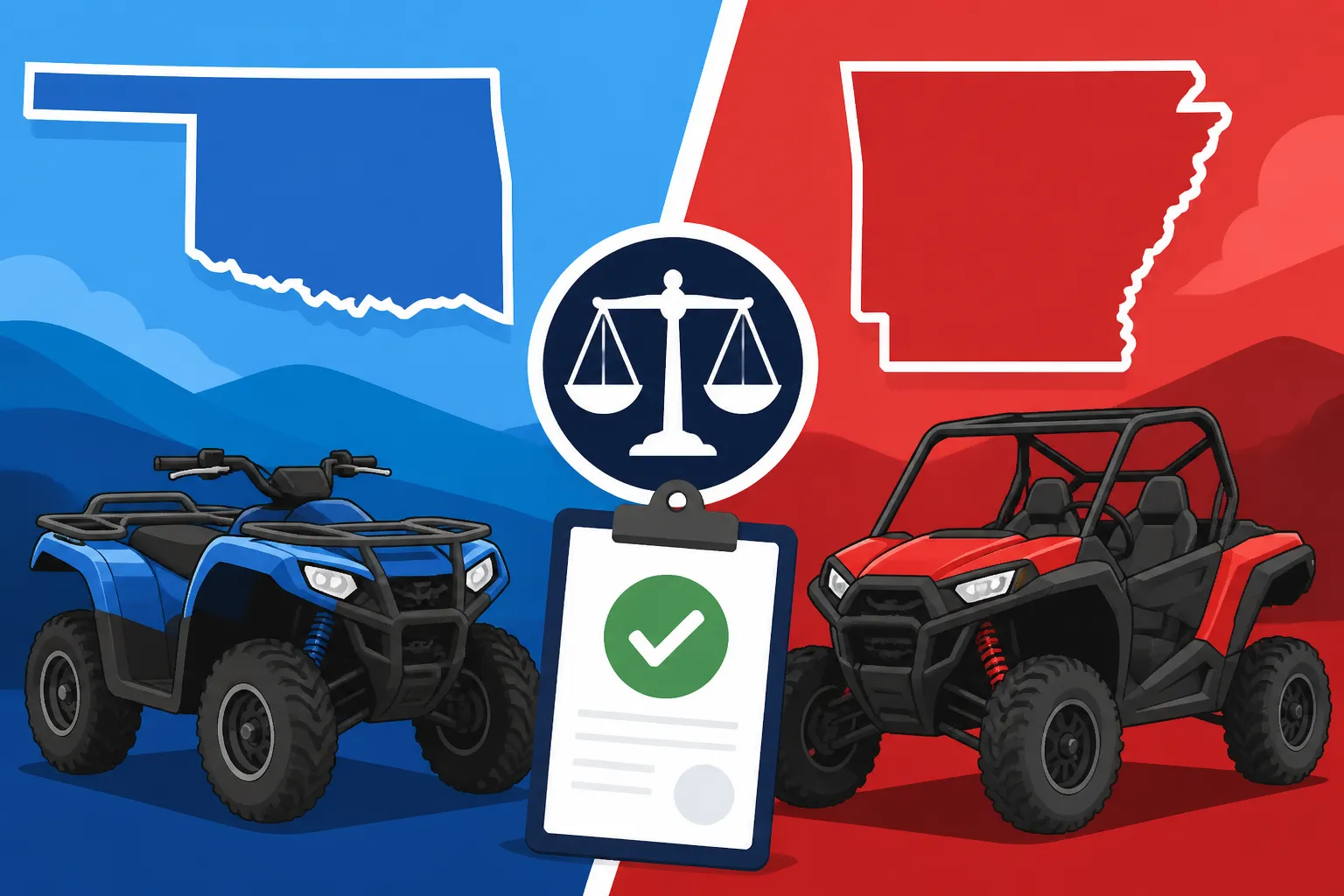
Oklahoma Registration Compared to Arkansas
Oh, the joys of owning an ATV or UTV and realizing that the invisible lines on a map, those state borders, come with a whole lot of different rules for your beloved machine! It's incredibly frustrating when you're just trying to do the right thing, whether you're moving to a new state, planning a cross-border ride, or even just buying a used quad from a seller in a neighboring state, only to find that what's perfectly legal in one place is completely different just a few miles down the road. This guide is here to untangle the often-confusing world of ATV and UTV registration, specifically comparing the distinct approaches of Oklahoma and Arkansas, so you can ride with confidence and stay on the right side of the law.
Navigating Oklahoma's ATV and UTV Registration System
Let's kick things off by digging into how Oklahoma handles off-road machines. If you're an Okie, or you're considering becoming one, you'll quickly learn that our system is quite unique, especially when compared to many other states. We've got a streamlined approach that, for better or worse, differs significantly from our neighbors.
The "One and Done" Oklahoma Registration Fee
One of the biggest head-turners for folks coming from other states is Oklahoma's ATV and UTV registration fee structure. When you register your off-road machine in Oklahoma, you pay a one-time, flat fee. That's right, a single payment, and you're essentially set for life for that specific machine under your ownership. There are no annual renewal notices filling your mailbox, no yearly scramble to remember a deadline. It's truly a "one and done" deal, which many riders appreciate for its simplicity. This flat fee covers the administrative costs and ensures your machine is on record with the state, but it doesn't expire, nor does it require ongoing payments. This is a stark contrast to states that demand yearly renewals, and it's definitely something to highlight when considering [Oklahoma ATV Registration Cost]. However, it's crucial to remember that this "never renews" policy only applies as long as you own the machine. If you sell it, the new owner will go through the same titling and registration process and pay the fee again. [Oklahoma Registration Never Renews] is a common point of confusion for new residents, but once you understand it, it's quite convenient.
What Oklahoma Requires for Titling and Registration
Getting your ATV or UTV officially recognized in Oklahoma involves a few specific pieces of paperwork, depending on whether your machine is brand new or a seasoned trail veteran. For a brand-new machine, you'll typically need the Manufacturer's Statement of Origin (MSO) and the dealer's invoice. This proves the machine's origin and that you're the first official owner. If you're buying a used machine from a private seller, things shift a bit. You'll need a bill of sale, and it's crucial that this document is complete and accurate, detailing the sale price, machine information, and signatures from both parties. Sometimes, especially with older machines or if the price isn't clearly stated, you might also need to file a Declaration of Vehicle Purchase Price. It's always a good idea to ensure you have a robust bill of sale, and tools like those found on LawDepot can provide excellent templates to make sure you're not missing any critical information. This ensures a smooth transfer and proper calculation of any applicable taxes. Always remember that Oklahoma titles ATVs and UTVs, so having a clear chain of ownership is paramount. [Oklahoma Titles ATVs and UTVs] is a key point here, as not all states title off-road vehicles.
Decals and Placement in Oklahoma
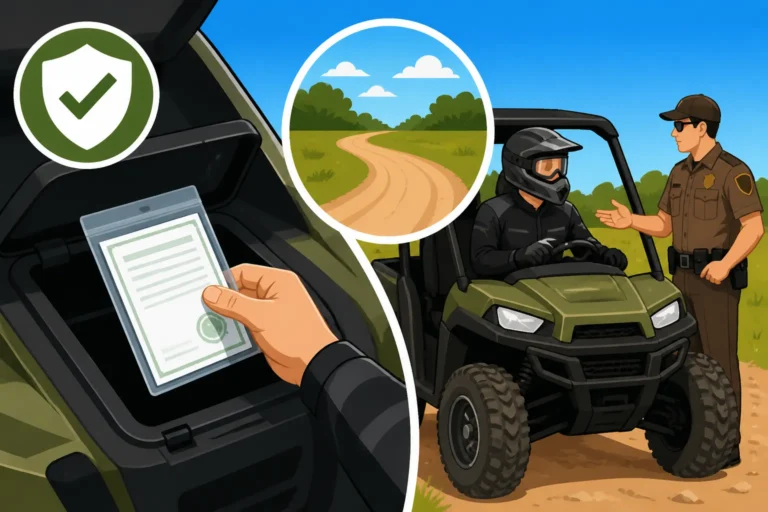
Once your machine is registered and titled in Oklahoma, you'll receive a decal. But don't go looking for a license plate, because you won't get one. Oklahoma issues a small decal that's meant to be displayed prominently on the front of your ATV or UTV. This decal serves as proof of registration and is what law enforcement will look for when checking compliance. For ATVs, it typically goes on the front plastic or bumper, in a visible spot. For side-by-sides, it also goes on the front, often on the grille or a similar forward-facing surface. The idea is to make it easily identifiable from the front, especially when encountering other riders or officials on trails or designated riding areas. This front decal is simple and functional, a clear indicator that you've completed your registration obligations. [Oklahoma Issues a Front Decal, Not a Plate] is a unique aspect that often surprises new residents.
Understanding Arkansas' Off-Highway Vehicle Registration Approach
Now, let's hop across the border to Arkansas. While both states share a love for off-road adventure, their approaches to registering those machines diverge significantly. Arkansas has a system that might feel more familiar to those used to annual renewals and perhaps a bit more comprehensive in its fee structure.
Arkansas' Annual Registration Requirements
Unlike Oklahoma's one-time fee, Arkansas operates on an annual registration system for its off-highway vehicles (OHVs). This means that once a year, you'll need to renew your registration and pay an associated fee to keep your ATV or UTV legally recognized in the state. This annual renewal process involves receiving a notice (hopefully!), completing the necessary paperwork, and submitting the fee by the deadline. It's similar to how many states handle car and motorcycle registration, designed to ensure that the state has an up-to-date record of registered OHVs and to collect ongoing revenue for things like trail maintenance or administrative costs. Missing your renewal can lead to late penalties, so keeping track of the expiration date is crucial. This is a primary difference when considering Oklahoma Registration Compared to Arkansas, as the recurring cost and administrative steps are a yearly commitment in Arkansas.
Proof of Ownership and Application in Arkansas
To register your ATV or UTV in Arkansas, you'll need to provide clear proof of ownership. This typically means having a valid title for the machine, if one was issued. For new machines, an MSO will be required. For used machines, a properly assigned title from the previous owner is essential. If the machine is older and a title wasn't originally issued or is lost, a comprehensive bill of sale becomes even more critical. This document needs to clearly identify the machine, the buyer and seller, the date of sale, and the purchase price. Again, using a reliable template from resources like LawDepot can help ensure your bill of sale meets all legal requirements and avoids future headaches. The state wants to confirm that you are the rightful owner before allowing you to register the machine, protecting against theft and ensuring proper tax collection.
Arkansas Decal and Display Rules
When you successfully register your OHV in Arkansas, you'll receive a decal or sticker. This decal is usually required to be affixed to a prominent, visible location on your machine. While the exact placement might have some flexibility, the general rule is that it must be easily seen by law enforcement or park officials. This often means on the front or rear fender, or another easily accessible flat surface. Unlike Oklahoma's strict front-only decal, Arkansas typically aims for general visibility. The purpose of the decal is the same: to provide immediate visual proof that your machine is properly registered with the state, helping officials quickly verify compliance when you're out on the trails or designated riding areas. It's a quick visual check that helps keep things moving smoothly.
Key Differences: Oklahoma vs. Arkansas ATV/UTV Registration
When you lay the two systems side by side, the distinctions become quite clear. These differences aren't just minor details; they can significantly impact your experience as an owner, especially if you live near the border or frequently travel between the states.
Cost and Renewal: A Tale of Two Systems
The most striking difference between Oklahoma and Arkansas is undoubtedly the cost structure and renewal frequency. In Oklahoma, you pay a small, one-time fee (currently around $11 for most ATVs and UTVs) at the time of titling and registration. That's it. No annual bills, no renewal deadlines to remember, and no ongoing fees as long as you own the machine. It's designed to be simple and permanent. This means that while your initial outlay includes the registration fee, you won't be budgeting for it every year.
Arkansas, on the other hand, requires annual registration renewals. This means a yearly fee, similar to how you would register a car. While the exact fee might vary, it's an ongoing expense that needs to be factored into your annual budget for ATV/UTV ownership. This recurring cost can add up over the years and requires active management to ensure you don't miss a deadline and incur late fees. So, when comparing [Oklahoma ATV Registration Cost] to Arkansas, remember you're looking at a single payment versus an annual one.
| Feature | Oklahoma ATV/UTV Registration | Arkansas OHV Registration |
|---|---|---|
| Registration Fee | One-time flat fee | Annual fee |
| Renewal | No annual renewal | Required annually |
| Decal Placement | Front of the machine | Prominent, visible location (e.g., fender) |
| Titles | Titles ATVs and UTVs | Typically titles OHVs |
| Primary Tax | Excise Tax at titling | Sales Tax (at purchase) and possible property tax |
Required Documents and Titling Philosophies
Both states require proof of ownership, but the emphasis and specific documents can differ. Oklahoma generally requires an MSO for new machines and a bill of sale for used machines, especially older ones, and it places significant importance on titling all ATVs and UTVs. This means you'll almost always deal with a title when buying or selling, which helps track ownership. You might even use a Declaration of Purchase Price to establish the value for tax purposes. For ensuring you have all the correct documents, especially if dealing with a private sale, a reliable bill of sale template from a service like LawDepot can be invaluable to avoid any hiccups. [Oklahoma Registration Without a Bill of Sale] can be a real headache, so it's always best practice.
Arkansas also requires MSOs for new machines and titles for most newer used machines. However, for very old machines or certain types of OHVs, a robust bill of sale might be the primary proof of ownership if a title was never issued. The state's Department of Finance and Administration will verify these documents to ensure a legal transfer of ownership before issuing registration.
Decal Placement and Enforcement Considerations
The physical evidence of your registration also varies. Oklahoma is very specific: your decal goes on the front of the machine. This makes it clear and consistent for law enforcement to quickly spot if a machine is registered. It's not a license plate, but it serves the same verification purpose in the off-road context. [Where the Registration Decal Goes on an ATV] is a question Oklahoma riders often ask, and the answer is always the front.
Arkansas is usually a bit more flexible, requiring the decal to be in a prominent, visible location, often on a fender. While this might seem like a minor detail, it means that if you're riding in Arkansas with an Oklahoma-registered machine, you should be aware that the local authorities might be looking for a different style of decal or placement than what you're used to. Conversely, an Arkansas-registered machine in Oklahoma needs to clearly display its home state's decal, understanding that Oklahoma's expectation is a front decal.
Excise Tax vs. Sales Tax
Beyond registration fees, the initial tax structure also differs. In Oklahoma, when you title and register your ATV or UTV, you pay an excise tax. This is typically 4.5% of the purchase price and is paid at the tag agency. This excise tax is specifically for vehicle transfers and is distinct from general sales tax. [Oklahoma Excise Tax at Titling] is a significant part of the cost of ownership, especially for new machines.
Arkansas, like many states, charges a state sales tax on the purchase of an ATV or UTV, whether from a dealer or a private seller (though private sales sometimes have different collection mechanisms). This sales tax is generally applied to the purchase price. Additionally, in Arkansas, OHVs may also be subject to annual personal property taxes, which are assessed by the county. This means that after the initial sales tax, you could have an ongoing tax liability each year, adding another layer to the cost of ownership that Oklahoma generally avoids for OHVs.
Practical Advice for Border Riders and New Residents
Understanding these differences isn't just academic; it has real-world implications for how you manage your ATV or UTV, especially if your life or riding habits span both states.
Riding Across State Lines with Your Machine
If you live near the Oklahoma-Arkansas border, or you just enjoy exploring different riding areas, you might wonder if your machine's registration is recognized in the neighboring state. Generally, states do extend reciprocity for legally registered off-road vehicles from other states. This means an Oklahoma-registered ATV or UTV is typically allowed to ride on designated trails in Arkansas, and vice-versa, as long as it adheres to the local operating rules (like helmet laws, age restrictions, or spark arrestor requirements).
However, "reciprocity" doesn't mean "ignore their rules." While your registration is probably fine, you are still subject to the operating laws of the state you're riding in. So, if Arkansas has a specific helmet law for certain riders, or a noise ordinance, or a unique permit requirement for a particular trail system, you must follow those. Always check the specific regulations for the riding area or state you plan to visit. It's like driving your car in another state; your license and registration are valid, but you still follow their speed limits and traffic laws.
Moving from One State to the Other
Moving from Oklahoma to Arkansas, or vice versa, means you'll need to re-register your machine in your new home state. This isn't just a suggestion; it's usually a legal requirement to officially establish residency for your vehicle.
If you're moving from Oklahoma to Arkansas, you'll need to go through the annual registration process in Arkansas. You'll present your Oklahoma title (or other proof of ownership), pay any applicable sales tax (if it hasn't been paid to Arkansas already), and pay the annual registration fee. You'll then receive an Arkansas decal.
If you're moving from Arkansas to Oklahoma, you'll bring your Arkansas title and registration documents to an Oklahoma tag agency. You'll pay the one-time Oklahoma registration fee (currently $11) and the Oklahoma excise tax (4.5% on the declared value, unless an exemption applies or it was already paid in Oklahoma at a previous transfer). You'll then receive your Oklahoma title and the front decal. This is a common situation for folks navigating [Oklahoma Registration for a New Resident], so be prepared with all your paperwork.
Buying a Machine from the Neighboring State
Purchasing an ATV or UTV from a seller across the state line can sometimes create confusion, particularly regarding sales or excise taxes. If you, an Oklahoma resident, buy a machine from an Arkansas seller, you will typically owe Oklahoma's 4.5% excise tax when you title and register the machine in Oklahoma, even if the machine was subject to sales tax in Arkansas when the seller originally bought it. This is because Oklahoma's excise tax is tied to the transfer of ownership within the state. You will also pay the one-time $11 registration fee.
Conversely, if you're an Arkansas resident buying from an Oklahoma seller, you'll likely owe Arkansas sales tax on the purchase when you register the machine in Arkansas. Always be clear about the purchase price on your bill of sale, as this will be the basis for calculating taxes. Again, using a comprehensive bill of sale, perhaps a template from LawDepot, can help clearly document the transaction and the agreed-upon price, making the registration process smoother in your home state. Always remember to ask about specific tax implications at your local tag agency or equivalent state office before finalizing an out-of-state purchase. [Oklahoma Tax on an Out-of-State Purchase] is a common concern, so gathering all documentation is key.
Disclaimer
This article is for general informational purposes only and does not constitute professional advice. Laws, prices and regulations vary by location and change over time. Consult a qualified professional for guidance on your specific situation.