What an Agricultural Permit Still Exempts You From
Riding ATVs and UTVs is a way of life for many Oklahomans, especially those of us who work the land. For years, there was this common understanding that if you used your machine for farming or ranching, you were pretty much exempt from a lot of the usual vehicle paperwork. But let me tell you, things have changed, and that old assumption can lead to a real headache, not to mention unexpected fees. This guide is going to clear up the confusion, helping you understand exactly what an Oklahoma agricultural permit still exempts you from when it comes to your ATV or UTV, and just as importantly, what it doesn't.
The Evolving Role of Oklahoma's Agricultural Permit for ATVs and UTVs
Back in the day, if you had an agricultural permit in Oklahoma, it felt like a golden ticket for your farm or ranch machinery, including your trusty ATV or UTV. There was a time when these permits offered broad exemptions, largely simplifying the process for those dedicated to working the land. But like many things, regulations evolve, and what was once a comprehensive pass has become more nuanced. It’s crucial to understand this history to grasp where we stand today.
A Historical Look at Agricultural Exemptions
For decades, Oklahoma recognized the vital role agriculture plays in our state's economy and way of life. To support farmers and ranchers, many laws were designed to ease the burden of vehicle ownership, particularly for machines used exclusively for agricultural purposes. This meant that if your ATV was primarily for checking fences, herding cattle, or hauling feed across your property, you might not have needed to worry about the same registration and titling requirements as someone using their machine purely for recreation. The intent was clear: don't add unnecessary bureaucracy or cost to the folks who are already putting in the hard work to feed our communities. These exemptions were a nod to the practicalities of farm life, where an ATV is less a luxury and more a tool, similar to a tractor or a combine.
This era of broad exemption fostered a certain expectation among agricultural producers. Many simply acquired their ATVs or UTVs, put them to work, and rarely interacted with the state's vehicle titling or registration agencies concerning these specific machines. It was a simpler time for farm equipment, where the focus was entirely on functionality and output, not on chasing down paperwork that felt irrelevant to the machine’s primary purpose. However, as the popularity and capabilities of ATVs and UTVs grew, and as more people used them for diverse purposes beyond strict agriculture, the regulatory landscape began to shift.
The Major Shift: When Registration Became Mandatory
The biggest game-changer for agricultural exemptions on ATVs and UTVs came with specific legislative actions that introduced mandatory registration and titling. These changes weren't sudden; they were phased in, creating some understandable confusion. For ATVs, the pivotal moment arrived with a cutoff date of July 2005. If you purchased an ATV after that date, regardless of whether you planned to use it for farming, ranching, or leisure, it became subject to mandatory titling and a one-time registration. UTVs followed a similar path, with their cutoff date established as July 2008.
What this effectively meant was that the "golden ticket" aspect of the agricultural permit for avoiding registration and titling altogether was largely rescinded for newer machines. Suddenly, those checking the legislative changes had to understand that their new utility vehicle, even if strictly for farm work, now needed to go through the same initial paperwork as a recreational quad. This was a significant departure from previous norms and directly impacted how many agricultural operations managed their equipment. It's why understanding these specific dates is critical for any Oklahoma ATV or UTV owner, especially if you're dealing with machines acquired [Oklahoma ATV Cutoff of July 2005] or [Oklahoma UTV Cutoff of July 2008]. It's no longer about whether you have an ag permit; it's about when you bought your machine relative to these cutoffs.
Understanding What an Ag Permit Still Saves You Money On
While the agricultural permit no longer offers a blanket exemption from titling and registration for most newer ATVs and UTVs, it absolutely still holds significant financial benefits for eligible operators. This is where many riders get confused, often assuming that because they have to register their machine, the permit is completely useless. Nothing could be further from the truth, especially when it comes to one of the biggest costs associated with purchasing a new or used off-road machine: excise tax.
The Enduring Excise Tax Exemption
Let's talk about the big one: excise tax. In Oklahoma, when you purchase a vehicle, whether it's a car, truck, or an ATV/UTV, you're generally subject to an excise tax. Think of it like a sales tax specific to vehicle transactions. This tax can add a substantial amount to the overall cost of your machine. For agricultural producers, however, holding a valid agricultural permit offers a direct and very real exemption from this particular tax. This is perhaps the most valuable remaining financial benefit of the ag permit for your off-road vehicles. The state recognizes that these machines are essential tools for agricultural businesses, and exempting them from excise tax reduces the operational cost for farmers and ranchers.
This exemption applies whether you're buying a brand-new side-by-side from a dealer or a used ATV from a private seller, as long as the machine will be used predominantly for agricultural purposes. The key is to demonstrate to the tag agency that you are an agricultural permit holder and that the machine meets the criteria for agricultural use. It's a critical distinction that can save you hundreds, if not thousands, of dollars, depending on the purchase price of your ATV or UTV. When you hear about [Oklahoma Ag Permit Holders Pay No Excise], this is the core of that statement.
How the Excise Tax Exemption Works in Practice
So, how do you actually put this excise tax exemption into action? The process is fairly straightforward, but it requires you to be prepared with the correct documentation when you head to your local tag agency. If you're buying a new ATV or UTV from a dealer, they will typically handle most of the initial paperwork. However, you need to clearly inform them that you are an agricultural permit holder and intend to claim the excise tax exemption. They will likely ask for your Oklahoma Agricultural Sales Tax Exemption Permit number, which is usually issued by the Oklahoma Tax Commission.
For private sales, the responsibility falls more squarely on your shoulders. When you go to the tag agency to title and register the machine, you'll need to present your valid agricultural permit along with your bill of sale and other required titling documents. You'll then complete a declaration or affidavit stating that the machine will be used primarily for agricultural purposes. The tag agency will process your paperwork, noting the exemption, and you won't be charged the standard 4.5% excise tax that most other vehicle purchasers incur. This can be a huge relief to your wallet, especially when considering [Oklahoma's 4.5 Percent Excise Tax] on a higher-priced UTV. Ensuring you have all your ducks in a row – the permit, the bill of sale, and any necessary declarations – will make the process smooth. Services like LawDepot can be incredibly helpful for creating custom bills of sale or other necessary legal declarations that clearly outline the agricultural nature of the transaction, ensuring everything is properly documented for the tag agency.
What an Ag Permit Doesn't Exempt You From Anymore
Now that we've covered the valuable excise tax exemption, it's equally important to understand what the agricultural permit doesn't get you out of anymore. This is where most of the current confusion and potential pitfalls lie for ATV and UTV owners in Oklahoma. Many riders, operating under outdated assumptions, incorrectly believe their ag permit gives them a free pass on all state requirements. Ignoring these modern regulations can lead to fines, delays, and a lot of frustration.
Mandatory Registration and Titling
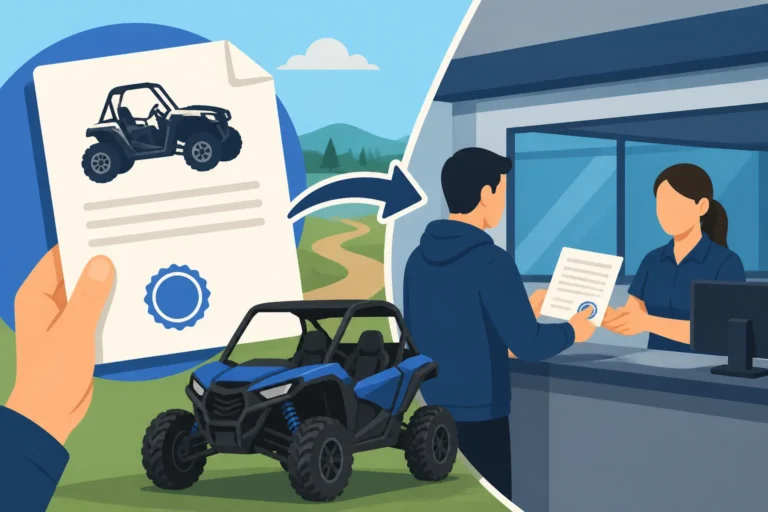
Let me be absolutely clear: if you bought your ATV after July 2005 or your UTV after July 2008, your agricultural permit does not exempt you from the mandatory requirement to title and register that machine with the state of Oklahoma. This is one of the biggest changes in the rules and a frequent source of misunderstanding. Every qualifying machine, regardless of its intended use (agricultural or recreational), must go through the initial titling process and pay the one-time registration fee. This is a non-negotiable step for compliance.
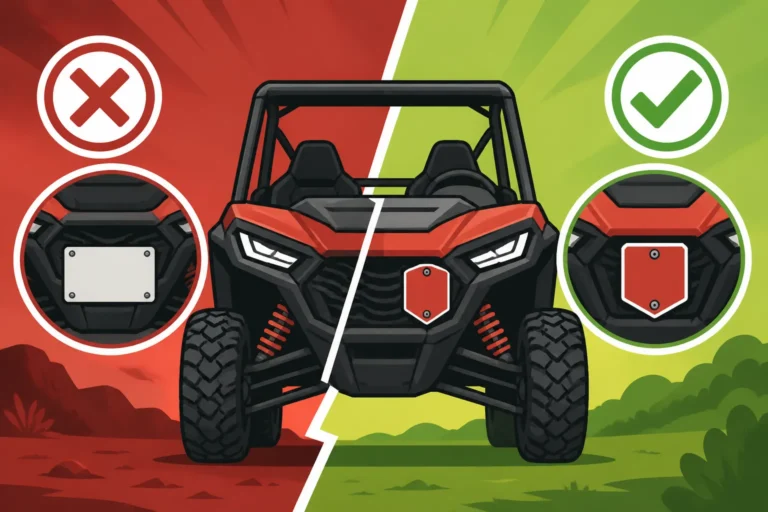
When you purchase such a machine, you'll still need to visit a tag agency, provide your proof of ownership (like a Manufacturer's Statement of Origin or a bill of sale), and complete the necessary forms for titling. Along with the title fees, you will pay the [Oklahoma ATV Registration Cost], which is a minimal, one-time fee that covers your machine for its lifetime of ownership by you. You will also receive a registration decal that must be displayed on the front of your machine. The agricultural permit only removes the excise tax portion of this initial transaction; it does not remove the need for the title itself or the basic registration fee. It's a fundamental requirement that every qualifying ATV and UTV must meet to be legally recognized in Oklahoma. [Oklahoma Titles ATVs and UTVs] are standard for nearly all new and recent machines.
Road Use Regulations and Equipment Standards
Another common misconception is that an agricultural permit automatically grants you permission to ride your ATV or UTV on public roads, county roads, or city streets. This is incorrect. While Oklahoma does have specific provisions for "instruments of husbandry" that allow certain farm equipment (including ATVs and UTVs when used for agricultural purposes) to operate on roads for limited distances between fields or to access different parts of a farm, this is a very specific and narrow exception. It is not a carte blanche for general road use. The [Oklahoma's Instrument of Husbandry Exception] is intended for functional, work-related travel, not for casual commuting or recreational riding on public thoroughfares.
If you want to use your UTV on public roads for non-agricultural purposes, you're entering a completely different realm of regulations. Oklahoma has established a specific "street-legal UTV" class that requires an entirely separate registration process (an annual plate, not the one-time ATV registration decal), strict equipment standards (like turn signals, mirrors, horn, and DOT-approved tires), and proof of insurance. An agricultural permit does not circumvent any of these requirements. In fact, most machines used under an ag permit would not meet the stringent equipment requirements for a street-legal UTV without significant modification. So, if you're asking [Can You Drive a UTV on the Road in Oklahoma?], the answer is complex and generally depends on whether it's truly an instrument of husbandry, or if it has been specifically modified and registered as a street-legal UTV. Your agricultural permit alone won't get you there for general road access.
Applying for and Maintaining Your Agricultural Permit
Understanding what your agricultural permit still covers is one thing, but actually obtaining and properly using it is another. For those who genuinely use their ATVs and UTVs for farming or ranching operations, ensuring you have a current and valid permit is crucial for claiming those valuable excise tax exemptions. It's not a permit specifically for your off-road machine, but rather a general agricultural sales tax exemption permit that applies to various farm-related purchases, including qualifying ATVs and UTVs.
Who Qualifies for an Agricultural Permit
An Oklahoma agricultural permit, specifically the sales tax exemption permit, is intended for individuals or entities actively engaged in the business of farming, ranching, or other agricultural production. This isn't just for someone who has a few backyard chickens; it's generally for those involved in producing crops, livestock, poultry, dairy products, timber, or aquaculture for sale. The key phrase here is "for sale" – meaning you're operating an agricultural business, not just a hobby farm, although specific definitions can vary. This permit allows you to purchase certain items, including ATVs and UTVs primarily used in your agricultural operation, without paying state sales tax or, in the case of vehicles, excise tax.
Typical qualifiers include ranchers with cattle herds, crop farmers, timber producers, and even those involved in large-scale gardening operations if the produce is sold commercially. The machine itself must also be primarily dedicated to these agricultural tasks. For example, using your side-by-side to haul feed to livestock or transport tools for fence repair clearly falls under agricultural use. However, if you primarily use the same side-by-side for weekend joyrides at Little Sahara State Park, it might be difficult to justify the agricultural exemption for that particular machine, even if you do own a farm. The intent and primary use are paramount. This is detailed in guidelines for [Oklahoma Agricultural Permit Exemptions].
The Application Process and Key Documents
The application for an Oklahoma Agricultural Sales Tax Exemption Permit is typically handled through the Oklahoma Tax Commission (OTC). You'll usually need to register as a business (even if you're a sole proprietor operating a farm) and then apply for the specific exemption permit. The OTC will require information about your agricultural operations, including the type of farming or ranching you do, the nature of your products, and often, some proof of commercial activity. This might involve showing income generated from agricultural sales or demonstrating substantial investment in agricultural production.
Once approved, you'll receive a permit number or card that you'll use to claim your exemptions. It's essential to keep this permit current and readily accessible. When it comes time to purchase an ATV or UTV for agricultural use, you'll present this permit number to the dealer or the tag agency. They will record it on the purchase documents, verifying your eligibility for the excise tax exemption. This is also where good record-keeping comes in. Ensuring you have accurate forms and documentation to present is key. Utilizing resources like LawDepot can assist you in generating official-looking bills of sale or affidavits of agricultural use, making the entire process smoother and more professional. Having these documents ready not only streamlines your purchase but also helps ensure compliance if questions arise later.
Navigating Common Scenarios and Pitfalls
Even with a clear understanding of what an agricultural permit does and doesn't exempt you from, real-world situations can sometimes present tricky scenarios. It's easy to overlook a detail or make an assumption that leads to unexpected costs or compliance issues. Being prepared for these common situations can save you time, money, and stress down the road.
Transferring Ownership and the Ag Permit
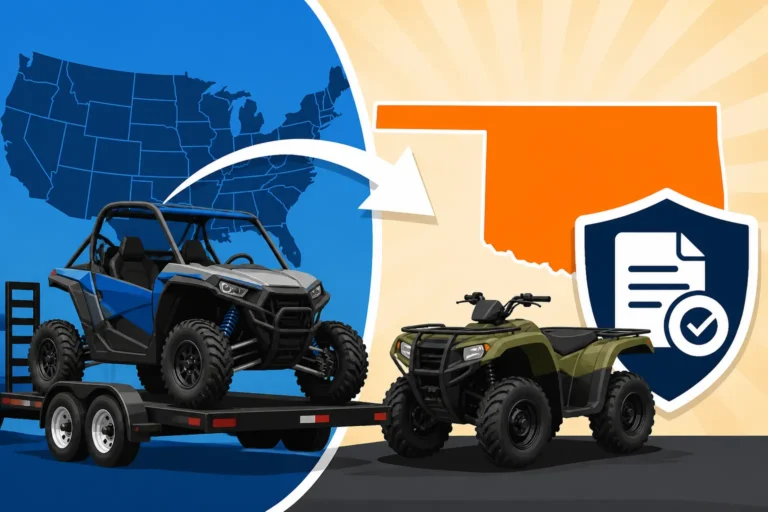
One of the most common questions revolves around what happens when an ATV or UTV, originally purchased with an agricultural excise tax exemption, changes hands. Let's say you bought a new side-by-side for your ranch, claimed the excise tax exemption with your ag permit, and registered it. A few years later, you decide to sell it to your neighbor, who doesn't have an agricultural permit and plans to use it for hunting on his lease. In this scenario, when your neighbor goes to the tag agency to title the machine in his name, he will likely be assessed the 4.5% excise tax on the declared purchase price.
The excise tax exemption is tied to the initial purchase by an eligible agricultural permit holder for agricultural use. It's not a permanent exemption that transfers with the machine to subsequent owners who don't qualify or intend to use it for agriculture. Therefore, when you sell an ATV or UTV that was originally purchased with an ag permit exemption, the new owner, if not an ag permit holder, will be responsible for paying the excise tax on their purchase. This is an important detail to discuss during a private sale, so there are no surprises for the buyer when they go to complete the [Oklahoma Titles After a Private Sale] process. Be transparent, and suggest they call a tag agency to confirm their obligations.
Audits and Compliance with Agricultural Use
Claiming an agricultural excise tax exemption is a privilege, and it comes with the responsibility of genuine compliance. The Oklahoma Tax Commission (OTC) and tag agencies operate on the assumption that you are truthfully using the machine for agricultural purposes when you claim the exemption. However, like any tax exemption, there is always the possibility of an audit or inquiry if the state suspects misuse. While infrequent for individual ATV/UTV owners, it's wise to maintain records that substantiate the agricultural use of your machine.
This means if you claim the exemption, your ATV or UTV should predominantly be engaged in tasks related to your agricultural operation. If an auditor were to inquire, you'd want to be able to demonstrate that the machine is indeed used for farming, ranching, or timber production activities. This could involve showing your agricultural income, documenting the types of tasks the machine performs, or simply having a clear understanding of how it integrates into your farm or ranch. For instance, if you're using services like LawDepot to generate legal documents for your farm, ensure that the description of your ATV or UTV's use aligns with your exemption claim. It’s about being honest and consistent with your representations. The goal is to avoid any appearance of claiming an exemption for a machine primarily used for recreational activities, which would be a misrepresentation and could lead to penalties or repayment of the exempted tax.
Agricultural Permit Exemptions: A Quick Guide
| Feature | Pre-July 2005 (ATV) / Pre-July 2008 (UTV) | Post-July 2005 (ATV) / Post-July 2008 (UTV) |
|---|---|---|
| Mandatory Titling | Generally Exempt (often no title issued) | REQUIRED (regardless of ag permit) |
| Mandatory Registration | Generally Exempt | REQUIRED (one-time $11 fee) |
| Excise Tax Exemption | YES | YES (if used for agriculture) |
| Road Use Exemption | Specific "Instrument of Husbandry" rules apply; not general road use | Specific "Instrument of Husbandry" rules apply; not general road use |
| Equipment Standards for Road Use | Not generally applicable for farm use | Not generally applicable for farm use; separate "street-legal UTV" rules apply for general road use |
| Ag Permit Required for Exemption | Yes, to claim any applicable exemptions | Yes, specifically for the excise tax exemption |
This table should help clarify the significant changes over time and highlight that the primary ongoing benefit of the ag permit for newer machines is the excise tax exemption.
Disclaimer
This article is for general informational purposes only and does not constitute professional advice. Laws, prices and regulations vary by location and change over time. Consult a qualified professional for guidance on your specific situation.