Oklahoma Bills of Sale for Older Machines
Buying an older ATV or UTV in Oklahoma can feel like navigating a maze of paperwork, especially when you discover the machine doesn't have a traditional title. Many riders face the frustration of finding a great deal on a used quad or side-by-side, only to realize that the formal title they expected simply doesn't exist for older models. This guide is here to untangle that confusion, explaining why a solid bill of sale becomes your most vital document and how to use it to properly register your vintage off-road machine in the Sooner State.
The Role of a Bill of Sale in Oklahoma ATV/UTV Transactions
When you're dealing with the world of off-road machines in Oklahoma, especially those with a few years under their belt, the concept of a bill of sale takes on an elevated importance. It's not just a casual receipt; it's often the foundational document proving your ownership and allowing you to follow through with the necessary registration steps. For many riders, the expectation is always a formal title transfer, just like with a car or truck, but the reality for older ATVs and UTVs is quite different.
Why a Bill of Sale Becomes Crucial for Older Machines
Oklahoma's approach to titling ATVs and UTVs has specific cutoff dates, which means a significant number of older machines simply weren't issued traditional titles when they were new. Imagine you've just found a fantastic deal on a 2003 Honda Rancher or a 2007 Polaris Ranger. Your first thought might be to ask for the title, only for the seller to tell you they don't have one, and perhaps never did. This isn't necessarily a red flag! For an ATV manufactured before July 1, 2005, or a UTV manufactured before July 1, 2008, a formal title from the state was not a requirement. This means many perfectly legitimate machines from these eras are out there without an Oklahoma-issued title.
In these specific scenarios, the bill of sale steps up to become the primary legal instrument proving that the machine has changed hands and that you are now the rightful owner. It replaces the title as the key document needed to demonstrate the chain of custody. Without it, you'd have no official record of purchase, leaving you in a difficult position when it comes to registering your new (to you) ride. It’s the cornerstone of your ownership claim, especially when the state itself didn't mandate a title for the machine in question.
Think of it this way: the state recognized that these machines were primarily for off-road use and weren't initially subject to the same titling requirements as on-road vehicles. While that has changed for newer models, the legacy of those cutoff dates means a robust bill of sale is your best friend. It’s what you’ll present at the tag agency to prove that the 2004 Kawasaki Brute Force you just bought legitimately belongs to you. It’s your first and most critical piece of evidence.
When Oklahoma Requires a Bill of Sale for Registration
So, when exactly does a bill of sale move from "nice to have" to "absolutely essential" for registration in Oklahoma? The answer primarily revolves around those aforementioned cutoff dates. If you've purchased an ATV manufactured before July 1, 2005, or a UTV manufactured before July 1, 2008, and the machine doesn't have an existing Oklahoma title, then a bill of sale is your direct path to registration. The tag agency will use this document to verify the sale, the purchase price for excise tax calculation, and your ownership. [Oklahoma ATV Cutoff of July 2005] and [Oklahoma UTV Cutoff of July 2008] are critical dates to remember.
Beyond the cutoff dates, a bill of sale is also incredibly important in private sales, even for machines that might technically have a title. While a title transfer is usually preferred, if you're buying a machine from a private seller who has misplaced or never properly obtained a title for a newer machine, a detailed bill of sale can serve as a strong starting point for addressing that issue, though it won't entirely circumvent the need for a title in cases where one should exist. However, for genuinely older machines without a title history, it is the undisputed king.
The state wants to ensure that the machine you're trying to register isn't stolen and that the excise tax (Oklahoma's version of sales tax on vehicles) is properly collected. A well-written bill of sale provides both the necessary proof of a legitimate transaction and the declared purchase price for tax purposes. Without it, the tag agency simply won't have the information they need to process your registration. It's the official record they rely on when no other formal ownership document, like a title, exists. This is especially true for [Oklahoma Machines With No Paperwork] where a bill of sale helps establish a legitimate history.
What Makes a Bill of Sale Valid in Oklahoma
Not just any scribbled note will pass muster as a valid bill of sale when you head to the tag agency. Oklahoma, like any state, has certain expectations for what this document should contain to be considered legitimate and complete. It's about ensuring clarity, preventing fraud, and accurately recording the transaction for both the buyer and the state. A strong bill of sale protects everyone involved.
Essential Information Every Bill of Sale Must Include
To be considered valid and useful for registering an older ATV or UTV in Oklahoma, your bill of sale must be comprehensive. First and foremost, it needs to clearly identify both the buyer and the seller. This means full legal names, current addresses, and contact information for both parties. This establishes who is selling and who is buying, an absolutely fundamental detail.
Next, the document must precisely describe the off-road machine being sold. This isn't just "a red quad." It needs to include the year, make, model, and crucially, the Vehicle Identification Number (VIN). The VIN is the machine's unique fingerprint, and without it, the bill of sale loses much of its credibility. Matching the VIN on the bill of sale to the actual VIN on the machine is a step you should never skip. Also, the purchase price, clearly stated, is vital for [Oklahoma Excise Tax at Titling] calculations. The date of the sale is another non-negotiable item, as it determines when your 30-day window to register begins, helping you avoid [Oklahoma Late Registration Fees].
A good bill of sale also includes a statement that the seller is indeed the legal owner and has the right to sell the machine, and that it is being sold "as-is" (unless otherwise specified, which is rare for private ATV/UTV sales). This helps protect both parties by clarifying the condition of the sale. You can find excellent templates from reputable sources, including LawDepot, that guide you through including all these necessary fields. These templates are designed to ensure you don't overlook any critical details that could cause issues down the road.
| Section | Required Information | Why It's Important |
|---|---|---|
| Seller Info | Full Legal Name, Address, Phone Number | Identifies who is transferring ownership. |
| Buyer Info | Full Legal Name, Address, Phone Number | Identifies the new owner. |
| Vehicle Description | Year, Make, Model, Color, Type (ATV/UTV) | Clearly identifies the machine. |
| Vehicle ID Number | Full 17-digit VIN (or shorter for pre-1981 machines) | Unique identifier; crucial for verifying the machine's identity and history. |
| Purchase Price | Amount Paid (Numerical and Written Out) | Establishes the value for excise tax assessment. |
| Date of Sale | Month, Day, Year | Determines the start of the 30-day registration window. |
| "As-Is" Clause | Statement of condition of sale | Clarifies that the buyer accepts the machine in its current state. |
| Seller's Attestation | Declares seller is legal owner and can sell | Confirms seller's right to transfer ownership. |
| Signatures | Seller's and Buyer's Signatures | Legally binds both parties to the terms of the sale. |
Signatures, Notaries, and Witnessing: What's Necessary?
When it comes to formalizing your bill of sale, signatures are absolutely non-negotiable. Both the buyer and the seller must sign the document. This act signifies that both parties agree to the terms of the sale as outlined in the document and that the transaction has officially taken place. Without both signatures, the document is incomplete and won't hold up as a legal record of transfer. This is a fundamental principle of any contract or agreement, and a bill of sale is no different.
Now, regarding notarization and witnessing, Oklahoma generally does not require a bill of sale for an ATV or UTV to be notarized to be valid for registration purposes. You won't typically be turned away at a tag agency because your bill of sale lacks a notary's seal. However, there's absolutely no downside to having it notarized, and in fact, it adds an extra layer of legal security. A notary public verifies the identities of the signers and witnesses their signatures, which can be invaluable if there's ever a dispute about the sale later on. It simply adds more weight and authenticity to the document.
Similarly, while not strictly required, having a third-party witness the signing of the bill of sale can also provide additional peace of mind. A witness can attest that both parties genuinely signed the document and that the transaction appeared legitimate. This is particularly helpful in private sales between individuals who might not know each other well. So, while you don't have to get it notarized or witnessed for a basic registration, these steps can offer significant protection and clarity, especially when dealing with higher-value machines or if you have any doubts about the seller. Utilizing a template from a service like LawDepot can help you ensure all necessary signature lines are included, whether for buyer, seller, or potential witnesses.
Navigating Transactions Without a Formal Title
The concept of buying a vehicle without a title can be daunting for many, as it goes against the typical process for cars and trucks. However, for certain older ATVs and UTVs in Oklahoma, this is not just normal but expected. Understanding why titles might be absent is key to confidently completing your purchase and subsequent registration. It all boils down to specific legislative decisions made years ago.
Understanding Oklahoma's Cutoff Dates for ATV/UTV Titles
The reason so many older ATVs and UTVs in Oklahoma don't have traditional titles stems from specific legislation that went into effect many years ago. Before July 1, 2005, the State of Oklahoma did not require titles for ATVs. This meant that if you bought a brand-new quad in 2004, you would have received a Manufacturer's Statement of Origin (MSO) from the dealer, but no state-issued title. The MSO was the document that established the first owner, and subsequent private sales would primarily rely on a bill of sale to transfer ownership. If you're looking at a Honda Foreman from 2003, it's highly likely it never had an Oklahoma title. This is crucial for understanding [Oklahoma's 2005 and 2008 Cutoff Dates].
Similarly, a separate cutoff date was established for UTVs. For side-by-sides manufactured before July 1, 2008, Oklahoma also did not mandate titling. So, if you're eyeing an older Polaris Ranger or Kawasaki Mule from 2007, don't be alarmed if the seller doesn't have a state title. For these machines, the MSO (if it still exists from the original purchase) and a clear bill of sale are the primary forms of ownership documentation. These cutoff dates are the historical backbone of why a bill of sale is so critical for older machines, distinguishing them from newer models that do require [Oklahoma Titles ATVs and UTVs].
It's vital to know these dates, as they fundamentally alter what paperwork you should expect when buying a used off-road machine. If someone is trying to sell you a 2010 ATV without a title, that's a red flag. But if it's a 2004 ATV, the absence of a title is normal, and your focus shifts entirely to ensuring you get a solid bill of sale. Being informed about these historical legislative details empowers you to make smarter, more secure purchases.
How a Bill of Sale Establishes Ownership for Untitled Machines
For those ATVs and UTVs that pre-date Oklahoma's titling requirements, the bill of sale serves as the official record of legal ownership transfer. When you present this document to an Oklahoma tag agency, they're not looking for a title to transfer; they're looking for proof that you legitimately acquired the machine. The bill of sale, complete with all the essential details we discussed earlier (buyer/seller info, vehicle description, VIN, price, date, signatures), provides that proof. It essentially becomes the "title" in spirit, if not in name, for these specific older models.
The tag agency will use the VIN on your bill of sale to run a check, ensuring the machine isn't reported stolen. They'll also verify the seller's information and your information. Once satisfied, they will process your one-time [Oklahoma ATV Registration Cost] (which is a very modest amount) and issue you a registration decal. This decal, which [Oklahoma Issues a Front Decal, Not a Plate], serves as your ongoing proof that the machine is legally registered in the state. The bill of sale, therefore, isn't just a receipt; it's the gateway to official recognition of your ownership by the state.
Without a robust bill of sale for these untitled machines, you would be unable to legally register your ATV or UTV, which means you couldn't legally operate it on designated trails or cross county roads where allowed. It's the critical link in the chain that legitimizes your ownership for state purposes. Even though it's not a title, it carries the same weight for these specific historical machines, confirming that you are the rightful custodian of your new off-road adventure vehicle.
Drafting and Obtaining a Proper Bill of Sale
Creating a bill of sale might seem like a simple task, but getting it right ensures a smooth transaction and avoids potential headaches down the line. It's about providing clear, unambiguous information that satisfies both parties and, crucially, the state's requirements for registration. Don't leave it to chance; a little preparation goes a long way.
Templates and Resources for Creating a Bill of Sale
You don't need to be a legal expert to draft a perfectly acceptable bill of sale. Many excellent templates are available that guide you through the process, ensuring you include all the necessary information. A highly recommended resource is LawDepot. Their website offers user-friendly templates for various legal documents, including bills of sale for vehicles, which can easily be adapted for an ATV or UTV. Using a structured template helps prevent omissions and ensures the document is formatted professionally. These templates often include placeholders for all the crucial details like VIN, buyer and seller information, and purchase price, ensuring nothing is overlooked.
Beyond dedicated legal document sites, many state Department of Motor Vehicle (DMV) or tag agency websites might offer generic bill of sale forms that can be used. Local stationery stores or even some bank branches might also have basic forms. The key is to find a template that covers all the required information for vehicle sales, even if it's not specifically labeled "ATV Bill of Sale." Just make sure it's comprehensive enough to include the VIN, purchase price, and all parties' details. Never just scribble something on a napkin; a formal template lends credibility to your transaction.
When you use a template, whether it's from LawDepot or another reputable source, make sure you fill in every applicable blank completely and accurately. Double-check all spellings, addresses, and especially the VIN. Any errors or missing information could lead to delays or issues when you try to register your machine at the tag agency. Print out at least two copies – one for you and one for the seller – and ensure both are signed by all parties. This way, everyone has an identical, signed record of the transaction.
Pitfalls to Avoid When Using a Bill of Sale
While a bill of sale is essential, it's not foolproof if not handled correctly. One of the biggest pitfalls is incomplete or inaccurate information. Imagine getting to the tag agency only to find the VIN on your bill of sale doesn't match the one on the machine, or the seller's name is misspelled. These seemingly small errors can lead to immediate rejection of your registration application and a frustrating trip back to the seller (if you can even find them). Always, always double-check every piece of data, especially the VIN.
Another common mistake is a vague description of the machine. "Used ATV" isn't good enough. Be specific: "2004 Kawasaki Brute Force 650, Green, VIN: [Insert Full VIN]." The more specific you are, the less room there is for ambiguity or dispute. Failure to include the full purchase price is also an issue, as this is the figure the state will use to calculate your excise tax. Trying to declare a lower price than what was actually paid can lead to legal problems and penalties if discovered. [Oklahoma Declaration of Purchase Price] is a form that is used in certain cases, but a clear bill of sale often negates the need for it.
Finally, never, ever accept a bill of sale that isn't signed by the seller. This is your proof that they transferred ownership to you. And ideally, make sure the seller's signature is legible and matches their ID. If possible, consider having a witness or even a notary present, even if not legally required, for added security, especially if you have any doubts about the seller. Skipping these steps can leave you vulnerable if the seller later tries to claim they never sold you the machine, or if you encounter issues at the tag agency. A comprehensive template from a service like LawDepot can guide you through each field, minimizing these common errors.
Registering an Older Machine with Just a Bill of Sale
So you've done your homework, found an older machine, and secured a rock-solid bill of sale. Now comes the moment of truth: heading to the tag agency. While the process is generally straightforward for these specific cases, knowing what to expect can alleviate any last-minute anxieties and ensure a smooth registration experience.
The Process at an Oklahoma Tag Agency
Once you have your complete and accurately filled-out bill of sale, your next step is to visit an authorized Oklahoma tag agency. Remember that you have [Oklahoma's 30-Day Registration Deadline] from the date of purchase to complete this. When you arrive, you'll need to present your bill of sale as proof of ownership. The tag agency clerk will carefully review the document, paying close attention to the buyer and seller information, the detailed machine description, the VIN, and the purchase price. They'll likely input the VIN into their system to check for any flags, such as whether the machine is reported stolen.
You will also need to bring your Oklahoma driver's license or state-issued ID, and potentially proof of your Oklahoma address if it's not on your ID. Be prepared to fill out the [Oklahoma's ATV Registration Application Explained], which will ask for your personal details and the machine's information, mirroring what's on your bill of sale. The clerk will calculate the [Oklahoma Excise Tax at Titling] based on the purchase price listed on your bill of sale, as well as the one-time [Oklahoma Charges $11 at Titling] registration fee. These fees are typically paid on the spot.
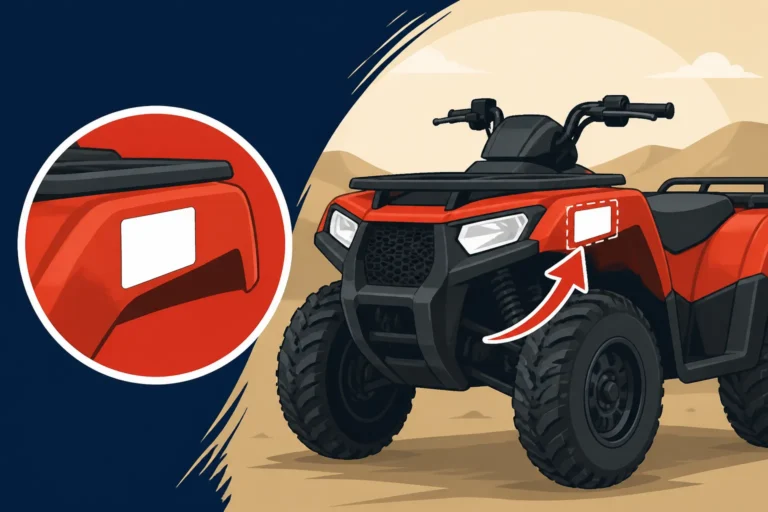
Once all the paperwork is processed and fees are paid, the tag agency will issue you your official registration decal. This decal is designed to be displayed prominently on the front of your ATV or UTV. [Where the Registration Decal Goes on an ATV] is usually a flat surface on the front fender or cowling, making it easily visible. Unlike car tags, this is a one-time registration and decal; [Oklahoma Registration Never Renews], so you won't get annual renewal notices. This entire process, guided by your robust bill of sale, formalizes your ownership and allows you to legally enjoy your older off-road machine in Oklahoma.
What Happens If Your Bill of Sale Is Challenged
While a properly executed bill of sale is generally sufficient for registering older, untitled ATVs and UTVs in Oklahoma, there can be rare instances where it's challenged. This isn't usually due to the bill of sale itself, but perhaps a discrepancy discovered by the tag agency. For example, if the VIN on your machine doesn't exactly match the VIN on the bill of sale, that will certainly raise a red flag. The tag agency cannot process the registration if there's a mismatch, as it casts doubt on the machine's true identity and origin. This is why painstakingly verifying the VIN before purchase is so critical.
Another potential challenge could arise if the machine is found to be reported stolen, even if your bill of sale looks legitimate. In such unfortunate cases, the machine will likely be impounded, and an investigation will follow. Your bill of sale, while proof of your purchase, won't override a stolen vehicle report, but it will be crucial evidence in demonstrating your good faith as a buyer. This highlights the importance of checking a machine's history through a VIN check service before you buy from a private seller, especially if it seems too good to be true.
If your bill of sale is challenged for any reason (missing information, illegible details, etc.), the tag agency clerk will inform you of the issue. You'll then need to correct the problem, which might involve contacting the seller to get a revised or clearer bill of sale, or even seeking a new one if the original was truly deficient. This is where a professional template, like those from LawDepot, can save you a lot of grief by ensuring all necessary fields are completed at the time of sale. Being prepared for potential questions and having accurate documentation is your best defense against any challenges.
Disclaimer
This article is for general informational purposes only and does not constitute professional advice. Laws, prices and regulations vary by location and change over time. Consult a qualified professional for guidance on your specific situation.