Oklahoma Agricultural Permit Exemptions
Oh, the agricultural permit in Oklahoma! If you own a ranch, a farm, or even just a bit of land where you use your ATV or UTV for actual work, you've probably heard whispers about this permit and wondered if it could save you some hassle or money. But let's be real, navigating state regulations can feel like slogging through deep mud after a spring rain. This guide is here to cut through that confusion, clarifying exactly what Oklahoma's agricultural permit does, what it doesn't do anymore, and how it impacts your off-road machine today.
Understanding Oklahoma's Agricultural Permit for ATVs and UTVs
For folks in rural Oklahoma, off-road machines aren't just for fun; they're vital tools for daily operations. Whether you're checking cattle, hauling feed, mending fences, or spraying weeds, your ATV or UTV is often an extension of your workforce. The state recognized this unique role, leading to the creation of the agricultural permit.
What an Ag Permit Is and Its Original Purpose
Think of the agricultural permit as a special designation for your ATV or UTV that says, "Hey, this machine is primarily for farm or ranch work, not just tearing up the dunes at Little Sahara." Historically, this permit was a big deal for Oklahoma's agricultural community. It was designed to acknowledge that these machines were essential business equipment, not luxury recreational vehicles. For many years, an agricultural permit offered significant relief from both the standard registration fees and the excise tax that would typically apply to other vehicles. It was a way for the state to support the backbone of its economy, understanding that adding more financial burden to working farmers and ranchers for their essential equipment just didn't make sense.
The purpose was clear: make it easier and more affordable for those in agriculture to use ATVs and UTVs for their livelihoods. Without it, every quad used to check a fence line or every side-by-side hauling hay bales might have been subject to the same fees as a machine bought purely for weekend trail riding. This distinction was crucial, validating the specific and rigorous demands placed on farm and ranch machinery. It meant less paperwork, less cost, and a smoother process for legitimate agricultural operations.
The Key Exemptions an Ag Permit Once Offered
Back in the day, before some crucial legislative updates, the agricultural permit was quite the golden ticket for farm and ranch owners. It offered two primary and very attractive exemptions. First, it completely exempted your ATV or UTV from the need for standard state registration. This meant you didn't have to worry about that [Oklahoma ATV Registration Cost] or dealing with the tag agency for a decal if your machine was solely used for agriculture and carried this permit. This was a huge convenience, simplifying the administrative load on busy farm operators. You just got your ag permit, and that was that for state-level registration.
The second, and arguably even more impactful, exemption was from the state's excise tax. When you buy a new vehicle in Oklahoma, you usually pay an excise tax, which is essentially a sales tax on vehicles. For ATVs and UTVs, this can be a substantial amount, as it's a percentage of the purchase price. However, if you had an agricultural permit for your machine, you were exempt from paying this excise tax. This meant significant savings right off the bat when you purchased a new quad or side-by-side for farm work. Imagine buying a brand-new utility UTV for the ranch; that 4.5% excise tax could easily add up to hundreds, if not over a thousand, dollars. The ag permit wiped that cost clean, directly lowering the barrier to entry for essential equipment. These exemptions together made the agricultural permit an incredibly valuable tool for those genuinely using their machines for farming or ranching operations, recognizing the economic realities of the industry.
The Shifting Sands of Ag Permit Exemptions: Post-2008 Changes
Like many laws and regulations, what was true yesterday isn't always true today. The rules around Oklahoma's agricultural permit saw a significant shift, particularly regarding registration, which has caused its fair share of head-scratching and frustration for owners. It's important to understand these changes so you don't inadvertently find yourself on the wrong side of the law or miss out on benefits you're still entitled to.
The July 2008 Turning Point for Registration Exemptions
This is where things get a little tricky for many owners. Prior to July 1, 2008, if you had an agricultural permit for your ATV or UTV, you were completely exempt from state registration. Full stop. However, a significant legislative change took effect on that date, altering the landscape for all new off-road machine purchases. For any ATV or UTV purchased on or after July 1, 2008, the agricultural permit no longer exempts the machine from state registration.
This change meant that even if your brand-new side-by-side was destined exclusively for farm work – hauling feed, checking fences, or pulling small implements – you still needed to register it with the state and get that single [Oklahoma Issues a Front Decal, Not a Plate] to display. Many farmers and ranchers found this update confusing, as the perception was that an "ag permit" meant total exemption. The state's intent was to bring more machines under a consistent registration framework, even those used agriculturally. While the logic might have been about better tracking or revenue, the practical effect for owners was an additional step and cost they previously didn't have to contend with. So, if you bought your machine after that pivotal date, assume you need to register it, even with your agricultural permit in hand.
How the Excise Tax Exemption Endures for Ag Permit Holders
Here's the good news amidst the changes: even with the registration requirement now applying to newer machines, the excise tax exemption tied to an agricultural permit remains firmly in place. This is a crucial point for anyone buying a new or used ATV or UTV specifically for farm or ranch use. When you purchase an off-road machine in Oklahoma, whether from a dealer or a private seller, you're generally subject to the state's 4.5% excise tax on the purchase price. This is a significant chunk of change, especially on higher-priced utility models.
However, if you obtain an agricultural permit for that machine and declare its primary use as agricultural, you are exempt from paying that 4.5% excise tax. This means real, tangible savings at the time of purchase. Let's say you buy a new UTV for $15,000. That 4.5% excise tax would be $675. With an agricultural permit, you pay $0 in excise tax. That's a direct savings that makes a real difference to the bottom line of a farming or ranching operation. It's one of the most powerful remaining benefits of the ag permit and why it's still worth pursuing if your machine qualifies. So, while you might still need to register it if it's a newer machine, you can absolutely still take advantage of the [Oklahoma Agricultural Excise Tax Exemption]. This exemption is filed at the tag agency when you go to title and register your machine.
Who Still Benefits: Qualifying for an Oklahoma Ag Permit
Even with the shifts in legislation, the agricultural permit still offers real advantages, especially on the tax front. But it's not a blanket exemption for just any machine that touches dirt. There are specific criteria and uses that define eligibility, and understanding these is key to making sure you qualify and stay compliant.
Defining "Agricultural Use" for Permit Eligibility
The cornerstone of qualifying for an Oklahoma agricultural permit is demonstrating genuine "agricultural use." This isn't about occasionally riding your quad through a pasture for fun or using your side-by-side to haul lawn clippings in your suburban yard. This permit is specifically for machines that are integral to a legitimate farming or ranching operation. Think about the daily grind of agricultural life:
- Hauling feed: Transporting hay bales, grain, or feed supplements to livestock in remote pastures.
- Checking fences and livestock: Regularly traversing large properties to inspect fencing, check on the health of cattle, sheep, or other animals.
- Spraying crops or pastures: Carrying spray tanks for herbicides, pesticides, or fertilizers.
- Light implement pulling: Using the machine to pull small trailers for tools, fencing materials, or even small cultivators in a garden plot that is part of a larger agricultural endeavor.
- General farm/ranch maintenance: Using the machine for tasks directly related to the upkeep and operation of the farm, like transporting fence posts or repairing irrigation lines.
The key here is that the machine's primary function must be in direct support of agricultural production or maintenance. If a law enforcement officer or state auditor were to observe your machine, they should see evidence of this agricultural work, not just recreational riding. Recreational riding, even on your own farm, generally wouldn't qualify the machine for the permit's benefits. It's about the purpose and frequency of use. This distinction is vital for avoiding potential issues if your permit's validity were ever questioned.
The Application Process for an Agricultural Permit
Getting your agricultural permit in Oklahoma isn't overly complicated, but it does require a few steps and the right documentation. The process typically starts at your local tag agency or a Service Oklahoma location. You'll need to fill out the necessary forms, which usually involve declaring the machine's intended agricultural use.
Here's a general rundown of what you can expect:
- Gather Your Documents: You'll need proof of ownership for your ATV or UTV. This typically means the Manufacturer's Statement of Origin (MSO) for a new machine or a [Oklahoma Bill of Sale for Older Machines] and the existing title for a used one. For new purchases, you'll also need the dealer invoice.
- Complete the Application: The tag agency will provide a specific application for off-road vehicles, and you'll indicate on it that you are applying for an agricultural permit. This might involve checking a box or writing "agricultural use" as the primary purpose. The [Oklahoma's ATV Registration Application Explained] will have a section for this.
- Declare Agricultural Use: You'll likely need to sign an affidavit or a specific section of the application form declaring that the machine will be primarily used for agricultural purposes on your farm or ranch. This is your official statement of intent.
- Pay Applicable Fees: While the agricultural permit saves you excise tax, there might still be a nominal fee for the permit itself, or for the standard registration if your machine was purchased after July 1, 2008. The main savings are on the excise tax.
- Receive Your Permit and Decal: Once processed, you'll receive your agricultural permit documentation and, if applicable, your standard registration decal which still needs to be displayed on the front of your machine.
It's crucial to be honest and accurate in your application. The state provides these exemptions to support agriculture, and misrepresenting your machine's use can lead to penalties. If you're unsure about specific requirements, it's always a good idea to call your local tag agency beforehand to confirm what documents you'll need for your particular situation.
Practical Implications for Your Farm or Ranch Machine
Understanding the current rules for an Oklahoma agricultural permit means knowing what you still need to do versus what you're exempt from. The practical side of this comes down to how you register your machine and the money you save on taxes.
Registration Requirements for Ag-Permitted Machines Post-2008
Let's reiterate this crucial point, because it's where many owners get tripped up: if your ATV or UTV was purchased on or after July 1, 2008, and even if it has an agricultural permit, it still requires standard state registration. This means you'll need to visit a tag agency, present your ownership documents (like the title or MSO and a bill of sale), and pay the one-time [Oklahoma ATV Registration Cost]. This fee, currently a flat amount and not a recurring annual charge, ensures your machine is officially recognized by the state.
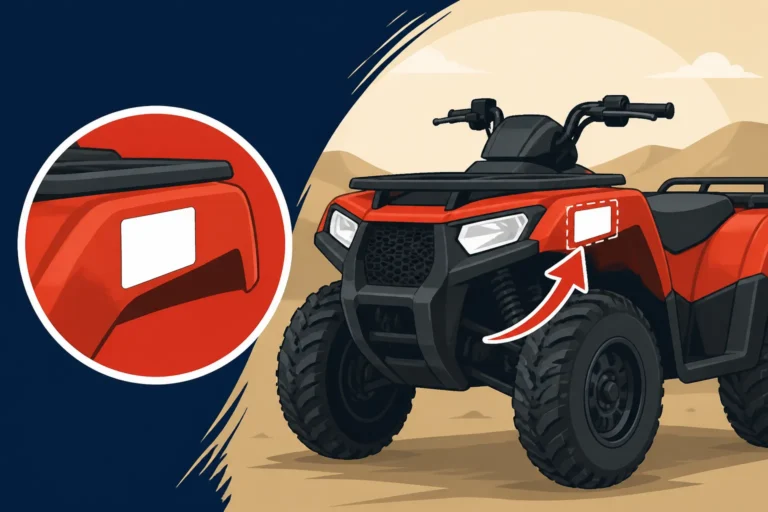
Once registered, you'll receive a registration decal. For ATVs and UTVs, this decal is typically a sticker that needs to be prominently displayed on the front of your machine. [Where the Registration Decal Goes on an ATV] is usually on the front fender or a visible part of the front frame. Even though your machine is used for agricultural purposes, this decal serves as proof that you've met the state's current registration requirements. This also includes machines like those used for [Oklahoma Registration for a Farm Machine] or [Oklahoma Registration for a Ranch Machine]. Without this decal on newer machines, you could face penalties if stopped by law enforcement, even if you truly use it for farm work. It’s a change from the old rules, but it’s the current reality for responsible farm and ranch owners.
The Excise Tax Advantage: What it Means for Your Wallet
Now, let's talk about the enduring financial benefit that still makes the agricultural permit incredibly valuable: the excise tax exemption. This is where an agricultural permit truly shines, directly saving you money at the point of purchase. Oklahoma imposes a 4.5% excise tax on the purchase price of ATVs and UTVs. This isn't a small amount, especially on modern, higher-priced machines.
Consider a new utility side-by-side that you're buying for $18,000 for your ranch. Without the agricultural permit exemption, you'd be looking at an additional $810 in excise tax (4.5% of $18,000). With the ag permit, you pay zero excise tax on that purchase. This is a significant savings that can be put towards other essential farm equipment, fuel, or even just keeping more money in your pocket. The process to claim this exemption is straightforward: when you go to the tag agency to title and register your machine, you'll present your agricultural permit application or indicate your agricultural use status. The tag agency clerk will then process the transaction without applying the excise tax. This applies whether you're buying from a dealer or a private seller, as the excise tax is paid at the tag agency upon titling, not directly to the seller. This financial relief highlights why the [Oklahoma Excise Tax at Titling] exemption is such a vital component of the agricultural permit program and remains a key benefit for working farms and ranches. This is a great area to ensure all your documents are in order. Services like LawDepot can assist in creating a solid [Oklahoma Declaration of Purchase Price] if buying privately, which is helpful when applying for any tax exemptions.
Understanding the Interplay with Standard ATV/UTV Rules
While an agricultural permit offers specific tax advantages and acknowledges your machine's working role, it doesn't give you a free pass on all other state regulations. It's crucial to understand how this permit interacts with broader ATV and UTV rules, especially concerning where you can ride and the titling process.
Road Use Limitations and the Ag Permit
One of the biggest misconceptions about an agricultural permit is that it automatically allows you to drive your ATV or UTV on public roads. This is simply not the case in Oklahoma. An agricultural permit designates your machine for farm or ranch use but does not transform it into a street-legal vehicle or grant widespread road-riding privileges. Generally, ATVs and UTVs are not permitted on public roads in Oklahoma, with some very specific and narrow exceptions.
The main exception that sometimes applies to agricultural machines is the "instrument of husbandry" rule. This allows ATVs or UTVs being used directly for agricultural purposes to cross public roads, or sometimes travel short distances on them, typically between fields or farm properties. However, this is usually limited to daylight hours, specific speed limits, and often requires visibility enhancements like a flag or lighting. It's a highly restrictive exception, not a blanket permission to drive down a county road to the grocery store. For more detailed information, you can look into [Oklahoma Farm Use on County Roads]. Always check local municipal and county ordinances as well, as some areas may have specific rules for limited road access. However, for general road use, an ag permit won't cut it. For general rules, refer to [Oklahoma Rules for Riding a County Road]. If you need true street-legal access, you'd be looking into [Oklahoma's Street-Legal UTV Class Explained], which has entirely different equipment and registration requirements.
Titling an Ag-Permitted Machine
Another area where the agricultural permit can cause confusion is regarding titles. It's important to understand that an agricultural permit, while a special designation for use, does not replace the need for a proper vehicle title. Just like any other ATV or UTV, an agricultural machine generally requires a state-issued title. This title is your official proof of ownership.
When you purchase a new ATV or UTV for agricultural use, you'll typically receive a Manufacturer's Statement of Origin (MSO) from the dealer. You'll take this, along with your bill of sale and your application for the agricultural permit, to the tag agency. There, the MSO will be converted into an [Oklahoma Titles ATVs and UTVs], which serves as your permanent record of ownership. For older, used machines that may not have a current title, there are processes to apply for one, though it can be more complex. The title is distinct from the registration (which, as we discussed, is now generally required for machines purchased post-2008, even with an ag permit). Having a clear title is crucial not only for proving ownership but also for future transactions, such as when [Selling a Registered Machine in Oklahoma]. A machine without a title, even if used exclusively for farm work, can create legal headaches and significantly reduce its resale value. So, while the permit saves you on excise tax, the title is still a fundamental document for your machine.
Avoiding Common Pitfalls and Ensuring Compliance
Navigating the rules for agricultural permits can be tricky, and it's easy to make assumptions that can lead to problems down the road. Staying informed and organized is your best defense against unintended non-compliance or missed opportunities for savings.
The Importance of Proper Documentation
One of the most critical aspects of dealing with any state vehicle or permit process is meticulous documentation. For your agricultural permit and the associated exemptions, this means keeping all your paperwork in order. This includes:
- Proof of Purchase: Your original MSO, dealer invoice, or bill of sale. If you're buying from a private party, ensure you have a robust [Oklahoma Bills of Sale for Older Machines] that clearly states the purchase price and seller information. Resources like LawDepot can help you generate professional and legally sound bills of sale, ensuring all the necessary details are captured for future reference, especially when claiming the excise tax exemption.
- Title Documents: Your current Oklahoma title for the ATV or UTV.
- Agricultural Permit Application/Approval: Copies of your submitted application and any approval documents or cards related to your agricultural permit.
- Registration Documents: Proof of current registration and the decal itself, especially for machines purchased after July 1, 2008.
Having these documents readily available can save you immense headaches. If you're ever stopped by law enforcement while operating your machine, or if you need to sell it, having all your paperwork in order proves your compliance and makes the process smooth. Improper or missing documentation can lead to delays, fines, or difficulties in transferring ownership or claiming exemptions. For instance, if you apply for the [Farm Permits Still Save You the Excise Tax], having a clear, accurate bill of sale or declaration of purchase price is paramount.
When an Ag Permit Might Not Be the Best Fit
While an agricultural permit offers excellent benefits, particularly the excise tax exemption, it's not always necessary or advantageous for every owner. There are scenarios where the permit might provide minimal benefit or might not even be applicable.
- Purely Recreational Use: If your ATV or UTV is solely for trail riding, hunting, or recreational use, even if some of that takes place on private rural land, it does not qualify for an agricultural permit. The "agricultural use" definition is strict, focusing on work directly tied to farming or ranching. In this case, applying for one would be a waste of time and could be seen as misrepresentation.
- Machines Purchased Before July 2008 (and Never Registered): If you own an older ATV or UTV that was purchased before July 1, 2008, and has always been used strictly for agricultural purposes, it might already be exempt from state registration without needing a formal permit. These older machines were often grandfathered in under previous rules. In such cases, an ag permit might not add any additional benefit you don't already have. However, you'd still likely need a title for ownership proof.
- Minimal Financial Impact: For very inexpensive or older machines where the excise tax savings would be negligible, the administrative steps to secure and maintain an agricultural permit might not feel worth the effort.
- Uncertainty of Use: If your machine's use is a mix of agricultural and significant recreational activity, trying to claim an ag permit could put you in a grey area. It's often better to comply with standard registration and titling requirements for recreational machines to avoid potential legal issues.
Ultimately, weigh the benefits – primarily the excise tax exemption – against the specific circumstances of your machine's use and purchase date. If you're genuinely operating a farm or ranch and buying a new or relatively new machine, the [What an Agricultural Permit Still Exempts You From] (the excise tax) is a compelling reason to pursue it. For other situations, standard registration and titling might be the most straightforward path. Always consult with your local tag agency or Service Oklahoma with specific questions about your unique situation.
| Feature | Machine Purchased Before July 1, 2008 (Ag Use) | Machine Purchased After July 1, 2008 (Ag Use) | Recreational Use (Any Purchase Date) |
|---|---|---|---|
| State Registration | Generally Exempt (if solely ag use) | Required | Required |
| Excise Tax Exemption | Yes | Yes | No |
| Agricultural Permit | Recommended/Obtainable | Recommended/Obtainable | Not Applicable |
| Road Use Allowance | Limited (Instrument of Husbandry) | Limited (Instrument of Husbandry) | Limited (Varies by local ordinance) |
| Need for Title | Yes | Yes | Yes |
Disclaimer
This article is for general informational purposes only and does not constitute professional advice. Laws, prices and regulations vary by location and change over time. Consult a qualified professional for guidance on your specific situation.