Oklahoma Riding in Fall
Fall can be one of the most comfortable times to ride an ATV or UTV in Oklahoma, but cooler weather doesn’t guarantee open trails or easy conditions. Hunting activity, rain-softened clay, changing daylight and area-specific access rules can all affect a ride. This guide helps you choose a riding area, check what’s open and prepare for a safer fall outing.
Plan around Oklahoma’s changing fall conditions
Expect big swings in weather and daylight
An Oklahoma fall ride might start with a chilly morning and end in warm sunshine, or turn damp and cold after a front moves through. Conditions can vary between the open plains around Waynoka, the wooded hills near Wilburton and the southeast’s forested riding areas. Dress in layers, bring rain protection and pack more water than the cooler temperatures might suggest you need.
Shorter days also change how you should plan. Set a turn-around time that leaves a comfortable margin before dark, especially if you’re riding unfamiliar trails or traveling with children. Don’t assume you can make up time by riding faster: dust, uneven ground, wildlife and other trail users can all limit visibility and stopping distance.
For a broader look at how riding conditions change through the year, see [Oklahoma Riding Season Month by Month]. The key fall takeaway is to plan for the conditions you may encounter later in the day, not only what you see when you unload.
Treat recent rain as a trail-planning issue
Rain can make Oklahoma’s red clay slick, particularly in shaded woods, low spots and rutted sections. A trail that seemed manageable on a dry afternoon may become difficult after overnight showers. On a side-by-side, that can mean lost traction on a slope; on a quad, it can mean sliding into a rut or struggling to steer through mud.
Before towing, check the riding area’s current status and contact the park or land manager if conditions are unclear. A forecast is useful, but it doesn’t tell you exactly how a particular trail has drained. If rain is expected, consider a shorter route, avoid steep or waterlogged terrain and have a safe way to turn around before committing to a narrow trail.
Keep [Oklahoma Trail Closures After Rain] in mind when building your plan. A closure or muddy section isn’t a challenge to push through; it may be there to prevent trail damage, protect riders or keep a vehicle from getting stranded.
Choose a riding area that fits your fall trip
Match terrain and access rules to your group
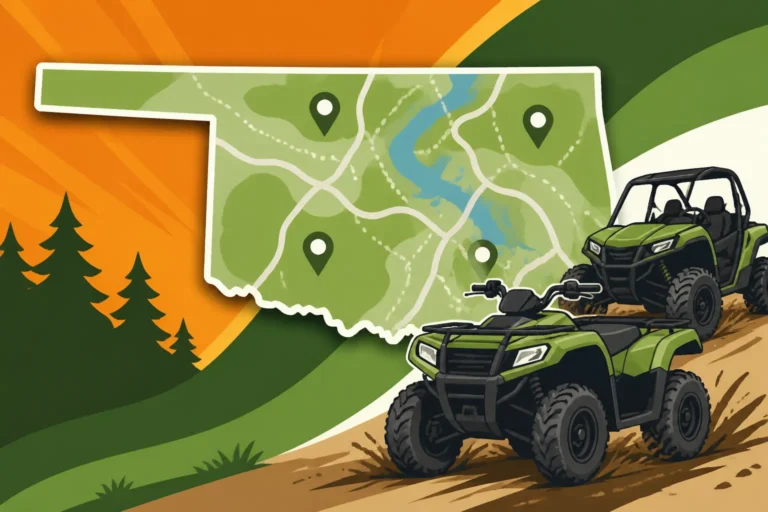
Oklahoma’s riding areas offer very different experiences. Little Sahara State Park near Waynoka is known for sand, while Robbers Cave OHV Area near Wilburton offers wooded, hilly terrain. Cross Bar Ranch near Davis is a private riding area, so check its rules and operating details before heading out. What works for a family’s first fall ride may not suit a group looking for steep, technical ground.
Think about the least experienced rider in your group, not just the most confident one. Ask whether the area allows your type of machine, whether trails are suitable for beginners, and what rules apply to passengers, helmets and equipment. When the group has mixed experience, pick a place where riders can take shorter routes or return to camp without getting separated from everyone else.
For a useful overview of access and riding-area options, start with [Oklahoma ATV Trails: Where to Ride]. Then check the rules for the specific destination rather than relying on a general trail list. Local conditions and access arrangements can differ even between areas that are relatively close together.
Check fall hunting and seasonal access carefully
Fall overlaps with hunting activity, so don’t assume that a route you used in summer is still open or appropriate. Public recreation areas, wildlife management areas and privately managed timberland can have different access rules. Some timberland riding opportunities are tied to seasonal windows, permits and hunting requirements; those rules should be confirmed for the specific property before you go.
This matters even if your group isn’t hunting. You may encounter hunters, parked vehicles, active work or limits on where motorized vehicles can travel. Stay on routes that are clearly allowed, respect gates and signs, and avoid riding into an area just because it appears on a map. For background, read [Oklahoma Hunting Season and Trail Access] and [Oklahoma Timber Land Access Rules].
A mapping app such as onX Offroad can be a helpful planning aid for reviewing routes and property boundaries, but don’t treat a map as permission to ride. Check the land manager’s rules and confirm that access is open. Before leaving home, save the information you’ll need in case cell service is weak.
| Fall riding area or setting | What it may suit | What to check before going |
|---|---|---|
| Little Sahara near Waynoka | Riders looking for open sand terrain | Park rules, sand-appropriate equipment, flag and lighting requirements |
| Robbers Cave near Wilburton | Riders seeking wooded, hilly terrain | Operating hours, trail conditions and machine restrictions |
| Cross Bar Ranch near Davis | Groups looking for a private riding park | Park rules, access arrangements, waivers and camping options |
| Honobia Creek or Three Rivers areas | Riders considering seasonal timberland access | Current access window, permits, hunting requirements and designated routes |
| Ouachita National Forest access areas | Riders planning a forest-area outing | The applicable motor vehicle use map and route-specific restrictions |
The table is a planning starting point, not confirmation that a particular route is open. For forest access, review [Oklahoma Ouachita National Forest Access] and the relevant route information before unloading.
Prepare your ATV or UTV for a fall ride
Check the machine before the trailer leaves home
A pre-ride check is easier in the driveway than at a trailhead. Inspect tires for damage and appropriate pressure, check the brakes and steering, and make sure lights work if your ride could extend toward dusk. Look for loose fasteners, fluid leaks and anything that may have shifted since your last outing. If you use a trailer, check its tires, lights, hitch and tie-down points too.
Fall riding can add challenges that aren’t obvious at first glance. Wet leaves may cover rocks, roots or ruts. Sand can still be loose at Little Sahara, while wooded routes may be slick after rain. Choose tires and equipment for the terrain you plan to ride, and don’t assume one setup is ideal everywhere.
Bring basic recovery and repair supplies suited to your machine and group. That might include a tire repair kit, suitable tools, a tow strap and a first-aid kit. If you’re riding in a remote area, tell someone your route and expected return time. An app such as onX Offroad may help you plan and keep track of a route, but carry a backup plan for poor signal or a drained device.
Pack for shorter days and cooler evenings
A comfortable daytime temperature can be misleading if you’re still on the trail after sunset. Pack warm layers, gloves and rain gear where you can reach them—not buried under camping equipment. Bring water and food, and consider a small first-aid kit and a light source for each rider. If you’re traveling with children, plan extra stops and bring clothing suited to the youngest rider.
If you’re camping, confirm the riding area’s camping arrangements before you arrive. Some places have designated campgrounds, while others may not allow overnight stays. The availability of a campsite doesn’t automatically mean that every nearby trail is open to motorized use. [Oklahoma Trails With Camping] can help you identify options to investigate; verify details with the specific area.
For an unfamiliar destination, onX Offroad can be part of your route-planning routine alongside official park or land-manager information. Review where you intend to ride, note a reasonable turnaround point and share the plan with someone who isn’t on the trip. That simple step can reduce confusion if the group gets separated or a route is blocked.
Ride responsibly and adjust the plan on the trail
Keep your pace appropriate for the surface
Fall conditions can change quickly from dry and firm to slick and rutted. Leave enough space between machines to see what the rider ahead is doing and to avoid their dust or debris. Slow down around blind turns, trail intersections and crowded areas. On hills, avoid stopping where you could block the trail or make it hard for another rider to pass safely.
Stay on designated routes and follow posted signs. Don’t make a new path around mud, a gate or a closure; doing so can damage land and create hazards for other riders. Be considerate around hikers, campers, hunters and nearby residents. [Oklahoma Trail Etiquette Locals Expect] offers useful reminders for sharing riding areas responsibly.
Have a clear reason to turn back
Turning around is a good decision when the trail is too slick, the group is running behind schedule, a rider is tired or access is uncertain. Before setting out, agree that anyone can ask to stop or head back without being pressured to continue. That matters especially with mixed-experience groups, where a confident rider may underestimate how demanding a muddy hill or unfamiliar trail feels to someone else.
If an area is unexpectedly closed or the route becomes unsafe, don’t try to bypass the restriction. Check your map, return by a known route if it’s safe, and contact the land manager when you have service. A planning tool such as onX Offroad can help you review your intended route, but signs, closures and land-manager instructions take priority.
Most importantly, leave enough time to get back before dark. A fall ride should end with the group safely loaded and on the way home—not navigating an unfamiliar trail in fading light because the original plan didn’t leave room for a slow section or a wrong turn.
Disclaimer
This article is for general informational purposes only and does not constitute professional advice. Laws, prices and regulations vary by location and change over time. Consult a qualified professional for guidance on your specific situation.