What to Ask the Dealer About Your Decal
Buying a new ATV or UTV is incredibly exciting, but the paperwork part? Not so much. Many folks leave the dealership feeling like they just ran a gauntlet, clutching keys to their awesome new machine but totally unsure about their registration decal. You're probably wondering, "What am I supposed to ask to make sure this is all handled correctly?" It's a completely valid concern, and honestly, it's easy to get lost in the shuffle. This guide is here to cut through that confusion, giving you the exact questions to ask your dealer about your off-road vehicle decal in Oklahoma, so you can ride with peace of mind.
Understanding Oklahoma's Unique Decal System for ATVs and UTVs
Oklahoma's system for registering off-road vehicles like ATVs and UTVs can feel a little… different. If you've ever registered a car or truck here, you might be expecting something similar, but that's not quite how it works for your quad or side-by-side. This unique approach means that what you need to ask your dealer about the decal might be different than what you'd ask for a street-legal vehicle. It's a common point of confusion, and you're not alone in feeling a bit bewildered by the distinctions.
First off, it's crucial to understand that we're talking about a registration decal, not a license plate. For many riders, this is the first hurdle in understanding the process. While street-legal vehicles get plates and annual renewals, your off-road machine is in a different category. The state recognizes these machines have a specific purpose and often don't operate on public roads, which influences the registration requirements. Knowing this foundational difference can help you ask more targeted questions at the dealership and avoid unnecessary back-and-forth later on.
The distinct nature of this registration system means that dealers themselves might have varying levels of familiarity with the nuances for ATVs and UTVs versus their typical car sales. This isn't to say they aren't helpful, but being armed with specific knowledge empowers you to guide the conversation and ensure all the right boxes are checked for your off-road machine.
The "One-and-Done" Nature of Oklahoma's ATV/UTV Registration
One of the biggest differences you'll encounter in Oklahoma is that ATV and UTV registration is essentially a "one-and-done" deal. Unlike your car, truck, or even a street-legal UTV, you don't have to worry about renewing your off-road vehicle's registration every single year. This is a huge relief for many owners, as it removes that annual reminder to pay fees and deal with paperwork. Imagine getting your new quad, going through the registration process once, and then simply enjoying the trails for years to come without another thought about that specific fee.
This "no renewal" policy often catches new owners by surprise, especially if they're used to the recurring expenses and deadlines associated with other vehicle types. When you hear about the initial registration fee, it's important to clarify with your dealer that this cost covers the lifetime of your ownership in Oklahoma for that particular machine. It means that once you've paid the initial [Oklahoma ATV Registration You Pay Once] and received your decal, you won't be sent any annual reminders or charged additional fees for that registration again. This simplified approach is part of what makes Oklahoma's off-road vehicle ownership a bit more streamlined in the long run.
So, when you're discussing the final costs with your dealer, make sure to ask specifically about this. Confirm that the registration fee is a one-time charge and that there are no hidden annual renewal fees down the line. It's a key point of clarity that can save you future headaches and ensure you fully understand the financial commitment. This "never renews" aspect is a significant benefit, but it's often overlooked in the flurry of a new purchase. [Oklahoma Registration Never Renews] is a real perk for riders here.
Decal vs. Plate: What to Expect
Forget about getting a metal license plate for your ATV or UTV. In Oklahoma, for off-road machines, you're going to receive a decal. This small sticker is your proof of registration, and it's issued by the Oklahoma Tax Commission through your local tag agency. It's a completely different animal than the standard vehicle tag, and understanding this distinction right from the start can prevent a lot of confusion. Many new owners are expecting a physical plate that bolts onto the back, only to find out it's a sticker for the front.
The decal itself is designed to be displayed prominently on the front of your machine. This means it needs to be affixed in a visible spot, often on the plastic bodywork, the brush guard, or even the front rack, depending on the machine's design. The purpose is easy identification for law enforcement or park rangers, ensuring that your machine is properly registered for use in designated areas. It's a simple, straightforward system, but it's one that often requires specific instructions, which your dealer should be able to provide or confirm. [Oklahoma Issues a Front Decal, Not a Plate] is a standard practice here.
When talking to your dealer, make sure to ask them to point out exactly where the decal is intended to go on your specific model. While the general rule is "on the front," ATVs and UTVs come in so many shapes and sizes that the ideal spot can vary. You want to ensure it's placed somewhere that won't be easily obscured by mud, branches, or accessories, and where it will adhere properly. Getting this clarity upfront means you won't be guessing later or accidentally putting it in a spot that makes it hard to see.
Key Questions to Ask Your Dealer About the Decal Process
Navigating the purchase of an ATV or UTV involves a lot of moving parts, and the registration decal is one of them. Dealers are usually well-versed in the sales aspect, but sometimes the intricacies of post-sale registration, especially for off-road vehicles, can be a bit hazier. This is where your proactive questions come into play. It's not about being difficult; it's about being informed and ensuring you leave with all the necessary information to comply with Oklahoma law. Don't be shy about asking direct questions; a good dealer will appreciate your thoroughness.
It's common for buyers to assume that all aspects of registration are seamlessly handled by the dealer, but this isn't always the case with off-road vehicles. Sometimes, the dealer will process the title and excise tax, but the decal itself might require a separate trip to a tag agency, or it might be mailed to you directly. Understanding who is responsible for which step and what the expected timeline is will save you a lot of anxiety and potential backtracking. This section will guide you through the critical questions to ensure you're fully prepared.
Remember, the goal is to drive away knowing not just that your machine will be registered, but how that process will unfold and what role you'll need to play. This clarity is especially important given the specific requirements for ATV and UTV decals in Oklahoma, which differ from traditional vehicle registrations.
When and How Will I Receive My Decal?
This is perhaps the most critical question to ask your dealer. The excitement of taking your new machine home can quickly turn into frustration if you're left wondering when, or even if, your registration decal will arrive. Oklahoma law states you have thirty days to register your machine after purchase, but the decal itself isn't always instantaneous. Some dealerships will facilitate the entire process, acting as a liaison with the tag agency, while others will provide you with the necessary paperwork to take care of it yourself.
Ask your dealer directly: "Will you be handling the entire registration process, including securing the decal, or will I need to visit a tag agency myself?" If they are handling it, inquire about the expected timeline. "When should I expect the decal to arrive, and will it be mailed directly to me or will I pick it up from you?" This clarifies expectations and helps you plan your first rides within the legal timeframe. It's not uncommon for decals to take a few weeks to process and arrive via mail after the initial paperwork is submitted.
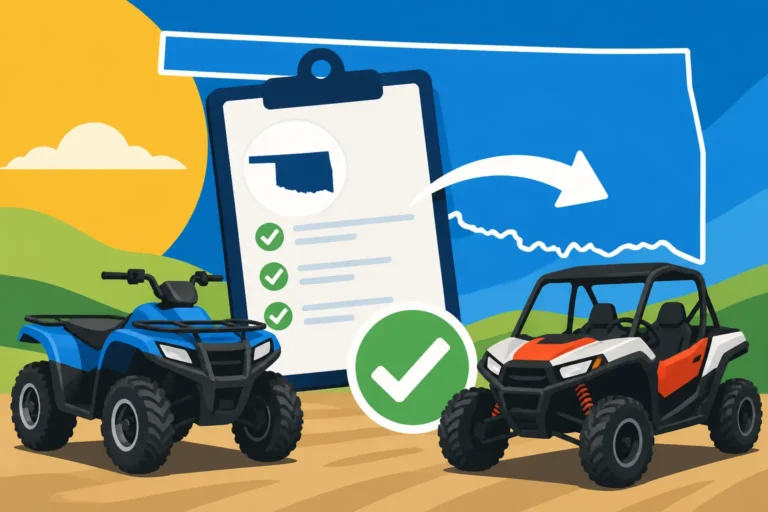
If the dealer expects you to visit a tag agency, ask them for a checklist of all the documents you'll need to bring. This usually includes the Manufacturer's Statement of Origin (MSO) for a new machine, or a bill of sale and title for a used one, along with proof of purchase. Knowing exactly what's required will make your trip to the tag agency efficient and hassle-free. [Oklahoma's 30-Day Registration Deadline] is a hard cutoff, so getting this information squared away quickly is essential.
What Documentation Do I Need to Keep for Proof of Registration?
Beyond the physical decal itself, there's crucial documentation you'll need to keep to prove your ATV or UTV is properly registered and titled in Oklahoma. Think of it like carrying your car's registration and insurance card – you need similar proof for your off-road machine, even if it's just a decal. Losing track of these papers can create headaches down the road if you're ever stopped by law enforcement or if you decide to sell your machine.
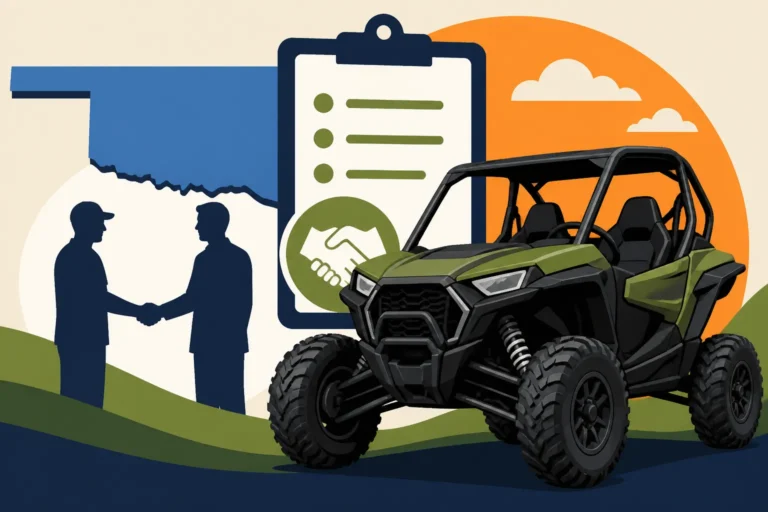
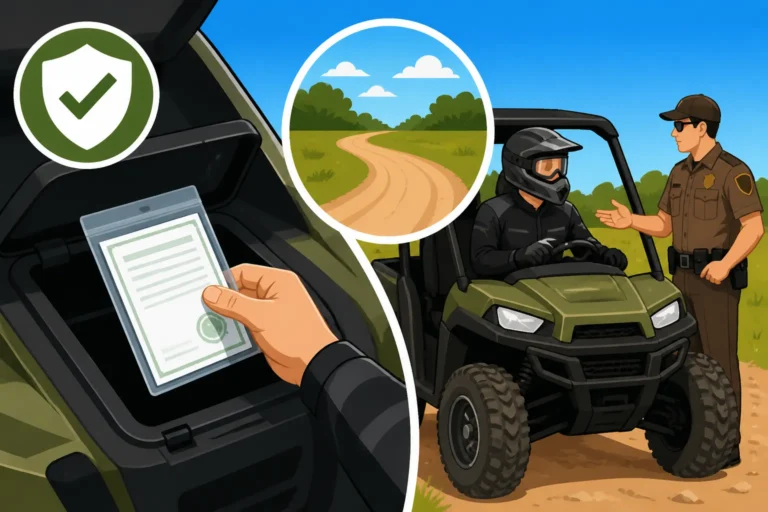
Ask your dealer what specific documents you should receive and retain. This typically includes your official registration card (often a small paper card that fits in your wallet), the certificate of title, and your bill of sale. The bill of sale is especially important, even if the dealer provides a fancy invoice. A clear, detailed bill of sale protects both buyer and seller, detailing the purchase price, date, and identifying information for the machine. If you're buying privately, or just want an extra layer of protection, resources like LawDepot offer templates for creating a robust bill of sale that covers all the necessary legal points.
Make sure you understand which of these documents you'll receive from the dealer and which will be mailed to you directly from the state. Keep these papers in a safe, waterproof place. Many riders create a dedicated folder for their off-road vehicle's paperwork. While the decal itself is visible on your machine, having the paper proof of ownership and registration is vital for any legal or administrative needs that might arise. A well-crafted bill of sale, perhaps generated using a service like LawDepot, provides undeniable proof of transaction details.
Ensuring Correct Decal Placement and What to Do if it's Lost
Once you have your decal in hand, whether directly from the dealer or after a trip to the tag agency, the next step is affixing it to your machine. This might seem like a minor detail, but incorrect placement could lead to questions from authorities. Oklahoma has specific guidelines for where these decals should be displayed, and understanding them helps avoid any unnecessary scrutiny. It’s not just about slapping it on; it’s about making sure it’s visible and legally compliant.
Beyond initial placement, life happens. Decals can fade, peel off, or even get torn off during aggressive rides through brush or mud. Knowing what steps to take if your decal goes missing or becomes unreadable is just as important as knowing where to put it in the first place. You don't want to be caught riding without valid proof of registration, even if it's just a missing sticker. Planning for these contingencies is part of being a responsible off-road vehicle owner.
This section will cover the specifics of where your decal should go and what actions you need to take if it ever needs to be replaced. It’s about ensuring continuous compliance and peace of mind while you're out enjoying the trails.
Proper Placement for Your Oklahoma ATV/UTV Decal
Oklahoma is pretty clear about where your ATV or UTV registration decal needs to go: it belongs on the front of the machine. This isn't just a suggestion; it's a requirement to ensure that your off-road vehicle is easily identifiable by authorities. The decal must be clearly visible, so avoiding areas that are typically covered by mud or obstructed by accessories is key. Think about how a park ranger or a state trooper would approach your machine from the front – they should be able to spot that decal without having to search for it.
For an ATV, the ideal spot is often on the front plastic bodywork, the center of the brush guard, or the front rack, if it's not too cluttered. For a side-by-side or UTV, you might find a good spot on the front bumper, the grille area, or the hood, always keeping visibility in mind. Your dealer can often provide specific advice based on the model you've purchased. Don't be afraid to ask them to show you examples of where other customers have successfully placed their decals on similar machines. [Oklahoma Decals on the Front of a Machine] is the standard rule, so make sure yours adheres.
When applying the decal, ensure the surface is clean and dry to allow for proper adhesion. A dirty or greasy surface can prevent the decal from sticking securely, leading to it peeling off prematurely. Take your time during application to avoid bubbles or wrinkles, which can make the decal harder to read or more susceptible to damage. Remember, this decal is your machine's primary identifier for registration, so treating it with care during placement will help it last. For a side-by-side, finding a flat, easily seen surface can sometimes be a challenge, but prioritizing visibility is paramount. [Oklahoma Decal Placement on a Side-by-Side] can be tricky, so visualize it.
Here's a quick comparison of dealer interactions regarding decals:
| Aspect | Common Dealer Promise/Assumption | Reality to Confirm with Questions |
|---|---|---|
| Decal Arrival | "It'll be mailed to you." | When exactly? Will it be from the dealer or the state? |
| Responsibility | "We handle everything." | Does "everything" include the actual decal or just the title/tax? |
| Documentation | "Your invoice is all you need." | Do I also need a separate registration card or official bill of sale? |
| Placement | "Just stick it on the front." | Where precisely on my model is best for visibility and adhesion? |
| Lost Decal | "Don't worry about it." | What's the process for replacement if it gets damaged or lost? |
What If My Decal is Lost, Damaged, or Never Arrives?
It's a frustrating scenario: you've done everything right, but your decal either never shows up, or it succumbs to the rigors of off-road riding. Perhaps it faded in the sun, got ripped by a low-hanging branch, or just peeled off after a particularly muddy weekend. Don't panic, but also don't ignore it. Riding without a visible, valid decal can lead to unnecessary hassle if you're ever checked by an officer.
If your decal is lost or damaged, you'll need to obtain a duplicate. This process typically involves a visit to an Oklahoma tag agency. You'll likely need to fill out an application for a duplicate registration decal and pay a small fee. It's helpful to bring any existing paperwork you have, such as your registration card or title, to expedite the process. The tag agency can look up your machine's registration records and issue a new decal on the spot or arrange for it to be mailed. [Oklahoma Decal Replacement If Lost] is a straightforward process, but it does require your attention.
If your decal simply never arrived after the initial purchase and registration, first double-check with your dealer about when they submitted the paperwork and what mailing address they provided. If it's been an unreasonable amount of time (more than a few weeks), then it's time to contact a tag agency directly. They can confirm if your registration was processed and if a decal was issued and mailed. Sometimes, mail gets lost, or there might have been a hiccup in the initial submission. Knowing [How to Order a Duplicate Registration Decal] means you're prepared for any eventuality, keeping you compliant and ready to ride.
Disclaimer
This article is for general informational purposes only and does not constitute professional advice. Laws, prices and regulations vary by location and change over time. Consult a qualified professional for guidance on your specific situation.