What Changes for a Quad Bought After July 2005
Navigating the ins and outs of Oklahoma's off-road vehicle laws can feel like trying to ride a dune buggy through a mud pit – confusing and often frustrating. Many riders, especially those who've recently acquired a quad, find themselves scratching their heads over what paperwork they need, particularly when dealing with machines from different eras. This guide is here to untangle the specific requirements and clarify exactly what changes for an ATV, or quad, that was purchased after July 1, 2005, ensuring you're fully prepared for the tag agency.
Understanding Oklahoma's ATV Registration Cutoff Dates
Oklahoma's approach to ATV registration and titling isn't a one-size-fits-all situation, and that's where a lot of the confusion stems from. Unlike cars, where the rules are pretty consistent regardless of age (aside from classic tags, of course!), off-road machines have specific historical cutoff dates that drastically alter their paperwork requirements. It's a key distinction that can make or break your trip to the tag agency.
The Significance of July 1, 2005, for Quads
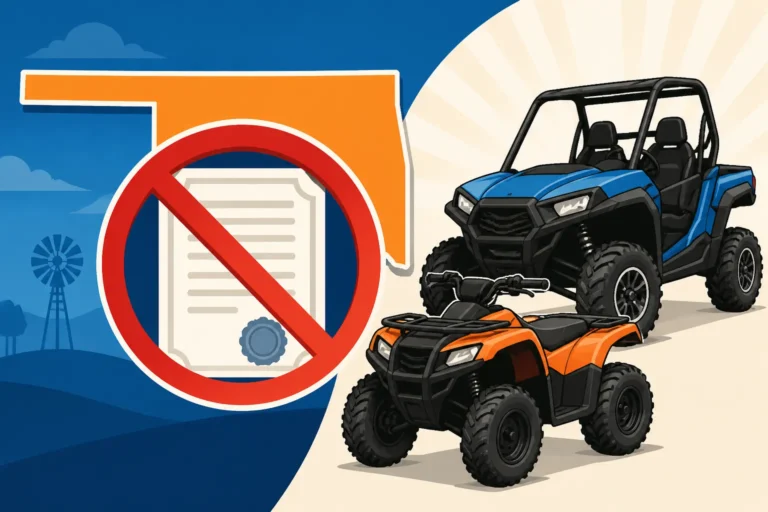
Before July 1, 2005, the world of ATVs in Oklahoma was, for the most part, a lot simpler from a regulatory standpoint. Quads were largely considered "off-road vehicles" and didn't fall under the same strict titling and registration mandates as their on-road counterparts. You might have bought a used quad, shaken hands, exchanged cash, and driven off with just a simple bill of sale, and that was perfectly fine. There wasn't a centralized system tracking every ATV sale or ownership transfer in the same way.
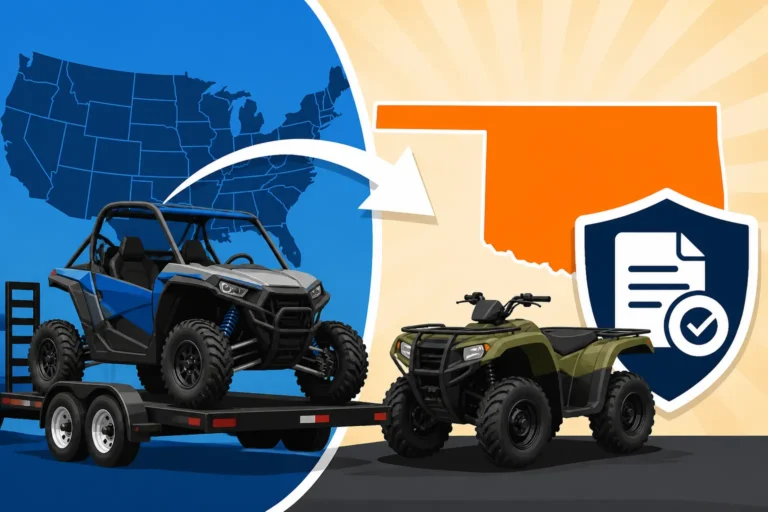
However, everything shifted dramatically on July 1, 2005. This date marked a significant turning point in Oklahoma law. From this day forward, any new ATV purchased in the state, or any ATV brought into Oklahoma from another state, became subject to mandatory titling and a one-time registration fee. This was a move to create a more comprehensive record of off-road vehicle ownership, streamline enforcement, and collect revenue. So, if your quad rolled off the dealership lot or entered Oklahoma after this date, the rules of the game changed entirely. It means that the state now expects a much clearer paper trail for your machine, moving away from the more informal processes that were once common.
Why Cutoff Dates Matter for Your Paperwork
The difference these cutoff dates make really boils down to the "burden of proof" for ownership. For a quad purchased or acquired after July 1, 2005, the state's expectation for documentation is much higher. You'll typically need official paperwork, such as a Manufacturer's Statement of Origin (MSO) for new machines or a properly assigned title from a previous owner for used ones. Without this, you're going to face significant hurdles trying to get your machine legally recognized.
On the flip side, machines that predate this July 2005 cutoff often benefit from more lenient requirements. While a bill of sale is always a good idea, for these older quads, the tag agency might be more flexible. In some cases, if a previous title was never issued or was lost to time, a detailed bill of sale might be accepted, or other methods might be available to establish ownership, especially if the machine has been in the family for years. This flexibility acknowledges that many older ATVs simply weren't titled under the old system. Understanding [Oklahoma ATV Cutoff of July 2005] is critical because it directly impacts the type of documents you'll need to gather. The cutoff essentially creates two distinct categories of ATVs, each with its own set of rules, and knowing which category your machine falls into is the first step in successful registration.
Titling and Registration Requirements Post-July 2005
If your quad was bought after July 1, 2005, you're looking at a different set of requirements when it comes to getting it officially recognized by the State of Oklahoma. These requirements were put in place to ensure a clear chain of ownership and to bring ATVs under a more standardized regulatory framework, similar to how other vehicles are handled, albeit with some unique off-road specific twists.
The Mandatory Title Requirement
For any quad acquired after July 1, 2005, having a title is not just recommended, it's mandatory. When you purchase a new quad from a dealer, the dealer will provide you with a Manufacturer's Statement of Origin (MSO). This document is the birth certificate of your ATV, proving it's new and has never been titled before. You’ll need to take this MSO to a licensed tag agency to get your first official Oklahoma title issued in your name. This process solidifies your legal ownership of the machine.
If you're buying a used quad that was initially purchased after this cutoff, it should already have an Oklahoma title. Your job is to ensure the seller properly assigns that title to you. This usually involves the seller signing and dating the back of the title in the designated transfer section. Then, you'll take that assigned title to the tag agency to have it transferred into your name. At this point, you'll also be responsible for paying [Oklahoma's 4.5 Percent Excise Tax] on the purchase price, and a one-time [Oklahoma ATV Registration Cost]. This process is crucial for proving ownership and ensuring that the machine isn't flagged as stolen or having other legal encumbrances. Without a valid MSO for a new machine or a properly assigned title for a used one, you'll run into a dead end at the tag agency. This is why understanding [Oklahoma Requires an MSO for a New Machine] and the general process for [Oklahoma Titles ATVs and UTVs] is so important.
The One-Time Registration and Decal
Once you’ve successfully navigated the titling process for your post-2005 quad, the next step is the registration. But here’s where ATVs differ significantly from your car or truck: the registration for an ATV in Oklahoma is a one-time deal. You pay a single, fixed fee (currently $11), and that’s it. You will never receive a renewal notice in the mail, nor will you have to pay this fee again for as long as you own that specific machine. This often catches new ATV owners off guard, especially if they’re used to yearly vehicle renewals. You can learn more about this unique aspect by checking out [Oklahoma Registration Never Renews].
In return for your one-time fee, the tag agency will issue you a registration decal. This isn't a metal license plate like you'd put on your car. Instead, it’s a sticker that is specifically designed to be displayed on the front of your quad. It’s important to place this decal correctly, as it serves as your official proof of registration. The exact placement is usually specified by the tag agency, but generally, it needs to be clearly visible. This front decal is another key difference from on-road vehicles and highlights the off-road nature of these machines. This means [Oklahoma Issues a Front Decal, Not a Plate], which simplifies things but still requires proper display. It's a system designed to be simple and permanent, ensuring that once your machine is registered, you're good to go without annual hassle. For many, this one-time fee is a welcome relief compared to other vehicle ownership costs, and [The $11 Registration You Pay Once and Never Renew] truly means just that.
Practical Implications for Buying and Selling
The July 2005 cutoff profoundly impacts how you buy and sell quads in Oklahoma. Knowing these implications can save you a lot of headaches, frustration, and potential legal issues down the road. It’s all about having the right paperwork and understanding your responsibilities as both a buyer and a seller.
Buying a Post-2005 Quad from a Dealer or Private Seller
When you're in the market for a quad that falls under the post-2005 rules, your experience will vary slightly depending on whether you're buying from a licensed dealer or a private individual.
From a Dealer: If you're buying a brand-new quad, the dealer is typically responsible for preparing the Manufacturer's Statement of Origin (MSO) and will often collect the excise tax on behalf of the state. They might even process some of the initial paperwork to get the ball rolling. However, you, as the buyer, will still need to take the MSO and any other dealer paperwork, like the [Oklahoma Dealer Invoices at Titling], to a local tag agency. This is where you'll finalize the titling in your name, pay the [Oklahoma ATV Registration Cost], and receive your front registration decal. Dealers usually provide a clear pathway for this, but it's ultimately your responsibility to complete the process within the state's timeline.
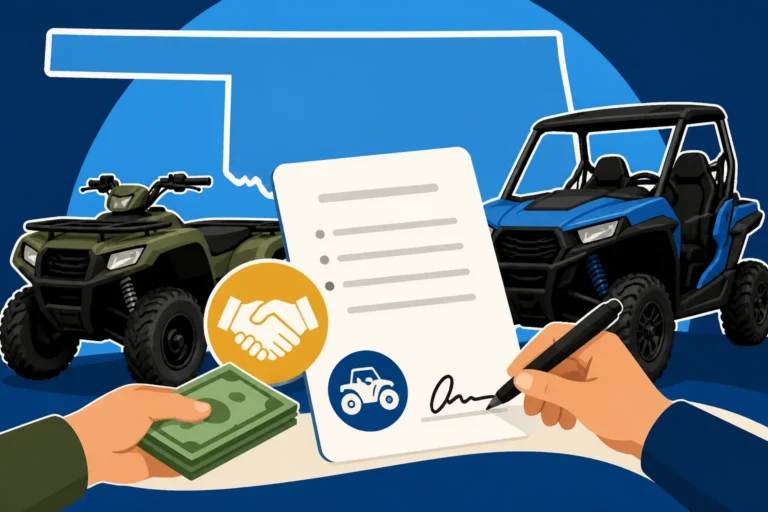
From a Private Seller: This is where you need to be particularly vigilant. When buying a used post-2005 quad, the most critical piece of paper is the actual Oklahoma title, properly assigned by the seller. Without it, you're buying a potential headache. The seller must sign over the title to you in the designated area. It's also highly advisable to complete a detailed bill of sale. Even though the title is primary proof of ownership, a bill of sale clearly documents the transaction, including the purchase price, which is essential for calculating the excise tax you'll owe. You can find reliable templates for a bill of sale through services like LawDepot, which help ensure all necessary information is captured. Always verify the Vehicle Identification Number (VIN) on the machine matches the VIN on the title before you hand over any money. If you're looking for guidance, [Oklahoma Titles After a Private Sale] offers more specifics.
Selling a Post-2005 Quad: Your Responsibilities
If you're selling a quad that falls under the post-2005 regulations, your primary responsibility is to ensure a clean transfer of ownership. This means properly assigning the Oklahoma title to the new buyer.
Proper Title Assignment: This is non-negotiable. You must sign and date the back of your existing Oklahoma title, transferring ownership to the buyer. Ensure all fields are filled out accurately, including the sale date and price. This action officially severs your ties to the machine in the state's records and allows the new owner to title it in their name. Failure to do this can lead to complications, potentially leaving you liable for things related to the machine even after you've sold it.
Bill of Sale: While the assigned title is the legal instrument for transfer, a comprehensive bill of sale is an excellent secondary document. It provides both you and the buyer with a record of the transaction, protects you against future disputes over the machine's condition or sale price, and serves as the official declaration of purchase price for tax purposes. Consider using a template from a service like LawDepot to ensure it includes all critical details such as the VIN, make, model, year, sale price, and names and signatures of both parties.
Remember, because ATV registration in Oklahoma is a one-time fee, you won't be getting any renewal notices after you sell your machine. The onus is on the buyer to complete their part of the registration and titling within the mandated timeframe. Your part is simply ensuring they have all the correct, properly signed paperwork from you to do so.
Avoiding Common Pitfalls and Special Considerations
Even with the clearest rules, there are always a few common missteps that can lead to unexpected costs or difficulties. Being aware of these can save you a significant amount of time, money, and frustration when dealing with your post-2005 quad.
Late Registration Penalties and How to Avoid Them
One of the most common pitfalls new owners face is missing the registration deadline. Oklahoma law states that you have [Oklahoma's 30-Day Registration Deadline] from the date of purchase or entry into the state to register your ATV. This isn't a suggestion; it's a firm deadline.
If you miss this 30-day window, you'll start accruing late fees. These aren't just a flat fee, either. They are daily penalties that quickly add up. While there is a cap on how much these late penalties can accumulate, letting them pile up means you'll pay more than you should for what is otherwise a very inexpensive, one-time registration. For example, if you wait two months, you could be looking at a significant addition to your total cost. Staying on top of this deadline is crucial to keeping your out-of-pocket expenses to a minimum. You can find more details on how these charges accumulate by looking at [Oklahoma Late Registration Fees] and learning that [Late Registration Costs a Dollar for Every Day]. It's a system designed to encourage prompt compliance, so mark that calendar!
Machines Without Paperwork (Post-2005)
This is a really tricky area, and it's where the post-2005 cutoff dates create the most significant headaches. If you encounter a quad manufactured or acquired after July 1, 2005, that lacks a proper Manufacturer's Statement of Origin (MSO) or an existing, properly assigned Oklahoma title, you should proceed with extreme caution. For these newer machines, the state's expectation is that a clear title exists or should exist.
Trying to title a post-2005 machine without the necessary paperwork is often an uphill battle, if not impossible, without involving a legal process to establish ownership. Unlike some older machines where a detailed bill of sale and perhaps an affidavit could sometimes suffice, the rules tightened considerably after 2005. Tag agencies are generally much less flexible when it comes to newer machines missing these foundational documents.
Therefore, if you're considering buying a post-2005 quad that "doesn't have a title" or "the title was lost," be very wary. It's usually a red flag. While some legitimate situations might arise (like a fire destroying documents), without the proper MSO or an assigned title, you could end up with a machine you can't legally register or sell, turning your exciting purchase into a very expensive paperweight. It’s always best to insist on clear, legal paperwork, especially for machines that fall after this crucial cutoff date. If you're ever in doubt, it's worth checking out [Oklahoma Machines With No Paperwork] for guidance, but generally, for post-2005 machines, no title means no deal.
Here's a quick reference to highlight the core differences:
| Feature | Quads Bought BEFORE July 1, 2005 | Quads Bought AFTER July 1, 2005 |
|---|---|---|
| Titling Requirement | Often not required; informal ownership accepted. | Mandatory title required (MSO for new, assigned title for used). |
| Registration Fee | Varies; some may have been exempt or handled differently. | One-time $11 fee. |
| Registration Renewal | No renewal required for registered machines. | No renewal required; truly a one-time process. |
| Proof of Purchase | Bill of sale often primary proof. | MSO (new) or properly assigned title (used); bill of sale as supporting document. |
| Excise Tax | Many exempt due to age/pre-existing rules. | 4.5% excise tax on purchase price is mandatory. |
| Paperwork Flexibility | More flexible with missing documents. | Very strict; proper title or MSO is essential. |
Disclaimer
This article is for general informational purposes only and does not constitute professional advice. Laws, prices and regulations vary by location and change over time. Consult a qualified professional for guidance on your specific situation.