Oklahoma Registration Compared to Missouri
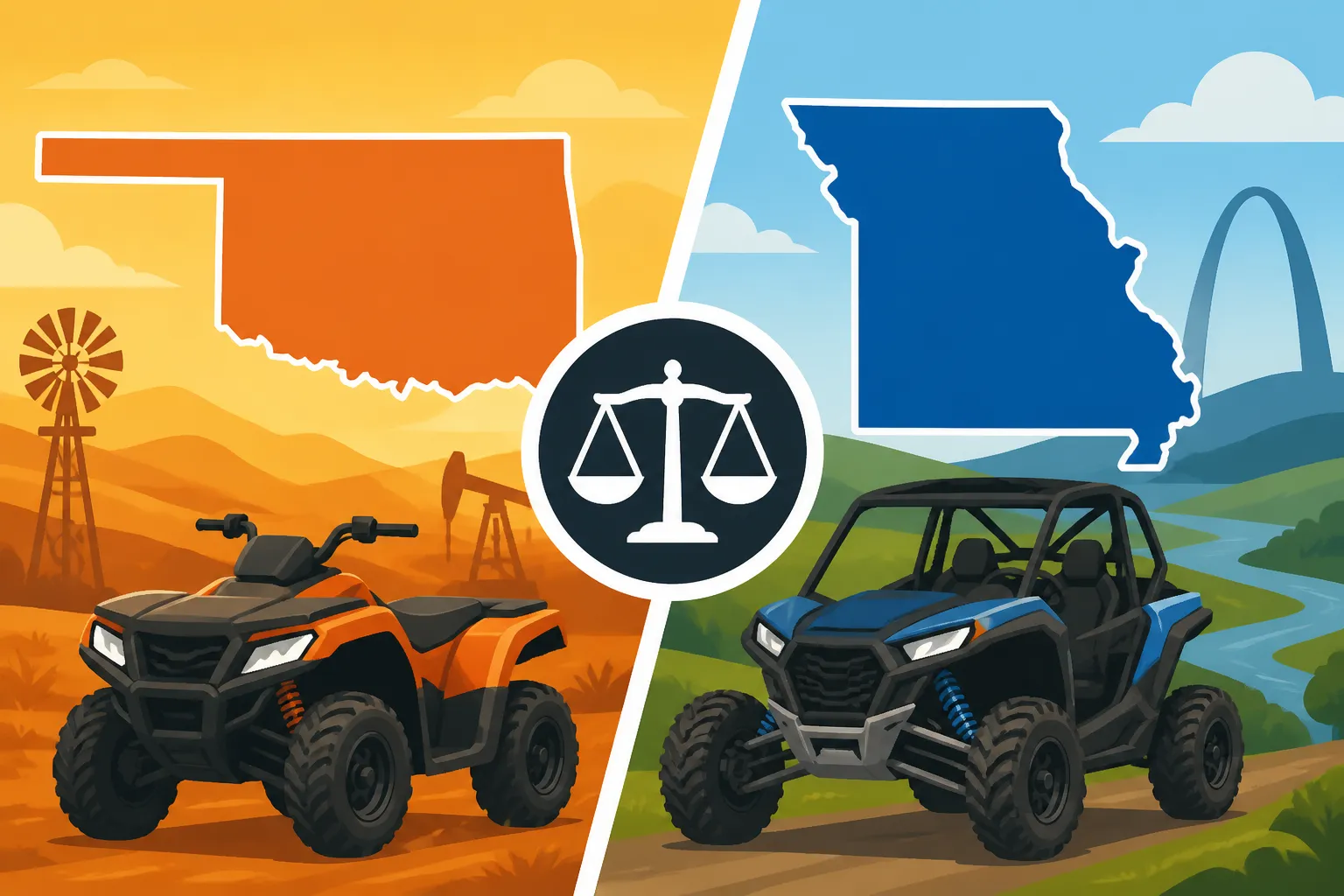
It can be incredibly confusing to figure out the rules for your ATV or UTV, especially when you live near a state line or are considering a move. What works in Oklahoma might be completely different just a few miles north or east in Missouri, and the last thing any of us wants is to be caught off guard by a regulation we didn't even know existed. This guide aims to clear up that confusion, giving you a detailed comparison of the ATV and UTV registration and titling processes in Oklahoma versus Missouri, so you can ride with confidence, no matter which side of the state line you're on.
The Fundamental Differences: How Oklahoma and Missouri Approach Off-Road Registration
When you're comparing off-road vehicle laws between states like Oklahoma and Missouri, it's not just about minor tweaks; you're often looking at fundamentally different philosophies. Oklahoma has a remarkably rider-friendly system that often surprises newcomers, while Missouri, like many other states, takes a more traditional approach that might feel more familiar to those used to car or truck registration. Understanding these core differences is your first step to navigating the rules effectively and avoiding any headaches down the road.
Oklahoma's "One-and-Done" Registration Philosophy
Let's start with Oklahoma, because its system is truly unique. Imagine paying for something once and never having to worry about renewing it again. That's essentially the deal for most ATVs and UTVs in the Sooner State. Unlike cars or trucks that demand annual renewal fees and new stickers every year, Oklahoma treats off-road vehicle registration as a one-time event. You pay a nominal fee, get your decal, and that's it for the life of the machine, as long as it stays with you. This can be a huge relief for owners who are tired of remembering renewal dates or scrambling for forgotten paperwork. It’s also important to know that [Oklahoma ATV Registration You Pay Once] is primarily for machines used off public roads. While there are rules for crossing highways, the basic registration isn’t for street-legal use.
This "one-and-done" approach means that once you've gone through the initial titling and registration process, your machine is marked as compliant with state law. The official term for this unique system is often misunderstood, but the reality is quite simple: [Oklahoma Registration Never Renews]. This significantly reduces the administrative burden on riders, allowing them to focus more on trail adventures and less on bureaucracy. For many of us who have spent countless hours dealing with DMV lines and annual paperwork, this aspect of Oklahoma's system is a breath of fresh air. It’s a testament to the state's recognition of how many residents use these machines for recreation, hunting, and agricultural work without needing them to be street-ready.
Missouri's Traditional Annual Renewal System
Now, cross the border into Missouri, and you'll find a system that aligns more closely with what you might expect for any other motor vehicle. In the Show-Me State, off-road vehicles like ATVs and UTVs typically require annual registration and renewals, complete with fees that need to be paid each year to keep your machine legal. This means that, just like your car or truck, you'll have to keep track of an expiration date and ensure you get your renewed registration and decal before it lapses. This annual cycle can feel like a constant reminder, especially if you own multiple machines or tend to let administrative tasks slip your mind.
Missouri's approach reflects a different regulatory environment, one where the state maintains a more continuous oversight of vehicle ownership and use. While it provides a consistent revenue stream for state services, it also places a recurring responsibility on the owner. This includes everything from ensuring your proof of ownership is readily available to budgeting for those annual fees. It’s a system designed for ongoing tracking and compliance, which can be a bit more intensive for riders. This traditional model is something many people are familiar with from other vehicles, but it stands in stark contrast to Oklahoma’s unique framework.
Diving Deeper into Oklahoma's Unique ATV/UTV Registration System
Oklahoma's system isn't just about the one-time fee; it encompasses several other distinctive features that set it apart. From how you get your initial decal to the titling process, understanding these details is crucial, especially if you're a new resident or just purchased a machine in the state. The goal here is to make the process as straightforward as possible, minimizing confusion and maximizing your time on the trails or tending to your land.
The Decal: What Oklahoma Issues and Where It Goes
One of the first things you'll notice in Oklahoma is the decal itself. Forget license plates for off-road machines; in Oklahoma, it’s all about a sticker. And not just any sticker – [Oklahoma Issues a Front Decal, Not a Plate]. This decal is typically applied to the front of your ATV or UTV, making it visible to law enforcement or park rangers when needed. It’s a clear, concise way to show that your machine is properly registered with the state. This distinction is quite important because it often confuses riders coming from states that might require a small plate or a rear-mounted sticker.
The placement of this decal is also specific. For ATVs, the decal usually goes on the front plastic, in a prominent spot where it won't be easily obscured by brush or mud. For UTVs, it’s often on the hood or a visible part of the front grille. Understanding [Where the Registration Decal Goes on an ATV] is key to avoiding issues. This practical approach to identification is part of Oklahoma’s effort to keep things simple for off-road enthusiasts. It’s less about making your machine street-legal and more about acknowledging its presence and ownership within the state's recreational and agricultural landscape.
Titling and Fees: The Once-Only Cost
Beyond the decal, the process of titling your ATV or UTV in Oklahoma is also geared towards simplicity. Most machines will need a title, and this is typically handled at a tag agency. The cost associated with this is minimal, and it's another one-time deal. The state charges a small fee for the title itself, along with the single-event registration fee. Many riders appreciate that [Oklahoma Charges $11 at Titling] for the registration, a cost that never recurs.
This initial expense covers both the administrative processing of your title and the lifetime registration of your off-road machine in Oklahoma. It's a key part of the [Oklahoma ATV Registration Cost]. You won't find yourself budgeting for annual tag renewals or paying recurring excise taxes that are common in other states for road vehicles. This system recognizes that ATVs and UTVs, while valuable assets, often aren't used in the same way as cars and trucks and therefore don't require the same level of ongoing taxation and regulation. The process generally requires you to present proof of ownership, like a Manufacturer’s Statement of Origin (MSO) for new machines or a bill of sale for used ones, along with a completed application.
Missouri's Distinctive Approach: Fees, Renewals, and Road Use
Missouri’s off-road vehicle laws paint a different picture, one that requires more consistent engagement from owners. While it might seem more complex than Oklahoma’s system at first glance, it’s a standard approach for many states. The key is understanding the annual commitment and how it impacts your riding.
Annual Registration and Fees in Missouri
In Missouri, your off-road machine isn't just titled; it's actively registered each year. This means you’ll be paying an annual registration fee to the Department of Revenue. These fees contribute to state programs and administrative costs, and they ensure that the state maintains an up-to-date record of off-road vehicle ownership. When you consider that this process repeats every year, it becomes clear that it requires more attention and budgeting than Oklahoma’s system.
Along with the fees, you'll receive a renewed decal or sticker that needs to be displayed on your machine. This annual renewal requirement means you need to mark your calendar and ensure you don’t let your registration lapse, as riding with an expired registration can lead to penalties. The Department of Revenue often sends out reminders, but ultimately, the responsibility falls on the owner. This consistency helps Missouri manage its off-road vehicle population and enforce regulations more easily, but it does mean a bit more ongoing paperwork and financial outlay for the rider.
Titling and Proof of Ownership in Missouri
Just like in Oklahoma, Missouri requires off-road vehicles to be titled. This process establishes legal ownership and is a one-time event for the life of the machine in Missouri, unless ownership changes hands. When you purchase a new ATV or UTV, you'll typically receive a Manufacturer's Statement of Origin (MSO) from the dealer, which you'll then use to apply for your title. For used machines, you’ll need a properly executed bill of sale and the previous owner's title. This is where tools like those from LawDepot can be incredibly helpful. If you’re ever in a situation where you need to create a rock-solid bill of sale or other legal documents for a private sale, using a service like LawDepot ensures all the necessary legal language and fields are included, protecting both buyer and seller.
The titling process in Missouri also involves paying sales tax on the purchase price, unless an exemption applies. This is typically calculated at the time of titling and is separate from the annual registration fees. After the initial title is secured, future owners will simply transfer the existing title into their name. Understanding [Oklahoma Titles ATVs and UTVs] is helpful, but remember Missouri's process is distinct, often involving more documentation and annual checks.
Road Use and Street-Legal Options
Missouri has a more structured approach to allowing ATVs and UTVs on public roads. While most off-road machines are primarily intended for private land or designated trails, Missouri offers pathways for certain UTVs to become street-legal under specific conditions. This typically involves equipping the UTV with lights, mirrors, turn signals, and other safety features that meet state highway standards, along with obtaining a separate street-legal registration and license plate, which are distinct from the off-road registration. These street-legal machines are subject to annual inspections and renewals, much like cars, and often require liability insurance.
This is a significant difference from Oklahoma, where the state's primary ATV/UTV registration is not for road use. While Oklahoma does have specific statutes for crossing roads or limited use on certain county roads under specific conditions, a full "street-legal" conversion for general road use is more complex and less universally available than in Missouri. For example, [Oklahoma's Street-Legal UTV Class Explained] clarifies specific conditions but shows a different philosophy compared to Missouri's broader allowance for properly equipped UTVs. This difference is crucial for riders who might want to use their side-by-side for errands or to connect trails via public roads.
Practical Implications for Riders: What This Means for You
Understanding the nuanced differences between Oklahoma and Missouri's ATV and UTV registration systems isn't just academic; it has very real, practical implications for riders, especially if you frequently travel between the states, are considering a purchase, or moving. Let’s break down what these differences truly mean for your wallet, your time, and your peace of mind.
Cost and Convenience for Oklahoma Riders
For those of us living in Oklahoma, the primary advantage is the "set it and forget it" nature of registration. The initial cost for [Oklahoma ATV Registration Cost] is nominal, often around $11 for the registration itself, paid once. You also have titling fees and excise tax, but those are also generally one-time events, with specific [Oklahoma Excise Tax at Titling] rules. This contrasts sharply with Missouri's annual fees, making Oklahoma a more budget-friendly option in the long run from a purely registration standpoint. There's no annual hassle of remembering to renew, no late fees piling up each year if you forget, as outlined by [Oklahoma Late Registration Fees]. The only time you'd pay the registration fee again is if you transfer the machine to a new owner, at which point they pay the $11 fee once.
However, Oklahoma’s system does mean you need to be diligent about getting everything squared away upfront. [Oklahoma's 30-Day Registration Deadline] is something to be aware of after purchasing a machine. Missing this deadline can lead to [Oklahoma Late Penalties Capped at $100], although these are also one-time for the duration of ownership. Using a service like LawDepot to generate a legally sound bill of sale when you buy or sell privately can help ensure you have all the necessary documentation to make this initial process smooth and avoid potential delays or rejections at the tag agency. Having all your ducks in a row initially pays off with years of hassle-free ownership.
What Missouri Riders Face Annually
Missouri riders, on the other hand, need to factor in the annual commitment of time and money. While the individual registration fee might not break the bank, it's a recurring expense that needs to be budgeted for. The potential for late fees or fines if you miss your renewal date is also a constant consideration. This means setting reminders, keeping your payment methods up to date, and making sure your decal is current. It's an ongoing administrative task that adds a layer of responsibility to off-road vehicle ownership.
Beyond just the fees, Missouri’s more stringent road-use rules and the potential for annual inspections for street-legal UTVs add to the total cost and time commitment. If you plan to make your UTV street-legal, you'll need to invest in the required equipment (turn signals, mirrors, horn, etc.), pay for the specific road-use registration, and potentially deal with yearly inspections to ensure compliance. This is a significant difference from Oklahoma’s focus on off-road designation.
| Feature | Oklahoma ATV/UTV Registration | Missouri ATV/UTV Registration |
|---|---|---|
| Registration Cycle | One-time, never renews | Annual renewal required |
| Registration Fee | Minimal, one-time fee (e.g., $11) | Annual fee, varies |
| Decal/Plate | Front-mounted decal, no plate for off-road use | Annual decal, specific plate for street-legal UTVs |
| Road Use | Primarily off-road, limited road crossings | Generally off-road, structured path for street-legal UTVs |
| Titling | Required, one-time process | Required, one-time process |
| Sales Tax/Excise | Excise tax at titling, one-time | Sales tax at titling |
| Lapse Penalty | Late fees apply if not registered within 30 days | Late fees/fines for expired annual registration |
| Insurance | Generally not required for off-road registration | Required for street-legal UTVs |
Cross-State Riding and Buying Considerations
If you're a rider who enjoys exploring trails in both states or frequently crosses the border, these differences are paramount. An Oklahoma-registered ATV with its one-time decal is generally recognized as legally registered in Oklahoma. However, if you're taking your Oklahoma machine into Missouri for an extended period, or if you're a new resident of Missouri, you'll need to understand their rules for out-of-state vehicles. The same goes for Missouri riders visiting Oklahoma. While a Missouri-registered machine is fine for a visit, if you move to Oklahoma, you'll need to re-register it under Oklahoma's rules.
When buying a machine, these differences also come into play. A machine bought in Missouri that you bring to Oklahoma will go through Oklahoma's titling and one-time registration process. Conversely, if you buy an Oklahoma-registered machine and take it to Missouri, you'll need to title it in Missouri and then begin their annual registration cycle. Always ensure you have a solid bill of sale, especially for private transactions. Again, resources like LawDepot can provide customizable bill of sale templates that ensure all the critical information is captured, helping you transition ownership smoothly between states or within a state. Whether you're filling out [Oklahoma's ATV Registration Application Explained] or navigating Missouri's forms, proper documentation is always your best friend.
Ultimately, while Oklahoma offers a simpler, one-time registration, Missouri’s system is more aligned with traditional vehicle regulations, demanding annual attention. Knowing these distinctions allows you to ride responsibly and enjoy your off-road adventures without the looming worry of non-compliance.
Disclaimer
This article is for general informational purposes only and does not constitute professional advice. Laws, prices and regulations vary by location and change over time. Consult a qualified professional for guidance on your specific situation.