Oklahoma Registration Compared to Texas
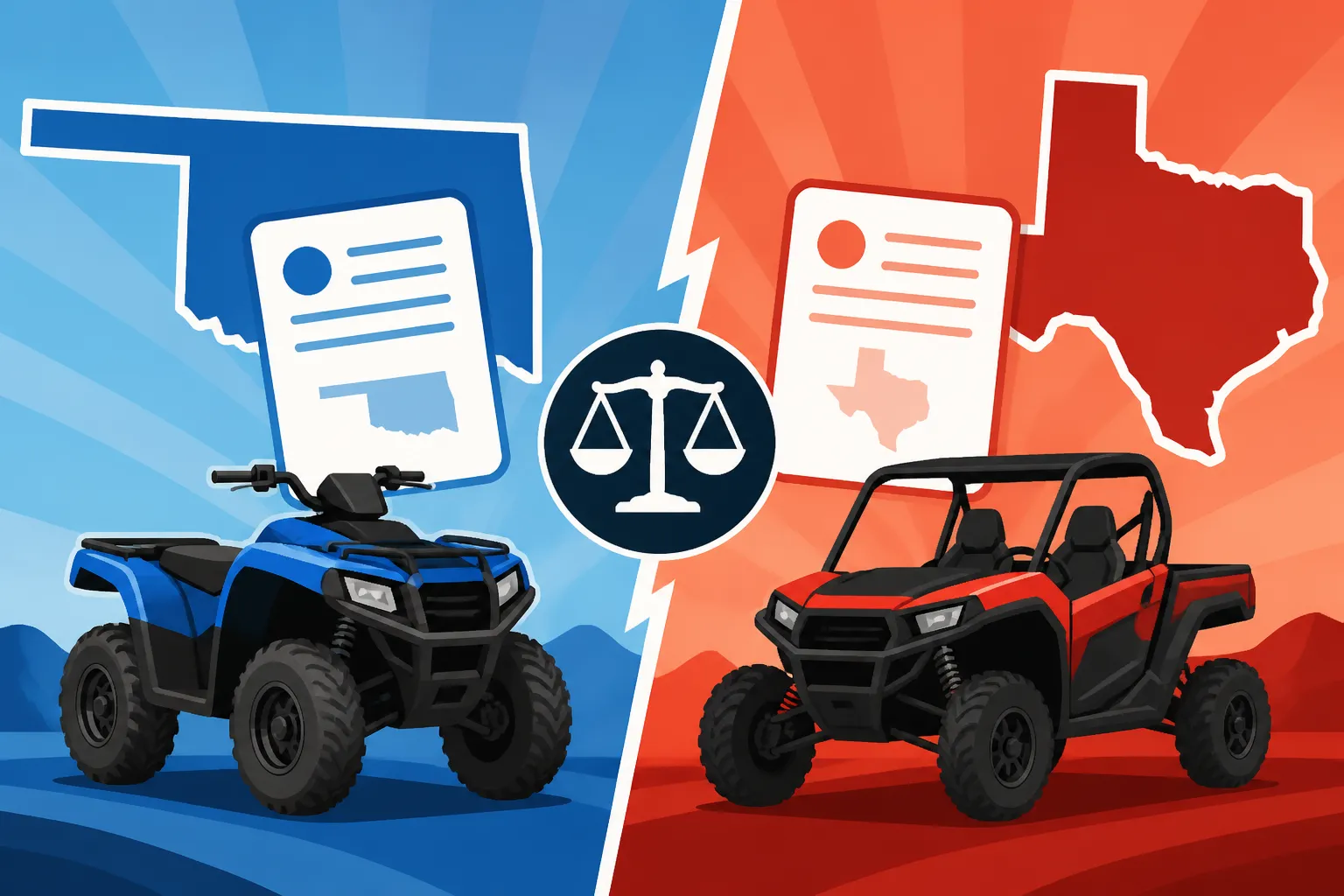
It's incredibly common for off-road enthusiasts moving to Oklahoma, or even just crossing state lines for a ride, to wonder how our ATV and UTV registration rules stack up against those in neighboring states like Texas. You've heard whispers that Oklahoma does things a little differently, and you're not wrong – our system can feel like it's from another planet compared to the annual renewals and plates many are used to. This guide will walk you through the distinct approaches Oklahoma and Texas take, helping you understand what to expect on both sides of the Red River.
Fundamental Differences in Registration Philosophy
The biggest head-scratcher for new Oklahoma residents or visitors from Texas often revolves around how we handle ATV and UTV registration. In Oklahoma, the philosophy leans heavily towards a one-time registration, while Texas, much like most other states, opts for an annual renewal system. This fundamental difference impacts everything from your budgeting to how often you interact with a tag agency.
One-Time Oklahoma Registration vs. Annual Texas Renewals
Imagine buying a brand-new side-by-side or a well-loved quad in Oklahoma. You’d take your paperwork to a tag agency, pay your fees, and get your registration decal. The magic? That decal is generally good for the life of your ownership. You pay once, and you're done. There's no annual reminder in the mail, no yearly trek to the tag agency, and no recurring fee to keep your machine legal for off-road use. This unique system is why we often talk about [Oklahoma ATV Registration You Pay Once] and how [Oklahoma Registration Never Renews]. It’s a huge relief for many riders who are used to the constant cycle of renewals for their cars, trucks, and even their dirt bikes in other states.
Now, compare that to Texas. In the Lone Star State, if you're registering an off-highway vehicle (OHV) for use in authorized areas, you're typically looking at an annual renewal. This means that every year, you'd need to go through a process, pay a fee, and get a new sticker or decal to keep your machine compliant. It’s a system that feels much more familiar to folks who register cars annually, and it ensures the state has up-to-date records and collects recurring revenue. For an Oklahoman venturing south, this can be an unexpected cost and administrative step that our own system avoids.
Plates, Decals, and Display
Another key differentiator lies in how each state expects you to display your registration. When you register an ATV or UTV in Oklahoma, you won't be handed a metal license plate like you would for a car or even for a street-legal motorcycle. Instead, our system provides you with a small, durable decal. This decal, which typically features the state seal and some identification numbers, is designed to be placed prominently on the front of your machine. We even have specific guidance for [Oklahoma Decals on the Front of a Machine] for ATVs and UTVs. This makes it easy for law enforcement or park rangers to quickly verify your registration without having to circle your machine.
In Texas, the specific requirements for displaying registration can vary depending on the type of off-highway vehicle and its intended use. While they might not issue a full-sized license plate for every OHV, there are typically stickers or smaller plates that need to be affixed in a visible location. For vehicles that are modified for limited street use (where permitted), a license plate similar to those on motorcycles might be issued. The key takeaway here is that while Oklahoma opts for a simple, front-mounted decal for all registered off-road machines, Texas's approach can be a bit more nuanced, potentially involving different types of identification or placement depending on the machine’s classification or local regulations.
Titling Requirements and Excise Tax
Beyond just getting your machine registered to ride, proving ownership and paying the necessary taxes are crucial steps. Both Oklahoma and Texas have processes for titling ATVs and UTVs, but they differ significantly in the types of taxes you’ll pay and how they categorize older machines. Understanding these distinctions can save you a headache and some money.
Oklahoma's Titling Process for Off-Road Machines
In Oklahoma, we believe in clear ownership. That's why we title ATVs and UTVs, just like we title cars and trucks. When you buy a new machine, the manufacturer's statement of origin (MSO) is your golden ticket to getting a title at the tag agency. If you're buying a used machine, you'll need a bill of sale or previous title. The cost to get your initial registration and title can be surprisingly low, with [Oklahoma Charges $11 at Titling] being the registration portion of that fee. This one-time registration cost is minimal and doesn't recur.
Oklahoma also has specific cutoff dates that affect how older machines are titled. For ATVs, if your machine was manufactured before July 2005, the titling process is much simpler, often only requiring a bill of sale and a declaration of purchase price, without needing a previous title in some cases. This is known as the [Oklahoma ATV Cutoff of July 2005]. For UTVs, a similar rule applies for machines manufactured before July 2008, covered by the [Oklahoma UTV Cutoff of July 2008]. These cutoffs are a real blessing for folks trying to get paperwork for older machines that might have changed hands many times without proper documentation. For machines without a title, you might still be able to use a well-drafted bill of sale, perhaps created using an online legal document service like LawDepot, to help establish proof of ownership.
Texas also titles ATVs and UTVs, typically requiring a similar process involving MSOs for new machines and prior titles for used ones. However, specific requirements for older machines or those lacking a clear chain of title might differ, potentially requiring more extensive affidavits or surety bonds in some situations. Always check with the Texas Department of Motor Vehicles for their most current and specific guidelines.
Excise Tax vs. Sales Tax
Here’s where a significant financial difference comes into play. When you purchase an ATV or UTV in Oklahoma, whether new or used, you'll pay an excise tax at the time of titling. This is a flat 4.5% of the purchase price, and it's important to understand that this is not a sales tax, but rather an excise tax on the privilege of titling the vehicle in the state. So, while you might see a sales tax on parts or accessories, the machine itself is subject to this excise tax. We've got more details on [Oklahoma's 4.5 Percent Excise Tax]. If you purchase a machine from a private seller, you’ll usually file an [Oklahoma Declaration of Purchase Price] at the tag agency, and that declared price is what your 4.5% excise tax will be based on. It's crucial to have a solid bill of sale, and services like LawDepot can help ensure you have a comprehensive document for this purpose.
In Texas, the system generally involves a standard sales tax on the purchase of off-highway vehicles. This sales tax percentage is applied to the purchase price, similar to how sales tax is applied to most other goods you buy in the state. While the actual percentage might vary slightly, the fundamental difference is that Texas collects a sales tax, whereas Oklahoma collects an excise tax at titling. For someone buying a machine across state lines, it’s vital to understand these differences, as you’ll ultimately be responsible for paying the appropriate tax in the state where you title the machine, whether it’s Oklahoma’s excise tax or Texas’s sales tax. If you buy a machine from a private party, even across state lines, using a reliable bill of sale from a source like LawDepot can help protect you by clearly documenting the sale price.
Road Use and Permitting for Public Lands
The rules for where and how you can ride your ATV or UTV are another area where Oklahoma and Texas chart very different courses. This is especially true when it comes to riding on public roads or accessing public lands, which are often hot topics for off-road enthusiasts.
Street Legal UTVs and Road Rules
For many riders, the dream is to be able to legally drive their UTV on public roads. Oklahoma has made this dream a reality for many, with a specific framework for [Oklahoma Street-Legal UTVs]. Our laws allow UTVs that meet certain equipment requirements—like turn signals, mirrors, horns, and proper lighting—to be registered with a special street-legal plate. These machines get an annual plate, much like a car, and drivers must be at least 16 years old and carry insurance, but don't need a motorcycle endorsement. This opens up many county roads and even some city streets where local ordinances permit, vastly expanding riding opportunities for folks who use their UTVs for utility or simply for cruising to local spots.
Texas, on the other hand, generally has a much stricter stance on off-road vehicles on public roads. While there might be exceptions for specific agricultural uses or limited crossings, making a UTV truly "street-legal" across the state is significantly more challenging and often subject to local county or municipal ordinances that can vary widely. There isn't a unified statewide "street-legal UTV" class that mirrors Oklahoma's system. This means that a Texas rider generally has fewer options for road use, often relying solely on trailers to get their machines to designated off-road areas. For Oklahoma riders used to the freedom of a road-plated UTV, heading into Texas might require a mental adjustment to keep their machines strictly off the pavement.
Public Land Access and Permit Systems
Both states offer incredible opportunities for off-road riding on public lands, but the way you gain access and the permits you need can vary. In Oklahoma, we have fantastic destinations like [Little Sahara State Park in Oklahoma] for dune riding and various Wildlife Management Areas (WMAs) like Honobia Creek and Three Rivers for more trail-oriented experiences. To ride in many of our WMAs, particularly on timber company land open to the public, you'll need an [Oklahoma Land Access Permits Explained]. This permit, often purchased annually, helps fund conservation efforts and manage access. Little Sahara, being a state park, has its own day-use fees or annual passes.
Texas also boasts a robust system of public lands for outdoor recreation, including some areas designated for OHV use. Their system often involves a "Texas Outdoor Annual" license or specific permits depending on the land type (state parks, national forests, designated OHV parks). While the goals are similar—managing resources and funding—the specific permits, their costs, and where they are required will likely be different from Oklahoma's system. For example, a Texas resident looking to ride in an Oklahoma WMA would need to acquire an Oklahoma Land Access Permit, and vice-versa. Always check the specific land management agency's website for the most current permit requirements before you load up your machine and head out.
Here’s a quick comparison of the key differences:
| Feature | Oklahoma ATV/UTV Registration | Texas ATV/UTV Registration (General) |
|---|---|---|
| Registration Frequency | One-time fee, never renews (for off-road use decal) | Typically annual renewal (for off-highway use) |
| Registration Display | Front-mounted decal (for off-road use) | Stickers/decals, potentially small plates depending on classification/use |
| Titling Required | Yes, for ATVs and UTVs | Yes, for ATVs and UTVs |
| Tax at Purchase | 4.5% Excise Tax (at titling) | State Sales Tax (at purchase) |
| Street Legal UTV Class | Yes, with specific equipment and annual plate | Generally stricter; varies by local ordinance, no statewide unified class for broad use |
| Public Land Permits | Land Access Permits for WMAs, specific State Park fees (e.g., Little Sahara) | Texas Outdoor Annual, specific park/land permits |
| Old Machine Rules | Specific cutoff dates (e.g., 2005 for ATVs, 2008 for UTVs) simplify titling for older machines | Requirements for older machines can be more complex, may require affidavits/bonds |
| Bill of Sale Importance | Critical for private sales, especially for excise tax declaration. LawDepot helps. | Crucial for private sales, proof of ownership. LawDepot helps. |
As you can see, while both Oklahoma and Texas are fantastic states for off-road adventures, they each have their own unique approach to getting your machine registered, titled, and ready for the trail or the dunes. Doing your homework on the front end will save you a lot of grief and ensure your riding experiences are smooth, legal, and worry-free, no matter which side of the state line you're on!
Disclaimer
This article is for general informational purposes only and does not constitute professional advice. Laws, prices and regulations vary by location and change over time. Consult a qualified professional for guidance on your specific situation.