Oklahoma Titles for an Inherited Machine
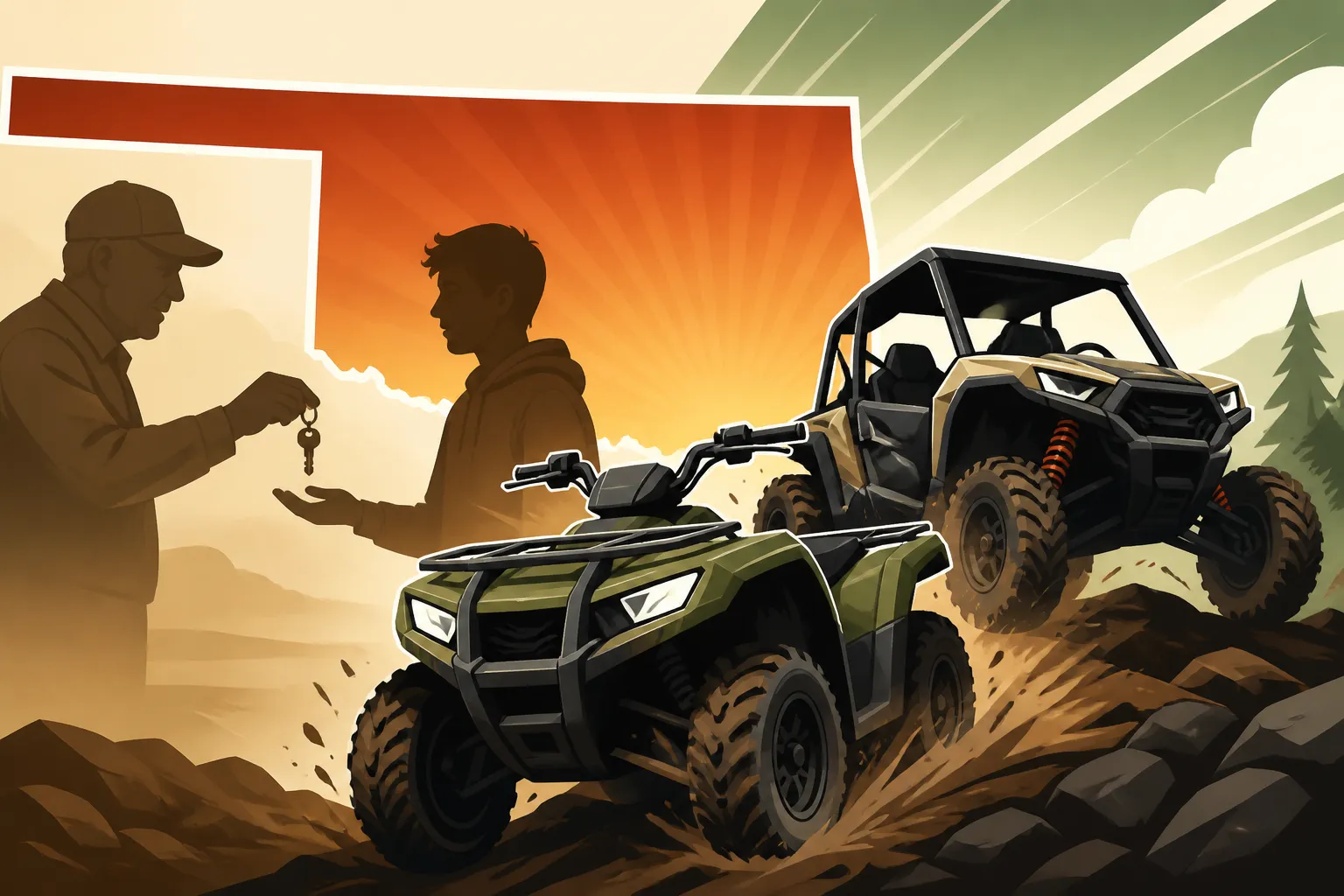
Losing a loved one is an incredibly difficult time, and when you’re also faced with the daunting task of sorting out their estate, including beloved off-road machines, the bureaucracy can feel overwhelming. Many folks find themselves scratching their heads, wondering how to legally transfer ownership of an ATV or UTV that was left behind. This guide is here to walk you through the often-confusing process of titling an inherited ATV or UTV in Oklahoma, aiming to provide clarity and reduce some of that stress during a challenging period.
Understanding the Unique Challenges of Inherited ATVs and UTVs
When you inherit an ATV or UTV, it’s not always as simple as signing a piece of paper. Unlike a straightforward private sale, there are legal steps involved to prove you are the rightful owner, especially if the machine was titled in the deceased person's name. This process often feels like navigating a maze, and it can be emotionally draining on top of everything else you're dealing with.
The Emotional and Administrative Burden
It’s completely normal to feel overwhelmed when handling the estate of someone you’ve lost. The machine itself might hold sentimental value, reminding you of cherished memories. Yet, you're also confronted with legal forms, deadlines, and the need to interact with government agencies, all while grieving. This administrative burden can quickly compound the emotional toll. You might be sifting through old papers, trying to find a title that hasn't been seen in years, or trying to understand legal jargon when your mind is already elsewhere. It’s a lot to ask of anyone.
Dealing with Missing Paperwork and Ownership Records
One of the most common frustrations when inheriting an ATV or UTV is discovering that the original title is nowhere to be found, or that the machine was so old it never even had one. Older machines, especially those bought before Oklahoma started requiring titles for ATVs and UTVs, can present unique challenges. You might have a machine that has been in the family for decades, used primarily on private land, and the idea of needing official paperwork for it now feels entirely foreign. Without a clear chain of title or an original Manufacturer's Statement of Origin (MSO), proving ownership can be a significant hurdle. This is particularly true for older models, where the original owner might have simply kept a bill of sale or nothing at all. [Oklahoma Bills of Sale for Older Machines] can become critical in these situations.
Different Ownership Structures and Their Implications
Sometimes, the deceased person might have owned the ATV or UTV jointly with another individual, or perhaps it was part of a trust. These scenarios can alter the titling process considerably. If the machine was titled with a "joint tenancy with right of survivorship," the process might be much simpler, as ownership could transfer directly to the surviving joint owner upon presentation of a death certificate. However, if it was titled as "tenants in common," the deceased person’s share would typically pass through their estate, making the probate process necessary. Understanding how the machine was legally owned can save you a lot of time and effort, but it often requires a bit of detective work into how the original title was structured, if one exists.
Navigating the Oklahoma Probate Process for Off-Road Machines
The path to titling an inherited ATV or UTV in Oklahoma largely depends on whether the deceased individual left a valid will and the overall size and complexity of their estate. Probate is the legal process of proving a will and settling the estate of a deceased person, and it’s often a necessary step to legally transfer ownership of assets like off-road vehicles.
When There Is a Will and Formal Probate Is Required
If the deceased left a valid will, it will typically name an executor or personal representative who is responsible for carrying out the instructions laid out in the will. This usually involves filing the will with the district court in the county where the person lived and initiating a formal probate case. The court will then officially appoint the executor. During this process, all assets, including ATVs and UTVs, are inventoried. Once the court approves the distribution of assets, an order will be issued, specifically naming who inherits the off-road machine. This court order is the golden ticket you’ll need at the tag agency to transfer the title into your name. It’s a formal and often lengthy process, but it provides clear legal authority for the transfer.
Without a Will: Intestacy and Heirship Determination
When someone passes away without a will, they are said to have died "intestate." In these cases, Oklahoma law dictates how their assets are distributed among their legal heirs. This typically involves a formal probate process as well, but instead of following a will, the court must determine who the legal heirs are and what share of the estate each is entitled to. This can be more complicated, especially if there are many potential heirs or if family relationships are complex. The court will issue an order determining heirship, which, similar to a will-based probate order, will authorize the transfer of the ATV or UTV to the designated heirs. You might need to consult an attorney to navigate this, as proving heirship without a will can involve detailed family histories and legal declarations. [Oklahoma Registration After the Owner Dies] covers similar ground for the registration aspect.
Utilizing a Small Estate Affidavit
For smaller estates, Oklahoma law provides a simplified probate process that can sometimes be used to transfer assets without a full-blown court case. This is often done through a small estate affidavit. The specific value limits for what qualifies as a "small estate" can change, so it's always important to check current Oklahoma statutes or consult with a legal professional. If the total value of the deceased's personal property falls below the legal threshold, and there's no real estate involved that needs to be probated, you might be able to use this affidavit. This document, signed under penalty of perjury, declares you as the rightful heir and lists the assets you're claiming, including the ATV or UTV. Many people find templates for these kinds of legal documents on platforms like LawDepot, which can help ensure all necessary information is included. Presenting a properly executed small estate affidavit, along with the death certificate, can often allow the tag agency to process the title transfer more quickly than formal probate.
Gathering Essential Documents for Titling an Inherited ATV/UTV
Regardless of whether probate is formal or simplified, having the correct documentation is paramount to a smooth titling process. Gathering these items ahead of time will save you multiple trips to the tag agency and prevent unnecessary delays.
The Official Death Certificate
This is the foundational document for any estate settlement. You will need an original or certified copy of the death certificate, which officially proves the person’s passing. The tag agency will need to see this to verify the event that triggered the ownership transfer. It’s wise to obtain several certified copies of the death certificate early on, as many institutions (banks, insurance companies, etc.) will require one, and you’ll likely need one for the tag agency as well.
Will, Letters Testamentary, or Court Order
This is where the probate process ties directly into titling.
- If there was a will and formal probate: You'll need the Letters Testamentary (if an executor was named) or the court order specifically authorizing the transfer of the ATV or UTV to you as the heir. This document is direct proof of your legal right to the machine.
- If there was no will and formal probate: You'll need the court order determining heirship and authorizing the distribution of the machine to you.
- If using a small estate affidavit: You will need the completed and notarized small estate affidavit. Remember, you can find forms and guidance for these kinds of affidavits through resources like LawDepot, which can help ensure they're correctly drafted.
This document, whatever its form, acts as the legal bridge between the deceased owner and you.
Previous Title and Bill of Sale (if available)
If the deceased person had a title for the ATV or UTV, you should bring it. Even if it's not signed over, it provides crucial information like the Vehicle Identification Number (VIN) and confirms prior ownership. If a title doesn't exist, especially for older machines, a bill of sale might be the next best thing. This could be an original bill of sale from when the deceased person purchased the machine, or even a notarized affidavit of facts from someone who knew the machine's history, if a formal bill of sale is unobtainable. While Oklahoma does title ATVs and UTVs, [Oklahoma ATV Cutoff of July 2005] and [Oklahoma UTV Cutoff of July 2008] mean many older machines might not have ever been titled. In these cases, proof of ownership from the previous owner becomes even more important.
Affidavit of Heirship or Other Proof of Kinship
Sometimes, particularly in small estate situations or when dealing with machines that were never formally titled, an Affidavit of Heirship can be required. This is a sworn statement, often from a disinterested third party (someone who doesn't stand to inherit), confirming the deceased person's family tree and identifying the legal heirs. It helps establish your relationship to the deceased and your claim to the property. You might be able to create an Affidavit of Heirship using a template from a service like LawDepot, ensuring all the legal niceties are covered. Combined with the death certificate, this can sometimes be enough to establish ownership for machines without a prior title.
Here's a quick summary of what documents you'll typically need:
| Scenario | Key Documents Required (Generally) | Notes/Considerations |
|---|---|---|
| With a Valid Will (Formal Probate) | Original/Certified Death Certificate, Letters Testamentary/Court Order naming Executor, Previous Title (if available) | The court order explicitly grants authority to the executor. The executor then facilitates the title transfer as per the will or court's directive. |
| Without a Will (Intestate Formal Probate) | Original/Certified Death Certificate, Court Order Determining Heirship, Previous Title (if available) | The court legally determines who the heirs are based on state law. This order is your authority to transfer the title. |
| Small Estate Affidavit | Original/Certified Death Certificate, Completed/Notarized Small Estate Affidavit, Previous Title (if available), Affidavit of Heirship (if needed) | Check current Oklahoma value limits for small estates. This bypasses lengthy probate, but rigorous documentation is still needed. LawDepot and similar services can assist with affidavit templates. |
| Older Machines (No Prior Title) | Original/Certified Death Certificate, Court Order (if applicable) OR Small Estate Affidavit/Affidavit of Heirship, Bill of Sale or other proof of purchase/ownership | More challenging. Focus on establishing a clear chain of ownership or undisputed heirship. A [Oklahoma Declaration of Purchase Price] might be needed if a bill of sale isn't available, or for excise tax purposes. |
The Step-by-Step Titling Process at an Oklahoma Tag Agency
Once you have gathered all the necessary documents, the actual titling process takes place at an authorized Oklahoma tag agency. While it might seem intimidating, breaking it down into manageable steps can make it much clearer.
Locating Your Nearest Tag Agency and What to Bring
Oklahoma has numerous tag agencies spread across the state. You can find their locations and hours online. Before you head out, double-check that you have all your meticulously gathered documents: the original or certified death certificate, the appropriate court order, Letters Testamentary, or the completed small estate affidavit/affidavit of heirship, and the previous title or proof of ownership for the ATV/UTV. It's also a good idea to bring your personal identification, such as a driver's license, and some form of payment for any applicable fees. Sometimes, it’s beneficial to call ahead to the specific tag agency you plan to visit, just to confirm their exact requirements for inherited machines, as processes can sometimes have minor local variations or additional forms they prefer. [Oklahoma Title Questions Service Oklahoma Hears] can often be answered by a quick call to your local agency.
Completing the Oklahoma Application for Certificate of Title
At the tag agency, you will need to fill out an Oklahoma Application for Certificate of Title. This form asks for details about the vehicle (VIN, make, model, year) and the applicant (your name, address). You'll clearly indicate that this is a title transfer due to inheritance. The tag agency clerk will review your supporting documents to ensure everything is in order. They will cross-reference the VIN on your paperwork with the machine's VIN, so make sure you have it accessible. If the machine has never been titled in Oklahoma, they will establish the first Oklahoma title in your name, which can be an important step for older machines, especially if you plan to sell them later.
Understanding and Paying Applicable Fees
When titling an inherited ATV or UTV, you will generally be responsible for certain fees. This includes a title fee and, in most cases, the Oklahoma excise tax. The excise tax is a one-time tax assessed on the purchase price or declared value of the machine when it's first titled or transferred, and it's something many people overlook in the inheritance process. While [Oklahoma Agricultural Permit Exemptions] used to apply more broadly, the excise tax on off-road machines can still apply, even if you acquired it through inheritance. If the machine has never been titled, the declared value, or the value listed in the probate documents, will be used to calculate this tax. If you inherit a machine that has already been titled, you will typically pay the excise tax again, even though it was not a direct purchase. It's important to budget for this, as the costs can add up. [Oklahoma Charges $11 at Titling] also covers the base registration fee which is due at this time, but remember that fee is a one-time charge, and the registration never renews.
Specific Scenarios and Common Pitfalls
The process of titling an inherited ATV or UTV isn't always straightforward. Various situations can complicate matters, requiring additional steps or considerations. Being aware of these common scenarios and potential pitfalls can help you prepare.
Multiple Heirs and Joint Ownership
What happens if the will or intestate laws dictate that an ATV or UTV is to be inherited by more than one person? In this situation, the Oklahoma title can be issued with multiple owners listed. You’ll need to decide how you want the ownership structured:
- Joint Tenancy with Right of Survivorship: If one owner passes away, their share automatically transfers to the surviving owner(s) without needing further probate.
- Tenancy in Common: Each owner has a distinct, divisible share. If one owner passes away, their share passes to their own heirs, not automatically to the other co-owners.
The court order or small estate affidavit should specify how the property is to be held. If it doesn't, or if you wish to change it, all named heirs will need to be present at the tag agency or provide notarized consent. [Putting Two Names on a Single ATV Title] provides further insight into this joint ownership structure. This is a crucial decision, as it impacts future transfers and what happens if one of the co-owners passes away down the line.
Missing VIN or MSO for Older Machines
As mentioned earlier, older machines, particularly those manufactured before Oklahoma's July 2005 cutoff date for ATVs and July 2008 for UTVs, might not have a clear paper trail. If the VIN is missing, illegible, or the machine has no Manufacturer's Statement of Origin (MSO), you’ll face a significant challenge. The tag agency needs a verifiable VIN to issue a title. In such cases, you might need to apply for a VIN inspection by a law enforcement officer, who can verify the machine’s identity. If a legitimate VIN cannot be found or assigned, titling might be impossible without a court order specifically addressing the issue. This is a rare and difficult scenario, often requiring legal counsel to explore options for obtaining a bonded title or other legal remedies. [Oklahoma Has No Out-of-State VIN Inspection] primarily refers to machines from other states, but the principle of needing a clear VIN remains.
Machine Too Old for a Standard Title
Some very old off-road machines, especially those primarily used on private property and pre-dating modern titling requirements, might technically not qualify for a standard Oklahoma title. While [Oklahoma Titles ATVs and UTVs] outlines the general rule, the practicality for ancient models can differ. For these, the primary function of establishing ownership might shift from a formal title to robust proof of purchase and a clear chain of possession through affidavits. If you intend to use such a machine exclusively on private land, you might not legally need a title. However, if you ever plan to sell it or use it in areas where registration (which requires a title) is enforced, you'll want to pursue the titling process as best you can, potentially relying on small estate affidavits and affidavits of heirship.
Beyond Titling: Other Considerations for Inherited Machines
Once the title is successfully transferred into your name, your responsibilities don't necessarily end there. There are other practical and legal aspects to consider for your newly inherited off-road machine.
Registration and Decal Placement
While getting the title is the main hurdle, you’ll also need to ensure the ATV or UTV is registered in your name. In Oklahoma, the registration for off-road machines is tied to the title issuance and is typically a one-time fee of $11 that never renews. This is different from annual vehicle registrations. When you pay the initial title fee, you’ll also pay this registration fee. You will then receive a registration decal that must be displayed on the machine. For ATVs, this decal typically goes on the front, while for UTVs, there are specific guidelines about placement on the front. [Oklahoma Decals on the Front of a Machine] and [Oklahoma Decal Placement on a Side-by-Side] provide guidance on where these decals should be affixed. Remember, this registration is for the machine's lifetime; [Oklahoma Registration Never Renews] is a key point to keep in mind.
Insurance for Your Inherited ATV or UTV
Unlike on-road vehicles, Oklahoma law does not generally require insurance for ATVs and UTVs used exclusively off-road. However, this doesn't mean it's not a good idea. If you plan to ride your inherited machine, especially at public riding areas, insurance can protect you financially in case of an accident, theft, or damage. Many private riding parks may even require proof of insurance to enter. You might consider liability coverage to protect you if you cause injury or damage to others, as well as comprehensive or collision coverage to protect the machine itself. Speaking with an insurance agent can help you understand your options and determine the best policy for your specific needs and how you plan to use the machine. It's a small investment that can provide significant peace of mind.
What to Do If You Plan to Sell the Inherited Machine
If your intention is to sell the inherited ATV or UTV rather than keep it, getting the title transferred into your name first is absolutely essential. You cannot legally sell a machine that is not titled in your name, even if you are the rightful heir. Trying to sell it with the deceased person's title will cause significant issues for the buyer and could lead to legal complications. Once the title is in your name, the selling process becomes much more straightforward, similar to any other private sale. You would then sign over the title to the new owner, complete a bill of sale, and the new owner would then take those documents to the tag agency to transfer the title into their name. This ensures a clean transfer of ownership and avoids headaches for both you and the buyer down the road. [Selling a Registered Machine in Oklahoma] covers the process from a seller's perspective.
Disclaimer
This article is for general informational purposes only and does not constitute professional advice. Laws, prices and regulations vary by location and change over time. Consult a qualified professional for guidance on your specific situation.