Oklahoma UTV Cutoff of July 2008
It can be incredibly frustrating to navigate the world of ATV and UTV registration in Oklahoma, especially when you're dealing with an older machine. You might have bought a trusty side-by-side years ago, used it exclusively on your land, and now suddenly you're hearing about state requirements and cutoff dates that seem to complicate everything. This guide is here to untangle the specific rules surrounding Oklahoma's July 2008 cutoff date for UTVs, helping you understand exactly what it means for titling and registering your machine.
Understanding the July 2008 UTV Cutoff
The Oklahoma Legislature made some significant changes regarding off-road vehicles over the years, and July 2008 marks a particularly important date for UTV owners. Before this date, many UTVs were often treated more like equipment or recreational toys, with little to no state-level oversight in terms of official registration or titling. But as these machines grew in popularity and use, both on private land and occasionally crossing public roads, the state recognized the need for a more structured system.
For many riders, this cutoff date can feel like an arbitrary hurdle, especially if you've owned your UTV for a long time without issue. It's easy to feel caught off guard by rules that weren't in place when you first purchased your machine. Rest assured, many Oklahoma UTV owners have faced, and successfully navigated, these same requirements.
What the Cutoff Means for Your UTV
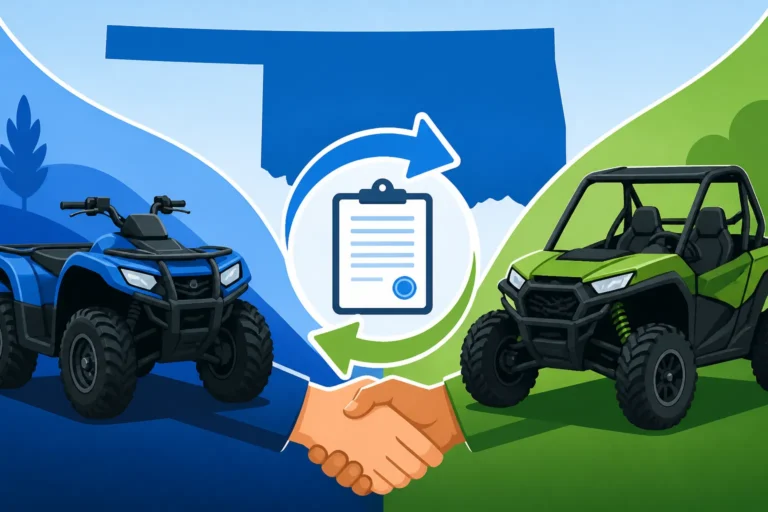
Essentially, the July 2008 cutoff date dictates how your UTV is processed when it comes to titling and registration in Oklahoma. If your UTV was manufactured or originally sold before July 1, 2008, it falls into a different category than machines made after that date. This distinction primarily impacts the type of paperwork you'll need to provide and the assumptions the state makes about its prior ownership history.
For pre-2008 UTVs, the state often has a more flexible approach to proof of ownership, acknowledging that formal titles or manufacturer's statements of origin (MSOs) might not have been standard practice for these machines back then. This doesn't mean you get a free pass on all documentation, but it does mean the tag agency might be more open to alternative forms of proof. On the other hand, if your UTV was made after July 1, 2008, the expectation is that it should have a more formal paper trail, much like a traditional motor vehicle. This is because, from that date forward, UTVs were officially brought into the fold of vehicles requiring proper documentation from their initial sale.
Why the State Implemented This Date
The decision to set a July 2008 cutoff date for UTVs wasn't arbitrary; it reflected the evolving landscape of off-road vehicle use and sales in Oklahoma. Before this period, UTVs were a smaller segment of the market, often used exclusively for farm work, hunting, or recreation on private property. The legal framework surrounding them was less developed, leading to a patchwork of local rules or, more commonly, no rules at all.
As UTVs became more commonplace, the state recognized a growing need for clearer regulations. This included tracking ownership for theft prevention, establishing a framework for potential road use (even limited crossings), and ensuring a consistent approach to collecting excise taxes. By establishing the 2008 cutoff, Oklahoma aimed to formalize the titling and registration process for newly manufactured or sold UTVs, while also creating a pathway for owners of older machines to bring them into compliance without undue burden. It was a legislative attempt to catch up with the increasing popularity and diverse uses of these versatile machines across the state.
Titling Requirements for Pre-2008 UTVs
If you're the proud owner of a UTV that predates the July 2008 cutoff, you might be wondering about the paperwork needed to get it properly titled and registered. It’s a common scenario, and many owners of older machines find themselves in this exact position. The good news is that Oklahoma’s system acknowledges the historical context of these older machines, which means there’s often a bit more flexibility in the types of documents you can use to prove ownership.
The key is to demonstrate to the tag agency that you are indeed the rightful owner. Without the typical manufacturer's statement of origin or a formal title, you'll need to gather alternative documents that paint a clear picture of your ownership history. It can feel like detective work, but it’s definitely doable.
The Hunt for Proof of Ownership
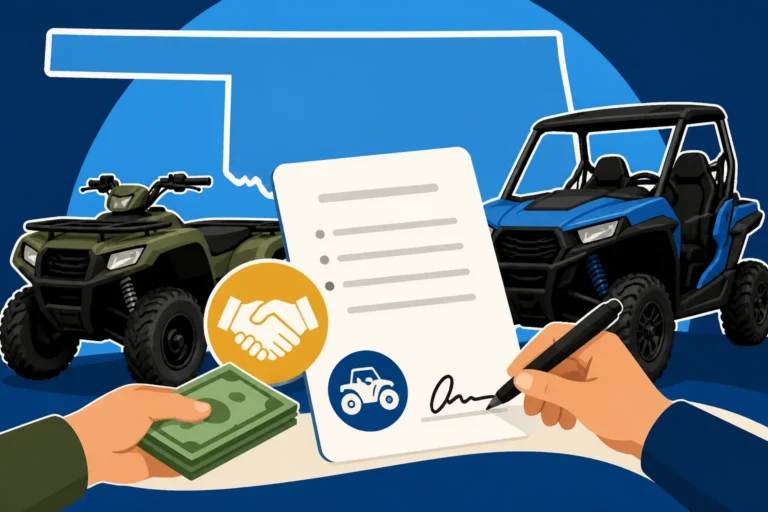
For UTVs manufactured or sold before July 2008, the primary document you'll need to present to the Oklahoma tag agency is a solid bill of sale. This isn't just a scribble on a napkin; it needs to be a clear, dated document that identifies the UTV by its Vehicle Identification Number (VIN) or serial number, states the purchase price, and is signed by both you and the seller. If you purchased the UTV from an individual, a well-drafted bill of sale is your best friend.
Sometimes, especially with older machines, the original bill of sale might be long gone. In such cases, other forms of documentation can help support your claim. This might include previous registration documents from another state (if applicable), an old insurance card listing the UTV, or even a dated receipt from the original purchase. If you absolutely cannot find a bill of sale, you might need to create a sworn affidavit of ownership, attesting to how and when you acquired the UTV. Resources like LawDepot can be incredibly helpful for finding professional, customizable templates for bills of sale or affidavits, ensuring you include all the necessary legal information. This can make the process much smoother when you finally get to the tag agency.
Avoiding the "No Paperwork" Trap
It’s a common fear for owners of vintage or very old UTVs: showing up at the tag agency with virtually no paperwork. While it's certainly more challenging, it's not always a dead end. The state of Oklahoma has provisions for situations where traditional proof of ownership is elusive. The crucial step is to be as prepared as possible with whatever minimal documentation you do have. Even old repair receipts with the VIN, or photos showing you with the machine over the years, can sometimes help support an affidavit.
In cases where a definitive bill of sale is impossible to obtain, you will likely need to sign a "Declaration of Vehicle Purchase Price" form provided by the tag agency. This form allows you to attest to the price you paid, which is used to calculate the excise tax. Coupled with an affidavit of ownership and any supporting evidence, this can often be enough. It's a testament to Oklahoma's pragmatic approach to older machines, acknowledging that not every transaction from decades past had a perfect paper trail. Don't be afraid to ask the tag agency clerks for guidance; they've seen it all, and they can often point you in the right direction. Remember, even with minimal documents, a well-prepared story of ownership goes a long way. You might also find it helpful to look into [Oklahoma Machines With No Paperwork] for further guidance.
Registering Your Post-2008 UTV
If your UTV rolled off the assembly line or was first sold after July 1, 2008, the registration process in Oklahoma will look quite a bit more like registering a traditional motor vehicle. This is because, from that cutoff date forward, the state began to treat UTVs more formally, requiring specific documents that ensure a clear chain of ownership and proper tax collection. While it might seem like more hoops to jump through, this standardized process actually makes things more predictable for everyone involved.
The core idea is to establish a solid paper trail from the manufacturer to you, the current owner. This protects both you and the state by preventing theft and ensuring all necessary fees are paid. You won’t have the same flexibility on ownership proof that older machines might allow, so having all your ducks in a row is absolutely essential before you head to the tag agency.
Standard Titling and Registration Process
For any new UTV purchased after the July 2008 cutoff, the first and most critical document you'll receive from the dealer is the Manufacturer's Statement of Origin, or MSO. This document is essentially the "birth certificate" of your UTV, proving it's new and hasn't been titled before. Along with the MSO, you'll need the dealer invoice, which clearly lists the purchase price, any trade-in value, and often, the associated fees. These two documents are the backbone of your initial registration.
If you purchased a used UTV from a private seller after 2008, you'll need the original Oklahoma title, properly signed over by the previous owner. If the UTV was originally titled in another state, you'll need that out-of-state title, along with a bill of sale. In all cases, the VIN must match perfectly across all documents. Bringing these items to your local tag agency is the first step in getting your UTV officially recognized. You can find more specific details on the process in [Oklahoma Registration for a UTV].
The Excise Tax Consideration
Regardless of whether your UTV was manufactured before or after the 2008 cutoff, if you are titling or transferring ownership in Oklahoma, you will generally be subject to the state's excise tax. This tax is 4.5% of the purchase price or declared value of the UTV, and it's collected at the time of titling. It's not a sales tax in the traditional sense, but rather a one-time tax on the privilege of transferring ownership of a vehicle within the state.
The 2008 cutoff didn't exempt older UTVs from this tax if they were being titled or transferred after that date. Instead, it solidified the state's position that UTVs, much like cars and trucks, are subject to these fees upon transfer. For new UTVs, the excise tax is calculated on the net purchase price after any trade-in credit. For used UTVs, it's based on the declared purchase price. It’s important to budget for this amount when buying an off-road machine, as it can be a significant addition to the overall cost. For more detailed information on this, refer to [Oklahoma Excise Tax at Titling].
Navigating Common Hurdles with UTV Registration
Even with a clear understanding of the July 2008 cutoff, the path to titling and registering your UTV can sometimes hit a snag. It's not uncommon for owners to encounter missing paperwork, challenges with out-of-state purchases, or simply confusion about what a tag agency needs. These hurdles can feel overwhelming, but most have solutions, even if they require a little extra legwork.
The key is often preparation and persistence. Don't get discouraged if your first attempt isn't perfectly smooth. Tag agency clerks deal with these situations daily and can often guide you through the process, but it helps if you come in knowing what potential issues you might face.
Missing or Incomplete Paperwork
This is perhaps the most common headache for UTV owners, especially those with machines that have changed hands multiple times. A missing title, an incomplete bill of sale, or a lost Manufacturer's Statement of Origin can bring the registration process to a grinding halt. What a tag agency clerk is really looking for is a clear and verifiable chain of ownership that ends with you. Without this, they cannot legally title the machine in your name.
If you're missing a crucial document like a title or a properly signed bill of sale, you might need to pursue an affidavit of ownership. This is a sworn statement, often notarized, where you declare how you came into possession of the UTV and that you are the rightful owner. It should include as much detail as possible, such as the date of purchase, the seller's information (if known), and the UTV's VIN. In some situations, especially for very old machines, this affidavit, along with a declaration of purchase price, can be sufficient. You might find templates for such documents on platforms like LawDepot, which can help ensure you're including all the necessary legal language. For more specific advice, check out [Oklahoma Registration Without a Bill of Sale].
Out-of-State Purchases and the Cutoff
Bringing a UTV into Oklahoma that you purchased in another state can add another layer of complexity. While Oklahoma's July 2008 cutoff date applies to how UTVs are treated within the state, the rules of the state where the machine was originally titled or registered will dictate the paperwork you receive. If you're importing an older UTV from a state that didn't title off-road vehicles at all, you might be back to the bill of sale and affidavit situation, even if it's technically a "post-cutoff" machine by Oklahoma standards.
The good news is that Oklahoma generally does not require an out-of-state VIN inspection for ATVs or UTVs, which can save you a step compared to registering a car or truck. However, the tag agency will meticulously scrutinize your out-of-state title or bill of sale to ensure its authenticity and proper assignment. Always bring the original documents. If your UTV was previously titled in a state that issues titles for off-road vehicles, that title will be your primary proof of ownership. If the other state had no such process, be prepared to explain the situation and provide all available purchase documentation, leveraging tools like a professionally drafted bill of sale from a site like LawDepot if your original is lacking. More on this topic can be found by researching [Oklahoma Has No Out-of-State VIN Inspection].
The Single, Non-Renewing Registration
One of the most unique aspects of registering an off-road UTV in Oklahoma, especially compared to vehicles you drive on public roads, is the nature of its registration. For most ATVs and UTVs used strictly off-road, you pay a fee once, and that's generally it. There are no annual renewals, no recurring bills showing up in your mailbox. This can be a pleasant surprise for many owners, as it simplifies long-term ownership costs and administrative tasks.
This distinct approach highlights Oklahoma's recognition that these machines primarily operate on private property or designated off-road trails, and thus don't require the same continuous tracking or revenue generation through renewals as highway vehicles. It's a system designed to be efficient for both the state and the rider, allowing you to focus more on enjoying your UTV and less on yearly paperwork.
The $11 Fee and Its Longevity
For the vast majority of off-road UTVs in Oklahoma, the registration fee is a modest, one-time payment. Historically, this fee has been a low, flat rate, around $11, paid at the time of titling. And here's the best part: for off-road use, it typically never renews. Once you pay it and receive your decal, that registration is generally valid for the lifetime of your ownership of that specific machine in Oklahoma.
This "pay once, never renew" system is a significant departure from standard vehicle registration and is often a point of confusion for new residents or first-time UTV owners. It's important to differentiate this from "street-legal" UTVs, which do require annual registrations and different fees because they are licensed for public road use. But for the typical ranch hand, hunter, or trail rider, that initial fee covers you indefinitely. It's a cost-effective and hassle-free way for the state to keep a record of off-road vehicles without creating an ongoing administrative burden for owners. For further details, you can look into [Oklahoma ATV Registration You Pay Once].
Decal Placement and What to Expect
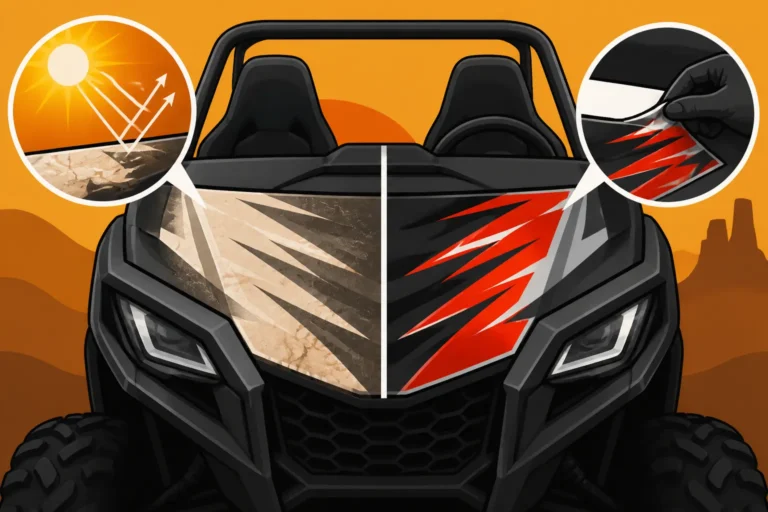
When you successfully title and register your off-road UTV at an Oklahoma tag agency, you won't receive a traditional license plate. Instead, you'll be issued a small, adhesive decal. This decal serves as your proof of registration and is designed to be placed prominently on the front of your UTV. The front location ensures it's easily visible for law enforcement or park rangers who might need to verify your machine's registration status.
The decal itself is typically durable and weather-resistant, designed to withstand the elements of off-road use. It will usually display a unique registration number along with the state's identifier. It’s crucial to place this decal correctly and ensure it remains visible and legible. A faded, torn, or improperly placed decal could potentially lead to questions from authorities. While this might seem like a small detail, proper decal placement is a simple way to demonstrate compliance and avoid any unnecessary hassle while you're out enjoying your UTV on the trails or your property. You can find specific instructions for placement in [Oklahoma Decals on the Front of a Machine].
Pre-2008 vs. Post-2008 UTV Registration in Oklahoma
To help clarify the differences we've discussed, here’s a quick overview of the key considerations for UTVs based on Oklahoma’s July 2008 cutoff date:
| Feature | UTV Manufactured/Sold BEFORE July 2008 (Pre-Cutoff) | UTV Manufactured/Sold AFTER July 2008 (Post-Cutoff) |
|---|---|---|
| Initial Documentation | Often requires Bill of Sale, Affidavit of Ownership (e.g., from LawDepot), or prior registration. May need to file a Declaration of Purchase Price. | Requires Manufacturer's Statement of Origin (MSO) for new, or prior state title for used. Original Bill of Sale also needed for private sales. |
| Proof of Ownership | More flexible; emphasis on establishing a credible ownership history with available documents. | Strict; clear chain of title from manufacturer or previous titled owner is expected. |
| Excise Tax (4.5%) | Applies upon initial titling or transfer after the cutoff date. Calculated on declared value. | Applies upon initial titling or transfer. Calculated on purchase price (new) or declared value (used). |
| Registration Type | One-time fee, non-renewing for off-road use. | One-time fee, non-renewing for off-road use. |
| Decal Placement | Front of the machine. | Front of the machine. |
| Common Hurdles | Missing original paperwork, proving legitimate ownership for very old machines. | Ensuring MSO or title is properly assigned, validating out-of-state titles. |
Disclaimer
This article is for general informational purposes only and does not constitute professional advice. Laws, prices and regulations vary by location and change over time. Consult a qualified professional for guidance on your specific situation.