Oklahoma Declaration of Purchase Price
Buying an ATV or UTV in Oklahoma, especially through a private sale, can feel like navigating a maze of paperwork. One form that often causes a lot of head-scratching is the Oklahoma Declaration of Purchase Price. You're trying to figure out how much you actually owe, what information goes where, and why it all matters, all while being excited about getting your new machine out on the trails or the farm. This guide is here to demystify that form, explain its critical role in your registration process, and help you fill it out correctly so you can avoid costly delays and penalties.
What Exactly is the Oklahoma Declaration of Purchase Price?
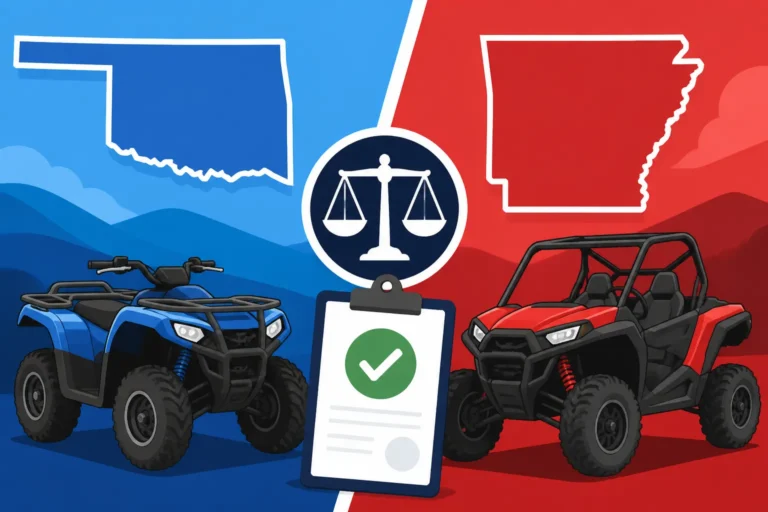
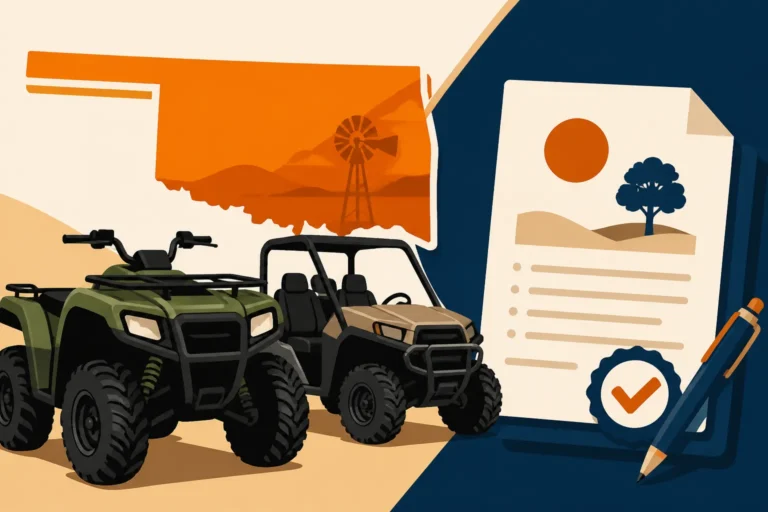
When you purchase an off-road vehicle in Oklahoma, whether it's a nimble ATV for tackling dunes or a robust UTV for ranch work, you're not just paying the seller for the machine. You're also entering into a process that requires the state to understand the value of that transaction. That's where the Oklahoma Declaration of Purchase Price comes in. It's a formal statement, usually a simple one-page form, that you, the buyer, complete to inform the Oklahoma Tax Commission (via your local tag agency) how much you paid for your all-terrain or utility vehicle. It’s a crucial document because it forms the basis for calculating the excise tax you owe, which is Oklahoma's version of a sales tax on vehicles.
More Than Just a Number: Why This Form Matters
You might think, "Why can't a simple bill of sale be enough?" And it's a fair question! But the Declaration of Purchase Price serves a specific legal and administrative purpose. Oklahoma doesn't impose a general sales tax on motor vehicles, including ATVs and UTVs, in the same way it does on other goods. Instead, it collects an excise tax, which is a one-time fee paid at the time of titling. This tax is a percentage of the purchase price, making an accurate and verifiable declaration absolutely essential. The state uses this form to prevent fraud, ensure fair tax collection, and maintain a consistent record of vehicle transfers. It's their way of making sure everyone is playing by the same rules and that the correct amount of revenue is collected for public services.
Without this form, the tag agency would have no official record of the transaction's value, leaving them unable to assess the appropriate tax. It protects both the state and, surprisingly, you, by providing a clear, documented value that can be referenced later if any questions arise about the purchase or ownership transfer. Think of it as a cornerstone document in your vehicle's paper trail, essential for its legal standing in the state.
Who Needs to Fill This Out and When?
The Oklahoma Declaration of Purchase Price isn't just for brand-new machines fresh off a dealer's lot. In fact, dealers typically handle the entire titling and registration process, including the excise tax calculation, directly with the tag agency on your behalf. Where this form truly shines, and where most buyers will encounter it, is in private sales. If you're buying a used ATV or UTV from an individual, you'll be responsible for bringing this completed form to the tag agency when you go to title and register the machine.
Beyond private sales, there are other scenarios where you'll need this declaration. If you've received an ATV or UTV as a gift, or if you've inherited one, you'll still need to complete the form, albeit declaring a purchase price of zero. Similarly, if you're a new resident moving to Oklahoma and bringing an off-road machine that you've purchased elsewhere but haven't yet titled in Oklahoma, you'll likely need to file this form to establish its value for Oklahoma's excise tax purposes. Essentially, anytime a machine changes hands, and it's not a direct dealer-to-customer sale where the dealer takes care of all the fees, expect to be filling out this critical declaration.
Filling Out the Form: A Step-by-Step Guide
The thought of filling out a government form can send shivers down anyone's spine, but the Oklahoma Declaration of Purchase Price is actually quite straightforward if you have all your information gathered. The key is to be precise and honest, as any discrepancies can lead to delays or even legal issues. Take your time, read each section carefully, and double-check your entries before heading to the tag agency. Remember, this form is a legal declaration, so accuracy is paramount.
Essential Information About the Machine
The first section of the form will ask for specific details about the ATV or UTV itself. This isn't just busywork; it's how the state uniquely identifies your machine and ensures the declaration matches the correct vehicle being titled. You'll need the Vehicle Identification Number (VIN), which is arguably the most crucial piece of information. The VIN is like your machine's fingerprint, unique to it alone. It's usually stamped on the frame in an easily accessible location, often near the steering column or on a lower frame rail. Make sure to physically verify the VIN on the machine against any paperwork you have, like the bill of sale or previous title. Don't just rely on what the seller tells you or what's on a faded piece of paper.
Beyond the VIN, you'll also need the make (e.g., Honda, Polaris, Can-Am), the model (e.g., Foreman, RZR, Defender), and the year of manufacture. Having the engine displacement (CCs) might also be requested. This information helps the tag agency cross-reference the machine and ensure its legitimacy. An accurate description is vital for establishing the vehicle's identity and correctly processing your title and registration.
Buyer and Seller Details: Getting it Right
Next up, the form requires detailed information about both the buyer(s) and the seller(s). This includes full legal names, current residential addresses, and driver's license numbers for all parties involved in the transaction. If there are multiple buyers or sellers, make sure all relevant names and information are included. For example, if you and your spouse are buying a side-by-side together, both your names will need to be listed. This section establishes who is giving ownership and who is receiving it, clearly defining the legal transfer.
It's highly recommended to use a comprehensive bill of sale in addition to this declaration. A well-crafted bill of sale, perhaps one you generated from a reputable online service like LawDepot, can serve as a separate, legally binding record of the transaction. This document will ensure that all essential details, including the full names and contact information of both parties, are captured correctly and agreed upon before you transfer them to the Declaration of Purchase Price form. Having a clear and accurate bill of sale not only simplifies filling out the declaration but also provides an extra layer of protection for both buyer and seller.
The Purchase Price: Declaring the Truth
This is arguably the most critical part of the form: declaring the actual purchase price. The state needs to know the exact amount of money or other valuable consideration that changed hands for the ATV or UTV. It's imperative that you declare the actual price paid, not an estimated value or a deliberately deflated figure. This honesty is crucial because the excise tax calculation hinges directly on this number. For example, if you paid $8,000 for a used UTV, you'll write down $8,000. Do not round up or down arbitrarily, and certainly do not undervalue it to try and save a few dollars on tax.
Tag agencies are experienced in spotting abnormally low declared prices, especially for machines that are known to hold their value. If the price you declare seems suspiciously low compared to the average market value for that make, model, and year, the tag agency has the authority to challenge it. They might ask for additional proof of purchase or even use an industry-standard valuation guide to assess a fair market value. If they determine the declared price is too low, they will likely adjust it upwards for tax calculation purposes, and you could face additional scrutiny or delays.
In cases of gifts or inherited machines, where no money actually exchanged hands, you will declare a purchase price of zero. While no excise tax will be due in these specific situations, you still need to complete and file the form. If you're trading in another machine as part of the purchase, the declared purchase price should reflect the cash difference you paid after the trade-in value has been applied. Always be transparent; it's the smoothest path through the process.
Understanding the Excise Tax Connection
The Oklahoma Declaration of Purchase Price is directly tied to the state's excise tax. This isn't just an arbitrary fee; it's a significant part of the cost of acquiring an ATV or UTV, and understanding how it's calculated is key to budgeting for your purchase. Many first-time buyers are surprised by this tax if they haven't done their homework, so let's break down how your declared price influences your final out-of-pocket costs at the tag agency.
How the Declared Price Dictates Your Tax Bill
In Oklahoma, the excise tax on off-road vehicles, including ATVs and UTVs, is 4.5% of the purchase price. This flat percentage is applied directly to the figure you declare on the form. For example, if you declare a purchase price of $10,000 for your side-by-side, your excise tax bill will be $450 (10,000 x 0.045). This amount is paid at the tag agency when you title the vehicle. Unlike property taxes or annual registration fees, it's a one-time tax assessed at the point of transfer or first registration in the state.
As mentioned earlier, the tag agency isn't just a rubber stamp. If the declared purchase price on your form seems exceptionally low for the type of machine, they may question it. They have access to various valuation guides and databases that provide estimated market values for different ATVs and UTVs. If they believe you've intentionally undervalued the machine, they can reassess the value based on these guides and calculate the excise tax accordingly. This means you could end up paying more tax than you anticipated if your declared price isn't realistic. It's always best to be truthful to avoid these kinds of challenges and potential penalties.
Exemptions and Special Cases
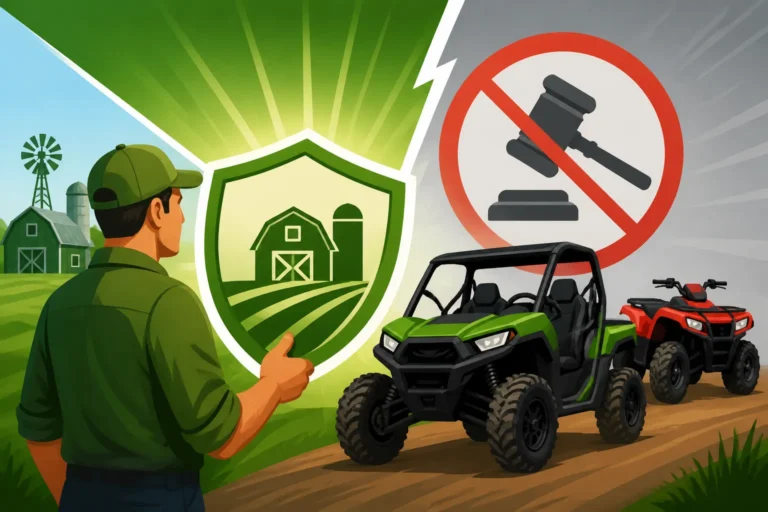
While the 4.5% excise tax generally applies to most ATV and UTV purchases in Oklahoma, there are a few important exemptions and special cases worth noting. For instance, if you qualify for an agricultural permit, you might be exempt from paying this excise tax entirely. This is a big saving for farmers and ranchers using their machines primarily for agricultural purposes. You'll still need to complete the Declaration of Purchase Price, but the tax calculation will reflect your exempt status. You can learn more about this in [Oklahoma Ag Permit Holders Pay No Excise].
Additionally, there are historical cutoff dates that affect whether certain older machines are subject to titling and, by extension, excise tax. For ATVs, the cutoff date is July 1, 2005. Machines manufactured before this date may have different titling requirements and might not incur excise tax if they weren't titled previously. Similarly, for UTVs, the cutoff date is July 1, 2008. Understanding these dates is crucial, especially when buying older machines through private sales. You can delve deeper into these specifics in [Oklahoma ATV Cutoff of July 2005] and [Oklahoma UTV Cutoff of July 2008]. In the case of gifts or inherited machines, where the purchase price is declared as zero, no excise tax is typically assessed, though documentation proving the gift or inheritance may be required.
Common Pitfalls and How to Avoid Them
Navigating the paperwork for an ATV or UTV purchase, even with seemingly simple forms like the Oklahoma Declaration of Purchase Price, can still lead to frustrating missteps. Many riders, eager to hit the trails, rush through the process and end up making avoidable mistakes that cost them time, money, or both. Knowing these common pitfalls beforehand can save you a lot of headaches and ensure a smooth transaction.
Underreporting the Purchase Price
One of the most tempting, yet ill-advised, mistakes people make is underreporting the purchase price on the Declaration form in an attempt to save on excise tax. While the idea of paying less tax might sound appealing, the consequences can be significant. As discussed, tag agencies are equipped to identify suspiciously low declared values. If they suspect you've intentionally deflated the price, they can:
- Delay your titling and registration: They'll require more information, proof of value, or even a re-evaluation of the machine.
- Reassess the value: They will use their own valuation guides to determine a fair market price and calculate the excise tax based on that higher figure, effectively negating any perceived savings.
- Impose penalties: While less common for simple underreporting on this specific form, intentional tax evasion can carry more severe legal consequences.
It's simply not worth the risk. Be honest and declare the actual price you paid. The few dollars you might save aren't worth the hassle, delays, or potential legal trouble. The state views the Declaration of Purchase Price as a legal document, and intentional misrepresentation can be taken seriously.
Missing or Inaccurate Information
Another common pitfall is submitting a form with missing or incorrect information. This could be anything from a transposed VIN to an incorrectly written address or an omitted driver's license number. Even minor errors can cause a significant delay in the titling and registration process. Imagine taking a day off work, driving to the tag agency, waiting in line, only to be told you can't complete the process because of a small mistake on the form.
This often means you'll have to go back home, correct the error, and then make another trip to the tag agency. If the error pertains to the seller's information, it could be even more problematic, requiring you to track them down for corrections, which can be difficult if they're no longer easily reachable. This is where cross-referencing with a detailed bill of sale comes in handy. A robust document, perhaps one created with a service like LawDepot, typically includes all the necessary identifying information for both the buyer and seller, as well as the vehicle, ensuring that you have a comprehensive and accurate record from which to pull details for the Declaration of Purchase Price. Double-checking every field against your bill of sale and identification documents before you leave for the tag agency can prevent a lot of frustration.
Not Having a Proper Bill of Sale
While the Oklahoma Declaration of Purchase Price is essential for the state's tax records, it is not a substitute for a comprehensive bill of sale between you and the private seller. Many buyers mistakenly believe that filling out the Declaration form is all they need. However, a bill of sale serves as your legal proof of purchase and transfer of ownership from the seller to you. It's a personal contract between two parties, detailing the terms of the transaction, the agreed-upon price, the condition of the machine (often "as-is"), and signatures from both parties. You can read more about what's needed for older machines in [Oklahoma Bills of Sale for Older Machines].
The Declaration of Purchase Price simply communicates the value to the state; it doesn't necessarily document all the crucial aspects of your transaction with the seller. A robust bill of sale, especially one obtained from a reputable source like LawDepot, can complement the Declaration of Purchase Price by providing a detailed and legally sound record of your transaction. It should clearly list the VIN, make, model, year, the exact purchase price, the date of sale, and the full names, addresses, and signatures of both the buyer and seller. This document is your primary defense if any disputes arise after the sale and serves as essential backup for the information you provide on the state's declaration form. Always ensure you have a signed, dated, and detailed bill of sale from the seller before you part ways with your cash.
What Happens After You File the Declaration?
You've successfully filled out the Oklahoma Declaration of Purchase Price, double-checked everything, and arrived at the tag agency with all your paperwork in hand. What happens next? The process isn't quite over, but you're definitely on the home stretch. Understanding the final steps will help manage your expectations and ensure you walk out with everything you need to legally ride your ATV or UTV.
The Role of the Tag Agency
Once you submit your completed Declaration of Purchase Price, along with your bill of sale, previous title (if applicable), and any other required documentation, the tag agency takes over. Their primary role is to process your application, verify the information, calculate the final excise tax amount, collect all applicable fees, and then issue you a new title and registration for your machine. This is where all the pieces come together to grant you legal ownership and permission to operate your ATV or UTV in Oklahoma. You can learn more about the broader titling process in [Oklahoma Titles ATVs and UTVs].
The tag agency clerk will review your declared purchase price, and as discussed, they might cross-reference it with valuation guides to ensure it's a reasonable figure. They'll also check your VIN against their database and ensure all buyer/seller information is complete and matches your identification. Once everything is approved and the fees (excise tax, title fee, and registration fee) are paid, they will print your new title and provide you with a registration decal. This decal, which typically goes on the front of your machine, is your proof of registration.
Timing and Deadlines
Oklahoma has a pretty firm rule when it comes to getting your newly purchased machine registered: you have 30 days from the date of purchase to complete the titling and registration process. This 30-day window starts on the day you take ownership, as indicated on your bill of sale and the Declaration of Purchase Price. It's a critical deadline to remember, and it applies even if you received the machine as a gift or through inheritance. You can read more about this in [Oklahoma's 30-Day Registration Deadline].
Missing this deadline can lead to financial penalties. Oklahoma assesses late registration fees that can add up quickly. While there's typically a cap on these late penalties, every day beyond the 30-day mark adds to your cost. So, even if you're excited to ride your new machine, make titling and registration your top priority after the purchase. Waiting until the last minute or procrastinating past the deadline will only cost you more money and potentially delay your fun. For more details on what those penalties look like, check out [Oklahoma Late Registration Fees].
Other Important Considerations for Your Purchase
Beyond the Declaration of Purchase Price, there are several other crucial pieces of the puzzle when buying an ATV or UTV in Oklahoma. Thinking ahead about these details can save you time and stress, ensuring your purchase and subsequent registration go off without a hitch. It's not just about filling out one form; it's about having a complete and accurate set of documents and understanding the overarching requirements.
Documentation to Bring to the Tag Agency
When you finally make your trip to the tag agency, you'll want to be overprepared rather than underprepared. Here’s a checklist of what you should typically have with you:
- Completed Oklahoma Declaration of Purchase Price form: Make sure all sections are filled out accurately and signed by the buyer.
- Bill of Sale: Your detailed, signed, and dated bill of sale from the seller is essential. This is your personal proof of transaction.
- Previous Title (if applicable): For used machines that were previously titled in Oklahoma or another state, you’ll need the original title, properly signed over by the seller.
- Manufacturer's Statement of Origin (MSO): If you're buying a brand-new machine from a dealer, they will provide this document, which is the "birth certificate" for your ATV or UTV.
- Proof of Identity: Your valid Oklahoma driver's license or state-issued ID.
- Proof of Residency: Documents like a utility bill or bank statement showing your current Oklahoma address, especially if you're a new resident or if your ID doesn't reflect your current address. This is critical as covered in [Oklahoma Registration and Proof of Address].
- Payment for fees: Be prepared to pay the excise tax, title fee, and registration fee. Check with your local tag agency regarding accepted payment methods (cash, check, card).
Having all these documents organized and easily accessible will make your visit to the tag agency much smoother and faster.
The Importance of a Clear Title (or lack thereof for older machines)
When buying a used ATV or UTV, especially from a private seller, understanding its title status is paramount. A clear, properly assigned title is the ultimate proof of ownership. You want to ensure that the seller legally owns the machine and has the right to transfer it to you. Always verify that the VIN on the title matches the VIN on the machine itself. Any discrepancies should be a major red flag.
However, it’s important to know that for very old ATVs and UTVs, a previous title might not exist, or it might not be required for titling in Oklahoma. For example, Oklahoma does [Oklahoma Skips Chain of Title for Old Machines] for some machines manufactured before certain cutoff dates. While this can simplify the process for older machines, it also places more emphasis on a robust bill of sale. If a machine has never been titled or is exempt from prior titling, the bill of sale becomes the foundational document establishing your ownership, which then allows you to get an Oklahoma title issued in your name. Regardless, always ask the seller for any and all paperwork they have pertaining to the machine's ownership history to ensure you're making a legitimate purchase.
| Scenario | When to Use Declaration of Purchase Price | What to Declare as Price | Additional Documents Needed (Typical) |
|---|---|---|---|
| New Machine | Yes, at dealer (often handled by dealer) | MSRP or agreed sale price | MSO, Dealer Invoice |
| Used Private Sale | Yes, buyer files | Actual price paid | Bill of Sale, Previous Title (if any) |
| Gift | Yes, recipient files | $0 (zero) | Gift Affidavit, Bill of Sale (optional but recommended) |
| Inherited Machine | Yes, heir files | $0 (zero) | Probate documents or Affidavit of Heirship |
| Out-of-State Purchase | Yes, new resident files | Actual price paid | Out-of-state Title/Registration, Bill of Sale |
| Trade-In (Private) | Yes, buyer files | Cash paid after trade-in | Bill of Sale (detailing trade), Previous Title |
Disclaimer
This article is for general informational purposes only and does not constitute professional advice. Laws, prices and regulations vary by location and change over time. Consult a qualified professional for guidance on your specific situation.