Oklahoma Private Park Camping Rules
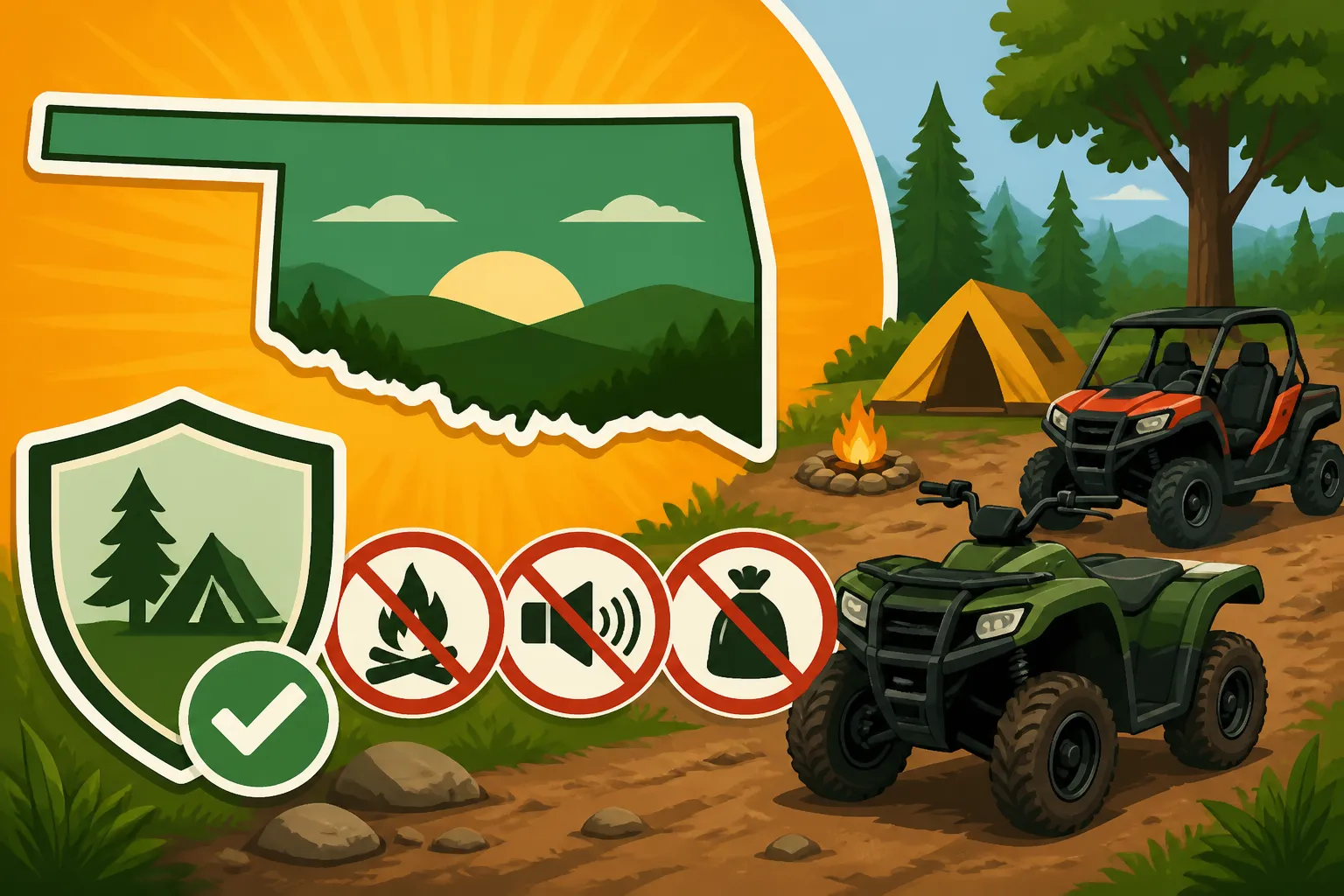
Camping at an Oklahoma ATV or UTV park is not governed by one statewide set of campground rules. Each private park sets its own policies for reservations, fires, pets, generators, quiet hours, and riding access. The safest plan is to confirm those details with the park before you tow in, rather than assume a campsite booking automatically covers every rider and machine.
Private park rules are set park by park
A private riding park can set conditions for entering its property, using its trails, and camping overnight. Those conditions may differ from one park to another, and they can change with weather, maintenance, events, or fire restrictions. A rule you followed at one campground may not apply at the next.
It helps to separate three things:
- Camping policies: Where you can camp, what facilities are available, and what conduct is allowed in the campground.
- Riding policies: Which machines can use which trails, what safety equipment is required, and when trails are open.
- General laws and restrictions: Rules that may apply beyond the park, including fire restrictions or laws governing alcohol and road use.
A campground reservation does not necessarily include riding access, and a riding pass does not necessarily reserve a campsite. Ask whether each is included, sold separately, or handled through a separate reservation. If you are unsure whether a permit for public land applies to a private riding area, confirm directly with the park; Oklahoma Camping Permits at Riding Areas explains why camping and land-access requirements can depend on where you ride.
Do not treat a private park’s website, social media post, or an older review as a guarantee that a policy remains current. Use those sources to prepare questions, then verify important details with park staff before departure. This is especially useful for a group trip, a holiday weekend, or a visit when severe weather could affect trails or camping.
| Camping detail | What to confirm with the park |
|---|---|
| Reservation | Whether a site must be booked in advance and how arrival or late check-in works |
| Site type | Whether you are booking a tent site, RV space, or another kind of camping area |
| Riding access | Whether riding passes are included, separate, or limited to specific hours |
| Fire | Whether fires are allowed, where they may be built, and whether restrictions are in effect |
| Generators | Whether they are permitted and whether the park sets operating hours |
| Pets | Whether pets are allowed, where they may go, and what restraint rules apply |
| Quiet hours | When they begin and how they affect generators, music, and vehicle use |
| Facilities | Whether water, power, restrooms, showers, and waste disposal are available |
| Group size | How many people, vehicles, or machines can stay at one site |
For a broader look at lodging and riding combinations, see Oklahoma OHV Camping With Trail Access and Oklahoma Campgrounds Next to a Riding Area. They can help you compare the type of setup you want, but the park still has the final say on its own current policies.
Reservations, campsite setup, and arrival
Before choosing a site, make sure it fits both your camping equipment and your riding plan. “Camping available” can mean anything from an open primitive area to a defined RV space. It does not necessarily mean every site has electricity, potable water, a picnic table, or room for a tow vehicle and trailer.
Ask what the site can accommodate. If you are bringing a motorhome, trailer, multiple machines, or a larger group, explain the full setup rather than asking only whether “camping” is available. A space that works for a tent may not leave room to park a truck and trailer. Confirm whether parking is at the site or in a separate lot, and whether trailers can remain connected to tow vehicles.
When making a reservation, check these points:
- What the booking covers. Confirm the dates, site type, number of campers, and whether riding access or entry passes are separate.
- Arrival and check-in. Ask where to check in, what time the campground opens for arrivals, and what to do if you arrive after the office closes.
- Site limits. Verify the allowed number of tents, vehicles, machines, and occupants.
- Cancellation and weather policies. Ask what happens if rain closes trails or makes a site unusable. Policies differ, so do not assume a refund or credit is automatic.
- Payment and proof of booking. Confirm accepted payment methods and keep the reservation details accessible when you arrive.
- Trail access from camp. Find out whether you can ride directly from your site, must use a designated route, or need to trailer machines to a staging area.
If the park is popular, book early enough to secure the kind of space your group needs. A reservation should identify the site or site category clearly; do not assume you can choose a different space on arrival. More planning tips are in Booking a Campsite Before a Busy Riding Weekend.
At check-in, listen for any updates that could affect the whole stay: temporary trail closures, changed riding hours, fire restrictions, or a designated route between the campground and trail system. Ask whether a wristband, vehicle pass, or other proof needs to stay visible. Keep it with you while riding if staff require it.
The campground’s location also affects how you should set up. Follow instructions about where to park, unload, secure trailers, and store fuel or equipment. Do not block access roads, gates, fire lanes, or neighboring sites. If you need to unload a machine after dark, check whether that is allowed and how to do it without disturbing campers.
Some private parks offer camping near riding areas, but access does not mean every trail is open to every machine. Confirm that your ATV or UTV is permitted on the routes you plan to use. For example, machine size and trail width can matter. Oklahoma Trails That Allow Side-by-Sides is a useful starting point for trail suitability, while the individual park can confirm its current trail conditions and access rules.
Fires, generators, pets, and quiet hours
Campground rules often focus on the small details that can cause conflict or create safety problems. Get the park’s current instructions for fire use, power equipment, pets, and noise before unloading. If the rules are unclear, ask staff rather than relying on what another visitor is doing.
Fires and cooking
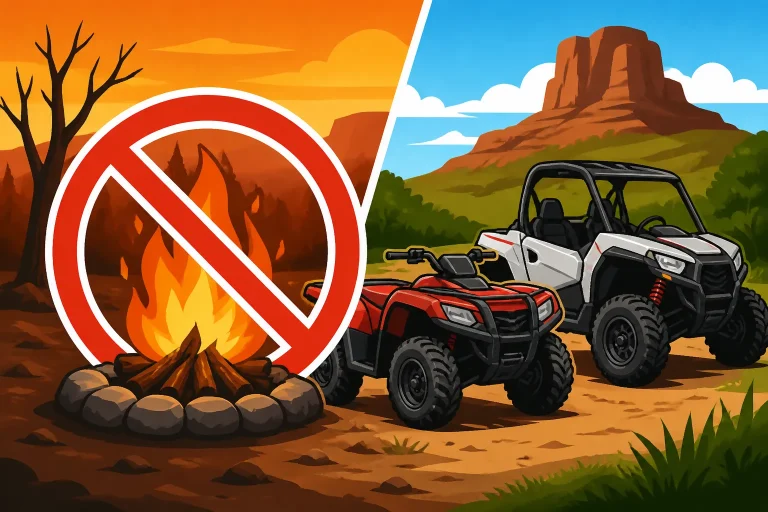
Never assume a campfire is allowed just because a site has a fire ring. A park may prohibit open fires, allow them only in designated rings, or suspend them during dry or windy conditions. County or state fire restrictions may also apply. Check both the park’s directions and any current local restrictions before lighting a fire.
Ask whether charcoal grills, propane stoves, and portable fire pits are treated differently. Keep cooking equipment away from tents, vehicles, fuel, and dry grass, and make sure you know how the park expects fires to be extinguished. Pack a way to put out a small cooking fire, but do not use that as a reason to ignore a ban.
Generators and power
Some campgrounds allow generators, while others limit where or when they can run them. If you need power for medical equipment, refrigeration, or another essential use, ask about the site’s electrical service and backup options before booking. Do not count on a generator being acceptable at every hour.
Use a generator only where the park permits it, and keep exhaust clear of tents, RV doors, and nearby campsites. If the site has electrical hookups, confirm the connection type and whether you need your own cord or adapter. Do not connect equipment unless the park says the setup is suitable.
Pets
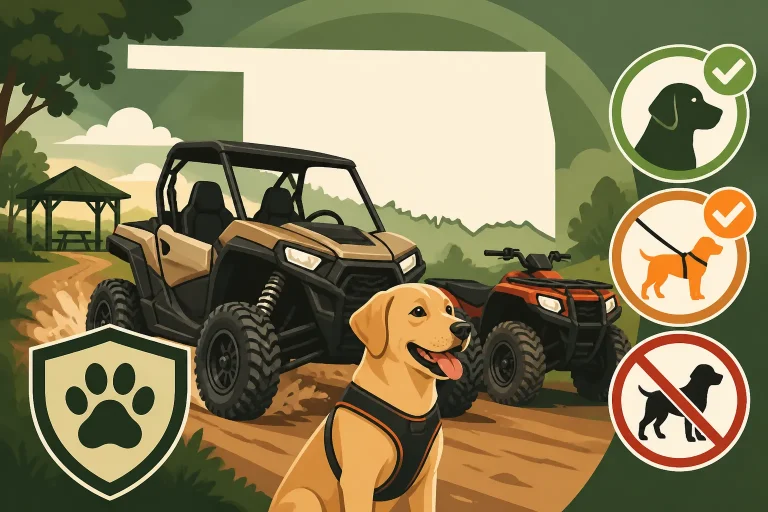
A park’s pet policy may cover more than whether dogs can enter the campground. Ask whether pets are permitted on trails, in common areas, or in specific buildings; whether they must be leashed; and whether there are restrictions around livestock or wildlife. Do not assume a pet that is welcome at camp can ride along on a machine or accompany you on every trail.
Bring enough water, waste bags, and a secure lead. Keep pets away from other campsites unless invited, and do not leave an animal unattended in a hot vehicle. For park-specific considerations, see [Oklahoma Private Park Pet Rules].
Quiet hours and alcohol
Quiet hours may apply to voices, music, generators, and machine use. Confirm when they start and whether the park has separate riding hours. A campground’s quiet time is not an extension of trail access: do not ride through camp or use a machine after the park’s permitted riding hours unless staff expressly allow it.
Alcohol policies also vary. Some parks may limit where alcohol is allowed or require compliance with specific event or wristband rules. Do not assume that permission to camp means alcohol is allowed throughout the property. The details in Oklahoma Private Park Alcohol Rules and [Oklahoma Private Park Quiet Hours] can help you identify questions to ask, but follow the rules provided by the park you are visiting.
A practical approach is to keep noise low even outside posted quiet hours. Avoid revving engines near tents, playing music toward neighboring sites, or letting a gathering spill into shared roads. Campsites are close together, and noise carries farther at night than it may seem during the day.
A simple checklist before you tow
A short call or message to the park can prevent a long drive ending in a campsite mismatch. Give staff the details that affect the answer: how many people are coming, what you are towing, how many machines you have, and whether you need hookups or a particular type of site.
Use this checklist:
- Confirm that the campground is open for your dates and that your reservation is complete.
- Ask what your booking includes: campsite, entry, riding access, and any required passes.
- Describe your truck, trailer, RV, and machines, then verify the site has room.
- Check arrival time, check-in location, and the procedure for late arrival.
- Ask whether water, electricity, restrooms, showers, and waste disposal are available.
- Confirm the current rules for fires, grills, generators, pets, and quiet hours.
- Verify riding hours, trail closures, machine restrictions, and routes between camp and trails.
- Ask about weather-related closures, refunds, or rescheduling.
- Save the park’s contact details and reservation confirmation where you can access them without cell service.
You can also ask whether you need to bring proof of ownership, proof of a riding pass, or other documents. Requirements differ by park and situation, so avoid assuming a registration decal alone answers every question. [Oklahoma Private Ranch Waivers] covers another point worth checking: some parks require riders to complete a waiver before access.
Pack for the facilities the park actually provides, not the ones you hope it has. If there is no confirmed potable water or power, plan accordingly. For small supplies such as a headlamp, drinking-water container, or tie-downs, Amazon is one place to shop; check product specifications and delivery timing, and bring equipment you have already tested rather than relying on a last-minute purchase.
Finally, keep a copy of the park’s rules and reservation details on your phone, and consider saving them offline. If the park gives instructions at check-in that differ from your earlier notes, follow the current instructions and ask staff to clarify anything that affects safety or your booked site. Questions to Ask the Park Office Before You Go can help you prepare those questions.
The main takeaway is simple: Oklahoma private parks do not all use the same camping rules. Confirm the current policies directly with the park, make sure your reservation fits your full setup, and treat campground access and riding access as separate things until staff tell you otherwise.
Disclaimer
This article is for general informational purposes only and does not constitute professional advice. Laws, prices and regulations vary by location and change over time. Consult a qualified professional for guidance on your specific situation.